

Militants Blockade Senegal-Mali Trade Route, Torch Trucks in Escalating Insurgency

Quote from Alex Bobby on September 18, 2025, 4:59 AM
Trucks Set Ablaze as Militants Block Key Senegal-Mali Trade Route: A New Phase in Mali’s Jihadist Insurgency
Mali’s already fragile security situation has taken a dramatic turn as Islamist militants impose blockades on crucial highways linking the country to Senegal and Mauritania. The siege, marked by arson attacks on trucks and the intimidation of drivers, threatens to strangle the economic lifelines of the landlocked nation.
In a rare acknowledgment of the severity of the crisis, Mali’s Prime Minister Abdoulaye Maïga said his government is working to strengthen security on the highways. The blockade poses a grave risk to fuel imports, which could cripple Mali’s economy and plunge Bamako, the capital, into deeper instability.
The Sahel region, long described as the epicentre of global terrorism, now accounts for more than half of the world’s terrorism-related deaths. The growing siege along the Dakar-Bamako corridor underscores how jihadist groups are evolving their strategies—shifting from military confrontation to economic sabotage.
How the Blockade Began
The crisis erupted in early September after six Senegalese lorry drivers were kidnapped—and later released—along the Dakar-Bamako trade corridor. This act marked the beginning of an orchestrated campaign by Jama'at Nusrat al-Islam wal-Muslimin (JNIM), al-Qaeda’s Sahel affiliate, to disrupt Mali’s supply chains.
JNIM militants have now set up checkpoints and imposed de facto blockades in two key areas: Kayes, Mali’s western gateway and logistics hub, and Nioro-du-Sahel, the main route linking Mali to Mauritania. Reports indicate that militants are extorting “taxes” from traders, torching fuel tankers, lorries and buses, and ambushing convoys transporting vital goods such as fuel, food, and cement.
Entire villages have been brought to a standstill, with markets closed, public services disrupted, and transportation halted. In Mali’s southern Sikasso region, suspected militants even ambushed fuel lorries coming from Ivory Coast in Bougouni, torching several vehicles.
“This is economic asphyxiation,” says Mamadou Bodian of Senegal’s Cheikh Anta Diop University, explaining that the militants are moving away from open combat to strategic economic blockades aimed at crippling the state.
Economic Chokehold on a Landlocked Nation
Kayes is a vital artery for Mali, serving as the main gateway for food, fuel, and manufactured goods entering from Senegal by road and rail. It is also home to about 80% of Mali’s gold production. Blocking this route threatens the entire Malian economy, which relies heavily on neighbouring countries’ ports for imports.
The Dakar-based Timbuktu Institute warns that JNIM’s goal is clear: “The jihadists intend to disrupt the country’s supplies, destabilise or even suffocate the Malian economy, isolate the capital Bamako and increase economic pressure on the Malian transitional regime.”
Though there is currently no major shortage of fuel in Bamako, prices have risen by around 10% and electricity cuts have become more frequent. Analysts warn that if the blockade continues, it could paralyse western Mali and eventually cut off the capital from vital resources.
Government Response and Local Fears
The Malian army initially downplayed the blockade, with spokesperson Col Souleymane Dembélé dismissing it as an “information war orchestrated by foreign media.” He argued that viral videos of vehicles set ablaze were outdated and unrelated to current events.
However, public pressure forced the government to act. The army later announced airstrikes on a JNIM camp in Mousafa, Kayes, claiming to have killed “several dozen militants” and destroyed a logistics base. Reinforcements have since been deployed to Kayes and Nioro-du-Sahel, with authorities declaring “large-scale offensive” operations on major roads and the Diéma-Nioro corridor.
State media reported that some hostages were freed during the operations, but offered no details. Despite these assurances, residents and lorry drivers report that militant checkpoints remain and transport companies continue to suspend operations, reflecting a persistent sense of fear and insecurity.
A Strategic Shift by JNIM
For years, JNIM operations were concentrated in northern and central Mali, including Mopti, Segou, and Timbuktu. But in recent years, the group has expanded its footprint into southern regions such as Sikasso and Koulikoro. By targeting Kayes, JNIM is not only widening its reach but also threatening too encircle Bamako.
This expansion marks a dangerous shift from territorial warfare to economic warfare. By attacking trade corridors, JNIM is attempting to cut off Mali from the outside world, undermine public confidence in the government, and signal its ability to disrupt regional commerce.
“The choice to target buses and tankers is not insignificant—it aims to strike at the heart of Mali’s social and economic mobility,” noted Bamada.net.
Regional Implications
The blockade has rattled neighbouring Senegal, which depends heavily on trade with Mali. Mali is Senegal’s main African trading partner, accounting for over $1.4 billion in exports last year. The Dakar-Bamako corridor is critical for transporting fuel, cement, foodstuffs, and manufactured goods that power both economies.
The Union of Senegalese Truckers (URS) has condemned the attacks, warning that the abduction of lorry drivers poses a serious threat to regional trade. There are growing fears that JNIM could expand its operations westward into Senegal and Mauritania, using its newfound foothold in Kayes as a launchpad.
Since 2012, Mali has been locked in a grinding security crisis driven by groups affiliated with al-Qaeda, Islamic State (IS), and other militias. The current blockade shows the limits of the military government’s reliance on force—backed by Russian Africa Corps mercenaries, formerly Wagner—as a solution to the insurgency.
A Warning of What’s to Come
What began as a tactical disruption is now evolving into a full-scale economic siege, eroding confidence in Mali’s state institutions and exposing the fragility of its economy. If the blockade is not broken quickly, it risks setting off a chain reaction that could destabilise not just Mali, but the wider Sahel and West Africa.
The siege of Kayes is more than a local flare-up. It signals that the jihadist insurgency in Mali has entered a new phase—one in which economic sabotage, rather than battlefield dominance, becomes the weapon of choice. And its repercussions could extend far beyond Mali’s borders, threatening the stability of the entire region.
Looking Forward
Breaking the blockade on the Senegal-Mali trade route will require more than short-term military operations—it demands a long-term, coordinated strategy. Mali’s government must pair security crackdowns with stronger protection for transport corridors, improved intelligence-sharing with neighbours like Senegal and Mauritania, and deeper regional cooperation through ECOWAS and the African Union.
At the same time, rebuilding trust with local communities along these routes will be critical. Without local support, any military gains will be temporary. International partners, including the UN and the EU, could also play a key role by providing logistical support, funding, and technical assistance to secure vital infrastructure.
If successful, these efforts could restore the flow of goods, ease economic pressure on Bamako, and prevent JNIM’s tactics from spreading further west. The coming months will be pivotal—not only for Mali’s stability but for the security of the wider Sahel region.
Final Thoughts
The blockade on the Senegal-Mali trade route is more than just a disruption of commerce—it is a calculated strike at the heart of Mali’s fragile economy and governance. By targeting fuel tankers, food convoys, and key highways, JNIM is signalling its intent to choke the country’s lifelines and prove the state incapable of protecting its people.
This crisis reveals a sobering truth: military force alone cannot defeat an insurgency that has adapted to wage economic warfare. To prevent Mali’s gradual economic suffocation, the government must act decisively yet holistically—blending security operations with regional diplomacy, economic relief measures, and community engagement.
If these efforts fail, the blockade could become a blueprint for destabilising not just Mali, but other West African nations. What happens next will shape the balance between resilience and collapse in the Sahel for years to come.
Conclusion
The militant blockade of the Senegal-Mali trade route marks a turning point in Mali’s protracted conflict. By shifting from direct military confrontation to targeting economic lifelines, Jama'at Nusrat al-Islam wal-Muslimin (JNIM) has demonstrated its ability to cripple critical infrastructure and undermine public confidence in the state.
The disruption of fuel and goods along the Dakar-Bamako corridor threatens not only Mali’s internal stability but also the economic health of the wider region, especially Senegal and Mauritania. Despite the government’s military offensives and public reassurances, local fear persists, and trade activity remains severely hampered.
If left unresolved, this blockade could escalate into a prolonged siege, deepening Mali’s isolation and accelerating the erosion of state authority. It underscores the urgent need for a coordinated regional response that goes beyond military force, combining security measures with political dialogue, economic resilience, and community engagement to break the cycle of violence.
Meta Description:
Militants have blocked Mali’s key trade route to Senegal, torching trucks and crippling supplies. The blockade threatens to destabilise Bamako and spread across West Africa.
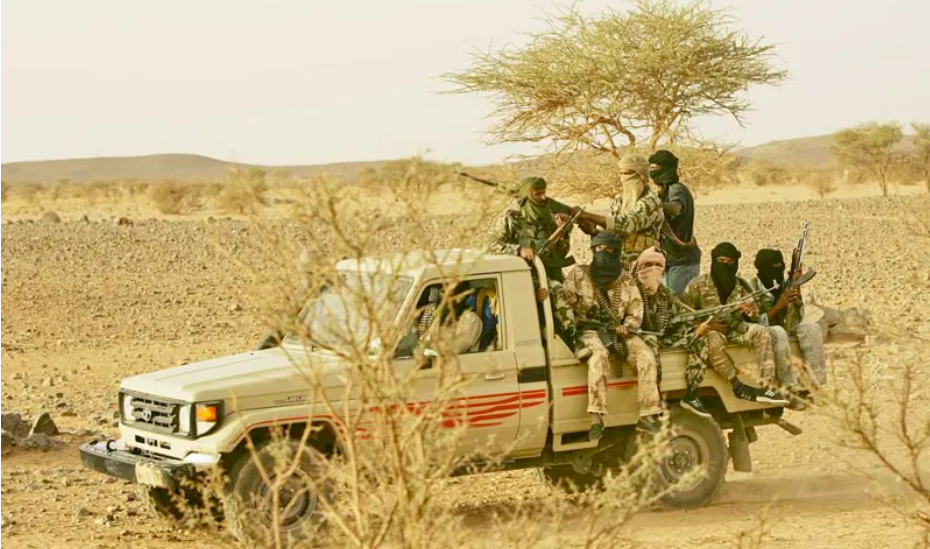
Trucks Set Ablaze as Militants Block Key Senegal-Mali Trade Route: A New Phase in Mali’s Jihadist Insurgency
Mali’s already fragile security situation has taken a dramatic turn as Islamist militants impose blockades on crucial highways linking the country to Senegal and Mauritania. The siege, marked by arson attacks on trucks and the intimidation of drivers, threatens to strangle the economic lifelines of the landlocked nation.
In a rare acknowledgment of the severity of the crisis, Mali’s Prime Minister Abdoulaye Maïga said his government is working to strengthen security on the highways. The blockade poses a grave risk to fuel imports, which could cripple Mali’s economy and plunge Bamako, the capital, into deeper instability.
Register for Tekedia Mini-MBA edition 20 (June 8 – Sept 5, 2026).
Register for Tekedia AI in Business Masterclass.
Join Tekedia Capital Syndicate and co-invest in great global startups.
Register for Tekedia AI Lab.
The Sahel region, long described as the epicentre of global terrorism, now accounts for more than half of the world’s terrorism-related deaths. The growing siege along the Dakar-Bamako corridor underscores how jihadist groups are evolving their strategies—shifting from military confrontation to economic sabotage.
How the Blockade Began
The crisis erupted in early September after six Senegalese lorry drivers were kidnapped—and later released—along the Dakar-Bamako trade corridor. This act marked the beginning of an orchestrated campaign by Jama'at Nusrat al-Islam wal-Muslimin (JNIM), al-Qaeda’s Sahel affiliate, to disrupt Mali’s supply chains.

JNIM militants have now set up checkpoints and imposed de facto blockades in two key areas: Kayes, Mali’s western gateway and logistics hub, and Nioro-du-Sahel, the main route linking Mali to Mauritania. Reports indicate that militants are extorting “taxes” from traders, torching fuel tankers, lorries and buses, and ambushing convoys transporting vital goods such as fuel, food, and cement.
Entire villages have been brought to a standstill, with markets closed, public services disrupted, and transportation halted. In Mali’s southern Sikasso region, suspected militants even ambushed fuel lorries coming from Ivory Coast in Bougouni, torching several vehicles.
“This is economic asphyxiation,” says Mamadou Bodian of Senegal’s Cheikh Anta Diop University, explaining that the militants are moving away from open combat to strategic economic blockades aimed at crippling the state.

Economic Chokehold on a Landlocked Nation
Kayes is a vital artery for Mali, serving as the main gateway for food, fuel, and manufactured goods entering from Senegal by road and rail. It is also home to about 80% of Mali’s gold production. Blocking this route threatens the entire Malian economy, which relies heavily on neighbouring countries’ ports for imports.
The Dakar-based Timbuktu Institute warns that JNIM’s goal is clear: “The jihadists intend to disrupt the country’s supplies, destabilise or even suffocate the Malian economy, isolate the capital Bamako and increase economic pressure on the Malian transitional regime.”
Though there is currently no major shortage of fuel in Bamako, prices have risen by around 10% and electricity cuts have become more frequent. Analysts warn that if the blockade continues, it could paralyse western Mali and eventually cut off the capital from vital resources.
Government Response and Local Fears
The Malian army initially downplayed the blockade, with spokesperson Col Souleymane Dembélé dismissing it as an “information war orchestrated by foreign media.” He argued that viral videos of vehicles set ablaze were outdated and unrelated to current events.
However, public pressure forced the government to act. The army later announced airstrikes on a JNIM camp in Mousafa, Kayes, claiming to have killed “several dozen militants” and destroyed a logistics base. Reinforcements have since been deployed to Kayes and Nioro-du-Sahel, with authorities declaring “large-scale offensive” operations on major roads and the Diéma-Nioro corridor.
State media reported that some hostages were freed during the operations, but offered no details. Despite these assurances, residents and lorry drivers report that militant checkpoints remain and transport companies continue to suspend operations, reflecting a persistent sense of fear and insecurity.
A Strategic Shift by JNIM
For years, JNIM operations were concentrated in northern and central Mali, including Mopti, Segou, and Timbuktu. But in recent years, the group has expanded its footprint into southern regions such as Sikasso and Koulikoro. By targeting Kayes, JNIM is not only widening its reach but also threatening too encircle Bamako.
This expansion marks a dangerous shift from territorial warfare to economic warfare. By attacking trade corridors, JNIM is attempting to cut off Mali from the outside world, undermine public confidence in the government, and signal its ability to disrupt regional commerce.
“The choice to target buses and tankers is not insignificant—it aims to strike at the heart of Mali’s social and economic mobility,” noted Bamada.net.
Regional Implications
The blockade has rattled neighbouring Senegal, which depends heavily on trade with Mali. Mali is Senegal’s main African trading partner, accounting for over $1.4 billion in exports last year. The Dakar-Bamako corridor is critical for transporting fuel, cement, foodstuffs, and manufactured goods that power both economies.
The Union of Senegalese Truckers (URS) has condemned the attacks, warning that the abduction of lorry drivers poses a serious threat to regional trade. There are growing fears that JNIM could expand its operations westward into Senegal and Mauritania, using its newfound foothold in Kayes as a launchpad.
Since 2012, Mali has been locked in a grinding security crisis driven by groups affiliated with al-Qaeda, Islamic State (IS), and other militias. The current blockade shows the limits of the military government’s reliance on force—backed by Russian Africa Corps mercenaries, formerly Wagner—as a solution to the insurgency.
A Warning of What’s to Come
What began as a tactical disruption is now evolving into a full-scale economic siege, eroding confidence in Mali’s state institutions and exposing the fragility of its economy. If the blockade is not broken quickly, it risks setting off a chain reaction that could destabilise not just Mali, but the wider Sahel and West Africa.
The siege of Kayes is more than a local flare-up. It signals that the jihadist insurgency in Mali has entered a new phase—one in which economic sabotage, rather than battlefield dominance, becomes the weapon of choice. And its repercussions could extend far beyond Mali’s borders, threatening the stability of the entire region.
Looking Forward
Breaking the blockade on the Senegal-Mali trade route will require more than short-term military operations—it demands a long-term, coordinated strategy. Mali’s government must pair security crackdowns with stronger protection for transport corridors, improved intelligence-sharing with neighbours like Senegal and Mauritania, and deeper regional cooperation through ECOWAS and the African Union.
At the same time, rebuilding trust with local communities along these routes will be critical. Without local support, any military gains will be temporary. International partners, including the UN and the EU, could also play a key role by providing logistical support, funding, and technical assistance to secure vital infrastructure.
If successful, these efforts could restore the flow of goods, ease economic pressure on Bamako, and prevent JNIM’s tactics from spreading further west. The coming months will be pivotal—not only for Mali’s stability but for the security of the wider Sahel region.
Final Thoughts
The blockade on the Senegal-Mali trade route is more than just a disruption of commerce—it is a calculated strike at the heart of Mali’s fragile economy and governance. By targeting fuel tankers, food convoys, and key highways, JNIM is signalling its intent to choke the country’s lifelines and prove the state incapable of protecting its people.
This crisis reveals a sobering truth: military force alone cannot defeat an insurgency that has adapted to wage economic warfare. To prevent Mali’s gradual economic suffocation, the government must act decisively yet holistically—blending security operations with regional diplomacy, economic relief measures, and community engagement.
If these efforts fail, the blockade could become a blueprint for destabilising not just Mali, but other West African nations. What happens next will shape the balance between resilience and collapse in the Sahel for years to come.
Conclusion
The militant blockade of the Senegal-Mali trade route marks a turning point in Mali’s protracted conflict. By shifting from direct military confrontation to targeting economic lifelines, Jama'at Nusrat al-Islam wal-Muslimin (JNIM) has demonstrated its ability to cripple critical infrastructure and undermine public confidence in the state.
The disruption of fuel and goods along the Dakar-Bamako corridor threatens not only Mali’s internal stability but also the economic health of the wider region, especially Senegal and Mauritania. Despite the government’s military offensives and public reassurances, local fear persists, and trade activity remains severely hampered.
If left unresolved, this blockade could escalate into a prolonged siege, deepening Mali’s isolation and accelerating the erosion of state authority. It underscores the urgent need for a coordinated regional response that goes beyond military force, combining security measures with political dialogue, economic resilience, and community engagement to break the cycle of violence.
Meta Description:
Militants have blocked Mali’s key trade route to Senegal, torching trucks and crippling supplies. The blockade threatens to destabilise Bamako and spread across West Africa.
Share this:
- Click to share on Facebook (Opens in new window) Facebook
- Click to share on X (Opens in new window) X
- Click to share on WhatsApp (Opens in new window) WhatsApp
- Click to share on LinkedIn (Opens in new window) LinkedIn
- Click to email a link to a friend (Opens in new window) Email
- Click to print (Opens in new window) Print