

Moscow 'Stuck in Another Century,' Zelenskyy Says at Helsinki Accords Anniversary

Quote from Alex Bobby on August 1, 2025, 2:24 AM
Moscow 'Stuck in Another Century,' Zelenskyy Says at Helsinki Accords Anniversary
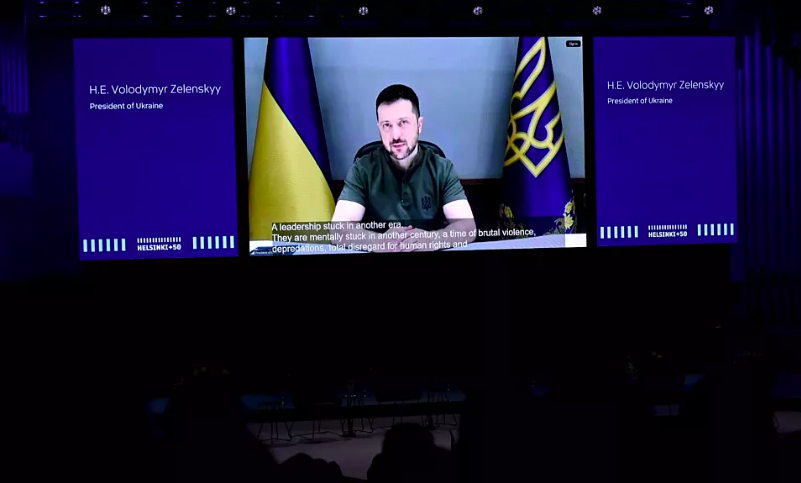
Ukrainian President Volodymyr Zelenskyy delivered a forceful and emotional speech during the anniversary commemorations of the Helsinki Accords, accusing Russia of clinging to an outdated and destructive worldview that continues to destabilise Europe. Speaking in Helsinki on Wednesday, Zelenskyy’s remarks came just hours after a deadly Russian missile and drone strike on Kyiv claimed six lives and injured more than 50.
Zelenskyy, who has become an emblematic figure of resilience since Russia’s full-scale invasion of Ukraine in February 2022, called out the Kremlin’s ongoing aggression as a “brutal return to imperialism” and declared that “Moscow is stuck in another century—politically, morally, and strategically.”
A Painful Morning Before a Historic Day
Just before dawn on the same day Zelenskyy took the stage in Finland, Russian forces launched a wave of missile and drone attacks across Ukraine. In Kyiv, several residential districts were hit, reducing apartment buildings to rubble and forcing emergency crews to dig through debris in search of survivors. The Ukrainian Air Force reported that over 30 projectiles were launched, with most intercepted, but several found their targets in the capital.
“This is how Russia honours international commitments—by bombing sleeping civilians,” Zelenskyy said, referencing the 1975 Helsinki Final Act, a cornerstone agreement that aimed to ease Cold War tensions and uphold respect for national sovereignty and human rights in Europe. “What we are seeing today is the utter betrayal of those principles by one of its signatories.”
A Blistering Critique of Russian Leadership
Zelenskyy used the moment to draw a stark contrast between the principles enshrined in the Helsinki Accords and the actions of modern-day Russia. “Fifty years ago, world leaders gathered here to commit to peace and mutual respect,” he said. “But while Europe has moved forward, embracing democratic values and cooperation, Russia has retreated into darkness.”
Describing the Kremlin's behaviour as "feudal," he accused President Vladimir Putin of choosing “imperial conquest over cooperation, fear over diplomacy, and lies over truth.” Zelenskyy also warned that Russia’s aggression would not stop with Ukraine unless the international community remained united and vigilant.
Resonating with History and Present Dangers
The Helsinki Final Act was signed in 1975 by 35 nations, including the United States, Canada, and the Soviet Union, in an effort to improve East-West relations during the Cold War. It included commitments to respect borders, human rights, and peaceful conflict resolution. Zelenskyy lamented that many of those promises have been shattered by Russia’s actions in Ukraine over the past decade.
“From Crimea to Donbas, from Bucha to Bakhmut, we have seen how easily these commitments can be ignored when the world does not act swiftly,” he said. “That is why today must not be about memories. It must be about accountability.”
Western Support and Future Security
Zelenskyy also used his platform to thank Western nations for their continued support, including military aid, sanctions on Russia, and humanitarian assistance. But he stressed that Ukraine’s security—and by extension, Europe’s—must be institutionalised through NATO membership and long-term defence partnerships.
“Peace in Europe is only possible when aggressors know their actions will be met with united strength,” he said. “Ukraine will not be a buffer zone or a grey area. We will be a shield for Europe, but we must be armed, protected, and respected.”
Several European leaders attending the event echoed his sentiments. Finnish President Sauli Väinämö Niinistö reaffirmed Helsinki’s solidarity with Ukraine, saying, “The principles we committed to in this city 50 years ago are more relevant than ever. They are being tested, and we must not fail them.”
The Stakes Ahead
As the war in Ukraine stretches into its fourth year, there are signs that Russia is preparing for a long conflict. Increased defence spending, recruitment drives, and deepening ties with countries like Iran and North Korea point to a strategy of attrition. Meanwhile, Ukraine continues to push for international isolation of Russia and prosecutions for war crimes.
Zelenskyy ended his speech with a powerful appeal: “The question is no longer whether we can stop Russia. It is whether we are ready to do so now—or allow another century to be lost to tyranny.”
Final Thought
Zelenskyy’s address in Helsinki served as both a tribute to past diplomacy and a stark warning about present dangers. His words painted a picture of a Russia that, in his view, is choosing regression over progress, aggression over dialogue. With lives lost that very morning in Kyiv, his message was not only symbolic but urgent: history, he warned, is repeating itself—but this
time, the world must not look away.
Looking Forward
As the war in Ukraine grinds on with no clear end in sight, Zelenskyy’s call for global solidarity takes on renewed importance. The coming months will be critical—not just for Ukraine’s battlefield resilience, but for the broader international response to authoritarian threats. With NATO expansion, continued military support, and legal action against war crimes on the table, the choices made now will shape the geopolitical landscape for decades to come. Looking forward, Ukraine’s fight is no longer just its own—it is a frontline defence of the democratic values the world once pledged to uphold in Helsinki.
Conclusion
President Zelenskyy's speech at the anniversary of the Helsinki Accords was a sobering reminder of the fragile state of global peace and the dangerous resurgence of authoritarian aggression. By drawing a direct line between Russia’s actions in Ukraine and the betrayal of the principles enshrined in the 1975 agreement, he underscored the urgent need for the international community to act—not just with words, but with decisive support and long-term commitment. As missiles continue to fall and innocent lives are lost, Zelenskyy’s message is clear: the defence of democratic values requires unity, strength, and the courage to confront those determined to drag the world backward.
Moscow 'Stuck in Another Century,' Zelenskyy Says at Helsinki Accords Anniversary
Ukrainian President Volodymyr Zelenskyy delivered a forceful and emotional speech during the anniversary commemorations of the Helsinki Accords, accusing Russia of clinging to an outdated and destructive worldview that continues to destabilise Europe. Speaking in Helsinki on Wednesday, Zelenskyy’s remarks came just hours after a deadly Russian missile and drone strike on Kyiv claimed six lives and injured more than 50.
Zelenskyy, who has become an emblematic figure of resilience since Russia’s full-scale invasion of Ukraine in February 2022, called out the Kremlin’s ongoing aggression as a “brutal return to imperialism” and declared that “Moscow is stuck in another century—politically, morally, and strategically.”
Register for Tekedia Mini-MBA edition 20 (June 8 – Sept 5, 2026).
Register for Tekedia AI in Business Masterclass.
Join Tekedia Capital Syndicate and co-invest in great global startups.
Register for Tekedia AI Lab.
A Painful Morning Before a Historic Day
Just before dawn on the same day Zelenskyy took the stage in Finland, Russian forces launched a wave of missile and drone attacks across Ukraine. In Kyiv, several residential districts were hit, reducing apartment buildings to rubble and forcing emergency crews to dig through debris in search of survivors. The Ukrainian Air Force reported that over 30 projectiles were launched, with most intercepted, but several found their targets in the capital.
“This is how Russia honours international commitments—by bombing sleeping civilians,” Zelenskyy said, referencing the 1975 Helsinki Final Act, a cornerstone agreement that aimed to ease Cold War tensions and uphold respect for national sovereignty and human rights in Europe. “What we are seeing today is the utter betrayal of those principles by one of its signatories.”

A Blistering Critique of Russian Leadership
Zelenskyy used the moment to draw a stark contrast between the principles enshrined in the Helsinki Accords and the actions of modern-day Russia. “Fifty years ago, world leaders gathered here to commit to peace and mutual respect,” he said. “But while Europe has moved forward, embracing democratic values and cooperation, Russia has retreated into darkness.”
Describing the Kremlin's behaviour as "feudal," he accused President Vladimir Putin of choosing “imperial conquest over cooperation, fear over diplomacy, and lies over truth.” Zelenskyy also warned that Russia’s aggression would not stop with Ukraine unless the international community remained united and vigilant.

Resonating with History and Present Dangers
The Helsinki Final Act was signed in 1975 by 35 nations, including the United States, Canada, and the Soviet Union, in an effort to improve East-West relations during the Cold War. It included commitments to respect borders, human rights, and peaceful conflict resolution. Zelenskyy lamented that many of those promises have been shattered by Russia’s actions in Ukraine over the past decade.
“From Crimea to Donbas, from Bucha to Bakhmut, we have seen how easily these commitments can be ignored when the world does not act swiftly,” he said. “That is why today must not be about memories. It must be about accountability.”
Western Support and Future Security
Zelenskyy also used his platform to thank Western nations for their continued support, including military aid, sanctions on Russia, and humanitarian assistance. But he stressed that Ukraine’s security—and by extension, Europe’s—must be institutionalised through NATO membership and long-term defence partnerships.
“Peace in Europe is only possible when aggressors know their actions will be met with united strength,” he said. “Ukraine will not be a buffer zone or a grey area. We will be a shield for Europe, but we must be armed, protected, and respected.”
Several European leaders attending the event echoed his sentiments. Finnish President Sauli Väinämö Niinistö reaffirmed Helsinki’s solidarity with Ukraine, saying, “The principles we committed to in this city 50 years ago are more relevant than ever. They are being tested, and we must not fail them.”
The Stakes Ahead
As the war in Ukraine stretches into its fourth year, there are signs that Russia is preparing for a long conflict. Increased defence spending, recruitment drives, and deepening ties with countries like Iran and North Korea point to a strategy of attrition. Meanwhile, Ukraine continues to push for international isolation of Russia and prosecutions for war crimes.
Zelenskyy ended his speech with a powerful appeal: “The question is no longer whether we can stop Russia. It is whether we are ready to do so now—or allow another century to be lost to tyranny.”
Final Thought
Zelenskyy’s address in Helsinki served as both a tribute to past diplomacy and a stark warning about present dangers. His words painted a picture of a Russia that, in his view, is choosing regression over progress, aggression over dialogue. With lives lost that very morning in Kyiv, his message was not only symbolic but urgent: history, he warned, is repeating itself—but this
time, the world must not look away.
Looking Forward
As the war in Ukraine grinds on with no clear end in sight, Zelenskyy’s call for global solidarity takes on renewed importance. The coming months will be critical—not just for Ukraine’s battlefield resilience, but for the broader international response to authoritarian threats. With NATO expansion, continued military support, and legal action against war crimes on the table, the choices made now will shape the geopolitical landscape for decades to come. Looking forward, Ukraine’s fight is no longer just its own—it is a frontline defence of the democratic values the world once pledged to uphold in Helsinki.
Conclusion
President Zelenskyy's speech at the anniversary of the Helsinki Accords was a sobering reminder of the fragile state of global peace and the dangerous resurgence of authoritarian aggression. By drawing a direct line between Russia’s actions in Ukraine and the betrayal of the principles enshrined in the 1975 agreement, he underscored the urgent need for the international community to act—not just with words, but with decisive support and long-term commitment. As missiles continue to fall and innocent lives are lost, Zelenskyy’s message is clear: the defence of democratic values requires unity, strength, and the courage to confront those determined to drag the world backward.
Uploaded files:Share this:
- Click to share on Facebook (Opens in new window) Facebook
- Click to share on X (Opens in new window) X
- Click to share on WhatsApp (Opens in new window) WhatsApp
- Click to share on LinkedIn (Opens in new window) LinkedIn
- Click to email a link to a friend (Opens in new window) Email
- Click to print (Opens in new window) Print