

New Survey Finds Fragile Deep-Sea Ecosystems off Cyprus Threatened by Human Activity

Quote from Alex Bobby on September 8, 2025, 4:22 AM
New Marine Survey Reveals Fragile Ecosystems off Cyprus Under Threat from Human Activity
A groundbreaking marine expedition has shed new light on the hidden underwater worlds surrounding Cyprus, uncovering fragile ecosystems that face mounting threats from human activity. The survey, part of the UK-funded MESOPHOS project, is the first detailed exploration of mesophotic ecosystems—habitats that exist in the twilight zone between 50 and 200 metres below the ocean surface—around Akrotiri and Dhekelia, two areas of British Overseas Territory on the island.
Until now, these depths remained virtually unmapped, lying beyond the reach of traditional scuba diving. Using remotely operated vehicles (ROVs), scientists from the Marine & Environmental Research (MER) Lab explored more than 32 sites, revealing a rich patchwork of corals, sponges, anemones, and other habitat-forming organisms that sustain diverse marine life. Their findings highlight both the ecological importance of these little-known ecosystems and the pressing threats they already face.
The Twilight Zone: What Are Mesophotic Ecosystems?
The word mesophotic literally translates as “middle light.” These ecosystems exist at depths where sunlight still penetrates but is too dim for the robust photosynthesis seen in shallow coral reefs. Despite these challenging conditions, they host unique communities of organisms. Some scientists believe these habitats may serve as refuges for species displaced from shallow-water reefs, offering a critical buffer against the impacts of warming seas and widespread coral bleaching.
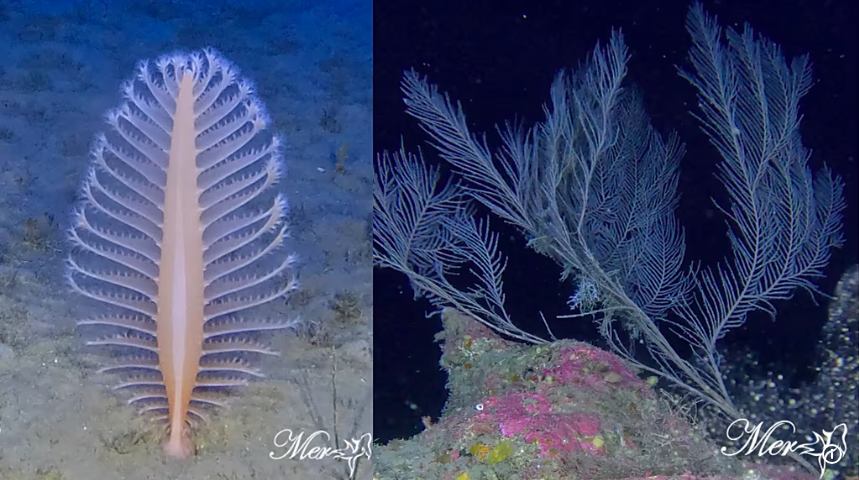
During the MESOPHOS expedition, researchers recorded over 200 species, including several never before documented in Cyprus. Particularly notable were fragile and slow-growing corals such as gorgonians (Callogorgia verticillata), hydroid corals (Lytocarpia myriophyllum), soft corals, and sea pens. Many of these species are considered threatened or protected, underscoring the ecological value of the region’s deep reefs.
A Hidden Reservoir of Biodiversity
The ecosystems discovered are more than scientific curiosities—they are reservoirs of biodiversity with direct links to human well-being. Sponges and corals create complex three-dimensional structures that provide shelter and feeding grounds for fish and invertebrates, supporting healthy populations and indirectly bolstering sustainable fisheries.
By strengthening marine biodiversity and resilience, these mesophotic reefs contribute to the stability of local marine resources. In an era when shallow reefs around the world are under severe stress, the discovery of such habitats is a reminder of the ocean’s hidden capacity to adapt and endure.
Human Footprint Reaches the Depths
Despite their depth and relative inaccessibility, the newly mapped ecosystems already bear the scars of human activity. The MER team documented marine litter scattered across the seabed, including soft drink cans and lost fishing equipment known as “ghost gear.” They also observed clear evidence of bottom trawling—deep-sea fishing practices where heavy nets are dragged along the seabed, devastating delicate corals and sediment communities.
The team further noted invasive species and coral mortality likely linked to rising ocean temperatures. Christina Michail, Biologist and Marine Biologist at the MER Lab, expressed concern about these findings:
“The presence of human impacts at these depths is particularly concerning because habitats such as maerl beds, sponge grounds, and corals are extremely slow-growing and highly vulnerable. Our surveys revealed clear marks from bottom trawling gear, alongside areas where sedimentation and disturbance had reduced both the abundance and diversity of marine life.”
Her comments underline a sobering reality: even in places once thought to be beyond the immediate reach of human influence, the ocean’s most fragile communities are not immune.
Why Protection Matters Now
The findings of the MESOPHOS project carry clear implications. The discovery of rich mesophotic ecosystems, combined with visible signs of degradation, calls for urgent conservation measures. Michail and her colleagues have urged immediate action, beginning with the prohibition of destructive fishing activities, particularly bottom trawling, in areas where sensitive habitats have been identified.
Beyond restrictions, the researchers emphasise the need for more detailed mapping of these ecosystems to guide effective management. Long-term monitoring will also be essential to track progress and adapt protective strategies over time.
As Michail points out, these efforts must be proactive: “We recommend the immediate protection of sensitive habitats such as maerl beds and coralligenous reefs. This must go hand in hand with mapping the spatial extent of these critical habitats to guide effective management, while long-term, systematic monitoring will be essential.”
A Blueprint for Future Research
While the MESOPHOS expedition represents a landmark achievement, it is only the beginning. Scientists stress that similar surveys should be carried out around other parts of Cyprus to build a complete picture of the island’s underwater ecosystems. Expanding the knowledge base will help assess vulnerabilities and shape a broader conservation framework across the Mediterranean.
The study also sets an example for how technology—such as ROVs and remote mapping—can open new frontiers in marine research. By venturing into zones once considered inaccessible, researchers can uncover biodiversity that plays a vital role in ecological resilience and global ocean health.
Looking Forward
The MESOPHOS survey is only the first step in understanding Cyprus’s hidden marine treasures. With so many sites still unexplored, future expeditions could reveal even more fragile habitats and species new too science. What happens next will depend on how quickly policymakers and conservation bodies act on these findings. If protective measures are put in place—banning destructive fishing, improving monitoring, and raising public awareness—these ecosystems could become strongholds of resilience in a warming Mediterranean. Looking forward, the hope is that Cyprus can lead by example, showing how science-driven action can preserve marine biodiversity before it is too late.
Conclusion: A Fragile Treasure at Risk
The MESOPHOS project has revealed a hidden treasure beneath the waters of Cyprus: ecosystems rich in species and ecological function, yet already under threat from human activity. The discovery underscores both the fragility of our oceans and their remarkable capacity to support life in even the most challenging conditions.
But it also comes with a warning. Without immediate protections, these habitats may suffer the same fate as shallow reefs already degraded by climate change, pollution, and overfishing. Safeguarding them is not only about preserving biodiversity—it is about securing the future of the Mediterranean’s marine resources and the communities that depend on them.
The twilight reefs of Akrotiri and Dhekelia remind us that the ocean’s secrets are still being uncovered. Whether they endure will depend on how quickly humanity can act to protect them.
Meta Description:
A UK-funded survey has revealed fragile mesophytic ecosystems off Cyprus teeming with rare corals and marine life, but already threatened by litter, trawling, and warming seas—experts call for urgent protection.
New Marine Survey Reveals Fragile Ecosystems off Cyprus Under Threat from Human Activity
A groundbreaking marine expedition has shed new light on the hidden underwater worlds surrounding Cyprus, uncovering fragile ecosystems that face mounting threats from human activity. The survey, part of the UK-funded MESOPHOS project, is the first detailed exploration of mesophotic ecosystems—habitats that exist in the twilight zone between 50 and 200 metres below the ocean surface—around Akrotiri and Dhekelia, two areas of British Overseas Territory on the island.
Until now, these depths remained virtually unmapped, lying beyond the reach of traditional scuba diving. Using remotely operated vehicles (ROVs), scientists from the Marine & Environmental Research (MER) Lab explored more than 32 sites, revealing a rich patchwork of corals, sponges, anemones, and other habitat-forming organisms that sustain diverse marine life. Their findings highlight both the ecological importance of these little-known ecosystems and the pressing threats they already face.
Register for Tekedia Mini-MBA edition 20 (June 8 – Sept 5, 2026).
Register for Tekedia AI in Business Masterclass.
Join Tekedia Capital Syndicate and co-invest in great global startups.
Register for Tekedia AI Lab.
The Twilight Zone: What Are Mesophotic Ecosystems?
The word mesophotic literally translates as “middle light.” These ecosystems exist at depths where sunlight still penetrates but is too dim for the robust photosynthesis seen in shallow coral reefs. Despite these challenging conditions, they host unique communities of organisms. Some scientists believe these habitats may serve as refuges for species displaced from shallow-water reefs, offering a critical buffer against the impacts of warming seas and widespread coral bleaching.
During the MESOPHOS expedition, researchers recorded over 200 species, including several never before documented in Cyprus. Particularly notable were fragile and slow-growing corals such as gorgonians (Callogorgia verticillata), hydroid corals (Lytocarpia myriophyllum), soft corals, and sea pens. Many of these species are considered threatened or protected, underscoring the ecological value of the region’s deep reefs.

A Hidden Reservoir of Biodiversity
The ecosystems discovered are more than scientific curiosities—they are reservoirs of biodiversity with direct links to human well-being. Sponges and corals create complex three-dimensional structures that provide shelter and feeding grounds for fish and invertebrates, supporting healthy populations and indirectly bolstering sustainable fisheries.
By strengthening marine biodiversity and resilience, these mesophotic reefs contribute to the stability of local marine resources. In an era when shallow reefs around the world are under severe stress, the discovery of such habitats is a reminder of the ocean’s hidden capacity to adapt and endure.

Human Footprint Reaches the Depths
Despite their depth and relative inaccessibility, the newly mapped ecosystems already bear the scars of human activity. The MER team documented marine litter scattered across the seabed, including soft drink cans and lost fishing equipment known as “ghost gear.” They also observed clear evidence of bottom trawling—deep-sea fishing practices where heavy nets are dragged along the seabed, devastating delicate corals and sediment communities.
The team further noted invasive species and coral mortality likely linked to rising ocean temperatures. Christina Michail, Biologist and Marine Biologist at the MER Lab, expressed concern about these findings:
“The presence of human impacts at these depths is particularly concerning because habitats such as maerl beds, sponge grounds, and corals are extremely slow-growing and highly vulnerable. Our surveys revealed clear marks from bottom trawling gear, alongside areas where sedimentation and disturbance had reduced both the abundance and diversity of marine life.”
Her comments underline a sobering reality: even in places once thought to be beyond the immediate reach of human influence, the ocean’s most fragile communities are not immune.
Why Protection Matters Now
The findings of the MESOPHOS project carry clear implications. The discovery of rich mesophotic ecosystems, combined with visible signs of degradation, calls for urgent conservation measures. Michail and her colleagues have urged immediate action, beginning with the prohibition of destructive fishing activities, particularly bottom trawling, in areas where sensitive habitats have been identified.
Beyond restrictions, the researchers emphasise the need for more detailed mapping of these ecosystems to guide effective management. Long-term monitoring will also be essential to track progress and adapt protective strategies over time.
As Michail points out, these efforts must be proactive: “We recommend the immediate protection of sensitive habitats such as maerl beds and coralligenous reefs. This must go hand in hand with mapping the spatial extent of these critical habitats to guide effective management, while long-term, systematic monitoring will be essential.”
A Blueprint for Future Research
While the MESOPHOS expedition represents a landmark achievement, it is only the beginning. Scientists stress that similar surveys should be carried out around other parts of Cyprus to build a complete picture of the island’s underwater ecosystems. Expanding the knowledge base will help assess vulnerabilities and shape a broader conservation framework across the Mediterranean.
The study also sets an example for how technology—such as ROVs and remote mapping—can open new frontiers in marine research. By venturing into zones once considered inaccessible, researchers can uncover biodiversity that plays a vital role in ecological resilience and global ocean health.
Looking Forward
The MESOPHOS survey is only the first step in understanding Cyprus’s hidden marine treasures. With so many sites still unexplored, future expeditions could reveal even more fragile habitats and species new too science. What happens next will depend on how quickly policymakers and conservation bodies act on these findings. If protective measures are put in place—banning destructive fishing, improving monitoring, and raising public awareness—these ecosystems could become strongholds of resilience in a warming Mediterranean. Looking forward, the hope is that Cyprus can lead by example, showing how science-driven action can preserve marine biodiversity before it is too late.
Conclusion: A Fragile Treasure at Risk
The MESOPHOS project has revealed a hidden treasure beneath the waters of Cyprus: ecosystems rich in species and ecological function, yet already under threat from human activity. The discovery underscores both the fragility of our oceans and their remarkable capacity to support life in even the most challenging conditions.
But it also comes with a warning. Without immediate protections, these habitats may suffer the same fate as shallow reefs already degraded by climate change, pollution, and overfishing. Safeguarding them is not only about preserving biodiversity—it is about securing the future of the Mediterranean’s marine resources and the communities that depend on them.
The twilight reefs of Akrotiri and Dhekelia remind us that the ocean’s secrets are still being uncovered. Whether they endure will depend on how quickly humanity can act to protect them.
Meta Description:
A UK-funded survey has revealed fragile mesophytic ecosystems off Cyprus teeming with rare corals and marine life, but already threatened by litter, trawling, and warming seas—experts call for urgent protection.
Share this:
- Click to share on Facebook (Opens in new window) Facebook
- Click to share on X (Opens in new window) X
- Click to share on WhatsApp (Opens in new window) WhatsApp
- Click to share on LinkedIn (Opens in new window) LinkedIn
- Click to email a link to a friend (Opens in new window) Email
- Click to print (Opens in new window) Print