

Poland Warned: Drone Incidents Likely to Continue as Ukraine War Rages

Quote from Alex Bobby on August 24, 2025, 6:06 AM
Expert Warns Drone Incidents in Poland Will Persist as Long as War Across the Border Continues
The explosion of a drone in the Polish village of Osiny this week has reignited concerns over the country’s vulnerability to cross-border incidents stemming from Russia’s ongoing war in Ukraine. For many in Poland, the reality that weapons of war could intrude into their daily lives is no longer a theoretical possibility but a recurring and unsettling pattern.
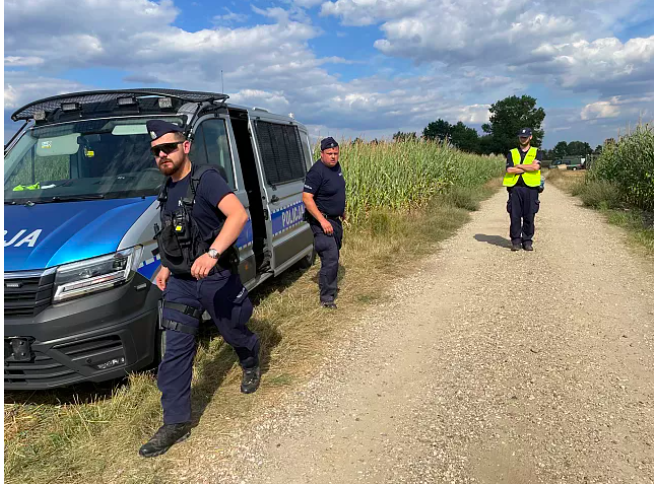
On Tuesday night, residents of the Lublin region were jolted when an unmanned aerial vehicle detonated in a cornfield. While no casualties were reported, the incident has sparked questions over Poland’s air defence capabilities and the extent of risk posed to civilians. According to military experts, the answer lies less in Poland’s preparedness and more in the enduring nature of the conflict next door.
“The Risk Remains Significant”
“If the conflict across our border continues, the risk of further incidents is significant,” said Andrzej Kiński, editor-in-chief of the defence magazine Wojsko i Technika, in an interview with Euronews. Kiński noted that while such incidents are alarming, the statistical threat to Polish civilians remains relatively low compared to everyday dangers such as road accidents.
“Of course, they should not be underestimated—every human life is priceless,” he said. “But the scale of the real danger is, so far, not large.”
Even so, the expert urged the public to adjust their expectations. As long as the war persists, weapons used by either side may stray into Polish territory—whether through technical failure, deliberate provocation, or sheer probability.
A Wider Regional Problem
Poland is not alone in grappling with this new reality. Since Russia’s full-scale invasion of Ukraine in 2022, multiple NATO members along the alliance’s eastern flank have reported similar incursions. In February 2024 and again in February 2025, Russian Shahed drones exploded in Moldova. In September 2024, drones breached the airspace of Latvia and Romania.
As Lithuanian Foreign Minister Gabrielius Landsbergis bluntly stated on social media: “Incidents unthinkable three years ago are now treated as routine. Nothing should land in Ukraine, Latvia or anywhere on NATO territory, but this is a new reality made possible by our inaction.”
The comment underscores growing unease that accidental or intentional violations of NATO airspace could trigger wider consequences.
Why Polish Radars Missed the Drone
A pressing question after the Osiny explosion is why Poland’s sophisticated radar and air defence systems failed to detect the drone. Major General Dariusz Malinowski, deputy commander of the Operational Command of the Armed Forces, suggested the UAV was designed to evade detection, likely flying at very low altitude.
Kiński supported this explanation, adding that Poland’s radar coverage in peacetime is not continuous below 3,000 meters. In crisis conditions, additional stations can extend coverage down to 500 meters, but gaps remain.
“Our eastern border stretches more than 900 kilometres,” he explained. “It is simply not possible to cover this entire belt and detect all targets flying as low as 10 meters.”
There are also health-related limitations to radar deployment. “These radars emit strong microwave radiation, harmful to humans and livestock if exposure is prolonged,” Kiński said. “That is why they are not placed everywhere, but carefully positioned for both safety and optimal observation.”
Can New Systems Help?
In May 2024, Poland signed a $960 million contract for the BARBARA radio-telemetry aerostat system, scheduled for deployment in 2027. The system would consist of four tethered aerostats along Poland’s eastern borders, each capable of monitoring objects up to 300 kilometres away.
While heralded as a significant enhancement to Poland’s early-warning capabilities, Kiński expressed skepticism about its wartime effectiveness.
“It is a peacetime system, very useful for observation and warning,” he said. “But in an active conflict, it would be among the first targets to be destroyed. Its location is known, and neutralising it would not be difficult.”
Lack of Transparency in Past Incidents
Another source of frustration is the limited information shared publicly about past drone and missile incidents. The expert doubted whether the Osiny case would ever be fully explained.
“No official report was published about the Przewodów incident of November 2022, nor about the rocket remains found near Bydgoszcz in April 2023,” Kiński noted. “We rely on what politicians decide to tell us, since the military is bound by those directives.”
Poland’s Role in the Conflict
Despite not being a combatant, Poland remains deeply exposed to the war’s consequences. It hosts key logistics hubs for Western military aid to Ukraine, including the critical transport base in Rzeszów. The country has also taken in millions of Ukrainian refugees and provides continuous humanitarian assistance.
This proximity increases the likelihood of spillover from Russian attacks on Ukrainian targets near the border. “Large Ukrainian cities close to Poland contain critical infrastructure and military facilities,” Kiński explained. “When they are attacked, it raises the chance of violations of Polish airspace—sometimes accidental, sometimes not.”
NATO’s Response
The Osiny explosion also prompted a statement from NATO Secretary General Mark Rutte, who expressed solidarity with Poland during a joint press conference with Ukrainian President Volodymyr Zelensky.
“Without revealing details, I can confirm that NATO is closely monitoring the situation,” Rutte said. “Our Polish colleagues will respond appropriately. Please have no doubt about that.”
A Reality to Endure
For now, Poland and its neighbours must accept the unsettling fact that drone incidents are likely to persist. As Kiński put it, “Weapons used in war may appear on our territory. The only question is whether it happens by accident or by design.”
Until the war in Ukraine comes to an end, Eastern Europe—and Poland in particular—will remain on the frontline of risk, caught between its role as NATO’s shield and the unpredictability of modern warfare.
Looking Forward
As Poland continues to strengthen its air defence and prepare for future incidents, the coming years will be critical in balancing security measures with public reassurance. The deployment of new technologies such as the BARBARA aerostat system may help expand early warning capabilities, but their effectiveness in wartime conditions remains uncertain.
Much will also depend on NATO’s continued support and coordination across the Alliance’s eastern flank. With incidents spilling over into Moldova, Romania, Latvia, and now Poland, the pressure for a unified and decisive response will only grow. For ordinary citizens, awareness and preparedness will become part of daily life as the war next door continues to cast a shadow.
If the conflict in Ukraine stretches on, drone incursions and cross-border threats are likely to become more frequent — and managing their impact without escalating tensions will remain one of Poland’s greatest challenges.
Conclusion
The explosion of a drone in Osiny is yet another reminder of the dangers Poland faces as long as the war in Ukraine rages on. Experts agree that while the scale of civilian risk remains limited compared to the battlefield, the likelihood of future incidents cannot be dismissed. With gaps in radar coverage, the vulnerability of peacetime defence systems, and the proximity of critical Ukrainian targets to Poland’s border, the country remains exposed to accidental or deliberate spillovers from the conflict.
As Andrzej Kiński and other defence specialists warn, the Polish public must come to terms with this new reality—living next to a war means unpredictable threats, even if their scale is relatively small. NATO’s reassurances and planned upgrades to defence infrastructure offer some comfort, but they cannot fully eliminate the risks. Until the war ends, drone intrusions and similar incidents will continue to test Poland’s security, resilience, and ability to balance vigilance with calm.
Meta Description:
A drone explosion in Osiny highlights Poland’s vulnerability to cross-border incidents from the Ukraine war. Experts warn such threats will continue until the conflict ends, despite NATO support and new defence systems.
Expert Warns Drone Incidents in Poland Will Persist as Long as War Across the Border Continues
The explosion of a drone in the Polish village of Osiny this week has reignited concerns over the country’s vulnerability to cross-border incidents stemming from Russia’s ongoing war in Ukraine. For many in Poland, the reality that weapons of war could intrude into their daily lives is no longer a theoretical possibility but a recurring and unsettling pattern.
On Tuesday night, residents of the Lublin region were jolted when an unmanned aerial vehicle detonated in a cornfield. While no casualties were reported, the incident has sparked questions over Poland’s air defence capabilities and the extent of risk posed to civilians. According to military experts, the answer lies less in Poland’s preparedness and more in the enduring nature of the conflict next door.
Register for Tekedia Mini-MBA edition 20 (June 8 – Sept 5, 2026).
Register for Tekedia AI in Business Masterclass.
Join Tekedia Capital Syndicate and co-invest in great global startups.
Register for Tekedia AI Lab.
“The Risk Remains Significant”
“If the conflict across our border continues, the risk of further incidents is significant,” said Andrzej Kiński, editor-in-chief of the defence magazine Wojsko i Technika, in an interview with Euronews. Kiński noted that while such incidents are alarming, the statistical threat to Polish civilians remains relatively low compared to everyday dangers such as road accidents.
“Of course, they should not be underestimated—every human life is priceless,” he said. “But the scale of the real danger is, so far, not large.”

Even so, the expert urged the public to adjust their expectations. As long as the war persists, weapons used by either side may stray into Polish territory—whether through technical failure, deliberate provocation, or sheer probability.
A Wider Regional Problem
Poland is not alone in grappling with this new reality. Since Russia’s full-scale invasion of Ukraine in 2022, multiple NATO members along the alliance’s eastern flank have reported similar incursions. In February 2024 and again in February 2025, Russian Shahed drones exploded in Moldova. In September 2024, drones breached the airspace of Latvia and Romania.

As Lithuanian Foreign Minister Gabrielius Landsbergis bluntly stated on social media: “Incidents unthinkable three years ago are now treated as routine. Nothing should land in Ukraine, Latvia or anywhere on NATO territory, but this is a new reality made possible by our inaction.”
The comment underscores growing unease that accidental or intentional violations of NATO airspace could trigger wider consequences.
Why Polish Radars Missed the Drone
A pressing question after the Osiny explosion is why Poland’s sophisticated radar and air defence systems failed to detect the drone. Major General Dariusz Malinowski, deputy commander of the Operational Command of the Armed Forces, suggested the UAV was designed to evade detection, likely flying at very low altitude.
Kiński supported this explanation, adding that Poland’s radar coverage in peacetime is not continuous below 3,000 meters. In crisis conditions, additional stations can extend coverage down to 500 meters, but gaps remain.
“Our eastern border stretches more than 900 kilometres,” he explained. “It is simply not possible to cover this entire belt and detect all targets flying as low as 10 meters.”
There are also health-related limitations to radar deployment. “These radars emit strong microwave radiation, harmful to humans and livestock if exposure is prolonged,” Kiński said. “That is why they are not placed everywhere, but carefully positioned for both safety and optimal observation.”
Can New Systems Help?
In May 2024, Poland signed a $960 million contract for the BARBARA radio-telemetry aerostat system, scheduled for deployment in 2027. The system would consist of four tethered aerostats along Poland’s eastern borders, each capable of monitoring objects up to 300 kilometres away.
While heralded as a significant enhancement to Poland’s early-warning capabilities, Kiński expressed skepticism about its wartime effectiveness.
“It is a peacetime system, very useful for observation and warning,” he said. “But in an active conflict, it would be among the first targets to be destroyed. Its location is known, and neutralising it would not be difficult.”
Lack of Transparency in Past Incidents
Another source of frustration is the limited information shared publicly about past drone and missile incidents. The expert doubted whether the Osiny case would ever be fully explained.
“No official report was published about the Przewodów incident of November 2022, nor about the rocket remains found near Bydgoszcz in April 2023,” Kiński noted. “We rely on what politicians decide to tell us, since the military is bound by those directives.”
Poland’s Role in the Conflict
Despite not being a combatant, Poland remains deeply exposed to the war’s consequences. It hosts key logistics hubs for Western military aid to Ukraine, including the critical transport base in Rzeszów. The country has also taken in millions of Ukrainian refugees and provides continuous humanitarian assistance.
This proximity increases the likelihood of spillover from Russian attacks on Ukrainian targets near the border. “Large Ukrainian cities close to Poland contain critical infrastructure and military facilities,” Kiński explained. “When they are attacked, it raises the chance of violations of Polish airspace—sometimes accidental, sometimes not.”
NATO’s Response
The Osiny explosion also prompted a statement from NATO Secretary General Mark Rutte, who expressed solidarity with Poland during a joint press conference with Ukrainian President Volodymyr Zelensky.
“Without revealing details, I can confirm that NATO is closely monitoring the situation,” Rutte said. “Our Polish colleagues will respond appropriately. Please have no doubt about that.”
A Reality to Endure
For now, Poland and its neighbours must accept the unsettling fact that drone incidents are likely to persist. As Kiński put it, “Weapons used in war may appear on our territory. The only question is whether it happens by accident or by design.”
Until the war in Ukraine comes to an end, Eastern Europe—and Poland in particular—will remain on the frontline of risk, caught between its role as NATO’s shield and the unpredictability of modern warfare.
Looking Forward
As Poland continues to strengthen its air defence and prepare for future incidents, the coming years will be critical in balancing security measures with public reassurance. The deployment of new technologies such as the BARBARA aerostat system may help expand early warning capabilities, but their effectiveness in wartime conditions remains uncertain.
Much will also depend on NATO’s continued support and coordination across the Alliance’s eastern flank. With incidents spilling over into Moldova, Romania, Latvia, and now Poland, the pressure for a unified and decisive response will only grow. For ordinary citizens, awareness and preparedness will become part of daily life as the war next door continues to cast a shadow.
If the conflict in Ukraine stretches on, drone incursions and cross-border threats are likely to become more frequent — and managing their impact without escalating tensions will remain one of Poland’s greatest challenges.
Conclusion
The explosion of a drone in Osiny is yet another reminder of the dangers Poland faces as long as the war in Ukraine rages on. Experts agree that while the scale of civilian risk remains limited compared to the battlefield, the likelihood of future incidents cannot be dismissed. With gaps in radar coverage, the vulnerability of peacetime defence systems, and the proximity of critical Ukrainian targets to Poland’s border, the country remains exposed to accidental or deliberate spillovers from the conflict.
As Andrzej Kiński and other defence specialists warn, the Polish public must come to terms with this new reality—living next to a war means unpredictable threats, even if their scale is relatively small. NATO’s reassurances and planned upgrades to defence infrastructure offer some comfort, but they cannot fully eliminate the risks. Until the war ends, drone intrusions and similar incidents will continue to test Poland’s security, resilience, and ability to balance vigilance with calm.
Meta Description:
A drone explosion in Osiny highlights Poland’s vulnerability to cross-border incidents from the Ukraine war. Experts warn such threats will continue until the conflict ends, despite NATO support and new defence systems.
Share this:
- Click to share on Facebook (Opens in new window) Facebook
- Click to share on X (Opens in new window) X
- Click to share on WhatsApp (Opens in new window) WhatsApp
- Click to share on LinkedIn (Opens in new window) LinkedIn
- Click to email a link to a friend (Opens in new window) Email
- Click to print (Opens in new window) Print