

Polish Far-Right Politician Quits Konfederacja After Announcing Relationship with Intersex Model

Quote from Alex Bobby on September 3, 2025, 4:03 AM
Polish Far-Right Politician Leaves Konfederacja After Announcing Relationship with Intersex Woman
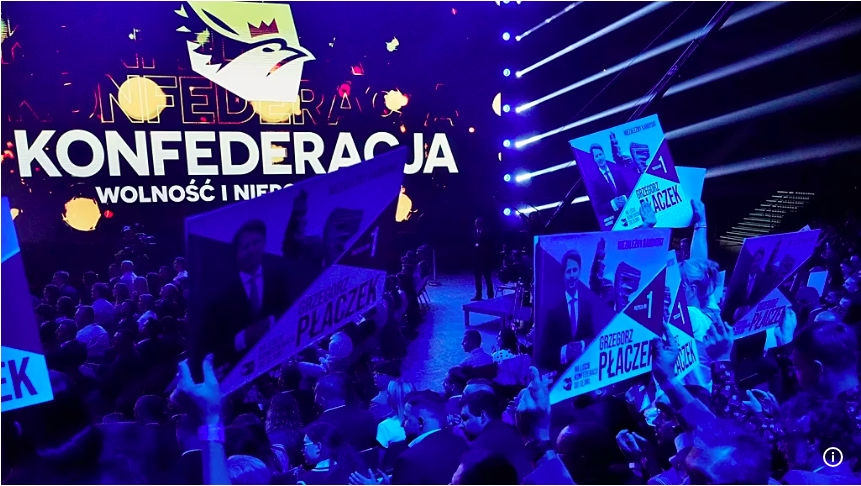
In a move that has sent shockwaves through Poland’s political landscape, Dawid Szóstak, a rising figure in the country’s far-right Konfederacja (Confederation) party, has announced he is stepping down from the movement. The announcement followed revelations of his relationship with Michalina Manios, a model and public figure who is intersex.
The couple confirmed their relationship in a joint interview with the Polish daily Gazeta Wyborcza, saying they want to “focus on what’s important” rather than political battles. Their union—and Szóstak’s decision to leave one of Poland’s most hardline parties—has ignited widespread debate about love, identity, and the contradictions within Poland’s right-wing politics.
A Love Story Beyond Politics
Szóstak and Manios said they met through an online platform, where Szóstak was drawn to her energy and the femininity reflected in her photographs.
“I liked the photos Michalina posted,” Szóstak told Gazeta Wyborcza. “They radiated a lot of energy and femininity.”
What began as online admiration soon developed into an emotional bond. “Everything happened quite naturally. We became a couple,” Manios explained. “We have respect and understanding for each other.”
Despite their unusual pairing in the context of Polish politics, the couple emphasised the values they share: their Catholic faith, their respect for traditions, and their mutual commitment to one another. For Szóstak, the relationship is not a political statement but a personal journey—yet it has profound political implications.
Who Is Michalina Manios?
Manios is no stranger to the spotlight. She rose to national fame in 2011 when she appeared on Zostań modelką (Top Model), Poland’s version of the popular reality TV modeling competition. During the show, she spoke candidly about being born intersex and the struggles of her youth.
Raised as a boy until the age of 18, Manios described her early years as living “in prison.” She recalled feeling deeply out of place, saying:
“Functionally, I developed as a woman, but unfortunately, I was assigned a male identity, not any other. My body and mind developed toward femininity, but my genitals didn’t. I was ashamed to go to physical education classes because I was embarrassed.”
At 18, she legally transitioned to being recognized as a woman and later moved to Sweden, where she pursued studies in philology and psychology. Today, she divides her time between Sweden and Poland, balancing her academic interests with public appearances.
Szóstak’s Rise and Fall in Konfederacja
Before this dramatic exit, Dawid Szóstak was the leader of Konfederacja in Katowice and had attempted, unsuccessfully, to win a seat in the Polish parliament. His departure marks a rare break in a party known for its rigid ideological discipline.
Konfederacja, founded in 2018, has established itself as one of Poland’s most extreme political forces. With roots in ultranationalism and libertarian economics, the party combines hard-right social conservatism with hostility to the European Union. Its leader, Sławomir Mentzen, once summarised the party’s agenda bluntly: “We stand against Jews, homosexuals, abortion, taxes, and also the European Union!”
Szóstak’s announcement comes at a time when Konfederacja is increasingly influential. In Poland’s most recent presidential election, over 50% of voters supported right-wing candidates, with Mentzen himself taking 14.8% of the vote and gaining traction among younger Poles.
The Contradiction at the Heart of the Story
For many observers, Szóstak’s relationship with Manios is more than a personal decision—it exposes the contradictions within Poland’s far-right politics. A party that thrives on rigid definitions of gender, identity, and tradition is now seeing one of its own walk away to embrace a life that defies those boundaries.
Dr. Olgierd Annusewicz, a political scientist at the University of Warsaw, told Euronews earlier this year that Konfederacja’s success with young people has less to do with its ideology and more with its anti-system image. “Not necessarily because of the views he preaches, but because, firstly, he is anti-system, and young people very often do not like the system, they do not like the state and its institutions. But also simply because he seemed cool to them.”
Yet, for a movement that has positioned itself against LGBTQ+ rights and “non-traditional” identities, the revelation of Szóstak’s partnership with an intersex woman undermines its ideological purity. His resignation spares the party a scandal, but it also raises questions about whether such rigid stances can endure in a society where personal stories like Manios’s are increasingly visible.
Manios as a Symbol of Change
Michalina Manios’s life story resonates with many Poles who feel marginalised by traditional structures. By speaking openly about her intersex identity and the struggles she faced growing up, she has become an emblem of resilience and authenticity.
Her relationship with Szóstak, a man once embedded in Poland’s hard-right, serves as a powerful narrative of change—both personal and political. While she insists that their relationship is grounded in love and mutual respect rather than politics, it inevitably challenges the narratives that Konfederacja and similar parties seek to uphold.
Wider Implications
The Szóstak-Manios relationship is not just a human-interest story; it reflects broader cultural and political shifts in Poland and Europe. As far-right movements gain ground across the continent, they are forced to grapple with the realities of diverse identities within their own ranks.
For Konfederacja, Szóstak’s departure may be seen as a minor loss, but the symbolism is harder to ignore. It suggests that even those drawn to the far-right’s promises of order and tradition are not immune to the complexities of modern life and love.
Final Thought / Looking Forward:
As Dawid Szóstak and Michalina Manios choose to step away from political noise to focus on their relationship, their story could mark a cultural turning point. Looking forward, it may prompt deeper conversations in Poland about identity, faith, and tradition—challenging rigid political dogmas with the more universal language of love and human connection.Conclusion: Love Versus Ideology
Dawid Szóstak’s decision to leave Konfederacja after revealing his relationship with Michalina Manios highlights the tension between rigid ideology and human experience. For Szóstak and Manios, the choice is simple: to focus on love, faith, and personal fulfilment. For the political establishment he left behind, the message is more complicated: the world is changing, and the black-and-white boundaries of far-right politics may not be able to contain it.
In the end, the couple’s story serves as both a challenge and an inspiration. It challenges entrenched political dogmas while inspiring those who believe in the transformative power of love, even in the most unlikely places.
Meta Description:
Former Konfederacja member Dawid Szóstak left Poland’s far-right party after revealing his relationship with intersex model Michalina Manios. Their story challenges rigid ideologies.
Polish Far-Right Politician Leaves Konfederacja After Announcing Relationship with Intersex Woman
In a move that has sent shockwaves through Poland’s political landscape, Dawid Szóstak, a rising figure in the country’s far-right Konfederacja (Confederation) party, has announced he is stepping down from the movement. The announcement followed revelations of his relationship with Michalina Manios, a model and public figure who is intersex.
The couple confirmed their relationship in a joint interview with the Polish daily Gazeta Wyborcza, saying they want to “focus on what’s important” rather than political battles. Their union—and Szóstak’s decision to leave one of Poland’s most hardline parties—has ignited widespread debate about love, identity, and the contradictions within Poland’s right-wing politics.
Register for Tekedia Mini-MBA edition 20 (June 8 – Sept 5, 2026).
Register for Tekedia AI in Business Masterclass.
Join Tekedia Capital Syndicate and co-invest in great global startups.
Register for Tekedia AI Lab.
A Love Story Beyond Politics
Szóstak and Manios said they met through an online platform, where Szóstak was drawn to her energy and the femininity reflected in her photographs.
“I liked the photos Michalina posted,” Szóstak told Gazeta Wyborcza. “They radiated a lot of energy and femininity.”

What began as online admiration soon developed into an emotional bond. “Everything happened quite naturally. We became a couple,” Manios explained. “We have respect and understanding for each other.”
Despite their unusual pairing in the context of Polish politics, the couple emphasised the values they share: their Catholic faith, their respect for traditions, and their mutual commitment to one another. For Szóstak, the relationship is not a political statement but a personal journey—yet it has profound political implications.
Who Is Michalina Manios?

Manios is no stranger to the spotlight. She rose to national fame in 2011 when she appeared on Zostań modelką (Top Model), Poland’s version of the popular reality TV modeling competition. During the show, she spoke candidly about being born intersex and the struggles of her youth.
Raised as a boy until the age of 18, Manios described her early years as living “in prison.” She recalled feeling deeply out of place, saying:
“Functionally, I developed as a woman, but unfortunately, I was assigned a male identity, not any other. My body and mind developed toward femininity, but my genitals didn’t. I was ashamed to go to physical education classes because I was embarrassed.”
At 18, she legally transitioned to being recognized as a woman and later moved to Sweden, where she pursued studies in philology and psychology. Today, she divides her time between Sweden and Poland, balancing her academic interests with public appearances.
Szóstak’s Rise and Fall in Konfederacja
Before this dramatic exit, Dawid Szóstak was the leader of Konfederacja in Katowice and had attempted, unsuccessfully, to win a seat in the Polish parliament. His departure marks a rare break in a party known for its rigid ideological discipline.
Konfederacja, founded in 2018, has established itself as one of Poland’s most extreme political forces. With roots in ultranationalism and libertarian economics, the party combines hard-right social conservatism with hostility to the European Union. Its leader, Sławomir Mentzen, once summarised the party’s agenda bluntly: “We stand against Jews, homosexuals, abortion, taxes, and also the European Union!”
Szóstak’s announcement comes at a time when Konfederacja is increasingly influential. In Poland’s most recent presidential election, over 50% of voters supported right-wing candidates, with Mentzen himself taking 14.8% of the vote and gaining traction among younger Poles.
The Contradiction at the Heart of the Story
For many observers, Szóstak’s relationship with Manios is more than a personal decision—it exposes the contradictions within Poland’s far-right politics. A party that thrives on rigid definitions of gender, identity, and tradition is now seeing one of its own walk away to embrace a life that defies those boundaries.
Dr. Olgierd Annusewicz, a political scientist at the University of Warsaw, told Euronews earlier this year that Konfederacja’s success with young people has less to do with its ideology and more with its anti-system image. “Not necessarily because of the views he preaches, but because, firstly, he is anti-system, and young people very often do not like the system, they do not like the state and its institutions. But also simply because he seemed cool to them.”
Yet, for a movement that has positioned itself against LGBTQ+ rights and “non-traditional” identities, the revelation of Szóstak’s partnership with an intersex woman undermines its ideological purity. His resignation spares the party a scandal, but it also raises questions about whether such rigid stances can endure in a society where personal stories like Manios’s are increasingly visible.
Manios as a Symbol of Change
Michalina Manios’s life story resonates with many Poles who feel marginalised by traditional structures. By speaking openly about her intersex identity and the struggles she faced growing up, she has become an emblem of resilience and authenticity.
Her relationship with Szóstak, a man once embedded in Poland’s hard-right, serves as a powerful narrative of change—both personal and political. While she insists that their relationship is grounded in love and mutual respect rather than politics, it inevitably challenges the narratives that Konfederacja and similar parties seek to uphold.
Wider Implications
The Szóstak-Manios relationship is not just a human-interest story; it reflects broader cultural and political shifts in Poland and Europe. As far-right movements gain ground across the continent, they are forced to grapple with the realities of diverse identities within their own ranks.
For Konfederacja, Szóstak’s departure may be seen as a minor loss, but the symbolism is harder to ignore. It suggests that even those drawn to the far-right’s promises of order and tradition are not immune to the complexities of modern life and love.
Final Thought / Looking Forward:
As Dawid Szóstak and Michalina Manios choose to step away from political noise to focus on their relationship, their story could mark a cultural turning point. Looking forward, it may prompt deeper conversations in Poland about identity, faith, and tradition—challenging rigid political dogmas with the more universal language of love and human connection.
Conclusion: Love Versus Ideology
Dawid Szóstak’s decision to leave Konfederacja after revealing his relationship with Michalina Manios highlights the tension between rigid ideology and human experience. For Szóstak and Manios, the choice is simple: to focus on love, faith, and personal fulfilment. For the political establishment he left behind, the message is more complicated: the world is changing, and the black-and-white boundaries of far-right politics may not be able to contain it.
In the end, the couple’s story serves as both a challenge and an inspiration. It challenges entrenched political dogmas while inspiring those who believe in the transformative power of love, even in the most unlikely places.
Meta Description:
Former Konfederacja member Dawid Szóstak left Poland’s far-right party after revealing his relationship with intersex model Michalina Manios. Their story challenges rigid ideologies.
Share this:
- Click to share on Facebook (Opens in new window) Facebook
- Click to share on X (Opens in new window) X
- Click to share on WhatsApp (Opens in new window) WhatsApp
- Click to share on LinkedIn (Opens in new window) LinkedIn
- Click to email a link to a friend (Opens in new window) Email
- Click to print (Opens in new window) Print