

Rice, Curries and Dal: Inside India’s Garbage Café Where Plastic Pays for Food

Quote from Alex Bobby on August 20, 2025, 3:00 AM
Rice, Two Curries and Dal: Inside India’s Garbage Cafes Where Plastic Pays for Food
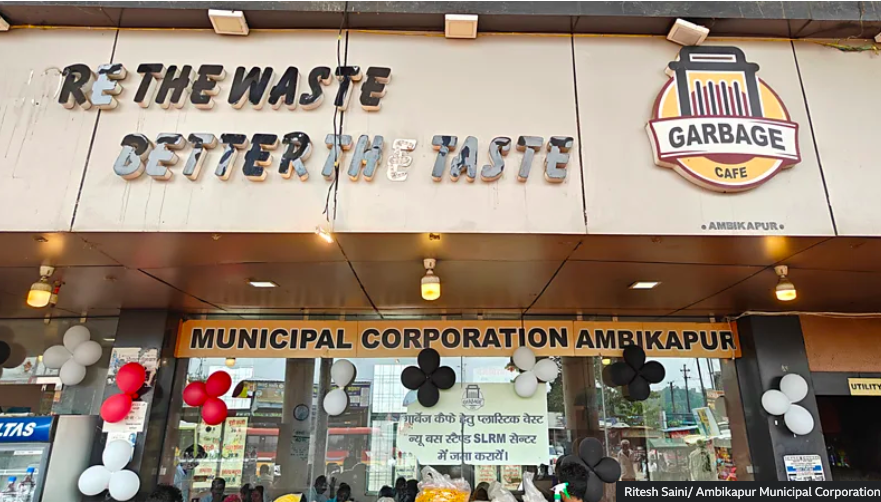
On a foggy morning in Ambikapur, a city tucked away in India’s Chhattisgarh state, the scent of frying samosas drifts through the air, inviting passersby to step into a small café near the bus stand. Inside, men and women sit on wooden benches, holding steaming steel plates filled with rice, two curries, dal, roti, salad, and pickles. But unlike any other eatery, money is not the currency here. Plastic is.
Welcome to India’s first Garbage Café—an initiative that began in 2019 with a simple slogan: “More the waste, better the taste.” In this café, one kilogram of collected plastic waste earns a full hot meal, while half a kilogram fetches breakfast items like vada pav or samosas. For many of Ambikapur’s poorest residents, it’s more than just food on the table—it’s survival.
Tackling Hunger and Pollution, One Meal at a Time
The idea was born out of two pressing problems: plastic waste and hunger. Ambikapur, once struggling with mountains of unmanaged garbage, wanted to transform waste management into an opportunity. The Ambikapur Municipal Corporation (AMC) launched the café to encourage ragpickers, homeless residents, and low-income families to collect plastic waste in exchange for nutritious meals.
“For us, plastic is money,” says Vinod Kumar Patel, who manages the café on behalf of AMC. “It helps clean the city and feeds the hungry.”
Every day, around 20–30 people turn up with bundles of discarded plastic bags, bottles, and food wrappers. One of them is Rashmi Mondal, who has been picking plastic off the streets for years.
“Earlier, I sold plastic to scrap dealers for barely ten rupees a kilo,” she explains. “Now, the plastic I collect feeds my family. It makes all the difference in our lives.”
Ambikapur’s Journey to Zero Landfill
Ambikapur’s Garbage Café is just one piece of a larger puzzle. The city has worked tirelessly to reduce its waste footprint, turning its reputation around to become one of the cleanest cities in India.
Once, Ambikapur generated nearly 45 tonnes of solid waste daily, much of which ended up in a sprawling 16-acre landfill. But in 2016, the dumping ground was converted into a park. The city shifted to a decentralized waste system, with 20 specialised centres (known as SLRMs) handling waste sorting and recycling.
At these centres, waste is segregated into more than 60 categories by 480 swachhata didis—women known as “cleanliness sisters.” Their work not only keeps plastic out of landfills but also provides them with steady incomes of around 8,000–10,000 rupees a month.
The results speak for themselves. Since 2019, Ambikapur’s Garbage Café alone has collected nearly 23 tonnes of plastic. Overall, landfill plastic has dropped from 5.4 tonnes a year in 2019 to just 2 tonnes in 2024.
The Wider Impact—and Its Limitations
The plastic collected at the café doesn’t go to waste. Instead, it is recycled into granules for road construction or sold to recyclers, generating income for the municipality. Wet waste is composted, while non-recyclable plastics are used as fuel in cement factories.
Ritesh Saini, who coordinates sanitation efforts under India’s Swachh Bharat Mission, sees the Garbage Café as both practical and symbolic. “It helps bring public participation into waste management,” he says. “It also gives dignity to ragpickers and vulnerable groups who are part of the city’s ecosystem.”
Yet, challenges remain. Delhi, which attempted to replicate the model with over 20 garbage cafés in 2020, has seen most of them close due to lack of awareness, poor waste segregation, and weak recycling support. Outside India, Cambodia has adopted similar programmes around Tonle Sap Lake, allowing people to exchange plastic for rice.
Experts caution that while such schemes are innovative, they don’t tackle the root causes of the plastic crisis—such as overproduction and widespread use of non-recyclable plastics. Environmental researcher Pathak argues: “It’s more like a quick fix. We need systemic changes in how plastic is manufactured, consumed, and disposed of.”
More Than a Meal
Still, for Ambikapur’s residents, the Garbage Café represents far more than a symbolic gesture. It is a lifeline. For families like Rashmi Mondal’s, a bundle of discarded wrappers and bottles is no longer worthless—it is the guarantee of a hot, filling meal. For ragpickers, it transforms backbreaking, undervalued work into sustenance and dignity.
The initiative has also sparked broader awareness. Children now bring in plastic waste collected from their homes, workers stop by with small bags of discarded wrappers, and the city itself has taken pride in being recognised as a “zero landfill” leader in India.
As plastic pollution continues to choke cities and waterways worldwide, Ambikapur’s Garbage Café offers a glimpse of how local solutions can address global problems. It may not solve the plastic crisis on its own, but it demonstrates how waste, when reimagined, can nourish both people and communities.
Here’s a forward-looking ending you can use to close out the blog article:
Looking Forward
Ambikapur’s Garbage Café may be a single café in a small Indian city, but its success holds valuable lessons for the world. As more communities face the twin crises of waste and hunger, initiatives like this show that local innovation can spark global inspiration. The question now is whether other cities—both in India and abroad—can build on Ambikapur’s example, scaling it up with better infrastructure, wider awareness, and stronger policies to reduce plastic at its source.
If the journey from waste to food can begin with a simple steel plate of rice, curries, and dal in Ambikapur, there’s no reason it can’t travel further—helping reshape how we see both plastic and possibility.
Conclusion
The story of Ambikapur’s Garbage Café is one of creativity and resilience—turning two pressing challenges, hunger and plastic waste, into an opportunity for change. While its impact may be modest compared to the scale of India’s plastic problem, it has shown that innovation at the grassroots level can improve lives and clean up communities at the same time.
A plate of rice, two curries, and dal may not seem revolutionary. But when paid for in rubbish, it becomes a powerful statement: that even waste has value, and with the right vision, it can help feed both people and progress.
Meta Description:
Discover how Ambikapur’s Garbage Café in India is tackling hunger and plastic waste by letting people exchange rubbish for hot meals of rice, curries, and dal—an inspiring model of community innovation.
Rice, Two Curries and Dal: Inside India’s Garbage Cafes Where Plastic Pays for Food
On a foggy morning in Ambikapur, a city tucked away in India’s Chhattisgarh state, the scent of frying samosas drifts through the air, inviting passersby to step into a small café near the bus stand. Inside, men and women sit on wooden benches, holding steaming steel plates filled with rice, two curries, dal, roti, salad, and pickles. But unlike any other eatery, money is not the currency here. Plastic is.
Welcome to India’s first Garbage Café—an initiative that began in 2019 with a simple slogan: “More the waste, better the taste.” In this café, one kilogram of collected plastic waste earns a full hot meal, while half a kilogram fetches breakfast items like vada pav or samosas. For many of Ambikapur’s poorest residents, it’s more than just food on the table—it’s survival.
Register for Tekedia Mini-MBA edition 20 (June 8 – Sept 5, 2026).
Register for Tekedia AI in Business Masterclass.
Join Tekedia Capital Syndicate and co-invest in great global startups.
Register for Tekedia AI Lab.
Tackling Hunger and Pollution, One Meal at a Time
The idea was born out of two pressing problems: plastic waste and hunger. Ambikapur, once struggling with mountains of unmanaged garbage, wanted to transform waste management into an opportunity. The Ambikapur Municipal Corporation (AMC) launched the café to encourage ragpickers, homeless residents, and low-income families to collect plastic waste in exchange for nutritious meals.
“For us, plastic is money,” says Vinod Kumar Patel, who manages the café on behalf of AMC. “It helps clean the city and feeds the hungry.”

Every day, around 20–30 people turn up with bundles of discarded plastic bags, bottles, and food wrappers. One of them is Rashmi Mondal, who has been picking plastic off the streets for years.
“Earlier, I sold plastic to scrap dealers for barely ten rupees a kilo,” she explains. “Now, the plastic I collect feeds my family. It makes all the difference in our lives.”
Ambikapur’s Journey to Zero Landfill

Ambikapur’s Garbage Café is just one piece of a larger puzzle. The city has worked tirelessly to reduce its waste footprint, turning its reputation around to become one of the cleanest cities in India.
Once, Ambikapur generated nearly 45 tonnes of solid waste daily, much of which ended up in a sprawling 16-acre landfill. But in 2016, the dumping ground was converted into a park. The city shifted to a decentralized waste system, with 20 specialised centres (known as SLRMs) handling waste sorting and recycling.
At these centres, waste is segregated into more than 60 categories by 480 swachhata didis—women known as “cleanliness sisters.” Their work not only keeps plastic out of landfills but also provides them with steady incomes of around 8,000–10,000 rupees a month.
The results speak for themselves. Since 2019, Ambikapur’s Garbage Café alone has collected nearly 23 tonnes of plastic. Overall, landfill plastic has dropped from 5.4 tonnes a year in 2019 to just 2 tonnes in 2024.
The Wider Impact—and Its Limitations
The plastic collected at the café doesn’t go to waste. Instead, it is recycled into granules for road construction or sold to recyclers, generating income for the municipality. Wet waste is composted, while non-recyclable plastics are used as fuel in cement factories.
Ritesh Saini, who coordinates sanitation efforts under India’s Swachh Bharat Mission, sees the Garbage Café as both practical and symbolic. “It helps bring public participation into waste management,” he says. “It also gives dignity to ragpickers and vulnerable groups who are part of the city’s ecosystem.”
Yet, challenges remain. Delhi, which attempted to replicate the model with over 20 garbage cafés in 2020, has seen most of them close due to lack of awareness, poor waste segregation, and weak recycling support. Outside India, Cambodia has adopted similar programmes around Tonle Sap Lake, allowing people to exchange plastic for rice.
Experts caution that while such schemes are innovative, they don’t tackle the root causes of the plastic crisis—such as overproduction and widespread use of non-recyclable plastics. Environmental researcher Pathak argues: “It’s more like a quick fix. We need systemic changes in how plastic is manufactured, consumed, and disposed of.”
More Than a Meal
Still, for Ambikapur’s residents, the Garbage Café represents far more than a symbolic gesture. It is a lifeline. For families like Rashmi Mondal’s, a bundle of discarded wrappers and bottles is no longer worthless—it is the guarantee of a hot, filling meal. For ragpickers, it transforms backbreaking, undervalued work into sustenance and dignity.
The initiative has also sparked broader awareness. Children now bring in plastic waste collected from their homes, workers stop by with small bags of discarded wrappers, and the city itself has taken pride in being recognised as a “zero landfill” leader in India.
As plastic pollution continues to choke cities and waterways worldwide, Ambikapur’s Garbage Café offers a glimpse of how local solutions can address global problems. It may not solve the plastic crisis on its own, but it demonstrates how waste, when reimagined, can nourish both people and communities.
Here’s a forward-looking ending you can use to close out the blog article:
Looking Forward
Ambikapur’s Garbage Café may be a single café in a small Indian city, but its success holds valuable lessons for the world. As more communities face the twin crises of waste and hunger, initiatives like this show that local innovation can spark global inspiration. The question now is whether other cities—both in India and abroad—can build on Ambikapur’s example, scaling it up with better infrastructure, wider awareness, and stronger policies to reduce plastic at its source.
If the journey from waste to food can begin with a simple steel plate of rice, curries, and dal in Ambikapur, there’s no reason it can’t travel further—helping reshape how we see both plastic and possibility.
Conclusion
The story of Ambikapur’s Garbage Café is one of creativity and resilience—turning two pressing challenges, hunger and plastic waste, into an opportunity for change. While its impact may be modest compared to the scale of India’s plastic problem, it has shown that innovation at the grassroots level can improve lives and clean up communities at the same time.
A plate of rice, two curries, and dal may not seem revolutionary. But when paid for in rubbish, it becomes a powerful statement: that even waste has value, and with the right vision, it can help feed both people and progress.
Meta Description:
Discover how Ambikapur’s Garbage Café in India is tackling hunger and plastic waste by letting people exchange rubbish for hot meals of rice, curries, and dal—an inspiring model of community innovation.
Uploaded files:Share this:
- Click to share on Facebook (Opens in new window) Facebook
- Click to share on X (Opens in new window) X
- Click to share on WhatsApp (Opens in new window) WhatsApp
- Click to share on LinkedIn (Opens in new window) LinkedIn
- Click to email a link to a friend (Opens in new window) Email
- Click to print (Opens in new window) Print