

Skeleton of Medieval Knight Dubbed ‘Gdańsk Lancelot’ Found Beneath Former Ice Cream Parlour

Quote from Alex Bobby on July 28, 2025, 6:47 AM
‘Gdańsk Lancelot’: Skeleton of Medieval Knight Found Under Former Ice Cream Parlour in Poland
Beneath the sweet memories of ice cream cones and childhood summers, a tale of steel, honour, and medieval history has emerged from the heart of Gdańsk. Archaeologists in Poland have made a remarkable discovery under the former site of the beloved "Teddy" ice cream parlour—an almost perfectly preserved skeleton of a 13th-century knight, already nicknamed the "Gdańsk Lancelot."
A Sweet Past and a Surprising Find
The discovery was made in the city centre at the intersection of Sukiennicza and Grodzka Streets, a location known for its social vibrancy and, until 1962, the site of a popular pub and later an iconic ice cream parlour. The premises have since become part of a large-scale archaeological exploration project, revealing layers of Gdańsk’s ancient past.
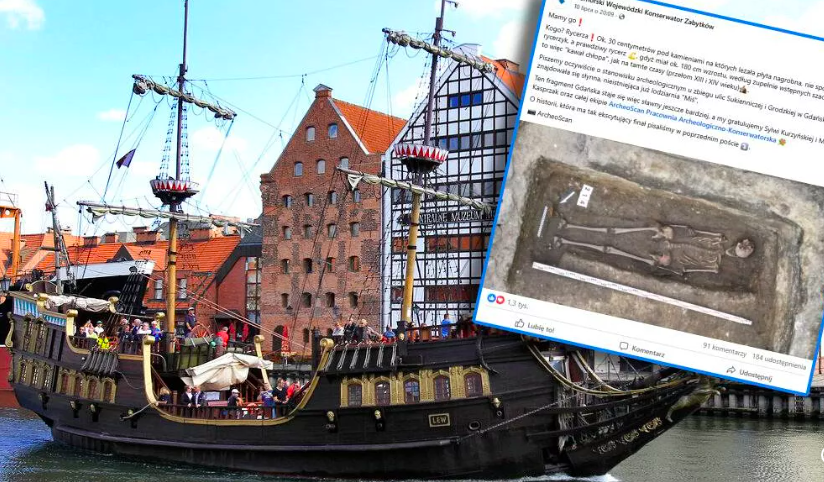
Earlier this July, archaeologists from ArcheoScan unearthed a decorated tombstone showing the image of a knight clad in chainmail, brandishing a sword on his right arm and a shield in his left. Just two days later, 30 cm below the stones, the team discovered the skeleton itself—lying undisturbed for over 700 years.
Not Just a Knight, But a True Warrior
According to preliminary assessments, the man buried beneath the stone was approximately 180 cm tall—a height that stood out in medieval times. Experts from the office of the Pomeranian Regional Monument Conservator emphasised that this was not just any symbolic burial: “This was not a knight in name, but a real knight,” they noted.
The use of expensive Gotland limestone for the tombstone and the commanding posture depicted in the carving suggest that the man held a position of considerable importance. “Considering the value of the chainmail armour, the sword, and the very representation of the knight—upright with his sword raised—it is reasonable to believe he was likely a commander or someone of special recognition,” said archaeologist Sylwia Kurzyńska in an interview with the Polish Press Agency.
Who Was the Gdańsk Lancelot?
While the knight’s identity remains a mystery for now, the public has affectionately dubbed him the “Gdańsk Lancelot,” or “Danzig Lancelot” using the city’s historical German name. The name invokes images of noble deeds, medieval battles, and chivalric honour. Though Gdańsk was under the control of the Teutonic Knights in the 13th century, some researchers speculate that the knight could have been linked to the Sobieslaw dynasty—a ruling family influential in the city during the 11th and 12th centuries.
Experts are currently conducting further forensic and historical analysis on the remains to determine his origin, health, and cause of death. Isotope analysis may also help reveal where he grew up and what kind of diet he had—offering more clues to his social standing and identity.
Gdańsk’s Growing Medieval Map
This discovery adds to a growing list of significant medieval findings in Gdańsk since archaeological work in the area resumed in 2023. Among these is the rediscovery of a Teutonic castle that existed between 1335 and 1341 before being torn down by Gdańsk’s rebellious citizens in 1454. Remains of a wooden church from 1140 have also been found, along with fragments of what appears to be a densely built-up city street from the early medieval period.
These archaeological projects are painting a richer, more complex picture of Gdańsk’s evolution from a medieval stronghold to the bustling port city it is today.
A Knight’s Legacy Beneath the Stones
The story of the Gdańsk Lancelot is both poignant and powerful. While millions walked unknowingly above his resting place for decades—grabbing cones of vanilla and strawberry from the ‘Teddy’ parlour—his legacy remained buried, undisturbed but not forgotten.
This knight may have fought in brutal conflicts, commanded respect from his peers, and served under one of medieval Poland's most influential families. Now, centuries later, he has become a bridge between the past and the present, offering historians a glimpse into an era marked by feudal codes, territorial wars, and social transformation.
Final Thought:
The discovery of the ‘Gdańsk Lancelot’ reminds us that history is never far beneath our feet. From ice cream parlours to ancient battlefields, every corner of a city can hold untold stories waiting to be rediscovered.Conclusion
The unearthing of the ‘Gdańsk Lancelot’ beneath a former ice cream parlour is a stunning reminder of how the past often lies hidden just beneath the surface of our everyday lives. This extraordinary find not only sheds light on the life and stature of a medieval knight but also enriches the historical fabric of Gdańsk. As archaeologists continue to investigate his origins, the knight’s silent legacy continues to speak volumes—linking the city’s vibrant present with its storied and noble past.
Meta Description:
Archaeologists in Gdańsk have unearthed the skeleton of a 13th-century knight—dubbed the ‘Gdańsk Lancelot’—beneath a former ice cream parlour, shedding light on Poland’s medieval past.
‘Gdańsk Lancelot’: Skeleton of Medieval Knight Found Under Former Ice Cream Parlour in Poland
Beneath the sweet memories of ice cream cones and childhood summers, a tale of steel, honour, and medieval history has emerged from the heart of Gdańsk. Archaeologists in Poland have made a remarkable discovery under the former site of the beloved "Teddy" ice cream parlour—an almost perfectly preserved skeleton of a 13th-century knight, already nicknamed the "Gdańsk Lancelot."
A Sweet Past and a Surprising Find
Register for Tekedia Mini-MBA edition 20 (June 8 – Sept 5, 2026).
Register for Tekedia AI in Business Masterclass.
Join Tekedia Capital Syndicate and co-invest in great global startups.
Register for Tekedia AI Lab.
The discovery was made in the city centre at the intersection of Sukiennicza and Grodzka Streets, a location known for its social vibrancy and, until 1962, the site of a popular pub and later an iconic ice cream parlour. The premises have since become part of a large-scale archaeological exploration project, revealing layers of Gdańsk’s ancient past.
Earlier this July, archaeologists from ArcheoScan unearthed a decorated tombstone showing the image of a knight clad in chainmail, brandishing a sword on his right arm and a shield in his left. Just two days later, 30 cm below the stones, the team discovered the skeleton itself—lying undisturbed for over 700 years.
Not Just a Knight, But a True Warrior

According to preliminary assessments, the man buried beneath the stone was approximately 180 cm tall—a height that stood out in medieval times. Experts from the office of the Pomeranian Regional Monument Conservator emphasised that this was not just any symbolic burial: “This was not a knight in name, but a real knight,” they noted.
The use of expensive Gotland limestone for the tombstone and the commanding posture depicted in the carving suggest that the man held a position of considerable importance. “Considering the value of the chainmail armour, the sword, and the very representation of the knight—upright with his sword raised—it is reasonable to believe he was likely a commander or someone of special recognition,” said archaeologist Sylwia Kurzyńska in an interview with the Polish Press Agency.
Who Was the Gdańsk Lancelot?

While the knight’s identity remains a mystery for now, the public has affectionately dubbed him the “Gdańsk Lancelot,” or “Danzig Lancelot” using the city’s historical German name. The name invokes images of noble deeds, medieval battles, and chivalric honour. Though Gdańsk was under the control of the Teutonic Knights in the 13th century, some researchers speculate that the knight could have been linked to the Sobieslaw dynasty—a ruling family influential in the city during the 11th and 12th centuries.
Experts are currently conducting further forensic and historical analysis on the remains to determine his origin, health, and cause of death. Isotope analysis may also help reveal where he grew up and what kind of diet he had—offering more clues to his social standing and identity.
Gdańsk’s Growing Medieval Map
This discovery adds to a growing list of significant medieval findings in Gdańsk since archaeological work in the area resumed in 2023. Among these is the rediscovery of a Teutonic castle that existed between 1335 and 1341 before being torn down by Gdańsk’s rebellious citizens in 1454. Remains of a wooden church from 1140 have also been found, along with fragments of what appears to be a densely built-up city street from the early medieval period.
These archaeological projects are painting a richer, more complex picture of Gdańsk’s evolution from a medieval stronghold to the bustling port city it is today.
A Knight’s Legacy Beneath the Stones
The story of the Gdańsk Lancelot is both poignant and powerful. While millions walked unknowingly above his resting place for decades—grabbing cones of vanilla and strawberry from the ‘Teddy’ parlour—his legacy remained buried, undisturbed but not forgotten.
This knight may have fought in brutal conflicts, commanded respect from his peers, and served under one of medieval Poland's most influential families. Now, centuries later, he has become a bridge between the past and the present, offering historians a glimpse into an era marked by feudal codes, territorial wars, and social transformation.
Final Thought:
The discovery of the ‘Gdańsk Lancelot’ reminds us that history is never far beneath our feet. From ice cream parlours to ancient battlefields, every corner of a city can hold untold stories waiting to be rediscovered.
Conclusion
The unearthing of the ‘Gdańsk Lancelot’ beneath a former ice cream parlour is a stunning reminder of how the past often lies hidden just beneath the surface of our everyday lives. This extraordinary find not only sheds light on the life and stature of a medieval knight but also enriches the historical fabric of Gdańsk. As archaeologists continue to investigate his origins, the knight’s silent legacy continues to speak volumes—linking the city’s vibrant present with its storied and noble past.
Meta Description:
Archaeologists in Gdańsk have unearthed the skeleton of a 13th-century knight—dubbed the ‘Gdańsk Lancelot’—beneath a former ice cream parlour, shedding light on Poland’s medieval past.
Share this:
- Click to share on Facebook (Opens in new window) Facebook
- Click to share on X (Opens in new window) X
- Click to share on WhatsApp (Opens in new window) WhatsApp
- Click to share on LinkedIn (Opens in new window) LinkedIn
- Click to email a link to a friend (Opens in new window) Email
- Click to print (Opens in new window) Print