

Western Leaders Condemn Videos of Emaciated Israeli Hostages, Red Cross Urges Access

Quote from Alex Bobby on August 4, 2025, 3:04 AM
Western leaders and humanitarian organisations have condemned the recent release of distressing videos showing emaciated Israeli hostages held by Palestinian armed groups in Gaza. The footage, released separately by the Palestinian Islamic Jihad and Hamas, has intensified global concern over the condition of the remaining hostages and reignited urgent calls for their immediate release.
UK Foreign Secretary David Lammy reacted sharply to the videos, stating that “images of hostages being paraded for propaganda are sickening.” He reiterated the demand that the hostages be “released unconditionally.” These sentiments were echoed by other Western officials, who called the treatment of the captives a violation of international humanitarian norms.
The international outcry was triggered after two separate videos were released last week. On Thursday, the Palestinian Islamic Jihad released footage of Rom Braslavski, a 21-year-old hostage, appearing gaunt, disoriented, and weeping. In the video, Braslavski says he has not eaten in days, having consumed only a few “crumbs of falafel,” and he describes himself as being “at death’s door.”
Just days later, on Saturday, Hamas released a similar video of Evyatar David, a 24-year-old hostage also taken during the October 7, 2023, attack on the Nova music festival in southern Israel. David, too, appears visibly malnourished and weak.
Both young men were among the 251 hostages captured during the Hamas-led assault that sparked the ongoing conflict. Of those, 49 are believed to still be held in Gaza, with 27 presumed dead, according to Israeli authorities.
International Red Cross: “Appalled” by Evidence of Hostage Conditions
In response to the videos, the International Committee of the Red Cross (ICRC) issued a rare and strongly worded statement, saying it was “appalled” by the visual evidence of the deteriorating health of the hostages. The organisation stressed that the footage “confirms the life-threatening conditions in which hostages are being held.”
The ICRC renewed its long-standing call for access to all hostages, demanding the ability to assess their medical needs, offer urgent care, and facilitate communication with their families. The Red Cross emphasised that access to captives in conflict zones is a basic requirement under international humanitarian law, though it depends on the cooperation of all parties involved.
Israeli Prime Minister Benjamin Netanyahu responded swiftly, calling the images “heartbreaking” and “profoundly shocking.” He spoke personally with the families of the two hostages, pledging that efforts to bring them home are ongoing and will be pursued “constantly and relentlessly.” On Sunday, Netanyahu also reached out to the Red Cross leadership, urging immediate intervention to ensure the delivery of food and medical assistance to hostages in Gaza.
Hamas Denies Starvation Claims Amid Growing Scrutiny
Hamas’s armed wing, the Al-Qassam Brigades, responded to the criticism by denying accusations that hostages were being deliberately starved. In a statement, the group claimed that prisoners receive the same food as fighters and civilians, amid an ongoing hunger crisis in the Gaza Strip caused by months of conflict and limited humanitarian aid.
The group said it was open to allowing the Red Cross to deliver food and medicine to prisoners—on the condition that humanitarian corridors into Gaza be opened regularly and airstrikes halted during aid deliveries.
Despite this, Israel and many of its allies remain skeptical, accusing Hamas of using the hostages as leverage in ceasefire negotiations while subjecting them to inhumane treatment.
Criticism of the Red Cross from Both Sides
The Red Cross has found itself under pressure from both Israeli and Palestinian communities. In Israel, many families of hostages accuse the organisation of inaction, arguing that it has failed to exert sufficient influence to access the hostages or pressure Hamas effectively.
Meanwhile, Palestinian groups and human rights advocates have criticised the ICRC for not being granted access to Palestinian prisoners in Israeli jails since the war began in October 2023. The organisation has explained that its access and operations depend entirely on permission from the warring parties and the safety of its staff, which can severely restrict its ability to act in volatile conditions.
Families Demand Urgent Action
At a rally in Tel Aviv over the weekend, the families of Braslavski and David made tearful pleas for action. “They managed to break Rom,” his family said in a statement. “He has simply been forgotten there.” They implored leaders in Israel and the United States to intensify efforts to bring him home.
“Everyone must get out of hell, now,” the families chanted along with hundreds of demonstrators, as emotional images of their sons were projected onto large screens in the square.
A Moral Imperative
The heart-wrenching videos have reignited global focus on the plight of the hostages, underscoring the urgency of a humanitarian solution amid an increasingly complex and deadly conflict. For the families waiting for news and for the hostages trapped in harrowing conditions, time is running out.
As the world watches, one thing is clear: humanitarian principles must prevail. The hostages must be granted immediate aid—and ultimately, they must be freed. Anything less is a betrayal of the values the international community claims to uphold.
Looking Forward
As international pressure mounts, the coming weeks will be critical in determining whether humanitarian corridors can be established and hostages receive the aid they desperately need. The Red Cross’s calls for access must be met with action, not delay. Only through sustained diplomatic effort and genuine cooperation can we hope to see these captives returned home safely—and ensure that such suffering is never repeated.
Final Thought
In war, the loudest voices are often those of weapons and politics—but it is the silent suffering of hostages like Rom Braslavski and Evyatar David that should move the world most. They’re faces, marked by hunger and despair, are a plea for humanity in a time of brutality. The question now is not just what governments will do, but how long the world is willing to look away.
Conclusion
As the final day looms, the Test delicately balances between triumph and heartbreak. England, within touching distance of a record-breaking chase, must summon composure under pressure, while India, buoyed by a late surge, will believe they can finish the job. With 35 runs needed and four wickets in hand, every ball on Monday morning could shape the outcome of not just this match, but an entire series rich in drama, brilliance, and tension. Whatever the result, this Test has already carved its place in cricketing folklore.
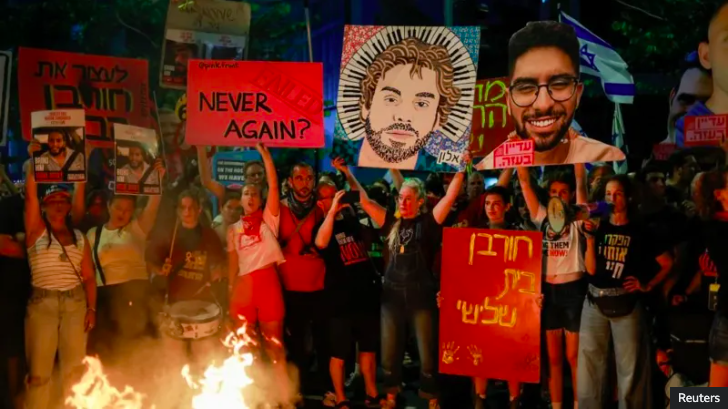
Western leaders and humanitarian organisations have condemned the recent release of distressing videos showing emaciated Israeli hostages held by Palestinian armed groups in Gaza. The footage, released separately by the Palestinian Islamic Jihad and Hamas, has intensified global concern over the condition of the remaining hostages and reignited urgent calls for their immediate release.
UK Foreign Secretary David Lammy reacted sharply to the videos, stating that “images of hostages being paraded for propaganda are sickening.” He reiterated the demand that the hostages be “released unconditionally.” These sentiments were echoed by other Western officials, who called the treatment of the captives a violation of international humanitarian norms.
The international outcry was triggered after two separate videos were released last week. On Thursday, the Palestinian Islamic Jihad released footage of Rom Braslavski, a 21-year-old hostage, appearing gaunt, disoriented, and weeping. In the video, Braslavski says he has not eaten in days, having consumed only a few “crumbs of falafel,” and he describes himself as being “at death’s door.”
Register for Tekedia Mini-MBA edition 20 (June 8 – Sept 5, 2026).
Register for Tekedia AI in Business Masterclass.
Join Tekedia Capital Syndicate and co-invest in great global startups.
Register for Tekedia AI Lab.
Just days later, on Saturday, Hamas released a similar video of Evyatar David, a 24-year-old hostage also taken during the October 7, 2023, attack on the Nova music festival in southern Israel. David, too, appears visibly malnourished and weak.
Both young men were among the 251 hostages captured during the Hamas-led assault that sparked the ongoing conflict. Of those, 49 are believed to still be held in Gaza, with 27 presumed dead, according to Israeli authorities.
International Red Cross: “Appalled” by Evidence of Hostage Conditions

In response to the videos, the International Committee of the Red Cross (ICRC) issued a rare and strongly worded statement, saying it was “appalled” by the visual evidence of the deteriorating health of the hostages. The organisation stressed that the footage “confirms the life-threatening conditions in which hostages are being held.”
The ICRC renewed its long-standing call for access to all hostages, demanding the ability to assess their medical needs, offer urgent care, and facilitate communication with their families. The Red Cross emphasised that access to captives in conflict zones is a basic requirement under international humanitarian law, though it depends on the cooperation of all parties involved.
Israeli Prime Minister Benjamin Netanyahu responded swiftly, calling the images “heartbreaking” and “profoundly shocking.” He spoke personally with the families of the two hostages, pledging that efforts to bring them home are ongoing and will be pursued “constantly and relentlessly.” On Sunday, Netanyahu also reached out to the Red Cross leadership, urging immediate intervention to ensure the delivery of food and medical assistance to hostages in Gaza.

Hamas Denies Starvation Claims Amid Growing Scrutiny
Hamas’s armed wing, the Al-Qassam Brigades, responded to the criticism by denying accusations that hostages were being deliberately starved. In a statement, the group claimed that prisoners receive the same food as fighters and civilians, amid an ongoing hunger crisis in the Gaza Strip caused by months of conflict and limited humanitarian aid.
The group said it was open to allowing the Red Cross to deliver food and medicine to prisoners—on the condition that humanitarian corridors into Gaza be opened regularly and airstrikes halted during aid deliveries.
Despite this, Israel and many of its allies remain skeptical, accusing Hamas of using the hostages as leverage in ceasefire negotiations while subjecting them to inhumane treatment.
Criticism of the Red Cross from Both Sides
The Red Cross has found itself under pressure from both Israeli and Palestinian communities. In Israel, many families of hostages accuse the organisation of inaction, arguing that it has failed to exert sufficient influence to access the hostages or pressure Hamas effectively.
Meanwhile, Palestinian groups and human rights advocates have criticised the ICRC for not being granted access to Palestinian prisoners in Israeli jails since the war began in October 2023. The organisation has explained that its access and operations depend entirely on permission from the warring parties and the safety of its staff, which can severely restrict its ability to act in volatile conditions.
Families Demand Urgent Action
At a rally in Tel Aviv over the weekend, the families of Braslavski and David made tearful pleas for action. “They managed to break Rom,” his family said in a statement. “He has simply been forgotten there.” They implored leaders in Israel and the United States to intensify efforts to bring him home.
“Everyone must get out of hell, now,” the families chanted along with hundreds of demonstrators, as emotional images of their sons were projected onto large screens in the square.
A Moral Imperative
The heart-wrenching videos have reignited global focus on the plight of the hostages, underscoring the urgency of a humanitarian solution amid an increasingly complex and deadly conflict. For the families waiting for news and for the hostages trapped in harrowing conditions, time is running out.
As the world watches, one thing is clear: humanitarian principles must prevail. The hostages must be granted immediate aid—and ultimately, they must be freed. Anything less is a betrayal of the values the international community claims to uphold.
Looking Forward
As international pressure mounts, the coming weeks will be critical in determining whether humanitarian corridors can be established and hostages receive the aid they desperately need. The Red Cross’s calls for access must be met with action, not delay. Only through sustained diplomatic effort and genuine cooperation can we hope to see these captives returned home safely—and ensure that such suffering is never repeated.
Final Thought
In war, the loudest voices are often those of weapons and politics—but it is the silent suffering of hostages like Rom Braslavski and Evyatar David that should move the world most. They’re faces, marked by hunger and despair, are a plea for humanity in a time of brutality. The question now is not just what governments will do, but how long the world is willing to look away.
Conclusion
As the final day looms, the Test delicately balances between triumph and heartbreak. England, within touching distance of a record-breaking chase, must summon composure under pressure, while India, buoyed by a late surge, will believe they can finish the job. With 35 runs needed and four wickets in hand, every ball on Monday morning could shape the outcome of not just this match, but an entire series rich in drama, brilliance, and tension. Whatever the result, this Test has already carved its place in cricketing folklore.
Uploaded files:Share this:
- Click to share on Facebook (Opens in new window) Facebook
- Click to share on X (Opens in new window) X
- Click to share on WhatsApp (Opens in new window) WhatsApp
- Click to share on LinkedIn (Opens in new window) LinkedIn
- Click to email a link to a friend (Opens in new window) Email
- Click to print (Opens in new window) Print