

Why Investors Are Abandoning Bonds for Gold in 2025’s Safe Haven Shift

Quote from Alex Bobby on September 10, 2025, 4:04 AM
Why Investors Are Ditching Bonds for Gold in 2025
Gold is shining brighter than ever in 2025, delivering its strongest performance in nearly half a century. Long valued as a hedge against inflation and a safeguard in times of crisis, the yellow metal has rocketed to record highs above $3,600 (€3,080) per ounce. That’s a near 40% surge year-to-date — gold’s best year since 1978.
For investors, the story is not just about price momentum. It’s about a structural shift in how portfolios are being built. Bonds, once considered the ultimate defensive asset, are faltering. Their inability to provide protection against inflation and volatility has left investors searching for alternatives. Increasingly, they’re finding their answer in gold.
Bonds No Longer a Reliable Safe Haven
For decades, U.S. Treasuries and European government bonds played a critical role in diversified portfolios. They were the shock absorbers: when equities fell, bonds tended to rally, cushioning investors from market turbulence. That relationship worked as long as inflation remained subdued.
But the bond market’s golden era is over. Since peaking in 2020, European government bonds have lost around 20% of their value. U.S. long-duration Treasuries have done even worse, halving in price over the same period.
So far in 2025, benchmark European bond indices are down another 2%. In contrast, equities have eked out moderate gains, and commodities — led by gold — are soaring.
The classic 60/40 portfolio mix (60% equities, 40% bonds), once seen as a foolproof approach to balancing risk and return, has dramatically underperformed. Over the last five years, this strategy has returned just 32%, compared with a 109% return from the S&P 500 alone.
Perhaps most troubling of all: the diversification benefits have broken down. Instead of offsetting equity weakness, bonds have often moved in the same direction, leaving balanced portfolios with similar volatility — and in some cases, even deeper drawdowns — compared to all-equity allocations.
The culprit is inflation. Rising prices erode the real value of bond income and reduce investor appetite for low-yielding debt. In this environment, bonds not only fail to provide safety but also risk compounding losses.
Gold Steps Into the Void
As bonds stumble, gold is taking their place as the portfolio stabiliser of choice. Unlike debt instruments, gold’s value is not tied to government solvency or monetary credibility. It is uncorrelated with equities and bonds, making it an effective hedge against systemic risks.
This dynamic was on full display during the post-Liberation Day selloff in April. Both equities and bonds fell sharply, leaving investors with nowhere to hide — except gold. Its price climbed as panic spread, proving once again its role as the ultimate safe haven.
The current environment echoes the 1970s, another era of inflationary pressures, geopolitical instability, and eroding central bank credibility. Back then, as now, gold outperformed every major asset class.
Goldman Sachs analysts note that equity-bond portfolios are especially vulnerable in two scenarios: when institutional credibility weakens (as in the 1970s) and when supply shocks spark stagflation (as in 2022). In both cases, gold historically delivers strong returns.
Central Banks Lead, Investors Follow
Another powerful driver of gold demand in 2025 is central bank buying. Since Western sanctions froze Russia’s foreign reserves in 2022, many emerging-market economies have accelerated efforts to reduce their reliance on the U.S. dollar. Nations like China, India, and Turkey have funneled billions into gold as a safer, sanction-proof store of value.
The IMF reports that central bank purchases of gold have increased fivefold since early 2022. This accumulation has provided a strong structural bid under the gold market.
Private investors are taking note. The SPDR Gold Shares (GLD), the world’s largest physically-backed gold ETF, has seen $11.3 billion (€9.63bn) in inflows this year alone — on pace to surpass its 2020 record. Institutional and retail investors alike are following central banks’ lead, treating gold as a strategic reserve asset.
The Problem With Bonds
The contrast with bonds could not be sharper. Sovereign debt carries two vulnerabilities: inflation risk and fiscal risk. With governments running record-high deficits and debt-to-GDP ratios climbing, the long-term outlook for bonds looks grim.
Investors increasingly view bonds not as risk-free assets but as liabilities. Inflation eats into returns, while the risk of “financial repression” — central banks suppressing yields to help governments manage debt — means real returns could remain negative for years.
Unlike bonds, gold carries no counterparty risk. It cannot be inflated away, defaulted on, or politically weaponized. In an era of polarized politics, economic fragmentation, and geopolitical rivalry, these qualities are more valuable than ever.
The Gold Signal
Gold’s record-breaking rally in 2025 is more than a market trend. It is a signal of a deeper shift in investor psychology. Confidence in traditional safe havens like government bonds is eroding, while faith in gold’s enduring value is surging.
Gold is not merely an inflation hedge. It is a hedge against institutional fragility, fiscal recklessness, and geopolitical upheaval. Its role is not limited to short-term speculation but as a cornerstone of a new defensive strategy for portfolios.
For decades, investors built portfolios anchored by bonds. Now, they are rewriting the playbook, placing gold at the center of their defensive strategies.
Looking Forward
As 2025 unfolds, the shift from bonds to gold looks less like a short-term trade and more like a structural transformation in how investors think about safety. If inflation stays elevated, government debt swells further, and political risks intensify, bonds may struggle to regain their former role as portfolio anchors.
Gold, by contrast, appears poised to remain at the center of defensive strategies — not only for central banks but also for institutional and retail investors. Its surge reflects a broader reality: in uncertain times, investors are seeking assets that stand apart from political promises and monetary experiments.
Looking ahead, the big question is whether gold’s rally has more room to run, or whether its current highs will invite a new cycle of volatility. Either way, 2025 has already made one thing clear: the world’s oldest store of value is also its newest safe haven.
Final Thoughts
The story of 2025 is not just that gold is outperforming — it’s that the foundations of traditional investing are shifting. Bonds, once synonymous with safety, have been undermined by inflation and fiscal excess. Gold, meanwhile, has reemerged as the asset that investors, central banks, and even governments trust when institutions falter.
For investors, the lesson is clear: diversification today means rethinking old rules and embracing assets that remain resilient no matter how turbulent the global landscape becomes. In that equation, gold is no longer an afterthought — it’s the core of the strategy.
Conclusion
The message from 2025’s markets is clear: bonds are losing their safe-haven status, and gold is reclaiming its place as the ultimate protector of wealth. With inflation persistent, government debt rising, and political uncertainty mounting, gold’s unique combination of independence, scarcity, and uncorrelated returns makes it the natural choice for investors seeking stability.
As one veteran fund manager recently put it: “In a world where nothing feels safe, gold feels timeless.”
Meta Description:
Gold has surged past $3,600 an ounce in 2025, delivering record returns as bonds falter. With inflation, debt risks, and political turmoil eroding trust in traditional safe havens, investors and central banks alike are turning to gold as the ultimate hedge.
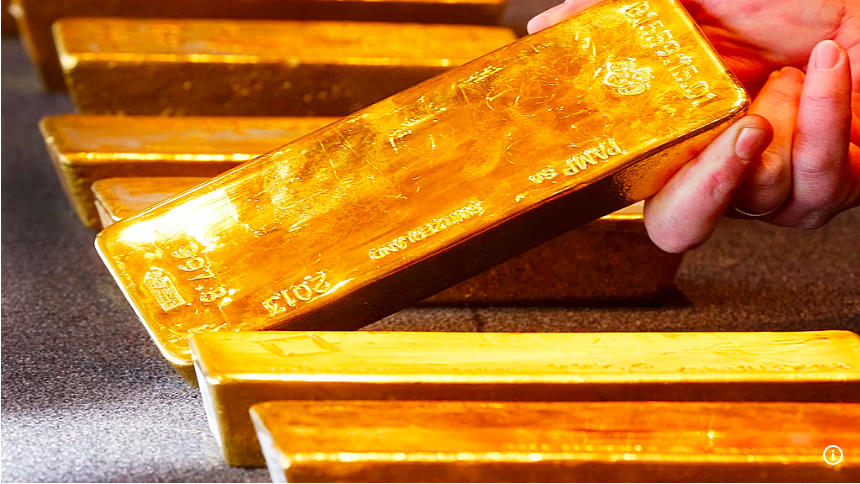
Why Investors Are Ditching Bonds for Gold in 2025
Gold is shining brighter than ever in 2025, delivering its strongest performance in nearly half a century. Long valued as a hedge against inflation and a safeguard in times of crisis, the yellow metal has rocketed to record highs above $3,600 (€3,080) per ounce. That’s a near 40% surge year-to-date — gold’s best year since 1978.
For investors, the story is not just about price momentum. It’s about a structural shift in how portfolios are being built. Bonds, once considered the ultimate defensive asset, are faltering. Their inability to provide protection against inflation and volatility has left investors searching for alternatives. Increasingly, they’re finding their answer in gold.
Register for Tekedia Mini-MBA edition 20 (June 8 – Sept 5, 2026).
Register for Tekedia AI in Business Masterclass.
Join Tekedia Capital Syndicate and co-invest in great global startups.
Register for Tekedia AI Lab.
Bonds No Longer a Reliable Safe Haven
For decades, U.S. Treasuries and European government bonds played a critical role in diversified portfolios. They were the shock absorbers: when equities fell, bonds tended to rally, cushioning investors from market turbulence. That relationship worked as long as inflation remained subdued.
But the bond market’s golden era is over. Since peaking in 2020, European government bonds have lost around 20% of their value. U.S. long-duration Treasuries have done even worse, halving in price over the same period.

So far in 2025, benchmark European bond indices are down another 2%. In contrast, equities have eked out moderate gains, and commodities — led by gold — are soaring.
The classic 60/40 portfolio mix (60% equities, 40% bonds), once seen as a foolproof approach to balancing risk and return, has dramatically underperformed. Over the last five years, this strategy has returned just 32%, compared with a 109% return from the S&P 500 alone.
Perhaps most troubling of all: the diversification benefits have broken down. Instead of offsetting equity weakness, bonds have often moved in the same direction, leaving balanced portfolios with similar volatility — and in some cases, even deeper drawdowns — compared to all-equity allocations.

The culprit is inflation. Rising prices erode the real value of bond income and reduce investor appetite for low-yielding debt. In this environment, bonds not only fail to provide safety but also risk compounding losses.
Gold Steps Into the Void
As bonds stumble, gold is taking their place as the portfolio stabiliser of choice. Unlike debt instruments, gold’s value is not tied to government solvency or monetary credibility. It is uncorrelated with equities and bonds, making it an effective hedge against systemic risks.
This dynamic was on full display during the post-Liberation Day selloff in April. Both equities and bonds fell sharply, leaving investors with nowhere to hide — except gold. Its price climbed as panic spread, proving once again its role as the ultimate safe haven.
The current environment echoes the 1970s, another era of inflationary pressures, geopolitical instability, and eroding central bank credibility. Back then, as now, gold outperformed every major asset class.
Goldman Sachs analysts note that equity-bond portfolios are especially vulnerable in two scenarios: when institutional credibility weakens (as in the 1970s) and when supply shocks spark stagflation (as in 2022). In both cases, gold historically delivers strong returns.
Central Banks Lead, Investors Follow
Another powerful driver of gold demand in 2025 is central bank buying. Since Western sanctions froze Russia’s foreign reserves in 2022, many emerging-market economies have accelerated efforts to reduce their reliance on the U.S. dollar. Nations like China, India, and Turkey have funneled billions into gold as a safer, sanction-proof store of value.
The IMF reports that central bank purchases of gold have increased fivefold since early 2022. This accumulation has provided a strong structural bid under the gold market.
Private investors are taking note. The SPDR Gold Shares (GLD), the world’s largest physically-backed gold ETF, has seen $11.3 billion (€9.63bn) in inflows this year alone — on pace to surpass its 2020 record. Institutional and retail investors alike are following central banks’ lead, treating gold as a strategic reserve asset.
The Problem With Bonds
The contrast with bonds could not be sharper. Sovereign debt carries two vulnerabilities: inflation risk and fiscal risk. With governments running record-high deficits and debt-to-GDP ratios climbing, the long-term outlook for bonds looks grim.
Investors increasingly view bonds not as risk-free assets but as liabilities. Inflation eats into returns, while the risk of “financial repression” — central banks suppressing yields to help governments manage debt — means real returns could remain negative for years.
Unlike bonds, gold carries no counterparty risk. It cannot be inflated away, defaulted on, or politically weaponized. In an era of polarized politics, economic fragmentation, and geopolitical rivalry, these qualities are more valuable than ever.
The Gold Signal
Gold’s record-breaking rally in 2025 is more than a market trend. It is a signal of a deeper shift in investor psychology. Confidence in traditional safe havens like government bonds is eroding, while faith in gold’s enduring value is surging.
Gold is not merely an inflation hedge. It is a hedge against institutional fragility, fiscal recklessness, and geopolitical upheaval. Its role is not limited to short-term speculation but as a cornerstone of a new defensive strategy for portfolios.
For decades, investors built portfolios anchored by bonds. Now, they are rewriting the playbook, placing gold at the center of their defensive strategies.
Looking Forward
As 2025 unfolds, the shift from bonds to gold looks less like a short-term trade and more like a structural transformation in how investors think about safety. If inflation stays elevated, government debt swells further, and political risks intensify, bonds may struggle to regain their former role as portfolio anchors.
Gold, by contrast, appears poised to remain at the center of defensive strategies — not only for central banks but also for institutional and retail investors. Its surge reflects a broader reality: in uncertain times, investors are seeking assets that stand apart from political promises and monetary experiments.
Looking ahead, the big question is whether gold’s rally has more room to run, or whether its current highs will invite a new cycle of volatility. Either way, 2025 has already made one thing clear: the world’s oldest store of value is also its newest safe haven.
Final Thoughts
The story of 2025 is not just that gold is outperforming — it’s that the foundations of traditional investing are shifting. Bonds, once synonymous with safety, have been undermined by inflation and fiscal excess. Gold, meanwhile, has reemerged as the asset that investors, central banks, and even governments trust when institutions falter.
For investors, the lesson is clear: diversification today means rethinking old rules and embracing assets that remain resilient no matter how turbulent the global landscape becomes. In that equation, gold is no longer an afterthought — it’s the core of the strategy.
Conclusion
The message from 2025’s markets is clear: bonds are losing their safe-haven status, and gold is reclaiming its place as the ultimate protector of wealth. With inflation persistent, government debt rising, and political uncertainty mounting, gold’s unique combination of independence, scarcity, and uncorrelated returns makes it the natural choice for investors seeking stability.
As one veteran fund manager recently put it: “In a world where nothing feels safe, gold feels timeless.”
Meta Description:
Gold has surged past $3,600 an ounce in 2025, delivering record returns as bonds falter. With inflation, debt risks, and political turmoil eroding trust in traditional safe havens, investors and central banks alike are turning to gold as the ultimate hedge.
Share this:
- Click to share on Facebook (Opens in new window) Facebook
- Click to share on X (Opens in new window) X
- Click to share on WhatsApp (Opens in new window) WhatsApp
- Click to share on LinkedIn (Opens in new window) LinkedIn
- Click to email a link to a friend (Opens in new window) Email
- Click to print (Opens in new window) Print