

World-First: Scientists Transplant Gene-Edited Pig Lung Into Human Patient

Quote from Alex Bobby on August 26, 2025, 5:11 AM
Scientists Transplant Pig Lung Into Brain-Dead Patient in World-First
In a breakthrough that could reshape the future of organ transplantation, scientists in China have successfully transplanted a genetically modified pig lung into a living human for the first time. While the patient had already been declared brain-dead, the lung remained functional for nine days—a milestone that researchers say represents proof of concept for cross-species transplants.
The study, carried out by a team at Guangzhou Medical University, has been published in Nature Medicine and is being hailed as a potential step toward solving one of modern medicine’s greatest challenges: the chronic shortage of human organs for transplantation.
The Shortage of Human Organs
Each year, tens of thousands of patients die waiting for organs that never arrive. According to data from the World Health Organization (WHO) and Spain’s National Transplant Organisation (ONT), there were more than 173,000 organ transplants performed worldwide in 2023, including more than 45,000 in Europe. But even these numbers fall far short of meeting demand.
“The clinical need is enormous,” said Dr. Beatriz Domínguez-Gil, director of ONT, who was not involved in the Chinese study. “Demand for organs continues to far outstrip supply, and many patients never receive the transplant they desperately need.”
This imbalance between supply and demand has driven scientists toward xenotransplantation, or the transplantation of organs from one species into another. Among possible donor animals, pigs have emerged as the leading candidates because their organs are similar in size and function to those of humans.
Why the Lung Is a Unique Challenge
Though progress has been made in recent years with pig kidneys, hearts, and even livers, the lung has remained one of the most difficult organs to transplant across species. The reason lies in its biology: lungs are highly vascularized, receiving enormous amounts of blood flow, and are constantly exposed to airborne pathogens. These factors make them particularly prone to infection, inflammation, and immune rejection.
Yet the Chinese team decided to take on this challenge, using gene-editing technology to modify the pig lung to make it more compatible with human immune systems.
How the Procedure Worked
The experiment involved a 39-year-old patient who had been declared brain-dead. Surgeons transplanted the left lung of the gene-edited pig into the patient while leaving their original right lung intact.
Remarkably, the pig lung began functioning immediately after surgery, integrating with the patient’s circulatory system and exchanging oxygen and carbon dioxide. For nine days, doctors monitored the organ closely.
The results were mixed but encouraging:
- Day 1: The pig lung showed signs of damage within 24 hours, a predictable outcome in such a complex procedure.
- Days 3 and 6: Doctors observed signs of immune rejection, though not catastrophic failure.
- Day 9: The experiment was concluded, with the lung still functioning but showing progressive deterioration.
Importantly, the patient’s immune system did not reject the lung immediately, suggesting that gene editing can significantly delay or reduce rejection.
Proof of Concept
For Dr. Domínguez-Gil, the study represents a pivotal proof of concept. “This constitutes evidence that, with further improvements, lung xenotransplantation could in the future become a real option for saving lives,” she explained.
The promise lies not only in the lung itself but also in the broader implications for gene editing and organ compatibility. Advances in CRISPR and other genome-editing tools now allow scientists to remove or modify the pig genes most likely to trigger rejection, while inserting human genes that make the organs more tolerable to the human immune system.
“The field is moving much faster than many would have predicted a decade ago,” Domínguez-Gil added. “Pig organs are closer than ever to becoming a clinical reality, but it is still very early days.”
Caution Amid Progress
Not all experts are ready to celebrate. Dr. Iván Fernández Vega, a professor of pathological anatomy at the University of Oviedo in Spain, urged caution.
“Because the lung transplant was performed on a brain-dead patient, the findings cannot be directly translated to living people,” he explained. “Neither the clinical tolerance nor the actual side effects of the procedure can be assessed in this setting.”
In other words, while the results are promising, they do not yet prove that a pig lung could sustain a living patient long-term. More research—both in pre-clinical animal models and eventually in carefully controlled human trials—will be needed before xenotransplantation can move from the lab to the clinic.
A Race to the Future of Medicine
The Chinese lung experiment is part of a growing international race to develop viable xenotransplantation. In recent years, U.S. researchers have transplanted gene-edited pig hearts into terminally ill patients and kidneys into brain-dead recipients. While outcomes have varied, the overall trend has been one of steady progress, with each experiment yielding valuable data.
Proponents argue that if successful, xenotransplantation could revolutionise healthcare by creating a sustainable, on-demand supply of organs. Critics, however, raise ethical questions about animal use, genetic modification, and the long-term safety of introducing animal tissue into humans.
The Road Ahead
For now, xenotransplantation remains firmly in the experimental stage. But the Guangzhou study offers a glimpse of what may be possible in the coming decades. If the hurdles of rejection, infection, and long-term function can be overcome, pig organs could one day save the lives of thousands of patients who currently die waiting.
As Dr. Domínguez-Gil noted: “What we are seeing today is not a ready-to-use therapy but the foundation of a new era in transplantation medicine. With sustained research, lung xenotransplantation may, in time, become more than an experiment—it may become a lifeline.”
Looking Forward
The success of the pig lung transplant, even in a brain-dead patient, shows just how far xenotransplantation has come—and how much further it needs to go. Future experiments will need to focus on reducing rejection, improving long-term function, and eventually moving into trials with living patients. If researchers can overcome these hurdles, gene-edited pig organs may one day transform transplantation medicine, offering hope to the thousands of patients who die waiting for human donors each year.
Conclusion
The world’s first pig lung transplant into a human marks a tentative but significant step forward in medical science. It demonstrates that with the right genetic modifications, even the most complex organs can function across species boundaries—at least for a short time.
While the challenges ahead are formidable, the potential reward is enormous: a future where no patient dies waiting for an organ. For the millions worldwide who depend on transplants, that future cannot come soon enough.
Meta Description:
Chinese researchers have successfully transplanted a gene-edited pig lung into a brain-dead patient, keeping it functional for nine days. Experts say the breakthrough inxenotransplantation could help address the global shortage of human organ donations.
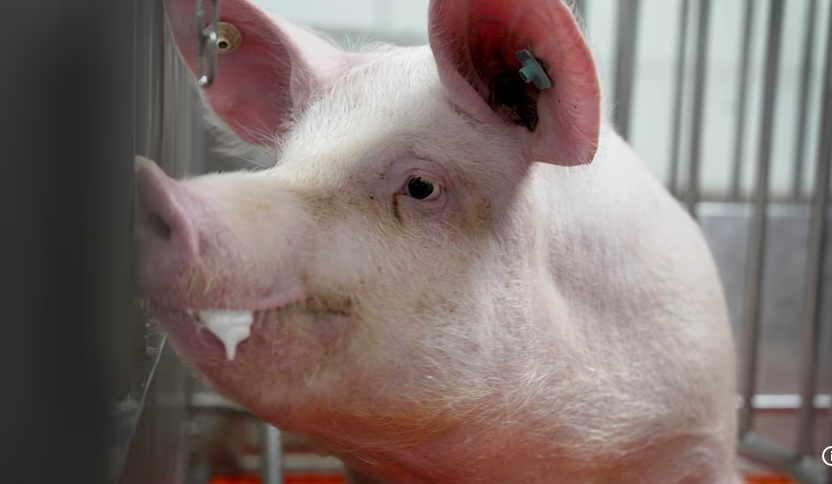
Scientists Transplant Pig Lung Into Brain-Dead Patient in World-First
In a breakthrough that could reshape the future of organ transplantation, scientists in China have successfully transplanted a genetically modified pig lung into a living human for the first time. While the patient had already been declared brain-dead, the lung remained functional for nine days—a milestone that researchers say represents proof of concept for cross-species transplants.
The study, carried out by a team at Guangzhou Medical University, has been published in Nature Medicine and is being hailed as a potential step toward solving one of modern medicine’s greatest challenges: the chronic shortage of human organs for transplantation.
Register for Tekedia Mini-MBA edition 20 (June 8 – Sept 5, 2026).
Register for Tekedia AI in Business Masterclass.
Join Tekedia Capital Syndicate and co-invest in great global startups.
Register for Tekedia AI Lab.
The Shortage of Human Organs
Each year, tens of thousands of patients die waiting for organs that never arrive. According to data from the World Health Organization (WHO) and Spain’s National Transplant Organisation (ONT), there were more than 173,000 organ transplants performed worldwide in 2023, including more than 45,000 in Europe. But even these numbers fall far short of meeting demand.
“The clinical need is enormous,” said Dr. Beatriz Domínguez-Gil, director of ONT, who was not involved in the Chinese study. “Demand for organs continues to far outstrip supply, and many patients never receive the transplant they desperately need.”

This imbalance between supply and demand has driven scientists toward xenotransplantation, or the transplantation of organs from one species into another. Among possible donor animals, pigs have emerged as the leading candidates because their organs are similar in size and function to those of humans.
Why the Lung Is a Unique Challenge
Though progress has been made in recent years with pig kidneys, hearts, and even livers, the lung has remained one of the most difficult organs to transplant across species. The reason lies in its biology: lungs are highly vascularized, receiving enormous amounts of blood flow, and are constantly exposed to airborne pathogens. These factors make them particularly prone to infection, inflammation, and immune rejection.

Yet the Chinese team decided to take on this challenge, using gene-editing technology to modify the pig lung to make it more compatible with human immune systems.
How the Procedure Worked
The experiment involved a 39-year-old patient who had been declared brain-dead. Surgeons transplanted the left lung of the gene-edited pig into the patient while leaving their original right lung intact.
Remarkably, the pig lung began functioning immediately after surgery, integrating with the patient’s circulatory system and exchanging oxygen and carbon dioxide. For nine days, doctors monitored the organ closely.
The results were mixed but encouraging:
- Day 1: The pig lung showed signs of damage within 24 hours, a predictable outcome in such a complex procedure.
- Days 3 and 6: Doctors observed signs of immune rejection, though not catastrophic failure.
- Day 9: The experiment was concluded, with the lung still functioning but showing progressive deterioration.
Importantly, the patient’s immune system did not reject the lung immediately, suggesting that gene editing can significantly delay or reduce rejection.
Proof of Concept
For Dr. Domínguez-Gil, the study represents a pivotal proof of concept. “This constitutes evidence that, with further improvements, lung xenotransplantation could in the future become a real option for saving lives,” she explained.
The promise lies not only in the lung itself but also in the broader implications for gene editing and organ compatibility. Advances in CRISPR and other genome-editing tools now allow scientists to remove or modify the pig genes most likely to trigger rejection, while inserting human genes that make the organs more tolerable to the human immune system.
“The field is moving much faster than many would have predicted a decade ago,” Domínguez-Gil added. “Pig organs are closer than ever to becoming a clinical reality, but it is still very early days.”
Caution Amid Progress
Not all experts are ready to celebrate. Dr. Iván Fernández Vega, a professor of pathological anatomy at the University of Oviedo in Spain, urged caution.
“Because the lung transplant was performed on a brain-dead patient, the findings cannot be directly translated to living people,” he explained. “Neither the clinical tolerance nor the actual side effects of the procedure can be assessed in this setting.”
In other words, while the results are promising, they do not yet prove that a pig lung could sustain a living patient long-term. More research—both in pre-clinical animal models and eventually in carefully controlled human trials—will be needed before xenotransplantation can move from the lab to the clinic.
A Race to the Future of Medicine
The Chinese lung experiment is part of a growing international race to develop viable xenotransplantation. In recent years, U.S. researchers have transplanted gene-edited pig hearts into terminally ill patients and kidneys into brain-dead recipients. While outcomes have varied, the overall trend has been one of steady progress, with each experiment yielding valuable data.
Proponents argue that if successful, xenotransplantation could revolutionise healthcare by creating a sustainable, on-demand supply of organs. Critics, however, raise ethical questions about animal use, genetic modification, and the long-term safety of introducing animal tissue into humans.
The Road Ahead
For now, xenotransplantation remains firmly in the experimental stage. But the Guangzhou study offers a glimpse of what may be possible in the coming decades. If the hurdles of rejection, infection, and long-term function can be overcome, pig organs could one day save the lives of thousands of patients who currently die waiting.
As Dr. Domínguez-Gil noted: “What we are seeing today is not a ready-to-use therapy but the foundation of a new era in transplantation medicine. With sustained research, lung xenotransplantation may, in time, become more than an experiment—it may become a lifeline.”
Looking Forward
The success of the pig lung transplant, even in a brain-dead patient, shows just how far xenotransplantation has come—and how much further it needs to go. Future experiments will need to focus on reducing rejection, improving long-term function, and eventually moving into trials with living patients. If researchers can overcome these hurdles, gene-edited pig organs may one day transform transplantation medicine, offering hope to the thousands of patients who die waiting for human donors each year.
Conclusion
The world’s first pig lung transplant into a human marks a tentative but significant step forward in medical science. It demonstrates that with the right genetic modifications, even the most complex organs can function across species boundaries—at least for a short time.
While the challenges ahead are formidable, the potential reward is enormous: a future where no patient dies waiting for an organ. For the millions worldwide who depend on transplants, that future cannot come soon enough.
Meta Description:
Chinese researchers have successfully transplanted a gene-edited pig lung into a brain-dead patient, keeping it functional for nine days. Experts say the breakthrough in
xenotransplantation could help address the global shortage of human organ donations.
Uploaded files:Share this:
- Click to share on Facebook (Opens in new window) Facebook
- Click to share on X (Opens in new window) X
- Click to share on WhatsApp (Opens in new window) WhatsApp
- Click to share on LinkedIn (Opens in new window) LinkedIn
- Click to email a link to a friend (Opens in new window) Email
- Click to print (Opens in new window) Print