

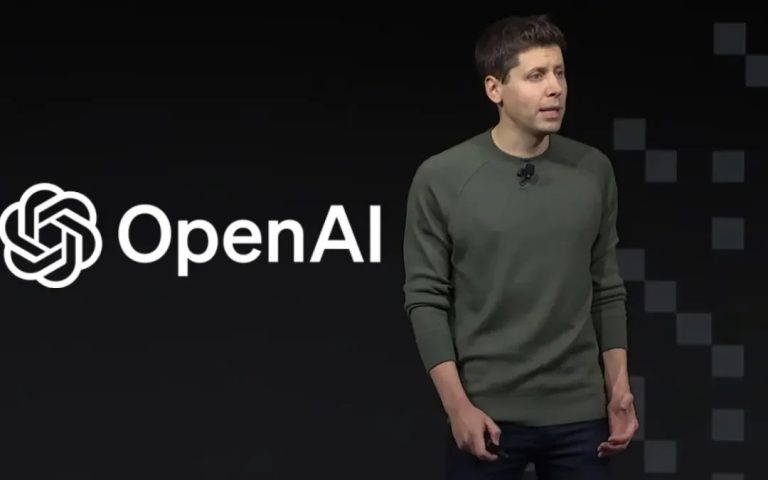
An OpenAI engineer has revealed just how protective the company has become of its top talent—particularly those working on debugging its cutting-edge AI models—amid an intensifying scramble for artificial intelligence expertise across Silicon Valley.
Speaking on the Before AGI podcast, OpenAI technical fellow Szymon Sidor described the company’s top debuggers as “some of our most-prized employees.” But before he could finish his sentence, he abruptly stopped, and someone quickly interjected: “No names.” Laughter followed. That moment—though clearly audible in the audio-only version of the podcast on Spotify and Apple Podcasts—was noticeably absent from the video versions uploaded to YouTube and X.
The decision to withhold their identities wasn’t incidental. It points to a larger trend: as competition escalates in the AI arms race, companies are becoming increasingly secretive and protective of their high-value technical staff—especially those whose work is vital to advancing powerful language models.
Register for Tekedia Mini-MBA edition 20 (June 8 – Sept 5, 2026).
Register for Tekedia AI in Business Masterclass.
Join Tekedia Capital Syndicate and co-invest in great global startups.
Register for Tekedia AI Lab.
Sidor and OpenAI chief data scientist Jakub Pachocki, who also appeared on the podcast, didn’t elaborate on why the names were censored. But the reason is obvious. The AI industry is now in the middle of a fierce talent war, and no company wants to make it easier for rivals to identify and poach their top minds.
Nowhere is that battle more aggressive than at Meta.
The Mark Zuckerberg-led company has gone all in on building out its superintelligence ambitions. Meta has poured billions into AI infrastructure and formed its own Superintelligence Lab—an elite group of researchers focused on developing artificial general intelligence (AGI). To staff it, the company has embarked on an aggressive recruitment campaign, offering top-tier AI scientists salaries and compensation packages worth as much as $100 million. In January, OpenAI CEO Sam Altman publicly admitted that Meta had attempted to lure his researchers with such offers.

Meta has already made major hires. It poached Shengjia Zhao, a co-creator of ChatGPT and a former lead scientist at OpenAI. It also secured Alexandr Wang, the founder of Scale AI, along with a number of other top-level researchers across the AI ecosystem. Internally, reports suggest Meta keeps a growing list of potential recruits from rival labs, underscoring the calculated nature of its recruitment drive.
The fallout is evident across the industry. AI companies, particularly those working on foundational models, are increasingly restricting internal disclosures and limiting public exposure of staff. OpenAI, for instance, no longer updates its team page on its website, and executives have been instructed to avoid name-dropping key contributors during public appearances or podcasts.
Even companies once known for promoting open collaboration have pulled back. Google DeepMind, Anthropic, xAI, and Inflection AI have all either beefed up internal NDAs or introduced policies restricting staff from appearing in media without prior clearance. The goal is to avoid giving competitors a roadmap to their core engineering teams.

The secrecy is also reshaping AI culture. What was once an academic-like environment where breakthroughs and talent were openly celebrated has morphed into a guarded corporate battlefield. Interns and junior researchers who would typically be spotlighted in published papers or product announcements are now increasingly left anonymous.
With trillions in future economic value projected from AI, the people who can fine-tune, debug, and scale these models have become more valuable than the models themselves. This is especially true in debugging, a process that has proven crucial to aligning AI behavior and preventing catastrophic model failures.
OpenAI’s Sidor hinted that the company has quietly hired more people with elite debugging skills, treating them like prized assets. But unlike in the early years of AI development, their names will remain off the record. Because in today’s AI gold rush, knowing who is working on the models may be just as valuable as knowing how they work.