

Japan’s strategy is to lock in the 15% ceiling agreed last year and prevent Trump’s new across-the-board tariff from being layered on top, a risk that could directly hit autos and unsettle corporate investment plans.
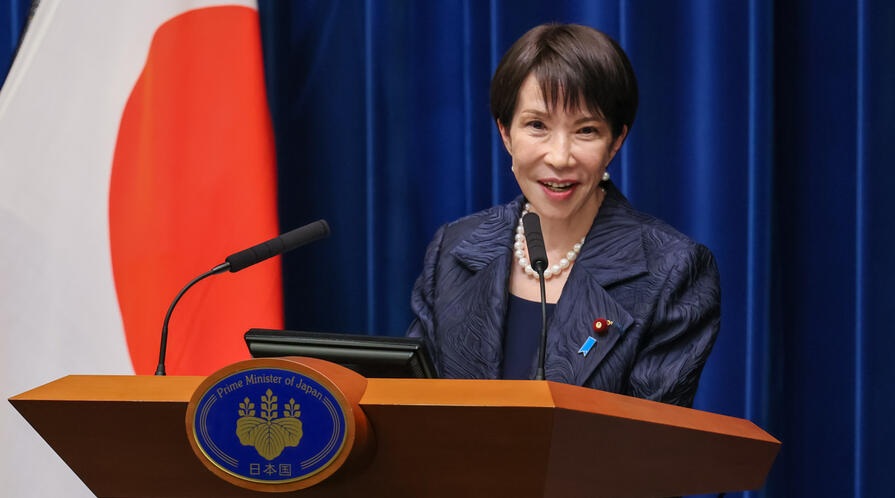
Japan has formally asked the United States to ensure that its treatment under Washington’s new tariff regime remains at least as favorable as terms secured in last year’s bilateral trade pact, underscoring Tokyo’s effort to preserve stability as Prime Minister Sanae Takaichi prepares for a high-stakes visit to Washington next month.
The request follows President Donald Trump’s decision to impose a temporary 15% duty on imports from all countries after the U.S. Supreme Court ruled that the International Emergency Economic Powers Act (IEEPA) does not authorize the president to impose tariffs. In response, Trump invoked a separate statute that allows duties of up to 15%, and warned that countries backing away from trade agreements could face higher tariffs under alternative trade laws.
Register for Tekedia Mini-MBA edition 20 (June 8 – Sept 5, 2026).
Register for Tekedia AI in Business Masterclass.
Join Tekedia Capital Syndicate and co-invest in great global startups.
Register for Tekedia AI Lab.
Japan’s trade minister Ryosei Akazawa said he and U.S. Commerce Secretary Howard Lutnick confirmed during a call on Monday that both governments would implement last year’s trade agreement “in good faith and without delay,” according to Japan’s trade ministry.
However, Akazawa acknowledged that some Japanese exports currently benefiting from tariff rates below 15% could face higher effective duties if the new across-the-board tariff is stacked on top of existing measures. A trade ministry official said the exposure applies in theory to goods enjoying tariffs below 15% under most-favored-nation treatment.
Tokyo’s position is narrowly framed: it is not seeking to reopen the agreement but wants assurance that the 15% rate agreed last July will function as a ceiling, not a floor.

Autos at the center of risk
The July agreement capped tariffs on Japanese autos and other goods at 15%, while Japan committed to a $550 billion package of U.S.-bound loans and investment. For Japan, autos are the critical variable. The sector accounts for a substantial share of exports to the United States and supports extensive domestic supply chains.
If the new 15% global tariff were layered over existing reduced rates, Japanese automakers could face higher-than-anticipated effective duties, compressing margins and potentially altering production allocation decisions between Japan, the United States, and third markets.
Japanese government sources said Tokyo will not seek to renegotiate the pact, partly out of concern that doing so could prompt the administration to consider sector-specific tariffs that are unaffected by the Supreme Court’s ruling, particularly in the auto industry.

The tariff shift introduces uncertainty into corporate investment planning on both sides of the Pacific. Yoshinobu Tsutsui, head of Keidanren, Japan’s largest business lobby, described the Supreme Court ruling as evidence that U.S. institutional checks and balances remain active and positive for the broader economy. At the same time, he warned that Trump’s new tariffs increase risks surrounding long-term capital expenditures.
Investment decisions in autos, semiconductors, energy, and advanced materials often hinge on stable tariff expectations over multi-year horizons. Even if the nominal rate remains at 15%, ambiguity over stacking or future legal shifts could delay board-level approvals for factory expansions or cross-border joint ventures.
Macroeconomic stakes
The broader macroeconomic implications are measurable. Takahide Kiuchi of Nomura Research Institute estimates that if the United States does not replace the invalidated IEEPA-based tariffs with permanent duties, Japan’s real GDP could be roughly 0.375% higher annually than under a sustained higher-tariff scenario.
That projection matters in an economy where growth is structurally constrained by demographics and modest domestic consumption. External demand, particularly from the United States, remains a key pillar. Even incremental changes in tariff treatment can ripple through export volumes, corporate profits, and wage growth.
The trade relationship now extends beyond tariff schedules. Last week, Tokyo and Washington unveiled three U.S. projects — valued at $36 billion — to be financed by Japan, including an oil export facility, an industrial diamonds plant, and a gas-fired power plant.
Akazawa described the broader tariffs-and-investment framework as a “win-win deal,” citing shared economic security concerns such as reliance on Chinese rare earths. By financing U.S. energy and industrial capacity, Japan is embedding itself more deeply in American supply chains while supporting diversification away from China.
This dimension adds geopolitical weight to the tariff discussion. The bilateral economic relationship increasingly intersects with supply-chain resilience, critical minerals access, and Indo-Pacific security cooperation.
Diplomatic caution ahead of March summit
With Takaichi’s Washington visit scheduled for late March, Japanese officials are emphasizing continuity. The meeting is viewed in Tokyo as important not only for trade but also for security coordination amid regional tensions and China’s export controls on strategic materials.
By refraining from public criticism of the Supreme Court ruling or Trump’s subsequent tariff move, and instead requesting equivalent treatment under the existing pact, Japan is signaling a preference for quiet diplomacy.
The immediate operational question is whether the 15% global tariff will be applied in a way that preserves the July agreement’s intended protections. The longer-term structural issue is whether U.S. trade policy will remain predictable enough for companies to plan capital deployment across borders.