

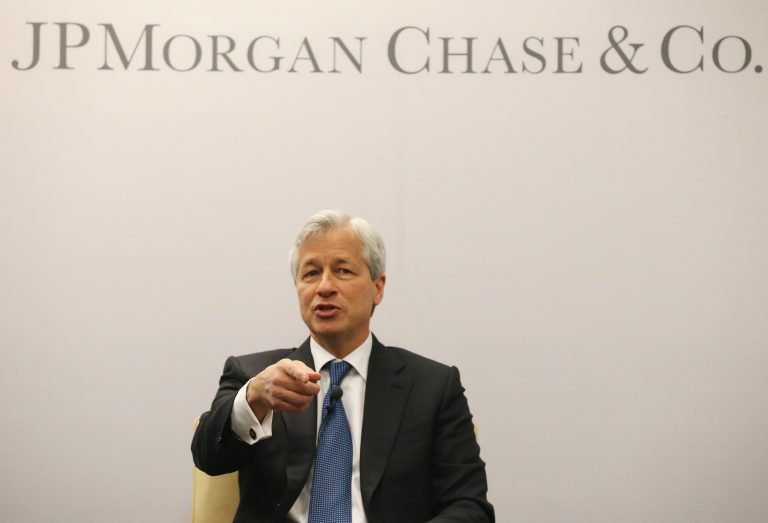
JPMorgan Chase CEO Jamie Dimon has issued a stark warning about the ongoing war with Iran, highlighting its potential to disrupt global energy markets and reignite inflationary pressures.
Dimon, who leads the $4.8 trillion banking giant, pointed to the risk of significant and persistent oil and commodity price shocks stemming from the conflict. These disruptions, combined with potential reshaping of global supply chains, could lead to “stickier” inflation and push interest rates higher than markets currently anticipate.
“Now, because of the war in Iran, we additionally face the potential for significant ongoing oil and commodity price shocks… which may lead to stickier inflation and ultimately higher interest rates than markets currently expect,” Dimon wrote.
Register for Tekedia Mini-MBA edition 20 (June 8 – Sept 5, 2026).
Register for Tekedia AI in Business Masterclass.
Join Tekedia Capital Syndicate and co-invest in great global startups.
Register for Tekedia AI Lab.
He described gradually rising inflation as “the skunk at the party”, an unwelcome surprise that could emerge in 2026, potentially dragging down financial markets further if interest rates climb in response. Dimon drew parallels to past episodes, noting that rapid increases in oil prices alongside inflation contributed to deep recessions in 1974 and 1982.
Dimon’s comment comes as oil prices rose on Monday, after U.S. President Donald Trump warned of “hell” for Iran unless it reopens the Strait of Hormuz by his self-imposed deadline, but a report of a push for a ceasefire appeared to ease some nerves.
Trump’s repeated threats to destroy civilian infrastructure including power plants and bridges if the vital waterway is not open by Tuesday have put traders on edge for reciprocal attacks by Iran on targets in the Gulf states.

Amid the geopolitical tension, the JPMorgan chief acknowledged that the U.S. economy remains relatively resilient, with healthy consumers and businesses. However, he warned that the Iran conflict adds to existing vulnerabilities.
“I tell people anything that happens is a straw on the camel’s back,” Dimon said in recent interviews. “The war is a couple of straws on that camel’s back. Whether that causes a tipping point [into recession], I don’t know. Hopefully not stagflation.”
He emphasized that while short-term market volatility is concerning, the long-term outcome of the conflict matters far more. “What’s more important to the future of the world is that the war is successfully conclude,” Dimon stated, adding that a decisive resolution could improve prospects for stability in the Middle East.

In the same shareholder letter and accompanying remarks, Dimon touched on other risks facing the U.S. economy, including a potential credit cycle, ongoing trade negotiations, AI-driven job displacement, and regulatory concerns around banking rules like Basel III. Despite the warnings, Dimon noted that the economy may be less fragile than in previous cycles, though he stopped short of ruling out downside risks entirely.
The remarks from one of Wall Street’s most influential voices contributed to cautious sentiment on Monday, with investors monitoring oil prices, inflation data, and Federal Reserve expectations closely.
Energy markets have already shown volatility in response to Middle East developments, and analysts are watching whether prolonged conflict could push oil toward significantly higher levels, spilling over into broader commodity costs (including fertilizer and transport fuels) and consumer prices.
Dimon’s message is clear: while the U.S. economy has shown strength, the Iran war represents a meaningful additional risk that could complicate the path toward sustained disinflation and stable growth.