

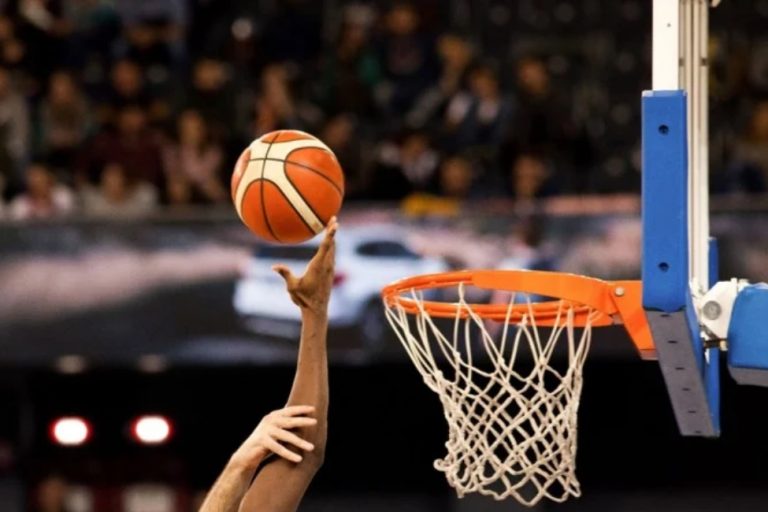
Kalshi, the prediction market platform, has launched a massive $1 Billion Bracket Challenge for the 2026 NCAA Men’s Basketball Tournament (March Madness). It’s designed to highlight the extreme improbability of a perfect bracket while offering huge incentives.
Grand Prize: $1 billion to anyone who submits a perfect bracket — correctly predicting the winner of all 63 games from the Round of 64 through the championship on April 6, 2026. This excludes the First Four play-in games in some descriptions. Consolation Prizes: $1 million guaranteed to the highest-scoring (best overall) bracket, even if no one goes perfect.
An additional $1 million donated to charity and and or scholarships. Free to enter — no purchase, deposit, or trading required. One entry per verified Kalshi account. Open to U.S. residents aged 18+ excludes New York and Florida due to regulations. Submit your bracket via the Kalshi app or website before the first game tips off on March 19, 2026 around 1 p.m. ET or earlier if the game starts sooner.
Register for Tekedia Mini-MBA edition 20 (June 8 – Sept 5, 2026).
Register for Tekedia AI in Business Masterclass.
Join Tekedia Capital Syndicate and co-invest in great global startups.
Register for Tekedia AI Lab.
Kalshi emphasizes this as a “lesson in probability.” A perfect bracket is astronomically unlikely — estimates put the odds at roughly 1 in 9.2 quintillion (if treating each game as a coin flip; real odds improve slightly by favoring higher seeds but remain vanishingly small). No one has ever achieved a perfect bracket in major public contests.
This echoes past high-profile challenges like Warren Buffett’s earlier ones but stands out as one of the largest prizes ever tied to March Madness. It’s backed by Kalshi and partners like Susquehanna International Group.
The math behind the probability of a perfect March Madness bracket correctly predicting the winner of every game in the NCAA Men’s Basketball Tournament is straightforward probability, but the numbers get enormous quickly. The tournament structure and assumptions about game outcomes drive the wildly low odds.
The main bracket excluding the “First Four” play-in games, which most public contests and Kalshi’s challenge ignore for perfection purposes has 63 games: Round of 64 ? 32 games. Round of 32 ? 16 games. Sweet 16 ? 8 games. Elite Eight ? 4 games. Final Four ? 2 games. Championship ? 1 game. Total: 32 + 16 + 8 + 4 + 2 + 1 = 63 games. Each game has 2 possible outcomes (Team A wins or Team B wins).
Assuming independence; a simplification, but standard for this calculation, the total number of possible brackets is 2?³.Calculate that: 2?³ = 9,223,372,036,854,775,808. That’s roughly 9.2 quintillion (9.2 × 10¹?). If you pick completely at random like flipping a fair coin for each game, with 50% chance for either side, the probability of getting a perfect bracket is:P(perfect) = 1 / 2?³ ? 1 in 9.2 quintillion.

This is the number Kalshi and many sources cite as the “coin-flip” or naive random odds. It’s the purest mathematical baseline, treating every game as equally likely regardless of team strength. Some older calculations use 67 games including First Four ? 1 in ~147 quintillion, but modern contests like Kalshi’s focus on the 63-game bracket.
Real games aren’t 50/50. Higher seeds win far more often, especially early: No. 1 seeds almost always beat No. 16 seeds (historically ~99%+ success rate; only one 16-over-1 upset ever). Favorites in later rounds still have edges, but upsets increase. If you use knowledge your effective accuracy per game rises.
Common estimates for “informed” picking: Average expert or good model: ~65–75% correct per game across the tournament. A frequently cited figure from NCAA data and models assumes roughly 66.7% (2/3) accuracy per game. Then probability becomes: P(perfect) ? (0.667)?³ ? 1 in 120 billion (or sometimes cited around 1 in 28–120 billion depending on exact accuracy assumption).

Even at a strong 75% per-game accuracy (very optimistic for the whole tournament) :(0.75)?³ ? 1 in 74 million — still tiny.Some refined models; Duke mathematician Jonathan Mattingly’s approach using seed-based probabilities put realistic odds around 1 in 2.4 trillion. Upsets are correlated (one Cinderella run affects many later games).
Late-round games involve stronger teams, but variance remains. No perfect bracket has ever been recorded publicly (longest streak: ~49 games correct in 2019). With ~60–100 million brackets filled yearly, even at 1 in 120 billion odds, you’d expect zero perfect ones over centuries.
In short: Pure random (coin flips): 1 in 9.2 quintillion ? astronomically impossible. With basketball knowledge / models: 1 in tens to hundreds of billions ? still effectively impossible in any practical sense. Kalshi’s $1B prize highlights this probability lesson perfectly: the prize is huge because perfection is vanishingly unlikely.
The $1M consolation for the best (non-perfect) bracket is far more attainable. If you’re building one, focus on high-confidence early picks and balance risk in later rounds — but don’t count on perfection. Good luck — though as Kalshi puts it, perfection is nearly impossible.