

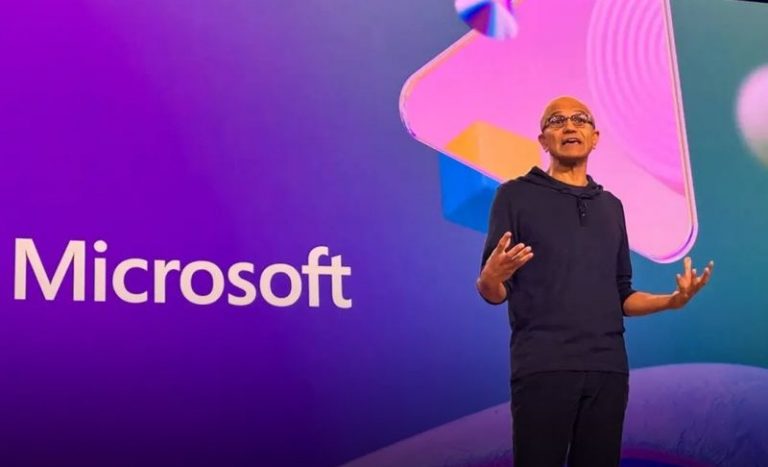
Microsoft CEO Satya Nadella is hitting the books again — not for a management course or a new technical certification, but to understand how tiny, fast-moving startups are outpacing giants like his own company in the AI era.
Speaking on the MD MEETS podcast with Axel Springer CEO Mathias Döpfner, Nadella said he has spent entire weekends studying how young companies design products. He described it as slipping into “study hall mode,” motivated by the realization that Microsoft’s sheer scale — long considered its defining advantage — has now become “a massive disadvantage” when competing with nimble AI startups.
“This entire weekend, I spent all the time trying to get myself to understand how new companies are building products,” Nadella told Döpfner in the episode released Saturday.
Register for Tekedia Mini-MBA edition 20 (June 8 – Sept 5, 2026).
Register for Tekedia AI in Business Masterclass.
Join Tekedia Capital Syndicate and co-invest in great global startups.
Register for Tekedia AI Lab.
What he sees inside smaller AI firms is a flat structure where scientists, engineers, and infrastructure teams often share the same table.
“They’re able to make decisions instantly,” he said. At Microsoft, by contrast, “I have three divisional heads who manage those three things,” a structure that naturally slows the company down.
The comments point to a core tension at Microsoft: even as the company has become a central player in the global AI race through its multibillion-dollar partnership with OpenAI — which has powered a surge in cloud demand, corporate adoption of AI tools and the launch of products like Copilot — its traditional hierarchy risks dragging its innovation velocity at the very moment when speed matters most.

Nadella’s concerns echo a broader Silicon Valley shift. Meta has spent the past two years flattening teams. Google has reorganized AI divisions multiple times. Amazon has pushed managers closer to engineering teams and trimmed middle layers. The industry’s consensus has shifted: bureaucratic distance kills good AI ideas before they materialize.
“Unlearning the things that made you successful”
Nadella told Döpfner that thriving in the AI era requires abandoning old habits — even habits that once defined Microsoft’s rise to power. He said leaders need to replace the “know-it-all” mindset with a “learn-it-all” mentality.
“The most important skill set for long-term relevance is — how do you be a learn-it-all and not a know-it-all,” he said, adding that “you have to unlearn the things that made you successful to learn something new.”

He emphasized that empathy and emotional intelligence are now indispensable leadership traits. AI is not just a technical shift, he argued — it is a cultural and organizational one, requiring leaders to read teams, customers, and the broader social mood with a different level of sensitivity.
This thinking is already shaping Microsoft’s internal structure. A leaked organizational chart reviewed by Business Insider revealed that Nadella now has 16 direct reports — a handpicked group tasked with breaking down silos, sharing information more efficiently, and accelerating Microsoft’s push into generative AI.
Why corporate AI projects fail
Nadella also delivered a blunt diagnosis of why so many companies flounder with their AI ambitions. Most executive teams approach AI as if it’s a traditional IT upgrade — something you “install,” plug into existing workflows, and expect immediate results from.
“That mistake is going to fail by definition,” Nadella said.
To make AI actually work, he said, companies need four foundational shifts:
• rethink workflows from scratch
• adopt modern, AI-native tools
• train employees extensively
• and ensure data is not locked inside outdated legacy systems
Until organizations rebuild these foundations, he said, their AI projects will collapse under their own dead weight. Only those willing to rethink their assumptions and trim the layers that slow decisions will actually see tangible gains.
Microsoft at a crossroads
The comments highlight Microsoft’s unusual position. The company has never been more central to the global AI boom. Its partnership with OpenAI turned it into the primary commercial gateway for generative AI tools. Azure has been flooded with demand. Corporate clients have moved quickly to adopt Copilot on the promise of productivity gains.
But Microsoft also faces the classic problem of incumbency: the mass of its own success.
Startups with 20 people can ship major architectural changes in a single weekend. Microsoft, with its enormous product ecosystem, compliance obligations, enterprise clients, legal reviews, and global risk posture, can’t operate that way — at least not easily.
Nadella is essentially trying to retrofit startup agility into a company with nearly 200,000 employees.
The result is a CEO who now spends his weekends reading about how companies one-thousandth the size build products — not because he wants to, but because he must.
The AI revolution is outpacing the traditional corporate machine. Nadella seems determined not to let Microsoft become one of the legacy giants that watches from the sidelines.
This is a nice article: https://www.solix.com/glossary/sovereign-ai/