

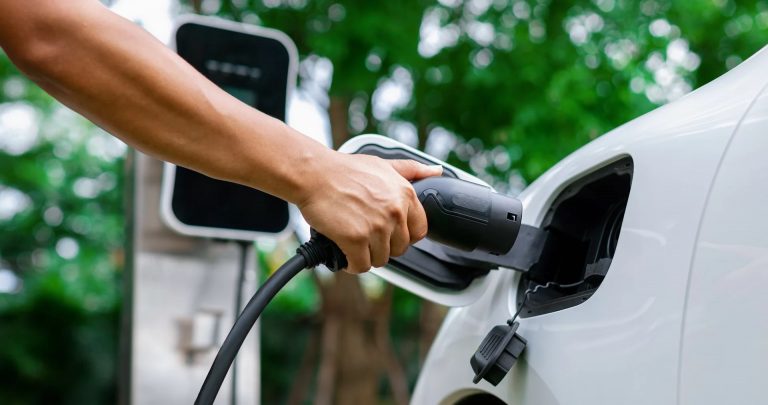
The Federal Government has taken a significant step toward positioning Nigeria at the center of Africa’s electric vehicle transition, signing a Memorandum of Understanding with South Korea’s Asia Economic Development Committee (AEDC) to establish what is being described as the continent’s first large-scale electric vehicle manufacturing plant, alongside nationwide charging infrastructure.
But the plan has been greeted with a mix of optimism and caution, as observers warn that the country may not yet have the fundamentals required to sustain a viable EV market.
The agreement with AEDC, executed on January 30, 2026, by the Minister of State for Industry, Senator John Enoh, on behalf of Nigeria, and AEDC Chairman Yoon Suk-hun, is being positioned as a cornerstone of the country’s green industrial strategy.
Register for Tekedia Mini-MBA edition 20 (June 8 – Sept 5, 2026).
Register for Tekedia AI in Business Masterclass.
Join Tekedia Capital Syndicate and co-invest in great global startups.
Register for Tekedia AI Lab.
According to the National Automotive Design and Development Council (NADDC), the project will be implemented in phases, beginning with EV assembly before expanding into full local manufacturing. At peak capacity, the plant is expected to produce up to 300,000 vehicles annually and create about 10,000 direct jobs. Authorities say the initiative aligns with Nigeria’s National Energy Transition Plan and the National Automotive Industry Development Plan, both of which aim to reduce carbon emissions, promote local manufacturing, and reposition Nigeria as a regional automotive hub.
The Director-General of NADDC, Otunba Oluwemimo Joseph Osanipin, said the partnership would accelerate technology transfer, attract investment, and strengthen research, design, and innovation within the automotive ecosystem. He added that Nigeria is steadily building a sustainable framework that supports green energy adoption and global competitiveness.
While the move is widely seen as plausible on paper, analysts point to the country’s persistent electricity crisis as a fundamental constraint. Nigeria’s national grid remains unstable, with frequent collapses and generation levels that struggle to meet basic household and industrial demand. For many, the idea of rolling out large-scale EV charging infrastructure in such an environment appears, at best, premature.

Electric vehicles rely heavily on consistent and affordable electricity, not only for private charging but also for commercial fleets, logistics operators, and public transport systems that policymakers hope will drive early adoption. In Nigeria, where millions of households rely on petrol and diesel generators for daily power needs, critics argue that charging EVs would simply shift emissions and costs from fuel tanks to generators, undermining the environmental and economic rationale of the transition.
Infrastructure gaps extend beyond electricity. Poor road networks, limited grid coverage outside major urban centers, and the absence of a coordinated national charging framework all pose significant hurdles. Even in Lagos and Abuja, where EV pilots and some charging stations exist, coverage remains thin and largely confined to corporate campuses.
There is also the question of affordability. Electric vehicles remain significantly more expensive upfront than conventional internal combustion engine cars, in a country where average incomes are low, and access to consumer credit is limited. Without substantial subsidies, financing schemes, or cost reductions driven by local manufacturing, mass-market adoption is likely to remain elusive in the near term.

Nigeria’s EV ambitions are not new. In April 2021, the Nigerian Institute of Transport Technology in Zaria set up a project team to develop a locally made electric vehicle. In August 2022, the National Agency for Science and Engineering Infrastructure signed MOUs with Israeli and Japanese firms to commence EV assembly and manufacturing. Several local companies, including Innoson Vehicle Manufacturing, Jet Motor Company, SAGLEV, Spiro, NEV Motors, and the Electric Motor Vehicle Company, have since introduced electric or hybrid models, mostly targeting fleets and niche urban users.
The Energy Transition Plan, launched in 2022, outlines an ambitious target of a 100% transition to electric vehicles by 2060, with Lagos State aiming for 2050. However, analysts note that these timelines assume massive improvements in power generation, grid stability, and infrastructure investment that have yet to materialize.
International interest in Nigeria’s EV potential is also rising. In May 2025, China announced plans to establish EV factories and other manufacturing ventures in the country, reflecting a broader push to tap Nigeria’s market size and mineral resources. Proponents argue that such investments could help unlock local value addition, particularly if Nigeria develops its lithium and other critical mineral value chains.
While there has been growing interest, many experts caution that manufacturing capacity alone does not create a market. Without reliable electricity, widespread charging infrastructure, and supportive consumer policies, an EV plant risks becoming an export-oriented facility or a symbolic project disconnected from domestic realities.
Against this backdrop, Nigeria’s EV push only underscores its ambitious long-term vision, colliding with short-term structural constraints. Analysts have noted that for projects like this to succeed and become a catalyst for genuine transformation, Nigeria has to quickly fix its infrastructure deficits and the basics that electric mobility depends on.