

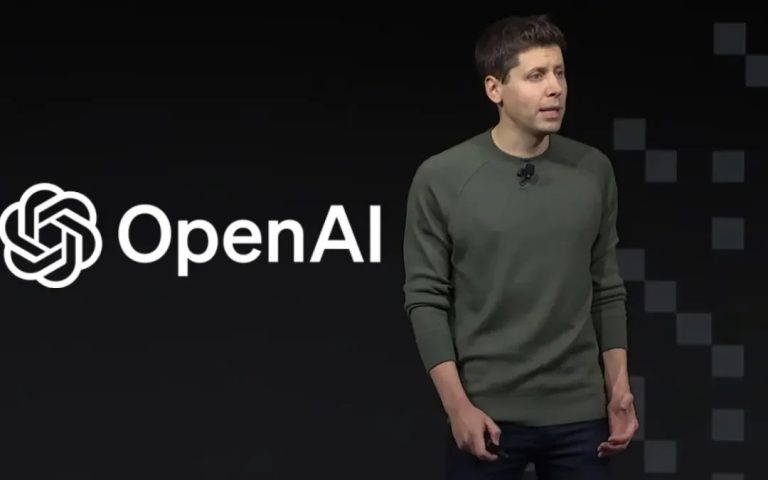
OpenAI CEO Sam Altman says the term artificial general intelligence — long viewed as the holy grail of artificial intelligence research — is losing relevance as breakthroughs in the field make it increasingly difficult to define what AGI actually means.
Speaking to CNBC’s Squawk Box last week following the release of OpenAI’s latest large language model, GPT-5, Altman argued that the label “AGI” has become too vague to serve as a meaningful milestone.
“I think it’s not a super useful term,” Altman said when asked whether GPT-5 marks a step closer to human-level AI. He noted that the concept has been defined in multiple ways over the years, from the broad notion of AI that can perform any intellectual task a human can, to narrower interpretations such as AI that can handle “a significant amount of the work in the world.” The challenge, he pointed out, is that the very definition of “work” evolves over time.
Register for Tekedia Mini-MBA edition 20 (June 8 – Sept 5, 2026).
Register for Tekedia AI in Business Masterclass.
Join Tekedia Capital Syndicate and co-invest in great global startups.
Register for Tekedia AI Lab.
“I think the point of all of this is it doesn’t really matter and it’s just this continuing exponential of model capability that we’ll rely on for more and more things,” Altman said.
A shifting North Star
For much of the past decade, AGI has served as both a technical goal and a fundraising rallying cry for AI startups. The concept has drawn billions in investment, including the tens of billions of dollars that have propelled OpenAI’s valuation to $300 billion, with reports suggesting a planned secondary share sale could push that figure to $500 billion.
Nick Patience, vice president and AI practice lead at The Futurum Group, told CNBC that while AGI works well as an “inspirational North Star,” the term’s lack of precision can distort the conversation.

“It drives funding and captures the public imagination, but its vague, sci-fi definition often creates a fog of hype that obscures the real, tangible progress we’re making in more specialized AI,” Patience said.
GPT-5 and the incremental debate
OpenAI last week released GPT-5, describing it as “smarter, faster, and a lot more useful,” particularly for writing, coding, and health care support. The system is available to all ChatGPT users, including those on the free tier.
However, the launch drew mixed reactions. Some online critics described GPT-5 as an incremental upgrade from GPT-4o rather than a revolution.

“By all accounts it’s incremental, not revolutionary,” said Wendy Hall, professor of computer science at the University of Southampton. She added that AI companies “should be forced to declare how they measure up to globally agreed metrics” to prevent overblown marketing claims, warning that “it’s the Wild West for snake oil salesmen at the moment.”
Altman himself conceded that GPT-5 does not meet his personal definition of AGI, as the system cannot yet continuously learn without human retraining. While OpenAI still positions AGI as its ultimate goal, Altman said the company now prefers to discuss “different levels” of intelligence rather than using the binary question of whether is it AGI or not? framing, which he believes has become “too coarse as we get closer.”
The distraction argument
The debate over AGI’s meaning comes as AI firms face growing scrutiny over how they present their technological progress. Some experts believe that chasing the AGI label has become more of a fundraising strategy than a practical benchmark.
Patience told CNBC that while AGI remains a compelling vision, it may now be more of a distraction than a useful guidepost.
“There’s so much exciting real-world stuff happening, I feel AGI is a bit of a distraction, promoted by those that need to keep raising astonishing amounts of funding,” he said. “It’s more useful to talk about specific capabilities than this nebulous concept of ‘general’ intelligence.”
Altman, for his part, predicts that AI will deliver breakthrough achievements — such as solving complex mathematical theorems and driving scientific discovery — within the next two years. Whether or not such milestones meet any one definition of AGI, he suggested, the more important measure will be how AI systems continue to integrate into daily life and reshape industries.