DD
MM
YYYY

PAGES

DD
MM
YYYY

spot_img

PAGES

Home Blog Page 10

33% CashRake Is Rewriting Top Online Gambling Rules: Why Spartans Is Pulling Ahead of FanDuel and Caesars

0

Traditional market giants like FanDuel and Caesars have long commanded massive audiences with deep pockets, broad offerings, and well?established digital presences. FanDuel consistently reports industry?leading revenue and a dominant share in U.S. online sports betting and iGaming.

It continues to drive billions in annual handle and monthly users, underscoring its scale and entrenched market position. Meanwhile, Caesars Entertainment blends brick?and?mortar heritage with digital expansion, eyeing diversified revenue growth through sportsbooks and enhanced AI?powered engagement tools.

Yet while these platforms have anchored the mainstream landscape, a new contender is rewriting expectations for what top online gambling can mean in a modern, crypto?infused era. Spartans is rapidly ascending from niche disruptor to focal point for bettors seeking value that transcends traditional bonus structures or loyalty tiers.

FanDuel: Steady Footing in the Online Betting Landscape

FanDuel stands as one of the most recognizable names in regulated betting. It has repeatedly led U.S. sports betting revenue and monthly active users, outpacing peers like DraftKings in key statistical categories. Its online casino operations also form a substantial portion of overall revenue, reflecting the expansive appeal of a combined sportsbook and iGaming ecosystem.

FanDuel’s technology emphasis, particularly on mobile app reliability and real?time data feeds, supports high engagement levels across diverse markets. Yet, even with strong performance metrics, the platform operates within the traditional online gambling framework: bonuses, promotions, and loyalty drivers still play a central role in user retention. FanDuel’s size provides resilience, but its innovation cadence tends to align with gradual enhancements rather than sweeping structural change.

Caesars: Legacy Meets Digital Expansion

Caesars Entertainment brings decades of gaming heritage into the digital arena, blending its physical venues with an expanding online sportsbook and casino footprint. Recent financial narratives indicate mixed performance across segments, with digital initiatives gaining traction even as analysts adjust fair value estimates in response to broader economic and operational pressures. Strategic moves, such as AI-driven dynamic pricing and personalized offers, highlight Caesars’ efforts to modernize its customer interface.

Despite these initiatives, the platform’s digital operations remain smaller in scale than leading competitors, both in market share and profitability, and face challenges from entrenched duopolies within regulated sports betting markets. While Caesars continues to leverage its omnichannel capabilities, its online presence represents incremental evolution typical of legacy operators, rather than a structural disruption in the top online gambling space.

Spartans: Changing the Math That Defines Online Gambling

Spartans approaches top online gambling with a structural rethink rather than surface-level incentives. At the center is CashRake, a system that returns value on every wager through a clear mathematical framework. Up to 33% rakeback is generated from house edge activity, paired with up to 3% cashback on losses, ensuring that every bet contributes to a measurable return. These rewards are credited as real cash, not tokens or locked bonuses, and carry no wagering requirements, removing friction that typically delays value realization.

The system’s flexibility further differentiates the platform. Deposits may be made at any time to expand the total CashRake limit, allowing engagement and earning potential to increase proportionally with activity. Rather than relying on fixed tiers or capped thresholds, access scales dynamically, reinforcing sustained participation through structure rather than promotion.

Time sensitivity is an intentional component of the CashRake framework. Rewards must be claimed within 24 hours, preserving momentum while maintaining clarity around eligibility and redemption. Returns are immediate, parameters are explicit, and outcomes are governed by defined rules rather than discretionary adjustments.

In a market where top online gambling platforms often depend on conditional incentives and delayed value realization, Spartans integrates rewards directly into gameplay. Risk becomes more controlled, limits evolve with participation, and returns are perceived as inherent to the system. This represents a recalibration of online gambling economics, grounded in design rather than surface-level incentives.

A New Benchmark for Top Online Gambling

Across these three platforms, the contrast is stark. FanDuel and Caesars illustrate the enduring strength and challenges of legacy and mainstream operators, massive in scale but often conservative in innovation. Spartans, on the other hand, signals a future where the very economics of play are reimagined. By embedding instantaneous rewards into every interaction, Spartans challenges assumptions about value, volatility, and what top online gambling can be.

Whether the broader industry eventually converges on similar structural models or watches from the sidelines, the current momentum, driven by CashRake and a shift toward crypto?native mechanics, ensures that Spartans will remain a defining talking point for the next chapter of speculative growth and platform evolution.

Find Out More About Spartans:

Website: https://spartans.com/

Instagram: https://www.instagram.com/spartans/

Twitter/X: https://x.com/SpartansBet

YouTube: https://www.youtube.com/@SpartansBet
Fink and Ambani Urge Indians to Bet on Equities Over Gold as Financialization Deepens

0

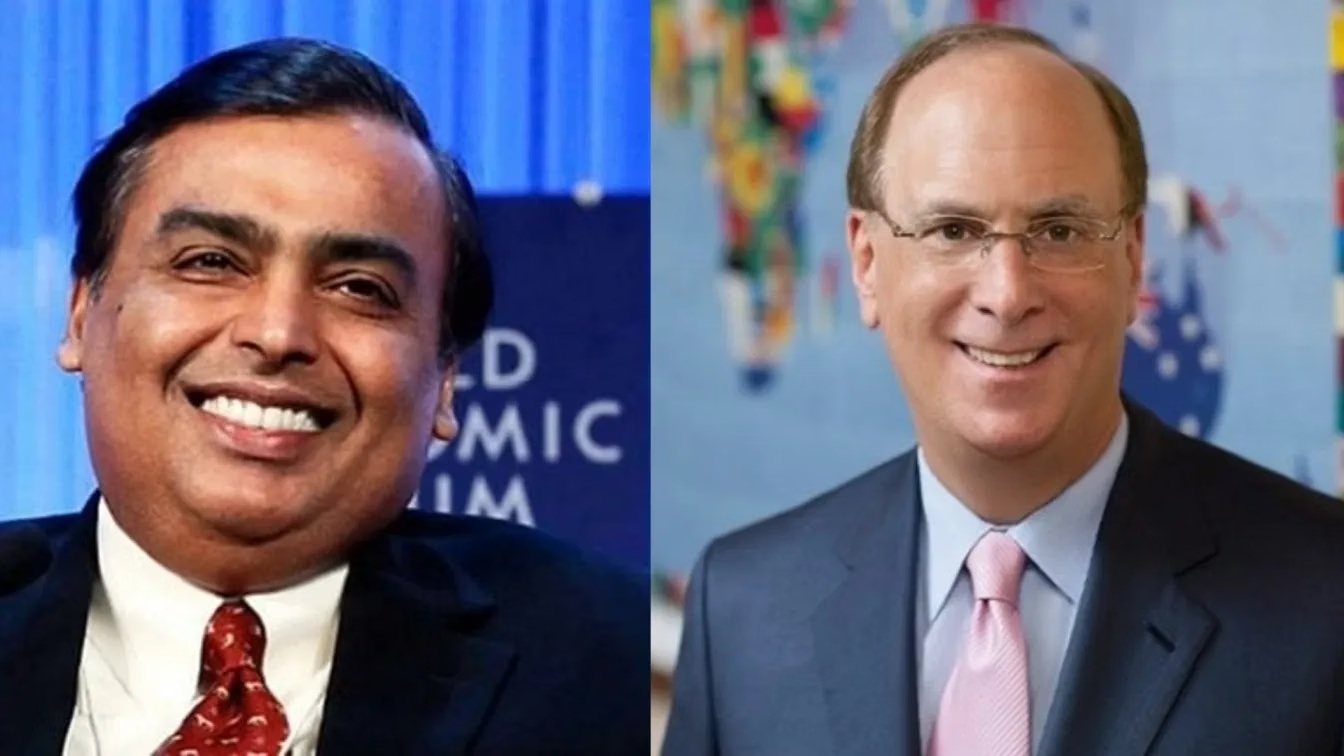
BlackRock CEO Larry Fink and Reliance Industries Chairman Mukesh Ambani are pushing a familiar but increasingly consequential argument in India’s financial discourse, that the country’s vast household savings would be better deployed in equity markets than locked away in gold.

Their intervention comes at a moment when market signals are mixed, investor sentiment is uneven, and the tension between tradition and financial modernization is once again in focus.

The remarks were made during a public fireside chat at a time when Indian equities have struggled to gain traction this year. The benchmark Nifty 50 is down nearly 2% so far, while gold has attracted attention amid heightened volatility driven by global interest rate uncertainty, geopolitical risks, and central bank buying. Against that backdrop, Ambani described domestic savings tied up in gold and silver as largely “unproductive,” arguing that money invested in equities compounds over time in ways physical assets do not.

The subtext of the conversation was not subtle. India’s household balance sheet remains heavily skewed toward physical assets, even as its capital markets mature and broaden. Gold, in particular, plays an outsized role, serving as a store of value, a hedge against inflation, and a cultural anchor that cuts across income levels. Yet for policymakers, economists, and global asset managers, that preference represents idle capital in an economy still hungry for long-term investment.

Fink’s message leaned heavily on the long view. He said the next 20 to 25 years would be an “era of India,” urging citizens to invest in their own country’s growth through capital markets rather than relying on traditional savings instruments. His confidence is rooted in macroeconomic forecasts that continue to set India apart from most major economies. The International Monetary Fund expects India to grow by 6.4% in 2026, making it the fastest-growing large economy globally. By contrast, global growth is projected at 3.3%, with economies such as Germany, the United Kingdom, and Japan expected to expand only marginally.

That growth gap underpins the broader equity argument. In Fink’s telling, those who participate in an economy’s expansion through markets tend to accumulate far more wealth than those who keep their savings idle or confined to low-yield assets. Drawing on BlackRock’s experience in the United States, he said Americans who invested in the country’s growth were far “better off than those who just kept all their money in a bank account.”

In a separate interview with The Economic Times, he went further, predicting that Indian equities could “double and triple and quadruple” over the next two decades, while adding bluntly that he does not see gold delivering comparable returns.

Ambani’s intervention carried its own weight. As chairman of India’s largest conglomerate, his remarks reflected a corporate perspective that sees deeper domestic capital markets as essential to sustaining long-term growth. For companies like Reliance, a broader and more active retail investor base can lower funding costs, reduce dependence on foreign capital, and stabilize markets during periods of global risk aversion.

There is also a clear business dimension to the push. Reliance and BlackRock partnered last year to form Jio BlackRock Asset Management, marking the U.S. firm’s re-entry into India’s mutual fund industry. The joint venture launched its first equity fund in August and had assets under management of 31.98 billion rupees, or about $353 million, across its equity funds by the end of December.

While small relative to the size of India’s mutual fund industry, the figure signals the ambitions of global asset managers who see household financialisation as one of the country’s biggest untapped opportunities.

India’s savings landscape is already changing, albeit gradually. Mutual funds have become more popular as digital platforms simplify access, and systematic investment plans allow households to invest small sums at regular intervals. Data from the Association of Mutual Funds in India shows that investments through SIPs tripled to 2.89 trillion rupees, or about $31.9 billion, in the 2025 financial year compared with 2021. That steady flow of domestic money has helped cushion Indian markets even as foreign investors have been net sellers of equities for more than a year.

Still, physical assets continue to dominate. According to Bain & Company, Indians allocated nearly 59% of their assets to gold and real estate in the 2025 financial year, down from 66% a decade earlier but still a clear majority. Bain estimates that retail investor-driven assets in the mutual fund industry could rise to 300 trillion rupees, or about $3.3 trillion, by 2035, from 45 trillion rupees in fiscal year 2025. The scale of that potential shift highlights why figures like Fink and Ambani are pressing the issue now.

Market performance adds complexity to the narrative. Over the past year, the MSCI India Index delivered a dollar return of just 2.61%, sharply lagging the MSCI Emerging Markets Index, which returned 43.67%. That underperformance has tested investor patience and reinforced the appeal of gold during periods of uncertainty.

Over a five-year horizon, however, India has told a different story, with its equity index delivering nearly twice the returns of the broader emerging markets benchmark. Supporters of equities argue that this contrast illustrates the danger of focusing too narrowly on short-term cycles.

Beyond returns, the debate has broader economic implications. Redirecting household savings from gold to equities could reduce India’s reliance on gold imports, which have long weighed on the current account. It could also provide domestic companies with a more stable source of long-term capital, strengthening the financial system and supporting infrastructure and industrial investment.

Yet cultural inertia remains a powerful force. Gold’s role in Indian households is not purely financial; it is bound up with social security, weddings, inheritance, and trust in tangible assets. Shifting that mindset will likely require more than bullish forecasts from global financiers and industrialists.

Consistent market returns, stronger investor protection, and sustained financial literacy efforts will be critical in convincing households that equities can serve as a reliable engine of wealth.

Crypto Rails Experiences Massive Liquidations Amid Lingering Price Decline

0

Bitcoin (BTC) has dropped below $70,000, currently trading around $64,225 amid a sharp sell-off in the cryptocurrency market. This marks a significant decline from its all-time high.

Bitcoin is trading around $67,000 to $68,000 today with intraday lows dipping to approximately $66,500–$69,000 across exchanges like Coinbase, CoinMetrics, and others.

This represents a roughly 7–9% drop in the past 24 hours and over 20% losses for the week. It’s the lowest level since late 2024 post-U.S. election in November 2024, erasing much of the post-election rally and subsequent gains.

The drop below $70,000 occurred earlier today, triggering widespread liquidations and heightened pessimism among traders. The broader cryptocurrency market has also been hit hard. The total market capitalization currently stands around $2.3–$2.5 trillion down significantly in recent sessions, with daily drops of 5–7% reported.

From its peak in October 2025—when Bitcoin hit around $126,000 with some reports citing highs near $126,210; the crypto market has shed substantial value. Estimates indicate a decline of around 40–50% in total market cap from that October peak, aligning closely with your statement of “almost 50%.”

Bitcoin alone has lost about 44–46% from its October high. This has wiped out hundreds of billions in value across the sector, with recent weekly losses nearing $500 billion in some reports.

This appears to be part of a prolonged “crypto winter” phase that’s been building since early 2025, accelerated recently by: Broader risk-off sentiment in global markets, including tech stock weakness, a stronger U.S. dollar, and macro uncertainty like geopolitical tensions, weak earnings.

Forced deleveraging 

Massive liquidations of leveraged positions (billions in longs wiped out). Outflows from Bitcoin ETFs and fading institutional and investor confidence after the post-2024 election hype didn’t sustain. Bitcoin underperforming traditional safe-havens like gold, which has outperformed significantly over the same period.

The market shows extreme fear levels, with sentiment indicators at multi-month lows. While some analysts see potential for further downside toward $60,000 or lower support levels, others note that historical cycles often feature sharp corrections before recoveries. This is a volatile space—prices can shift quickly.

$70,000 acted as a major support level and psychological barrier. Breaching it has triggered accelerated forced deleveraging — billions in long positions liquidated, creating a self-reinforcing cascade of selling.

This has pushed BTC to intraday lows around $66,500–$69,000 with closes/levels varying by exchange, e.g., $67,000–$68,000 in many reports, entering an “air pocket” zone with thin historical buying interest between ~$70,000–$80,000.

Downside momentum could target $60,000–$65,000 or even lower supports like the 200-week moving average ($58,000) or realized price floors if panic persists. Indicators like the Fear & Greed Index have plunged into single digits (e.g., 11 in some readings), signaling capitulation.

Retail and leveraged traders are exiting en masse, while ETF outflows have intensified (billions monthly since late 2025 peaks). This could prolong volatility, with choppy relief bounces possible but limited without fresh inflows.

Most altcoins like ETH, SOL are down even steeper percentage-wise, amplifying the “Bitcoin dominance” shift as capital flees to perceived safety within crypto. Stablecoins like USDT have seen relative resilience (market cap growth in some periods), but overall liquidity is contracting — a classic bear market sign.

The move erases virtually all post-2024 U.S. election “Trump rally” euphoria (BTC surged on pro-crypto rhetoric). It resets expectations, shaking confidence in narratives around institutional adoption, strategic reserves, or rapid mainstream integration.

Crypto’s decline mirrors weakness in tech stocks, equities, and even precious metals in some sessions, tied to macro factors like a stronger USD, geopolitical tensions, disappointing earnings, and policy uncertainty. This suggests crypto is behaving more like a high-beta risk asset than a decoupled “digital gold.”

Reports describe a “crisis of faith” among holders, with ~46% of BTC supply now underwater and institutional caution rising. Prolonged weakness could delay further ETF inflows or corporate adoption; companies holding BTC on balance sheets facing mark-to-market pain.

Analysts point to historical parallels, where drawdowns of 40-50%+ often precede bottoms. Liquidity tightening (negative stablecoin growth in recent windows) and on-chain demand collapse reinforce risks of testing lower ranges ($55,000–$60,000) before stabilization.

Crypto markets are cyclical; sharp corrections often shake out weak hands, setting up for recoveries when macro conditions improve. Some forecasts still cluster 2026 year-end targets in $130,000–$175,000 ranges if ETF demand rebounds and adoption continues.

This drawdown highlights crypto’s volatility and correlation to traditional markets, potentially accelerating regulatory scrutiny or calls for better risk management. It could weed out speculative excess, strengthening fundamentals for survivors.

Gold has outperformed BTC significantly in this period, challenging “digital gold” claims in risk-off environments. However, long-term bulls see this as a healthy reset after overhyped post-election gains. This isn’t necessarily the start of a multi-year bear market like 2018 or 2022, but it represents a painful “reality check” after 2024–2025 hype.

The market is in capitulation mode — historically a contrarian buy signal for patient holders, though near-term downside risks remain elevated. Monitor key levels ($65,000–$70,000 support, ETF flows, macro data) closely, as reversals can be swift in crypto.

Gold and Silver Slide Sharply as Speculators Exit, Dollar Strength and Calmer Geopolitics Sap Safe-Haven Appeal

0

Gold and silver prices fell sharply on Thursday, unwinding much of a short-lived rally as investors locked in profits amid persistent volatility, a firmer U.S. dollar, and a cooling of geopolitical tensions that had briefly revived demand for safe-haven assets.

Spot gold slid 2% to $4,864.36 per ounce by 0920 GMT, after falling more than 3% earlier in the session. U.S. gold futures for April delivery were down 1.3% at $4,855.80. Silver bore the brunt of the sell-off, tumbling 11.3% to $78.13 an ounce after plunging nearly 17% at one point, underscoring the fragile sentiment gripping precious metals markets.

The sharp moves come after a period of extreme price swings. Both gold and silver suffered their steepest single-day losses in decades last Friday, only days after hitting record highs, as speculative positioning built up rapidly and then reversed just as quickly.

“This is an after-effect of the volatility we’ve seen since last Friday,” said Carsten Menke, an analyst at Julius Baer. “The market has not found an equilibrium yet, which is why we see another sell-off following the previous two days’ recovery.”

Menke said short-term volatility is likely to persist as investors struggle to recalibrate expectations around interest rates, geopolitics, and physical demand.

Gold extended its recent losses earlier this week, sliding to as low as $4,403.24 on Monday, while silver dropped to $71.32, their weakest levels in about a month. That decline followed news that Kevin Warsh, a former Federal Reserve governor, had been nominated to lead the U.S. central bank. The nomination was seen by markets as reducing the risk of a sharply dovish Fed, supporting the dollar, and pressuring non-yielding assets such as gold.

The subsequent rebound in precious metals on Tuesday and Wednesday was driven largely by renewed concerns over U.S.-Iran tensions, which briefly reignited safe-haven buying. However, as fears of an immediate escalation faded and broader risk sentiment stabilized, those gains proved difficult to sustain.

Ole Hansen, head of commodity strategy at Saxo Bank, pointed to technical and regional factors amplifying Thursday’s sell-off, particularly in silver.

“Heavy selling emerged in the Chinese futures market and on the CME after failing to break resistance at $90.50,” he said.

Hansen added that weaker demand from China ahead of the Lunar New Year, combined with reports of a sizeable short position held by a Chinese investor, weighed heavily on sentiment.

The broader macro backdrop also turned less supportive. The U.S. dollar climbed to a two-week high, making dollar-priced commodities more expensive for holders of other currencies. Global equities slipped, while a broad range of commodities, including crude oil and copper, also moved lower as investors reassessed geopolitical risks and demand prospects.

Other precious metals were not spared. Spot platinum fell 6.5% to $2,082.76 per ounce, retreating further from its all-time high of $2,918.80 reached on January 26. Palladium dropped 3.5% to $1,711.69, extending recent losses.

Market participants say the violent swings highlight how crowded positioning and speculative flows have come to dominate short-term price action in precious metals. With inflation expectations, central bank policy signals, and geopolitical developments all pulling prices in different directions, traders are bracing for continued turbulence before a clearer trend emerges.

AI No Longer Hype, It’s Forcing Darwinian Reckoning in Software 

0

Software equities particularly SaaS and enterprise software stocks have experienced a significant crash/selloff in early February 2026, driven primarily by escalating investor fears that rapid advancements in artificial intelligence (AI) could disrupt or even cannibalize traditional software business models.

The selloff intensified around early February 2026, with a major catalyst being Anthropic’s release of new AI-driven automation tools including features like Claude plugins for legal and productivity tasks.

These tools demonstrated AI’s ability to automate workflows in areas like legal work, marketing, customer service, and administrative tasks—raising concerns that businesses might reduce or eliminate subscriptions to specialized software in favor of cheaper, more capable AI alternatives.

This sparked immediate sharp declines on Tuesday, February 3, 2026, with losses spilling over into Wednesday and beyond. Broader fears built on months of underperformance in the sector, amplified by comments from figures like Palantir CEO Alex Karp (who highlighted AI’s potential to write/manage enterprise software, threatening SaaS incumbents) and ongoing worries about AI capex vs. returns.

Software and services stocks lost hundreds of billions in market value in single sessions ~$300 billion on one Tuesday alone. The S&P 500 Software and Services Index or similar benchmarks like the Morningstar US Software Index or iShares Expanded Tech-Software Sector ETF/IGV dropped sharply: Down ~13% in the past week as of early February.

Some reports cite 15-20%+ monthly declines or 30%+ from recent peaks. The sector entered bear market territory in recent weeks, with the worst performance since the early 2000s dot-com fallout in some metrics.

Individual stocks hit hard: Thomson Reuters (-16%), LegalZoom (-20%), Intuit (-11%), Salesforce down ~26% YTD in 2026, ServiceNow, PayPal, Expedia, Equifax, and others saw double-digit percentage drops. Broader tech names like Microsoft, Adobe, and SAP also declined amid the contagion.

Investors worry AI represents an existential threat to software-as-a-service (SaaS) models: Cannibalization: AI agents could replace seat-based licensing, reducing demand for traditional apps.

Pricing pressure and moat erosion: Faster AI progress might commoditize software, with businesses opting for AI tools over renewals. AI spending surges, but total IT budgets grow slowly—implying AI eats into existing software allocations.

Terms like “SaaSpocalypse” or “software-mageddon” emerged among traders, describing panic selling. Not everyone sees this as terminal: Some analysts call the reaction overblown or “internally inconsistent,” comparing it to past panics like China’s DeepSeek AI scare in 2025 that proved temporary.

Others argue AI might expand markets rather than destroy them, or that software firms can adapt by integrating AI. Bargain-hunting has begun in some cases, with stabilization attempts by February 5, though volatility persists.

This event highlights a shift in 2026 market narrative: AI, once a universal tailwind for tech, is increasingly seen as creating clear winners and losers (disrupted incumbents in software). The selloff has rippled into broader tech and even related areas like consulting, but it’s most acute in software equities.

Markets remain volatile as investors reassess valuations amid this disruption debate. Not everyone sees doom—some view this as a temporary “repricing” akin to past panics, with AI ultimately expanding markets and enabling better software. Bulls point to strong earnings beats across the sector and argue the reaction is inconsistent.

Volatility will likely persist into earnings season as companies prove or fail to prove AI as a tailwind. This crash marks a pivotal narrative shift: AI is no longer just hype—it’s forcing a Darwinian reckoning in software. The fittest (those adapting fastest) survive and consolidate; others face prolonged pressure.

Investors should watch for signs of stabilization, like enterprise AI adoption stories or pricing model innovations, but expect choppiness as the market digests whether this is an overreaction or the start of a multi-year transformation.