DD
MM
YYYY

PAGES

DD
MM
YYYY

spot_img

PAGES

Home Blog Page 10

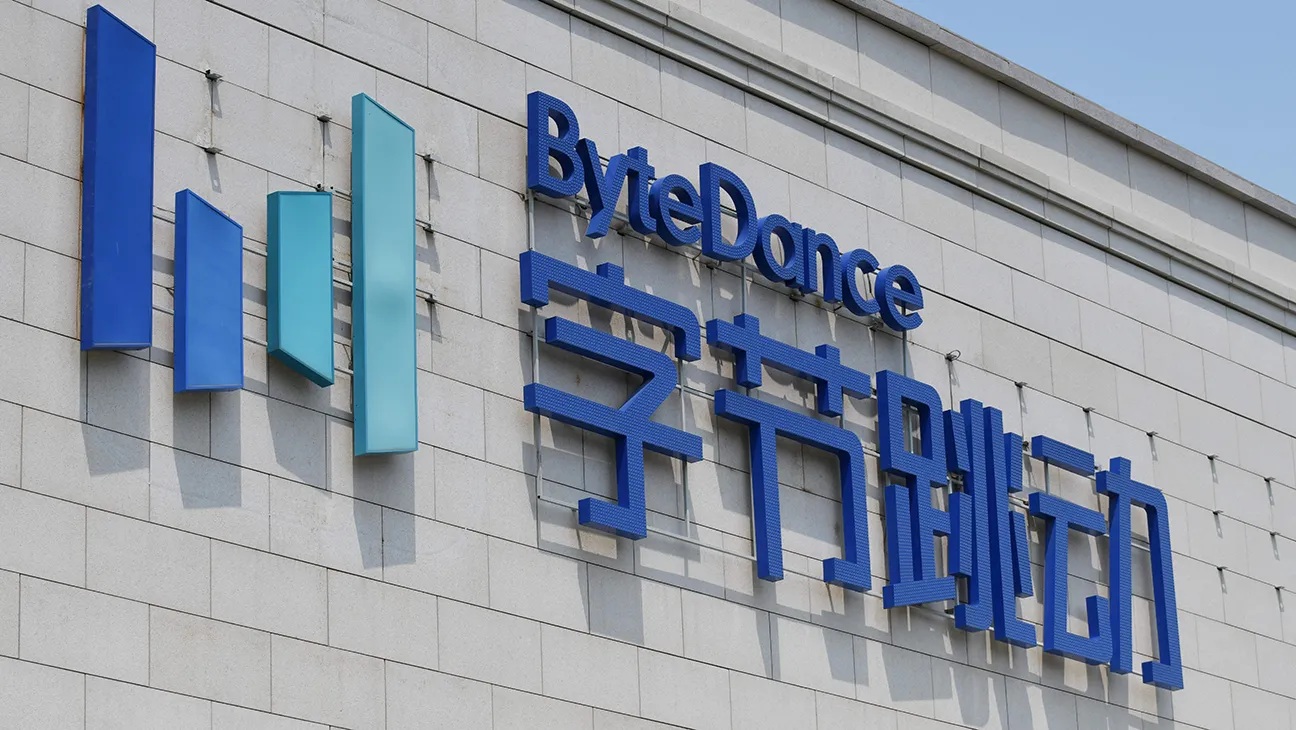
Hollywood Trade Group Strikes First AI Copyright Agreement With ByteDance

0

The Motion Picture Association has reached its first formal agreement with an artificial intelligence company, ByteDance, saying it has strengthened copyright protections in its AI video and image-generation tools following legal threats from major Hollywood studios.

The agreement, announced Monday, covers ByteDance’s Seedance text-to-video platform and Seedream image-generation tool. The MPA said the two sides have engaged constructively over the past several months to strengthen safeguards around the use of copyrighted material and other intellectual property.

The MPA represents major film and television companies including Disney, Netflix and Sony Pictures Entertainment. Its agreement with ByteDance marks a significant development in the entertainment industry’s effort to establish protections for copyrighted works as generative AI tools become increasingly capable of producing realistic video and images.

“Today’s agreement illustrates our belief that copyright is a cornerstone of the film and television industry and reinforces our commitment to protect creative content,” MPA Chairman and CEO Charles Rivkin said.

Neither the MPA nor ByteDance disclosed the specific safeguards included in the agreement.

The deal follows a sharp confrontation earlier this year. In February, the MPA sent ByteDance a cease-and-desist letter accusing its Seedance 2.0 model of widespread copyright infringement.

The trade group alleged that the AI system had been trained on copyrighted material without authorization and could generate videos featuring protected characters, including SpongeBob SquarePants, as well as visuals replicating scenes from the science-fiction series “Stranger Things.”

“ByteDance is engaged in pervasive and widespread infringement of our members’ valuable intellectual property that it must stop immediately,” MPA Global General Counsel Karyn Temple wrote in a Feb. 20 letter to ByteDance Global General Counsel John Rogovin.

The letter represented the first time the MPA had issued a cease-and-desist notice to a major AI company, underscoring the growing legal pressure on developers of generative AI systems over how their models are trained and what users can create with them.

ByteDance responded by saying it was taking steps to strengthen safeguards against unauthorized use of intellectual property and likenesses. Since then, the company has released Seedream 5.0 Pro and Seedance 2.5.

The MPA and ByteDance said the newer systems demonstrate continued progress in protecting intellectual property.

“ByteDance respects the intellectual property rights that underpin creative industries around the world, and we believe responsible innovation in AI goes hand in hand with meaningful protections for rightsholders,” Rogovin said.

A Potential Model for AI And Hollywood

The agreement is significant because it moves the relationship between an AI developer and Hollywood from litigation threats toward negotiated safeguards.

For studios, the issue extends beyond individual AI-generated videos. Film and television companies are trying to determine how copyrighted characters, visual styles, footage, and other intellectual property can be protected as AI systems become capable of reproducing recognizable creative elements with increasingly simple prompts.

AI companies, meanwhile, have strong incentives to develop relationships with studios rather than face repeated legal disputes and restrictions that could limit the commercial use of their products.

Seedance has gained attention among some independent filmmakers, who say the tool can reduce the cost of producing certain visual effects and video content compared with traditional production methods and some competing AI systems. That commercial appeal is increasing pressure on AI companies to balance rapid product development with mechanisms that prevent unauthorized use of protected material.

The competition has become particularly intense as developers race to attract users and establish their products as leading platforms for AI-generated video. In that environment, companies can have incentives to release capable tools quickly, potentially before copyright and content-protection systems have matured sufficiently.

The MPA-ByteDance agreement could therefore become a reference point for how AI companies and entertainment companies negotiate access to creative content and protections against unauthorized generation.

But the fact that the parties have not disclosed the precise guardrails also leaves open questions about how the agreement will work in practice. However, the effectiveness of the arrangement is expected to depend in part on ByteDance’s systems’ reliability in preventing users from generating protected material without unduly restricting legitimate creative uses.

Copyright Battle Enters A New Phase

The agreement comes amid a broader confrontation between the entertainment industry and AI companies over training data, licensing and compensation.

Studios have warned that their copyrighted works should not be incorporated into AI training systems or reproduced by AI tools without permission. AI developers have generally sought to defend their ability to train models on large datasets while introducing safeguards against direct reproduction of protected content.

The dispute is increasingly moving beyond the question of whether AI companies can use copyrighted works for training and toward the separate question of what their models allow users to generate.

The deal between Hollywood and ByteDance does not resolve the larger legal debate over AI training and copyright. But it establishes a negotiated framework between one of the world’s largest entertainment trade groups and a major AI developer at a time when both sides have strong incentives to find workable rules.

Anthropic’s $11.5 Billion Revenue Surge and Amodei’s Bold Vision for AI-Powered Medicine

0

Anthropic is entering a new phase of the artificial intelligence race, with its revenue accelerating dramatically while CEO Dario Amodei makes an extraordinary prediction about the technology’s potential impact on human health.

The Claude developer reportedly generated more than $11.5 billion in revenue during the second quarter of 2026, according to preliminary figures shared with prospective investors. That represents a more than fourteenfold increase from the $787 million recorded in the same quarter of 2025 and a substantial rise from $4.73 billion in the first quarter of 2026.

The financial figures are significant because they suggest that demand for advanced AI is moving rapidly beyond experimentation and into large-scale commercial deployment. Anthropic reportedly also achieved positive adjusted operating income during the quarter, although the figures remain preliminary and could still change.

The acceleration demonstrates how quickly enterprise customers are adopting AI systems for software development, research, automation and other high-value workloads.

Yet Amodei’s ambitions extend far beyond corporate productivity. The Anthropic CEO has argued that artificial intelligence could make it possible to cure most human diseases within approximately five to ten years.

His prediction includes major advances against diseases such as cancer and reflects his broader belief that increasingly capable AI systems could dramatically accelerate biological research.

Amodei has previously developed this argument in his essay Machines of Loving Grace, where he suggested that powerful AI could potentially accelerate biological discovery by roughly tenfold, compressing what might otherwise represent 50 to 100 years of scientific progress into five to ten years.

He acknowledged that experimental biology cannot be accelerated indefinitely because physical experiments, clinical development and other processes still require time. The distinction between accelerating discovery and immediately curing diseases, however, is crucial.

AI can help researchers analyze enormous datasets, identify promising molecular targets, design potential drugs and generate hypotheses at a speed that humans cannot match.

But promising computational results must still survive laboratory experiments, animal studies, clinical trials, regulatory review and large-scale manufacturing before becoming widely available treatments.

That makes Amodei’s prediction both compelling and controversial. Critics have argued that medical breakthroughs are constrained by biological complexity and practical experimentation, meaning that better algorithms alone cannot guarantee cures.

Still, AI’s growing ability to reason across scientific literature and biological data could substantially shorten parts of the research cycle. Anthropic’s financial trajectory gives the prediction an additional dimension.

A company generating billions of dollars from AI can invest heavily in computing infrastructure, researchers and life-sciences applications. The combination of commercial scale and scientific ambition could make AI-driven drug discovery one of the industry’s most consequential frontiers.

Ultimately, Anthropic’s story is becoming larger than the competition between Claude and other AI models. Its exploding revenue reflects the economic transformation already underway.

While Amodei’s medical vision represents a much more ambitious promise: that AI could become an engine for accelerating humanity’s understanding of biology itself. Whether most diseases can truly be cured within five to ten years remains uncertain.

But the speed at which AI capabilities and investment are advancing makes the question increasingly serious rather than purely speculative.

Coinbase Bitcoin Premium Index Hits Record 90-Day Negative Streak

0

Bitcoin is facing an increasingly important demand signal as the Coinbase Bitcoin Premium Index has remained negative for 90 consecutive days, marking the longest such streak since the indicator began tracking the price difference between Coinbase and Binance.

According to CoinGlass data cited in recent market reports, the negative run lasted from May 19 through August 16, with the latest reading around -0.1066%. The Coinbase Premium Index measures the difference between Bitcoin’s price on Coinbase and its price on another major exchange, commonly Binance.

When the index is positive, Bitcoin trades at a premium on Coinbase, suggesting stronger demand from buyers using the U.S.-linked platform. When it is negative, Bitcoin trades at a relative discount, indicating comparatively weaker buying pressure on Coinbase.

The significance of the current streak lies less in the size of the discount and more in its persistence. A reading of -0.1066% is relatively small in percentage terms, but maintaining negative territory for three consecutive months suggests that the market has struggled to generate sustained Coinbase-side demand.

The previous record was a 40-day negative streak between January 16 and February 24, meaning the latest episode has more than doubled that record.

Because Coinbase is widely used by U.S. investors and institutions, traders often treat its premium as a rough proxy for American spot-market demand.

A persistent discount can therefore raise questions about whether U.S. participants are buying Bitcoin as aggressively as traders on other global exchanges. However, the indicator should not be interpreted as definitive evidence that institutional investors are exiting Bitcoin.

Exchange-specific liquidity, market structure, arbitrage activity, differences in trading volumes and changes in investor positioning can all influence the premium. Consequently, the negative reading is better viewed as one piece of market intelligence rather than an isolated signal capable of predicting Bitcoin’s next move.

The timing is significant. Bitcoin has struggled to regain the $70,000 level that was last seen in May, while the negative Coinbase premium has continued. This divergence suggests that Bitcoin’s price performance may be occurring without the same strength of U.S.-based spot demand that typically supports sustained rallies.

For bulls, the key development to watch is whether the premium eventually turns positive. A sustained recovery above zero could indicate that buyers on Coinbase are once again willing to pay more for Bitcoin, potentially providing confirmation that U.S. demand is strengthening.

Conversely, another extension of the negative streak could reinforce concerns about weak domestic buying pressure. The record therefore does not automatically signal that Bitcoin is entering a major decline.

Instead, it highlights an unusual imbalance in the global Bitcoin market. While offshore trading activity can remain relatively resilient, U.S.-linked demand appears less aggressive.

The Coinbase Premium Index offers investors a useful window into Bitcoin’s underlying demand dynamics. Its record 90-day negative streak is a warning that should not be ignored, but it is also not a standalone bearish forecast.

Traders will need to combine the indicator with ETF flows, exchange balances, derivatives positioning, macroeconomic conditions and Bitcoin’s price structure to determine whether the weakness represents temporary caution or a deeper shift in market demand.

OpenAI’s ChatGPT Can Now Remember Computer Activity Such as Clicks and Keystrokes

0

OpenAI is moving toward a model of artificial intelligence that does more than answer prompts. Its latest ChatGPT feature, called Computer History.

Gives the assistant the ability to remember aspects of how users interact with their computers, including clicks, typing, keyboard shortcuts and application switching. The development offers a revealing glimpse into the broader direction of OpenAI’s consumer AI ambitions.

Particularly as the company prepares its first hardware device with designer Jony Ive. Computer History is currently an opt-in feature for ChatGPT’s macOS application.

Rather than continuously taking screenshots, as Microsoft’s controversial Recall initially did, OpenAI says its system records interaction events through macOS accessibility functions.

Screenshots, screen recordings, microphone input and system audio are not captured, while private browsing activity is excluded. The collected events can be transformed into a searchable timeline that ChatGPT and Codex can use as contextual memory.

The distinction is important because OpenAI is attempting to solve one of the central problems facing personal AI: context. Traditional chatbots depend heavily on information users deliberately provide. An agent that understands what someone has already done, which document they edited.

Which application they used and what task remains unfinished can potentially become much more useful. That capability, however, comes with significant privacy implications. Even without screenshots, a sufficiently detailed record of clicks.

Keystrokes and application activity can reveal sensitive information about a person’s work, communications and habits. Reports have also raised questions about how locally stored activity data is protected and the risks posed by malicious software or prompt injection.

OpenAI has attempted to put controls around the feature. Users can choose whether to activate Computer History, exclude particular applications or websites, pause tracking and delete individual activity records. The feature is therefore materially different from a system that secretly monitors activity.

The broader question remains: how much visibility should an AI assistant have into a person’s digital life? That question becomes even more important when viewed alongside OpenAI’s hardware ambitions.

The company is working with Ive and his design team on its first consumer device, expected to arrive during the second half of 2026. OpenAI has described the partnership as an effort to rethink how people interact with computers, while reports have suggested a screen-free device capable of functioning as a new type of AI computer.

Computer History could represent part of the software foundation for that future. Instead of requiring users to repeatedly explain their activities, an AI assistant could understand ongoing context and intervene when useful.

The ultimate objective is not simply conversation; it is persistent, ambient assistance. But this also creates a delicate trade-off. The more an AI knows about a user, the more capable it becomes—and the greater the consequences if that information is misused, exposed or misunderstood.

OpenAI’s challenge will therefore extend beyond building intelligent hardware. It must convince consumers that an AI capable of understanding their digital lives can also be trusted with them. The success of its future device may depend as much on that balance between intelligence and privacy as on the hardware itself.

How to Start an Online Casino in the UK: Costs, Compliance and Investment Opportunities

0

Understanding how to start an online casino requires more than selecting games and building a website. Britain has a mature, competitive and closely supervised market. Entrants need sufficient investment, suitable technology and a credible compliance framework.

The UK iGaming industry benefits from broad reach, mature payment infrastructure and experienced technology providers. Those wishing to assess how established platforms present their services can Visit Mega Casino. Still, regulatory approval alone does not ensure success. Operators must control acquisition costs, prevent fraud, protect players and build sustainable profitability.

Why the UK iGaming Market Still Attracts Investors

The British market combines widespread digital adoption with a recognised licensing framework. It also supports an extensive network of software, payment, compliance and media businesses.

Why investors continue to watch the sector

Online gambling can scale without maintaining a nationwide retail estate. Operators also receive detailed behavioural and transaction data, subject to privacy rules. These features support faster product testing and more measurable customer acquisition.

Investors may gain exposure through operators or specialised B2B suppliers. Software and compliance companies can serve several brands, reducing their dependence on one casino’s performance. Consolidation may also create acquisition opportunities.

Yet market size alone is not an investment thesis. Revenue quality, regulatory history, customer concentration and cash requirements often matter more than headline growth.

Online gambling vs. traditional betting shops

Physical betting shops require leases, local staffing, security and location-specific demand. Digital operators carry different costs, including platform development, cybersecurity, payments and continuous identity monitoring.

Searches for “standalone casinos UK” usually concern physical venues, not remote operators. An online business can reach eligible customers across Great Britain, but it faces strict licensing, advertising and safer-gambling obligations.

The digital model provides greater scalability and data visibility. Traditional premises may offer stronger local recognition and face-to-face service. Neither format is automatically cheaper once compliance and acquisition costs are included.

How to Start Online Casino Operations in the UK

Founders researching how to start Online Casino operations should begin with regulation, not branding. The licence category, target customers and product range determine many later decisions.

A practical launch process includes:

  1. Define the target audience, product and financial model.
  2. Select a white-label, proprietary or acquisition strategy.
  3. Prepare the corporate structure and licence application.
  4. Contract with certified technology and game suppliers.
  5. Integrate payments, KYC, AML and safer-gambling controls.
  6. Test operations before accepting customers or advertising.

Choose a launch model before committing capital

The right model depends on available capital, desired control and speed. Online casino software can be licensed from a provider or developed around proprietary components.

Launch model Control Typical speed Capital profile Principal trade-off                                                                                                              
Proprietary platform High Usually slowest Significant development, certification and staffing expenditure Greater control at the cost of complexity                                                                                                              
Licensed-business acquisition Potentially high Faster only after successful due diligence Purchase price plus integration and remediation capital Historic liabilities may follow the acquired company                                                                                                              

Secure the correct UK licence and corporate structure

Businesses providing remote gambling to consumers in Great Britain generally require the relevant Gambling Commission authorisation. An overseas licence does not replace British permission merely because servers or the company are located abroad.

Applicants should expect scrutiny of ownership, funding, competence and business plans. Required controls may cover anti-money laundering, customer verification, safer gambling, technical standards and reporting. Professional advice should also address corporate structuring and gambling duties.

Expert tip: Confirm licensing, banking, PSP and game-supplier eligibility before incorporation; a workable licence is useless if critical counterparties reject the structure.


Anyone researching online casinos in UK markets should also distinguish Great Britain from other territories. Northern Ireland has a separate legal framework, while other countries apply their own licensing rules.

Build the technology, payments and compliance stack

A reliable online casino website is only the customer-facing layer. The underlying stack must connect accounts, wallets, games, payments, monitoring, reporting and customer support.

Essential components include:

  • A scalable platform with account, wallet and reporting functions.
  • Certified games, aggregation tools and live-dealer integrations.
  • PSP coverage for deposits, withdrawals and reconciliation.
  • KYC/AML screening, sanctions checks and transaction monitoring.
  • Fraud controls for chargebacks, account takeover and bonus abuse.
  • Safer-gambling tools, including limits and self-exclusion processes.
  • Cybersecurity, data protection and incident-response procedures.

Gambling software contracts deserve close review. Operators should assess uptime commitments, intellectual-property rights, data access, termination assistance and regulatory change clauses. Dependence on one supplier can become expensive during migration.

An online casino dealer may work from a specialist live studio rather than the operator’s premises. The operator must still verify certification, market eligibility, streaming resilience and contractual accountability.

How Much Does a UK Online Casino Cost?

There is no universal price for launching an online casino in UK markets. Costs depend on the model, licence scope, supplier terms, staffing and marketing strategy.

The main cost categories

Founders asking how to start gambling operations commercially should budget beyond licensing and design. Important cost categories include:

  • Application, legal, corporate and regulatory expenses.
  • Platform setup, integrations, testing and certification.
  • Game content, minimum commitments and revenue-sharing charges.
  • Payment onboarding, processing, reserves and chargeback management.
  • Compliance, security, customer support and specialist personnel.
  • Marketing, affiliates, bonuses and customer-retention programmes.
  • Working capital and funds required to meet player liabilities.

The source article provides broad international estimates, but these should not be treated as UK quotations. A credible budget requires supplier proposals and a model for monthly cash burn. Marketing and compliance can exceed initial platform costs over time.

Timelines and the hidden price of speed

A white-label arrangement may shorten development, while a proprietary build can take considerably longer. Licensing timelines also depend on application quality, ownership complexity and regulatory enquiries.

Speed has a price. Accelerated entry may produce restrictive contracts, weaker integrations or costly revenue sharing. A slower build provides more control but increases pre-revenue expenditure and execution risk.

Where the Real Investment Opportunities May Be

Direct ownership is only one route into online casino gaming. Infrastructure suppliers may offer recurring B2B income without bearing the operator’s entire acquisition burden.

An investment map of the iGaming value chain

The most attractive segment depends on regulation, margins, customer concentration and technological defensibility.

Segment Commercial opportunity Revenue model Key investment risk
Casino operators Direct access to player spending Gaming revenue after winnings and costs Licensing, acquisition costs and player-protection failures
Platform providers Multi-client infrastructure Setup, subscription and revenue share Customer concentration and costly migrations
Payments and fintech High-volume processing and payouts Transaction and service fees Fraud, banking exposure and regulatory scrutiny
KYC/AML and fraud prevention Growing demand for automated controls Subscription and usage fees False positives, data quality and liability allocation
AI and personalisation Better service, risk detection and retention Software licensing or platform features Privacy, bias and inappropriate targeting
Live casino technology Differentiated real-time games Content fees and revenue share Studio costs, latency and certification
Game studios Scalable intellectual property Licensing and revenue share Hit-driven performance and distributor power
Affiliate/media businesses Qualified traffic and audience ownership Commission, sponsorship and advertising Advertising restrictions and platform dependence


Software businesses can scale across many operators, but integration costs and client concentration may weaken margins. Game studios can produce valuable intellectual property, although revenue often depends on a small number of successful titles.

AI may support fraud detection, customer service and risk identification. Personalisation must not exploit vulnerable consumers or undermine safer-gambling interventions.

What investors should examine before committing funds

Understanding what is a gambling platform helps investors separate a branded front end from the systems that hold operational value. Due diligence should cover code ownership, supplier contracts, data rights, licences and migration capability.

Expert tip: Test revenue quality, regulatory history, counterparty concentration and player liabilities before valuing growth; gross betting activity is not equivalent to sustainable earnings.


Investors should also review cash conversion, payment reserves, unresolved complaints and change-of-control provisions. A licence may require notification or approval when ownership changes.

The Regulatory Challenge and Key Investor Risks

Learning how to open a casino is partly an exercise in risk allocation. Regulation affects product design, onboarding, marketing, affordability processes and the use of customer data.

Risks that can weaken an attractive business

The strongest counterargument to sector investment is that regulatory intervention can change economics quickly. Restrictions designed to reduce harm may increase operating costs or limit acquisition channels.

Material risks include:

  • Licence suspension, enforcement action or mandatory remediation.
  • Weak KYC/AML controls and inadequate source-of-funds assessment.
  • Fraud, cyber incidents, chargebacks and payment-provider withdrawal.
  • Excessive dependence on one market, supplier or affiliate.
  • Advertising breaches and promotions that mislead consumers.
  • Player harm, complaints and failures in safer-gambling processes.

Responsible gaming is therefore both an ethical duty and an enterprise risk control. Effective systems should detect concerning behaviour, enable limits and self-exclusion, and support timely human intervention.

What Could Shape the UK Market in 2026–2030?

The next market phase will likely reflect regulatory policy, technology and consumer-protection expectations. Forecasts should remain scenarios rather than promises.

Technologies and policies likely to influence growth

Several developments may shape competition:

  • Wider use of AI for fraud detection and safer-gambling monitoring.
  • Greater automation of identity and financial-risk assessments.
  • Open-banking tools that improve verification and payment visibility.
  • Continued consolidation among operators and technology providers.
  • Stronger scrutiny of affiliates, bonuses and personalised marketing.
  • Demand for faster live content and locally relevant game formats.

Privacy rules will influence how operators use behavioural data. Regulators may also expect clearer evidence that automated models are explainable, accurate and fair.

Investment could shift toward compliance automation and payment resilience. These services address obligations shared by many operators and may benefit from recurring demand.


FAQ

What is a gambling platform?

A platform is the core system connecting player accounts, wallets, games, payments, reporting and compliance controls. It may be proprietary or supplied under a licence. It is broader than an individual game or branded interface.

Can an overseas licence be used to serve British players?

An overseas authorisation does not generally replace the required British remote-gambling permission. Operators should obtain specific legal advice before targeting or accepting consumers in Great Britain.

How can consumers learn how to gamble online safely?

Players should use properly licensed services, verify applicable age restrictions and set affordable time and spending limits. Gambling should never be treated as income or a guaranteed investment. Self-exclusion and support services should be used when control becomes difficult.

Can a live casino operate without a physical venue in Britain?

An operator can integrate content streamed from an approved third-party studio. Contracts must address certification, data, service continuity and territorial rights. Outsourcing production does not eliminate the operator’s regulatory responsibilities.