DD
MM
YYYY

PAGES

DD
MM
YYYY

spot_img

PAGES

Home Blog Page 1006

SoftBank Shares Rally as Telecom Upgrade and Arm’s AI Pivot Strengthen Group Outlook

0

The jump in SoftBank shares reflects growing investor confidence that steady telecom cash flows and Arm’s accelerating AI-driven shift toward data centers can underpin the group’s long-term strategy.

Shares of SoftBank Group Corp surged more than 10% after its telecom subsidiary, SoftBank Corp, raised its full-year profit outlook, while renewed optimism around Arm Holdings reinforced bullish sentiment toward the group’s exposure to artificial intelligence.

The immediate catalyst was the upgraded guidance from SoftBank Corp, which reported resilient results for the first nine months of fiscal 2025. Revenue rose 8% year on year to a record 5.2 trillion yen for the period, while operating income also climbed 8% to 884 billion yen. On the back of that performance, the telecom operator lifted its full-year revenue forecast to 6.95 trillion yen from 6.7 trillion yen and increased its operating income target to 1.02 trillion yen, pointing to confidence that momentum will be sustained into the final quarter.

Management stressed that the numbers reflected steady execution rather than aggressive growth. In the consumer segment, revenue rose 3%, and segment income increased 6%, even as smartphone subscribers declined by about 100,000 in the third quarter. The drop followed tighter customer-acquisition policies, as the company deliberately pulled back on promotions and incentives that boost subscriber counts but weigh on profitability. The strategy signals a shift toward maximizing lifetime customer value and margins in a mature Japanese mobile market where growth is increasingly incremental.

For SoftBank Group investors, the importance of the telecom arm goes beyond its standalone performance. The unit provides predictable cash flows that help stabilize the broader group, which has been rebuilding credibility after years marked by volatile returns from technology investments. Stronger guidance from SoftBank Corp, therefore, reassures the market that the group has a firmer earnings base as it continues to pursue high-growth opportunities elsewhere.

That context helps explain why gains in Arm Holdings amplified the rally in SoftBank shares. SoftBank remains Arm’s largest shareholder, making the British chip designer central to the group’s valuation and its artificial intelligence narrative. Recent strength in Arm’s stock has revived confidence that the company can play a structural role in global AI infrastructure rather than remain tethered to the slower-growing smartphone market.

Arm’s latest results and commentary have reinforced that shift. Chief executive Rene Haas said data-center royalty revenue has grown more than 100% year on year and is expected to become Arm’s largest business within a few years, overtaking mobile. That transition is significant, as data-center chips typically command higher royalties and are directly linked to sustained investment by cloud computing giants racing to build AI capacity.

Arm is also targeting a larger footprint among hyperscalers, aiming to supply half of the central processing units used by the world’s biggest cloud companies by year-end. If realized, that would deepen Arm’s integration into AI workloads and make its revenue base more resilient to consumer demand swings. While the company missed Wall Street expectations on licensing revenue, it still posted record quarterly revenue of $1.242 billion in the final three months of 2025, driven by strong AI demand. That figure exceeded LSEG SmartEstimates, which weights forecasts from analysts with stronger track records, lending further credibility to the growth story.

Market participants say the combination of upgraded telecom guidance and Arm’s AI momentum has sharpened the investment case for SoftBank Group. Andrew Jackson, head of Japan equity strategy at Ortus Advisors, noted that Arm’s upside is increasingly tied to artificial intelligence rather than smartphones, a shift that aligns closely with SoftBank founder Masayoshi Son’s long-held vision of positioning the group at the centre of the AI ecosystem.

The rally also comes at a time when investors are reassessing how to value conglomerates with mixed profiles of stable cash generators and high-growth technology assets. In SoftBank’s case, the telecom business offers ballast, while Arm provides leverage to global AI spending trends. Together, they have helped reframe the group not just as a speculative technology investor, but as a hybrid with both defensive and growth characteristics.

While questions remain around valuation sensitivity to AI cycles and the execution risks inherent in semiconductor markets, the latest results suggest that SoftBank’s core pieces are moving in a more synchronized direction.


Musk said he Will Congratulate Bezos’ Blue Origin if it Lands on the Moon before SpaceX

0

SpaceX is signaling a strategic shift away from headline lunar milestones toward building permanent, large-scale infrastructure on the moon.

Elon Musk has signaled a reframing of SpaceX’s role in the renewed lunar race, saying the company is willing to lose the symbolism of being first to the moon if it helps secure what he now calls the more important prize: establishing a permanent, self-sustaining human settlement on the lunar surface.

In a post on X on Monday, Musk said he would congratulate Jeff Bezos’ Blue Origin if it lands on the moon before SpaceX. The remark was notable not for its sportsmanship, but for what it revealed about SpaceX’s evolving priorities as competition intensifies among private space companies.

“What really matters for the future is being able to land millions of tons of equipment and people to build a self-growing city on the moon,” Musk wrote. “In this respect, perhaps we are more the tortoise than the hare for now.”

The comment came in response to a post by Bezos, who shared a black-and-white image of a tortoise earlier in the day. The imagery echoed the familiar tortoise-and-hare fable and was widely interpreted as a subtle message in the long-running rivalry between the two billionaires. Bezos has often positioned Blue Origin as methodical and patient, in contrast to SpaceX’s faster, more aggressive development style.

For years, Musk and Bezos have sparred over the future of human spaceflight, both publicly and behind the scenes. SpaceX has long been associated with Musk’s vision of colonizing Mars, while Blue Origin has consistently argued that the moon is humanity’s most logical next destination. Musk’s latest comments suggest that SpaceX’s own thinking has shifted closer to Bezos’ long-held position, at least in the near term.

Over the weekend, Musk confirmed that SpaceX has moved its primary focus to the moon, citing feasibility and timelines. In another post on X, he said a self-sustaining lunar city could potentially be achieved in under 10 years, while a comparable settlement on Mars would take more than two decades. He added that while Mars remains part of SpaceX’s long-term plan, the moon now offers a faster route to building an off-world civilization.

This represents a sharp turn from Musk’s earlier stance. As recently as January last year, he dismissed the moon outright, saying, “We’re going straight to Mars. The moon is a distraction.” The reversal underscores how SpaceX’s strategy continues to evolve as technical constraints, funding realities, and competitive pressures change.

Operationally, SpaceX remains deeply engaged in lunar planning. The Wall Street Journal reported last week that the company has told investors it is targeting March 2027 for an uncrewed lunar landing. That timeline places SpaceX squarely in competition with Blue Origin and other players, even as Musk downplays the importance of who arrives first.

Musk has also sought to clarify how the moon fits into SpaceX’s broader interplanetary roadmap. In a separate post on Sunday, he said SpaceX would continue launching missions directly from Earth to Mars where possible, rather than using the moon as a staging point. He cited limited fuel availability on the moon as a constraint, suggesting that lunar operations are being designed primarily for settlement and industry, not as a refueling hub for Mars missions.

Bezos, by contrast, has consistently framed the moon as a practical and strategic destination. He has argued that its proximity to Earth and relatively milder conditions make it better suited for sustained human and industrial activity. In 2019, he mocked the idea of living on Mars, saying spending a year on the summit of Mount Everest would be far more hospitable. During a Blue Origin presentation for its Blue Moon project, a slide on Mars was bluntly titled “FAR, FAR AWAY,” underlining his skepticism of Musk’s Mars-first rhetoric.

Even so, Blue Origin’s progress has been slower than its own early projections. The company previously said it aimed to reach the moon by 2023, a target it did not meet. Its deliberate pace has often been contrasted with SpaceX’s rapid launch cadence and willingness to iterate in public, even when failures occur.

Musk’s “tortoise” comment appears to acknowledge that SpaceX is now prioritizing depth over speed. Rather than focusing on a single landing, the company is framing success as the ability to deliver massive payloads repeatedly, build infrastructure, and sustain human presence over time. That approach aligns with SpaceX’s heavy investment in Starship, a fully reusable vehicle designed to move unprecedented amounts of cargo and people beyond Earth.

For the broader space industry, the exchange between Musk and Bezos highlights a deeper shift in the conversation. The emphasis is moving away from symbolic firsts toward questions of logistics, supply chains, and long-term viability. Landing on the moon may still capture headlines, but the company that demonstrates it can stay, build, and expand is likely to shape the next phase of lunar exploration.

Lyft Stock Plunges After Weak Q4 Results, Raising Questions About Growth and Profitability in Ride-Hailing

0

Shares of Lyft tumbled 15% in extended trading on Tuesday after the U.S. ride-hailing company reported fourth-quarter results that fell short of expectations, signaling persistent challenges in growing its user base and maintaining profitability despite recent regulatory and operational changes.

The sharp decline underscores investor skepticism that near-term policy changes and pricing adjustments will be enough to offset slowing momentum in an increasingly competitive market.

Lyft reported revenue of $1.59 billion for Q4, up only 3% year over year and well below analysts’ consensus estimate of $1.76 billion. Gross bookings grew 19% year over year to $5.07 billion, in line with Wall Street expectations, reflecting moderate underlying demand for rides. Net income for the quarter came in at $2.76 billion, or $6.72 per share, though this figure was not directly comparable to prior periods due to one-off accounting adjustments.

The company’s guidance for adjusted EBITDA—a key measure of profitability—ranged between $120 million and $140 million for Q1 2026, slightly below the Street estimate of $139.8 million. The cautious outlook highlights the delicate balancing act Lyft faces between stimulating demand through lower prices and sustaining margins.

Lyft cited recent California legislation that reduced insurance costs for ride-hailing companies as a factor behind its decision to lower fares in the state. Management expects the move to boost demand over time, but emphasized that broad-based consumer adoption will likely materialize in the second half of the year.

“The pricing adjustments are intended to make rides more accessible and competitive, but the uplift will not be immediate,” Lyft said in its earnings release. “Back-half weighting of adoption reflects the time needed for behavioral shifts and seasonal demand patterns.”

Key operational metrics underscored the challenges Lyft faces in scaling ridership. Active riders totaled 29.2 million, falling short of the StreetAccount estimate of 29.5 million. Total rides for the quarter were 243.5 million, compared with a FactSet estimate of 256.6 million. While bookings grew year over year, the underperformance in active riders and total rides points to ongoing hurdles in attracting new users and maintaining engagement among existing customers.

Industry analysts note that Lyft faces stiff competition from Uber, which has a broader international footprint, diversified revenue streams including freight and delivery, and stronger pricing power in key U.S. markets. Coupled with the lingering impact of pandemic-era consumer behavior shifts, Lyft’s growth trajectory appears more constrained than some investors had anticipated.

Strategic Initiatives and Shareholder Returns

In an effort to bolster investor confidence, Lyft’s board approved up to $1 billion in additional share repurchases, supplementing prior buyback programs. While share buybacks can support the stock and signal management’s confidence in the business, they do not address underlying demand or profitability challenges, which the market viewed as the more pressing issues.

Lyft also continues to explore initiatives to diversify its revenue streams and enhance the customer experience, including subscription offerings and partnerships for shared mobility, although the financial impact of these programs is expected to materialize gradually.

The steep stock decline reflects broader market concerns about profitability pressure across the U.S. ride-hailing sector. Higher labor costs, regulatory uncertainties, and price-sensitive consumers continue to challenge operators like Lyft, which lacks the scale of Uber to absorb margin shocks. Investors are likely to scrutinize the first-half 2026 results closely for evidence that regulatory tailwinds and fare reductions translate into sustained ridership growth without materially eroding margins.

“Lyft’s results show that the industry is still navigating a transitional period where competitive pricing, regulatory changes, and rider behavior all intersect,” said Jessica Liu, senior mobility analyst at Evercore ISI. “Even with the back-half weighted recovery narrative, investors will want to see consistent traction in active riders and ride frequency before regaining confidence.”

Lyft’s ability to regain growth momentum depends on successfully converting lower fares into higher adoption, managing costs effectively, and differentiating itself in a crowded ride-hailing market. With key metrics underperforming expectations and guidance slightly below consensus, the company faces a delicate path to proving that its business model can generate sustainable growth and profitability while navigating regulatory and competitive pressures.

In short, while share buybacks and policy tailwinds offer some support, Lyft’s core challenge remains the same: turning moderate bookings growth into consistent, profitable expansion in a market where consumer behavior is still evolving.

The Power of a “Big Ring”: Why Records Rule the Market

0

José Mourinho is back at Benfica. His resume reads like a map of footballing royalty: Porto, Chelsea, Inter Milan, Real Madrid, Manchester United, and beyond. Despite the inevitable ups and downs of a long career, the world refuses to stop believing in him. Why? Because he has the ultimate “ring” in the game, a Champions League trophy, first won with FC Porto, that cemented his status at the pinnacle of the sport.

As of late 2025, Mourinho has returned to Lisbon on a two-year deal, proving that when the world seems “tired” of a veteran, a new call inevitably comes. There is a profound business lesson here: High-performers with proven records are perpetually recycled. We see it in the C-suite every day, one CEO exits a role only to be snapped up by another firm, while the “new blood” waits in the wings.

Ancient African wisdom captures this perfectly: it takes the killing of a leopard to be called a “killer of leopards.” Once you have achieved that feat, you are addressed in the plural, “unu abiala” (you people have come), because your reputation is now larger than your physical self. You are no longer just a person; you are your record.

I remember my primary school teacher, Mr. Chigbu, using this lure of “legacy” to push us toward secondary school. He would tease us with stories of Okonkwo and Amalinze the Cat from Things Fall Apart, stopping just as the drama peaked: “If you want the rest of the story, you must get into secondary school.”

The legend of Amalinze “The Cat” was built on a record of never letting his back touch the ground. When a young Okonkwo finally threw him, that single, massive victory established a legend that lasted a lifetime.

The Lesson: Records build careers. Even when the shine begins to fade, decision-makers will always default to the person with a history of winning. If you want career longevity, put some undeniable records on your resume. Yes, win a “Champions League” in your own field.

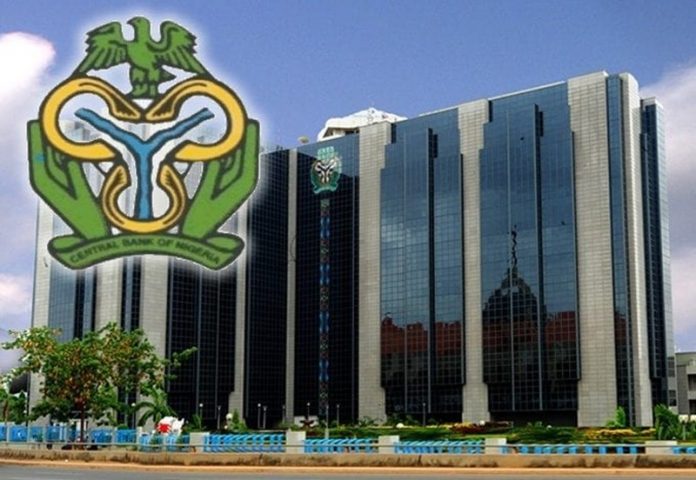
CBN Fully Activates S4 Platform, Redrawing Nigeria’s Primary Debt Market Architecture

0

By making S4 the sole gateway for primary auctions, the CBN has effectively rewired how Nigeria prices, allocates, and governs its sovereign debt.

The Central Bank of Nigeria (CBN) has confirmed the full operational deployment of its Scripless Securities Settlement System (S4) as the exclusive infrastructure for primary market auctions of government securities, sealing a structural shift that fundamentally alters how Nigeria’s sovereign debt is issued, priced, and allocated.

The confirmation, given in response to a Nairametrics enquiry, establishes S4 as the only gateway for bid submission, price discovery, and allocation in the primary market for Treasury bills and, by extension, other government securities. It follows the February 2026 Treasury Bills auction, where the Federal Government offered N150 billion in 91-day bills, N200 billion in 182-day bills, and N800 billion in 364-day bills through a fully centralized electronic process.

Market participants say that the auction marked more than a routine issuance. It signaled the end of Nigeria’s hybrid primary market model, where electronic systems coexisted with physical submissions and decentralized aggregation by intermediaries. In its place is a single, regulator-controlled digital window through which all primary market activity must now pass.

According to the CBN, the change is no longer experimental or transitional.

“S4 has become the only tool used by CBN for government securities auction in the primary market. So, it is fully working now,” said Mr. Auwalu of the CBN’s Corporate Communications Department. He added that participation remains channeled through authorized deposit money banks. “But it is only banks that can send their customer bids. All investors must bid through their bank.”

That clarification ended speculation in the market over whether the February directive was a temporary operational adjustment or the final stage of full enforcement of the S4 framework.

Mr. Zeal Akariwe, chief executive of Graeme Blaque Advisory and an adviser to the CBN, said the underlying infrastructure itself is not new, but its role has changed.

“CBN has always used S4 for primary market auctions. What the apex bank is looking at is deploying it for the secondary market. Nothing significant has changed,” he said.

Even so, traders and analysts argue that the scale and exclusivity of its use now represent a decisive break from past practice.

Under the new framework, all bids for government securities are transmitted electronically by banks on behalf of their clients, converge directly within the S4 interface, and are processed for allocation and settlement without any parallel channels. Physical submissions have been eliminated, decentralized aggregation by intermediaries has been removed, and auction visibility has been centralized within the CBN’s system.

Analysts describe the consolidation as one of the most consequential microstructure changes in Nigeria’s fixed-income market in more than a decade. By collapsing multiple points of discretion into a single electronic platform, the reform reduces informational asymmetry, limits opaque pricing practices, and gives policymakers a clearer sight of demand conditions at each auction.

The February 2026 issuance also confirmed the system’s stabilization after disruptions during its expanded rollout in late 2025. Those interruptions, linked to technical adjustments, had fueled doubts about readiness and market resilience. Its reinstatement and reinforcement now suggest the CBN views digital centralization of the primary market as irreversible.

One immediate consequence is a redefinition of the role of Primary Dealer Market Makers (PDMMs). Previously, PDMMs acted as key gatekeepers, collating bids, managing access, and, in some cases, shaping price formation. Under S4, that discretionary influence is narrowed.

“The full deployment of S4 effectively redraws the governance map of Nigeria’s primary fixed-income market,” said Tajudeen Olayinka, chief executive of Wyoming Capital and Partners Limited. “Price discovery is now centralized, informational asymmetry reduced, and auction mechanics digitized within a controlled regulatory environment.”

He added that mandating a single electronic submission process shifts PDMMs away from gatekeeping toward execution and liquidity facilitation. Akariwe, for his part, said the objective is transparency rather than control, noting that the Securities and Exchange Commission remains the statutory regulator. He said the CBN’s intervention addresses structural weaknesses that previously allowed profit concealment through opaque trading arrangements.

Beyond market structure, the entrenchment of S4 carries wider implications for fiscal financing and monetary policy execution. With bid flows and rate acceptance concentrated within one institutional window, auction outcomes are more likely to align with policy direction than under the former decentralized framework. Policymakers gain near real-time visibility into sovereign funding dynamics and investor behavior, while monetary signals transmitted through Treasury bill rates face fewer distortions.

For banks, the shift formalizes a transition from informational intermediaries to execution agents, responsible primarily for transmitting client orders rather than shaping auction outcomes. For investors, it creates a more transparent environment, but one that is also more sensitive to policy signals and regulatory calibration.

The reform sits within a broader effort by the CBN to sanitize the government securities market. Although S4 has existed since 2014, it was never enforced as the dominant platform for auctions until last year. Previously, bids were often submitted physically through the CBN Issue Office in Lagos or routed through PDMMs, creating layers of opacity and uneven access.

In a circular issued last year, the apex bank said it intended to neutralize structural vulnerabilities in the market and strengthen confidence in sovereign debt issuance. The full operationalization of S4 appears to be the most concrete expression of that intent.

As Treasury bills and government bonds remain central to fiscal financing and interest rate benchmarking, the system’s activation marks a decisive shift in market administration. The CBN has placed itself firmly at the center of primary market execution by digitizing bid submission, allocation, and settlement within a unified regulatory environment.

Market participants say the next phase—potential deployment of S4 into the secondary market—could further reshape yield behavior, trading dynamics, and investor strategy across Nigeria’s fixed-income landscape.