DD
MM
YYYY

PAGES

DD
MM
YYYY

spot_img

PAGES

Home Blog Page 101

Micron to Invest $9.6bn in A Chip Plant in Hiroshima, Signals Japan’s Return to the Global Semiconductor Frontline

0

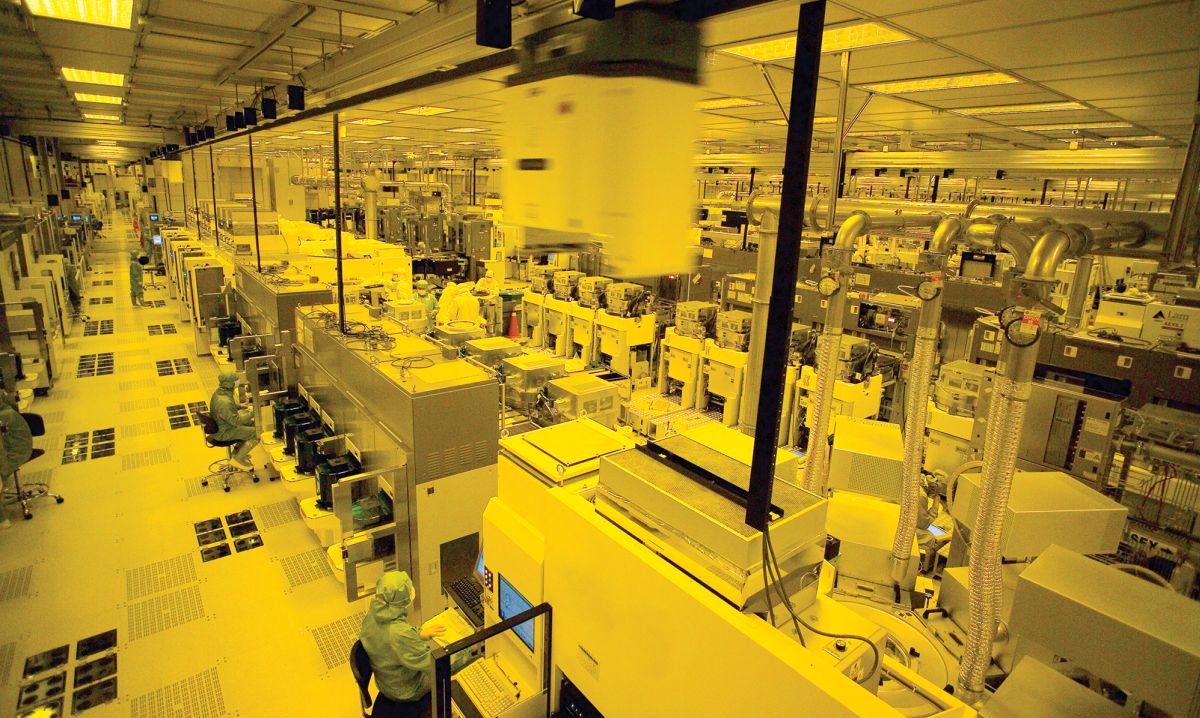
Micron Technology is preparing its largest commitment yet to Japan’s semiconductor revival, with plans to invest 1.5 trillion yen — roughly $9.6 billion — in a new high-bandwidth memory manufacturing plant in Hiroshima.

The figure, reported by the Nikkei and attributed to people familiar with the matter, marks one of the most aggressive expansions by a U.S. chipmaker in Japan in more than two decades.

Construction at Micron’s existing Hiroshima complex is scheduled to begin in May next year. The first shipments of advanced HBM chips are targeted for around 2028, positioning the facility to come online just as demand for AI-class memory is projected to deepen.

Japan’s Ministry of Economy, Trade, and Industry is prepared to shoulder a sizable part of the burden. According to the Nikkei, the ministry will provide up to 500 billion yen in subsidies — a sign of how urgently Tokyo wants to restore its semiconductor footprint. Once a global leader in memory and logic, Japan has spent the past decade trying to claw back relevance after years of underinvestment and the rise of South Korea and Taiwan.

Tokyo’s approach has shifted dramatically. Instead of hoping domestic players can recover alone, the government has thrown open its doors to foreign heavyweights such as Micron and TSMC. That effort has also included funding a new advanced-logic project built on IBM technology, part of a push to rebuild every layer of the chip ecosystem — from research and manufacturing to packaging and supply-chain logistics.

The timing aligns with a surge in demand for high-bandwidth memory. HBM has become the essential component in artificial intelligence systems, enabling the rapid throughput required to train and deploy large models. As cloud giants race to expand data-center clusters built around GPUs, the global HBM market has tightened sharply. SK Hynix dominates the space, but Micron’s Hiroshima expansion is designed to close that gap and diversify its operations away from Taiwan.

Analysts say diversification is no longer a strategic luxury. It is a geopolitical necessity. Tensions around the Taiwan Strait have pushed chipmakers to spread their manufacturing footprints across multiple regions to guard against disruption. Japan’s subsidies, political stability, and long-standing base of semiconductor talent have made it an increasingly attractive alternative.

The Hiroshima project is also part of Japan’s broader attempt to anchor itself in the world’s AI supply chain. By drawing companies like Micron and TSMC into long-term projects, Tokyo aims to lock in domestic jobs, secure access to advanced components, and make Japan indispensable again to global chip production.

Micron’s new plant, expected to deliver HBM for AI data-centers, high-performance computing systems, and next-generation enterprise hardware, will enter service during a period when memory demand is forecast to rise consistently. AI training complexes are expanding rapidly, and HBM shortages have become a recurring bottleneck. Investors tracking Micron’s strategy see the Hiroshima buildout as a long-term play to capture the next wave of AI-driven hardware spending.

Japan, for its part, is racing to ensure that this investment cycle does not slip away as previous ones did. It lost ground in the 2000s when domestic chip companies struggled to scale against Korean rivals. The current era — dominated by AI, data-center growth, and strategic industrial policy — offers Japan a rare second chance. Micron’s 1.5-trillion-yen commitment signals that global chipmakers are taking that opportunity seriously.

By 2028, when Micron intends to start shipping HBM from Hiroshima, the global memory landscape will be more competitive, more politically charged, and more dependent on AI infrastructure. The company’s push into Japan, backed by one of the world’s most aggressive subsidy programs, puts it in a position to compete with SK Hynix and Samsung.
OpenAI Reportedly Preparing to Offer Ads as Company Grapples with Heavy Spending and Low Profit

0

OpenAI is reportedly preparing to trial ads inside ChatGPT’s Android beta, as profit has significantly failed to catch up with the exploding user base and ballooning infrastructure bill.

An analysis by HSBC Global Investment Research concludes that OpenAI still isn’t likely to be profitable by 2030 — and warns the firm will need at least US$207 billion in additional funding to sustain its growth plans.

HSBC’s projection includes a scenario in which, by 2030, ChatGPT and related services reach roughly 44 percent of the world’s adult population (up from about 10 percent in 2025).

Yet even under this optimistic adoption scenario — and after assuming robust subscription and enterprise-AI growth — the infrastructure and compute burden threatens to overwhelm revenues. HSBC models show roughly US$792 billion in cloud and AI infrastructure costs from late 2025 to 2030, with a data-center rental bill of about US$620 billion alone.

Longer term, commitments balloon further: compute obligations could reach US$1.4 trillion by 2033 under current deals.

That math explains why OpenAI reportedly is already seeking more funding, even while it experiments with ads. The ad test may be part of a broader strategy to diversify revenue streams beyond paid plans and enterprise deals — precisely because the compute and infrastructure costs are so staggering, they can swallow growth if not offset by fresh capital or new revenue models.

Why The Infrastructure Costs Are So Massive

The pressure stems largely from recent multiyear cloud-compute and data-center rental deals that lock in enormous capacity commitments. Among them are a roughly US$250 billion agreement with Microsoft and a US$38 billion deal with Amazon Web Services (AWS), combining to secure around 36 gigawatts of AI compute power by the end of the decade.

To put that into perspective: HSBC’s analysts estimate that even with such deals, OpenAI’s “free cash flow + other liquidity” through 2030 would remain negative, leaving the US$207 billion gap.

Because AI models — and their inference demand from millions of users — scale rapidly, compute costs grow rapidly. The larger and more widely used the models become, the more infrastructure you need: data centers, specialized hardware, cooling, electricity, bandwidth, and maintenance. For a platform forecasting widespread global adoption, this translates into high recurrent costs, not one-off capital expenditures.

This high fixed-cost structure helps explain the company’s pursuit of non-subscription revenue streams like advertising: they may be essential to closing the widening deficit.

Ads Inside ChatGPT: A Potential Survival Mechanism — with Trade-offs

That brings us back to the ad test in ChatGPT’s Android beta. For OpenAI, ads offer a way to monetize the conversation and search traffic generated by its hundreds of millions — soon billions — of users. If properly implemented, ads could tap into digital ad budgets just like search engines or social platforms do, but with far greater targeting precision, thanks to the conversational and contextual signals available.

At a time when infrastructure spending threatens to outstrip even aggressive revenue forecasts, the ad strategy may reflect more than a convenience — it could be part of a lifeline to keep the platform afloat without perpetual infusions of external capital.

But that approach carries risks: delivering ads inside conversational AI could erode user trust, blur the lines between unbiased information and commercial content, and raise privacy concerns — especially when the system already handles personal data. For a tool many use for work, research, education, coding, or writing, introducing commercial placements changes the value proposition substantially.

What This Means for the Broader AI and Tech Industry

OpenAI’s situation encapsulates a fundamental tension now emerging across the frontier-AI industry: scaling to global reach demands massive compute infrastructure, but monetizing that scale — via subscriptions, enterprise sales, ads — remains uncertain. HSBC’s analysis suggests that even with high growth, the cash flows are unlikely to catch up to the cost curve without continuous capital infusions or breakthroughs in monetization.

For investors, cloud providers, chipmakers, and other infrastructure partners, that raises critical questions: Is the current AI megacycle sustainable, or is the industry building what some analysts now call a “money pit with a website on top”?

It also means regulators, privacy advocates, and users need to watch closely. As AI platforms like ChatGPT play an increasingly central role in how people access information, learn, work, and create, their business models will shape not only the tools themselves but the incentives behind them — from what kind of content gets surfaced to how user data is used and monetized.

Ecobank Nigeria Moves to Retire Remaining $150m Eurobond Early as Part of Aggressive Balance Sheet Cleanup

0

Ecobank Nigeria Limited has launched a tender offer for the remaining US$150 million of its US$300 million 7.125% Senior Note Participation Notes due 2026, marking the second phase of an ongoing effort to tidy up its external obligations ahead of schedule and settle legacy issues on its balance sheet.

The offer opened on Friday, 28 November 2025, giving eligible noteholders the option to sell their securities ahead of the original maturity date of 16 February 2026. According to the lender, investors whose notes are accepted will receive US$1,000 per US$1,000 principal, together with accrued and unpaid interest up to but excluding the settlement date. The settlement is expected on or before 31 December 2025.

Ecobank framed the transaction as part of a long-running “proactive approach to liability management”, aimed at strengthening capital planning flexibility and maintaining a more orderly debt composition in a period marked by uncertain macroeconomic conditions. Participation remains voluntary for noteholders.

The move builds on the bank’s early repayment four months ago, when it redeemed US$150 million, half of the same Eurobond, through a tender offer and exit consent process in July 2025. That intervention was one of the most significant steps in the bank’s liquidity reset. It was enabled by healthier cash flows, stronger loan recoveries, and the early repayment of promissory notes from its parent company, Ecobank Transnational Incorporated (ETI).

At the time of the July buyback, the bond traded near par, signaling firm investor confidence in Nigeria’s subsidiary of the pan-African banking group. Bondholders also supported the removal of a capital adequacy ratio covenant that had constrained the bank after its CAR slid to 7.65% earlier in 2024, below the 10% minimum for national banks. The drop was driven largely by heavy exchange rate depreciation in Nigeria.

Since then, Ecobank Nigeria has pushed an internal recovery programme that centers on stronger profit performance, strict operating discipline, and support from ETI. The bank had previously said it intended to redeem the remaining US$150 million at maturity in February 2026, subject to market conditions. This fresh tender offer now accelerates that plan by roughly two months.

Why This Matters

The tender offer arrives at a moment when Nigerian banks are aggressively rethinking portfolio risk after a turbulent two years of currency volatility, inflation pressure, and persistent monetary tightening. For Ecobank, retiring foreign debt early reduces rollover risk, limits future interest expense, and puts it in a position to enter 2026 with a leaner external funding book.

Financial analysts say this decision will likely help preserve investor confidence in the lender and in Nigeria’s banking sector more broadly. Global borrowing costs remain elevated, and refinancing any foreign currency debt has become more expensive. By settling the bond ahead of time, the bank sidesteps the uncertainty of raising fresh dollar funding in a volatile environment.

The early liability reduction also gives investors room to tidy up their portfolios before the year closes, particularly those seeking to rebalance exposures ahead of anticipated rate decisions in early 2026.

The strategy aligns with broader moves at the Group level. Ecobank Transnational Incorporated reduced its total borrowed funds by 15% to N2.83 trillion as of September 2025, now representing 6% of total assets, down from 8% in December 2024. Group executives have repeatedly signaled that lowering leverage is a central priority.

Building on Group Momentum

Ecobank Nigeria’s actions cannot be separated from the wider momentum of the ETI Group, which enters 2026 in a stronger financial shape. The bank delivered one of its most impressive quarterly earnings performances in years during Q3 2025. Pre-tax profit rose 47% year-on-year to N394.6 billion, while post-tax profit climbed 48% to N268.5 billion. The momentum extended through the nine-month period, with pre-tax profit hitting N1.01 trillion, up 42% year-on-year, and profit after tax rising 43% to N702.4 billion.

The earnings expansion came even as the Group absorbed higher impairment charges and recorded a one-off loss from discontinued operations. Cost management played a major role. Operating expenses increased only 3% to N446.2 billion in Q3, an outcome the Group views as a win given steep inflation and currency swings across its markets.

The balance sheet remained sturdy. Total assets rose 11% to N47.97 trillion, largely lifted by customer deposits, which reached N35.68 trillion and accounted for nearly three-quarters of the entire asset base. Higher impairment charges — up 64% to N129.7 billion — signaled a more cautious posture, but analysts say the Group’s profitability gave it room to absorb the impact.

The Bigger Picture

Ecobank’s accelerated debt retirement underscores a trend that has grown more visible across African banking in the past two years: the shift toward tighter balance sheets, trimmed foreign currency exposure, and a broader push to insulate operations from global financial swings.

For Nigeria in particular, where the banking sector has been navigating the sharpest currency reset in decades, steps like this offer reassurance that systemically important lenders are building buffers ahead of 2026 regulatory adjustments.

The success of this tender will also inform investor views on how well Nigerian banks manage foreign liabilities at a time when access to global credit markets remains uneven.

Robert Kiyosaki Warns of Looming Market Crash, Urges Investors to Buy Bitcoin

0

Author of Rich Dad Poor Dad and renowned Bitcoin advocate Robert Kiyosaki, has issued fresh warnings about what he believes is an impending collapse across global financial markets.

In a recent post shared on X, Kiyosaki disclosed that the Japan “carry trade”, one of the most influential yet often overlooked forces in global finance has come to an end, cautioning that major market bubbles are now on the verge of deflating.

He further cautioned that major market bubbles are about to burst, suggesting that stocks, real estate, and other asset classes may soon experience sharp declines due to their heavy overvaluation.

He wrote,

“Japan “Carry Trade” ended. Watch out below—bubble Markets are about to deflate. Standing by my mantra…buy gold, silver, Bitcoin, and Ethereum. More recommendations on how to get rich while the world collapses will follow in future Tweets. Yes:  you can get richer while the world gets poorer.”

The Japanese yen Carry Trade, which involves borrowing low-interest funds from Japan and investing them in higher-yielding assets globally, has long been a major driver of liquidity in global markets.

Through the Yen Carry Trade where investors borrowed cheap yen to invest in higher-yielding global assets, Japan became the country propping up valuations from Wall Street to emerging markets. This mechanism has been one of the hidden engines of global liquidity for decades. Currently, as Japan is forced by rising inflation and market distortions to finally depart from its ultra-loose monetary regime, the consequences will echo across continents.

This scenario has forced Kiyosaki to reaffirm his long-standing investment mantra, encouraging his audience to accumulate gold, silver, Bitcoin, and Ethereum. This is not the first time the renowned author has sounded a similar alarm.

In an earlier post, Kiyosaki insisted that the “biggest crash in history” has now begun echoing predictions he previously published in his 2013 book Rich Dad’s Prophecy. He warned that the downturn is not limited to the United States, adding that economies in Europe and Asia are also experiencing severe declines.

He further claimed that advancements in artificial intelligence will eliminate millions of jobs, potentially triggering a collapse in both commercial and residential real estate markets.

“Unfortunately that crash has arrived. It’s not just the US.  Europe and Asia are crashing. AI will wipe out jobs and when jobs crash office and residential real estate will crash. Time to buy more gold, silver, Bitcoin, and Ethereum”, he said.

In response, he reiterated his recommendation for investors to increase their holdings in gold, silver, Bitcoin, and Ethereum, describing silver in particular as “the best and the safest.” He predicted that silver, which he framed as being priced around $50 today, could rise to $70 soon and possibly reach $200 by 2026.

Despite his bleak outlook, Kiyosaki maintains that the unfolding crisis presents significant opportunities for those who prepare adequately.

Conclusion

Robert Kiyosaki’s warnings underscore a broader concern about the fragility of global financial markets amid shifting economic conditions. With the Japan carry trade coming to an end, asset bubbles showing signs of strain, and technological disruptions such as AI threatening employment, Kiyosaki emphasizes the need for investors to adopt defensive strategies.

By advocating for gold, silver, Bitcoin, and Ethereum, he positions these assets as potential safe havens in an era of uncertainty.

Baidu Reportedly Launches Major Layoffs as Intensifying AI Competition and Plummeting Ad Revenue Force Restructuring

0

China’s technology giant Baidu, which operates the country’s largest search engine, initiated a round of large-scale layoffs this week that is expected to hit multiple business units and run until the end of the year.

This aggressive restructuring move, confirmed by six sources briefed on the matter, follows the company’s recent report of a disappointing third-quarter net loss on November 18, underscoring the twin pressures of intensifying competition in artificial intelligence (AI) and the continued decline of its core online advertising business.

While the total, companywide number of jobs being cut could not be immediately established, the sources told Reuters the workforce reduction is internally perceived to be of a large-scale nature. The severity of the cuts is not uniform; layoff numbers vary significantly by business unit and performance ratings, with some teams facing reductions as high as 40%, according to two of the sources.

The job reductions are primarily a response to financial strain and market shifts. The layoffs follow Baidu’s second straight quarterly revenue decline, with total revenue falling 7% and the crucial online advertising revenue dropping 18% in the third quarter year-over-year. For the period, Baidu posted a substantial net loss of 11.23 billion yuan ($1.59 billion), a stark reversal from profit a year prior, primarily driven by asset impairment charges.

In response to these headwinds, the company is executing a definitive pivot by reallocating resources to high-growth, high-value areas. This means roles tied to AI and cloud computing will largely be protected, with one source noting that more resources would be directed into the AI division, signaling that long-term technological leadership remains the central ambition despite short-term profitability challenges.

Conversely, the Mobile Ecosystem Group (MEG) is expected to bear the brunt of the staff reductions, as this legacy unit is heavily exposed to the contracting online advertising market. Baidu’s workforce already stood at 35,900 at the end of last year, down from 39,800 in 2023 and 41,300 in 2022, indicating a multi-year trend of cost rationalization.

The Losing Ground in the AI Race

The deep cuts underscore Baidu’s failure to translate its multi-year, multi-billion-dollar investment in AI into a revival for its core growth. While Baidu was the first major Chinese tech firm to roll out a ChatGPT-style service, Ernie Bot, in 2023, it has struggled to maintain its early lead against agile competitors. Its large language model is now trailing offerings from rivals, including Alibaba and, notably, the fast-growing AI start-up DeepSeek.

The challenge is most apparent in user adoption figures: in September, Baidu’s Ernie Bot app recorded only 10.77 million monthly active users, significantly lower than the 150 million for ByteDance’s Doubao and 73.4 million for DeepSeek, according to AI product tracker Aicpb.com. Baidu’s attempts to gain ground through strategy shifts, including making its Ernie model open source earlier this year, have not yet closed the gap.

Nevertheless, Baidu remains committed to its AI push, focusing on embedding the technology into existing products. It states that more than half of its mobile search result pages now include AI-generated content, aiming to modernize user experience and drive future monetization.

However, this massive job reduction is part of a broader, global trend: major Chinese internet companies like Alibaba and Tencent slashed tens of thousands of jobs in 2022 following a broad regulatory crackdown, and major U.S. tech companies such as Amazon and IBM have also announced thousands of job cuts globally, making cost reduction and AI prioritization the dominant narrative across the tech sector.