DD
MM
YYYY

PAGES

DD
MM
YYYY

spot_img

PAGES

Home Blog Page 1015

Starlink Expands High-Speed Internet to Guinea-Bissau, Advancing Africa’s Digital Connectivity

0

Starlink has launched its high-speed, low-latency internet service in Guinea-Bissau, advancing Africa’s digital connectivity.

The launch follows a provisional licence granted in December 2024 and full approval by the National Regulatory Authority for Information and Communication Technologies (ARN-TIC) in April 2025.

With this launch, Guinea-Bissau becomes the 23rd African country to license the Elon Musk satellite internet constellation. The service is now available in several African countries, including Nigeria, Kenya, South Africa, Rwanda, Zambia, Uganda, Mozambique, Malawi, Ghana, Angola, Algeria, Tunisia, Morocco, Egypt, and now Guinea-Bissau.

Starlink’s entry in Guinea-Bissau comes as the country lags in expanding broadband internet connections. Only around 33 percent of all residents have access to the internet.

As of January 2024, approximately 686,200 people, or 31.6% of the population, were internet users, a significant increase from 2.9% in 2012. Mobile broadband is the primary mode of access, with 2.25 million cellular mobile connections (103.3% of the population, as many have multiple connections).

4G coverage reaches about 32% of the population, but 5G is not yet available as of 2023. The main providers are Orange Bissau and Telecel (formerly MTN), with Starlink recently approved to operate, aiming to improve coverage in remote areas. Challenges include high costs (1 GB of mobile data costs about 21% of average monthly income), limited infrastructure, and unreliable power supply.

Starlink’s entry in the Western African country, is expected to enhance high-speed, low-latency internet access, particularly in underserved areas, potentially closing the digital gap where 67.5% of the population remains offline. Fixed broadband is nearly nonexistent, and free Wi-Fi hotspots are limited, with no comprehensive data on their availability.

Notably, Starlink’s ability to reach remote areas could significantly reduce Guinea-Bissau’s digital divide, potentially increasing internet penetration beyond the current 31.6%. By enabling access to global markets, education, and healthcare, Starlink could boost GDP growth (a 1% increase in internet users can raise per capita GDP by up to 0.4% in sub-Saharan Africa) and empower communities.

Also, the Elon-Musk owned internet service presence, may push local providers to innovate, but it could also strain smaller ISPs unable to compete with its global scale and pricing structure.

Starlink’s launch in Guinea-Bissau is a transformative step toward closing the digital divide, offering high-speed internet to underserved regions and fostering digital inclusion. It could drive economic growth, education, and innovation, particularly in rural areas.

However, high costs and potential capacity issues may limit its reach among low-income populations, and concerns about technological sovereignty persist. The overall impact will depend on Starlink’s ability to balance affordability, local partnerships, and regulatory compliance while maintaining service quality.

It is worth noting that Starlink has been expanding across African countries since its debut in Nigeria in January 2023, aiming to enhance the continent’s digital connectivity, where internet penetration is only about 40% compared to a global average of 66%.

The internet service operates a constellation of over 7,600 low Earth orbit (LEO) satellites, delivering high-speed, low-latency internet to underserved and remote areas. Its significant expansion across Africa,  addresses the continent’s connectivity challenges, including low internet penetration (43% in early 2024), high costs, and limited infrastructure, particularly in rural areas where smartphone usage lags urban areas by up to 200%.

Looking ahead

Starlink’s aggressive expansion, supported by partnerships with local telecoms like Airtel and Paratus Group, positions it to potentially become Africa’s most widespread ISP.
NIBSS Unveils National Payment Stack to Reinvent Nigeria’s Instant Payment System

0

The Nigeria Inter-Bank Settlement System (NIBSS) has launched the National Payment Stack (NPS), a new generation digital infrastructure designed to transform Nigeria’s financial landscape and usher in the future of real-time payments.

The solution, officially unveiled in Lagos on Tuesday, is positioned as the successor to the NIBSS Instant Payment (NIP) platform, which was launched in 2011 and became Africa’s first real-time account-based payment system.

The Managing Director of NIBSS, Premier Oiwoh, said during the unveiling that the NPS was not just a technological upgrade but a foundational shift in Nigeria’s payment ecosystem. According to him, it was built to meet the challenges of today’s digital economy and to prepare the country for tomorrow’s financial innovations.

“It’s a transition to the future. With NPS, we didn’t just build another instant payment solution, we laid the foundation for Nigeria’s financial future,” Oiwoh said.

Oiwoh explained that the NPS was developed to offer faster transaction processing, better dispute resolution, enhanced fraud prevention, and easier integration for banks, fintechs, and government agencies. He noted that it incorporates ISO 20022, the advanced messaging standard now adopted globally by financial institutions for richer and more structured payment data.

He said the NPS will support both single and bulk payments on the same infrastructure and includes new capabilities such as Request-to-Pay, Direct Debit, automated reconciliation, and advanced KYC verification using identifiers like Bank Verification Numbers (BVN), Registered Company (RC) numbers, and Tax Identification Numbers (TIN).

He further stated that the NPS was designed with multi-currency readiness and cross-border payment capabilities in mind. According to Oiwoh, these features align with Nigeria’s broader ambition to achieve a $1 trillion economy within the next eight years. This target will require more efficient digital infrastructure to support formal transactions, tax collection, government disbursements, and private sector innovations.

The Central Bank of Nigeria (CBN), which jointly owns NIBSS with deposit money banks, described the new platform as a major leap forward. Speaking on behalf of the CBN, Musa Jimoh, the Director of Payment System Policy, said the NPS is expected to lay a solid foundation for deeper trust, greater financial inclusion, and the next wave of innovation in digital payments. He represented Philip Ikeazor, the Deputy Governor of Financial System Stability at the CBN and Chairman of the NIBSS Board.

Jimoh noted that the NPS reflects Nigeria’s response to the global movement towards smarter, faster, and more interoperable payment systems. He pointed out that with the global financial industry migrating to new standards like ISO 20022, Nigeria must build infrastructure that not only meets international norms but also addresses the country’s specific needs.

He added that the NPS will also improve the implementation of social intervention payments, tax remittances, and other government financial processes by reducing delays, enhancing transparency, and eliminating leakages.

The launch drew support from other government institutions as well. The Governor of Lagos State, Babajide Sanwo-Olu, represented by Deputy Chief of Staff Samuel Egube, commended NIBSS for developing the platform domestically.

Sanwo-Olu described it as a bold example of what African countries can achieve by investing in homegrown solutions. He added that Lagos, as Nigeria’s commercial nerve center, is especially keen on supporting innovations that promote ease of doing business, transparency, and financial inclusion.

Founded in 1993, NIBSS has remained a key player in Nigeria’s digital transformation journey. It manages the core switching and settlement infrastructure for banks, mobile money operators, and government agencies. The organization has introduced several landmark innovations in recent years, including AfriGO, Nigeria’s domestic card scheme launched to reduce dependence on foreign payment brands. In April 2025, NIBSS also introduced instant settlement for point-of-sale (POS) transactions using AfriGO cards, a development that was welcomed by merchants and payment service providers.

The unveiling of the National Payment Stack marks a critical evolution in Nigeria’s payment infrastructure, signaling readiness for the next era of digital finance. While the rollout of NPS is expected to happen in phases, banks and fintechs have already begun exploring integration through the sandbox environment provided by NIBSS, which allows partners to test their solutions with minimal onboarding time.

Industry observers say that with the NPS in place, Nigeria is better positioned to expand financial services to underserved populations, strengthen its regulatory oversight, and potentially become a continental leader in real-time cross-border payments.

The $PAWSE Token Launch Amplifies Solana’s Memecoin Dominance

0

The $PAWSE token, recently launched on the Solana blockchain, is associated with the deployer of the $WIF memecoin, a well-known dog-themed token. According to posts on X, $PAWSE was deployed via Vertigo, a new decentralized exchange (DEX), with initial trading exclusive to their partner platform, Bullpen, for the first few hours, accompanied by high fees (up to 100% tax) for snipers attempting to trade elsewhere. This was designed to encourage fair launch dynamics, with no single holder owning more than 0.5% of the supply.

The token reportedly surged to a $130M market cap within the first hour of launch on June 17, 2025, though some X posts warn of potential risks, citing the $WIF deployer’s history of launching multiple tokens post-$WIF, some of which were less successful or labeled as scams. For instance, one user noted that $WIF itself faced a community takeover (CTO) after its developer “nuked” the project, urging caution with $PAWSE.

There’s no confirmed evidence from web sources about $PAWSE’s launch details or tokenomics, but X posts suggest support from prominent Solana figures like Anatoly Yakovenko (Toly, co-founder of Solana Labs) and Ansem, a crypto influencer tied to Bullpen. However, skepticism persists, with some users calling it a potential “egregious scam” due to the deployer’s track record. The contract address for $PAWSE is reported as PAWSEvC8zsXJVgBcVB3QRKfwd4P9FS6vbB963HsUEP6, and it’s described as a liquidity play with a $6M liquidity pool and a $13.6M market cap shortly after launch.

The launch of the $PAWSE token by the $WIF memecoin deployer has sparked significant debate within the Solana memecoin community, highlighting both opportunities and tensions. The $PAWSE launch, reportedly hitting a $130M market cap within an hour on June 17, 2025, underscores the speculative fervor driving Solana’s memecoin ecosystem. The use of Vertigo DEX and Bullpen’s exclusive trading window with high sniper taxes aimed to curb bot-driven dumps, promoting a “fair launch.” This approach could set a precedent for future memecoin launches seeking to balance hype with stability.

However, the rapid price surge also amplifies risks. Memecoins like $PAWSE, lacking intrinsic utility, rely heavily on community hype and influencer endorsements (e.g., Anatoly Yakovenko and Ansem). A sudden loss of momentum could lead to sharp crashes, as seen with other Solana memecoins post-hype post. The launch reinforces Solana’s position as the leading blockchain for memecoin activity, with its low fees and high transaction speeds (up to 65,000 TPS) enabling rapid trading and liquidity pool creation. The $6M liquidity pool for $PAWSE and its integration with platforms like Vertigo and Bullpen highlight Solana’s infrastructure advantages over competitors like Ethereum.

Yet, this focus on memecoins risks overshadowing Solana’s broader utility in DeFi, DePIN, or SocialFi, potentially pigeonholing it as a “memecoin casino.” Declining network revenue (down 93% since January 2025) and reduced DEX volumes suggest over-reliance on memecoin speculation could harm long-term sustainability. $PAWSE’s launch leveraged Solana’s vibrant community and high-profile endorsements, boosting its visibility. The involvement of figures like Toly and Ansem underscores the role of influencers in driving memecoin adoption.

However, this also raises concerns about manipulation. Influencer-driven pumps can attract retail investors who may face losses if early holders or “snipers” dump tokens post-launch. The high initial tax on non-Bullpen trades was meant to deter this but alienated some traders, creating friction. The $WIF deployer’s track record is a double-edged sword. While $WIF achieved significant success, its community takeover after the developer’s alleged abandonment and subsequent token launches (some labeled scams) cast a shadow over $PAWSE. This history fuels skepticism, with some calling $PAWSE a potential “egregious scam” despite its early traction.

Successful execution of $PAWSE could redeem the deployer’s reputation, but failure risks further eroding trust, impacting future projects tied to their name. Many see $PAWSE as a promising addition to Solana’s memecoin roster, citing its fair launch mechanics, significant liquidity ($6M pool), and endorsements from Solana heavyweights. Supporters argue it could replicate or surpass $WIF’s success, especially with no single holder owning more than 0.5% of the supply, reducing whale manipulation risks.

Users of Vertigo and Bullpen praise the launch’s structure, viewing it as a model for curbing sniper bots and fostering equitable distribution. They believe $PAWSE strengthens Solana’s memecoin dominance, attracting more developers and traders. Drawn by the $130M market cap spike and Solana’s bullish momentum (SOL hit $270 post-$TRUMP launch in January 2025), traders see $PAWSE as a high-reward opportunity in a hot market.

Many distrust the $WIF deployer due to past projects’ failures or alleged rug pulls. X posts highlight $WIF’s CTO and other tokens’ poor performance, warning that $PAWSE could follow suit. Critics argue the deployer’s history suggests profit-driven launches over long-term commitment. Some community members lament Solana’s memecoin obsession, arguing it detracts from building sustainable DeFi or utility-driven projects. They cite Messari’s analysis of Solana as a “memecoin economy” vulnerable to volume crashes. These purists view $PAWSE as another speculative distraction.

High taxes on non-Bullpen trades during the launch’s early hours frustrated snipers and retail traders, who felt excluded from initial gains. This sparked accusations of favoritism toward Bullpen users, deepening distrust. The divide reflects broader tensions in Solana’s ecosystem between “degen” memecoin enthusiasts and those advocating for fundamental-driven growth. While memecoins like $BONK and $WIF have onboarded users, scandals and rug pulls (e.g., Solana’s NFT era) have left lasting skepticism. $PAWSE’s outcome could either bridge or widen this gap.

Solana’s memecoin market cap ($9.73B as of June 2025) is volatile, with a 7.2% daily drop reported earlier. $PAWSE’s reliance on hype makes it susceptible to sharp corrections, especially if influencer support wanes or if the deployer’s past catches up. High-profile memecoin launches, especially those tied to controversial figures or mechanics, could attract regulatory attention, impacting Solana’s broader ecosystem. The $TRUMP launch in January 2025 already strained network capacity, hinting at scalability concerns under memecoin-driven surges.

The $PAWSE token launch amplifies Solana’s memecoin dominance but exposes fault lines in its community. Optimists see it as a bold, well-structured project with massive potential, while skeptics fear it’s another fleeting hype cycle or worse, a scam. The divide hinges on trust in the $WIF deployer, Solana’s long-term vision, and the sustainability of memecoin mania.

Kraken’s Potential $DOG Listing Could Drive Significant Price Momentum

0

Kraken has teased a potential listing for $DOG, a Bitcoin-based meme coin known as DOG•GO•TO•THE•MOON, which operates as a Runes token on the Bitcoin blockchain. On May 21, 2025, Jesse Powell, Kraken’s co-founder, hinted at the possibility of listing $DOG for spot trading, sparking excitement in the crypto community. This followed Kraken’s earlier listing of $DOG perpetual futures on November 14, 2024, which led to a price surge of over 30% within hours.

Posts on X, including from users like @LeonidasNFT and @cryptolution101, reflect strong community enthusiasm, with some claiming Kraken’s move could make it the first Tier 1 exchange to fully integrate the Runes protocol. However, Kraken has not confirmed a spot listing, and their policy is to avoid revealing details until shortly before launch. $DOG’s price has been volatile, trading at $0.0047 as of June 3, 2025, down from its all-time high but up significantly from its lows.

A confirmed spot listing could boost liquidity and accessibility, but investors should remain cautious due to meme coins’ inherent volatility. The potential listing of $DOG, a Bitcoin-based meme coin and Runes token, on Kraken has significant implications for the crypto market and highlights a growing divide within the crypto community. A Kraken spot listing would significantly boost $DOG’s liquidity, making it easier for investors, particularly in the U.S., to trade the token.

As noted by LeonidasNFT, Kraken’s status as a U.S.-regulated exchange could unlock the U.S. market, where $DOG is currently less accessible due to limited exchange support. This could drive demand and price appreciation, as seen with the 30% surge after Kraken’s futures listing on November 14, 2024. Wider accessibility could attract new retail and institutional investors, potentially increasing trading volume, which recently hit $19.3 million in 24 hours.

Listing $DOG on a Tier 1 exchange like Kraken would validate the Runes protocol, a new token standard on Bitcoin’s blockchain designed for efficient fungible tokens. This could shift perceptions of Bitcoin beyond a store of value, challenging the “Bitcoin maximalist” narrative that prioritizes BTC’s purity. It may encourage other exchanges (e.g., Binance, Coinbase) to list Runes tokens, fostering ecosystem growth and increasing transaction fees for Bitcoin miners post-halving.

Meme coins like $DOG are highly volatile, with a 10% surge following the futures listing but a subsequent -23.9% drop in a week due to market corrections. A spot listing could amplify speculative trading, attracting momentum traders but also increasing risks of sharp price swings, as seen when $DOG hit $0.0099749 in December 2024 but later fell to $0.0047 by June 3, 2025.

The listing could create a “pump and dump” scenario, where early investors or speculators sell off at peak prices, leaving retail investors vulnerable. $DOG’s decentralized, community-driven model—no presale, no team allocation, and a fair airdrop to 75,000 Runestone holders—has fostered strong community engagement. A Kraken listing could amplify this, as organic hype on platforms like X drives further adoption. Partnerships, like with Nashville Hot Chicken for $DOG payments, could gain traction, enhancing real-world utility.

Kraken’s history with regulatory scrutiny, such as the SEC lawsuit in November 2023 for commingling funds and operating an unregistered securities exchange, suggests potential risks for $DOG traders if regulatory issues persist. The unregulated nature of meme coins like $DOG means investors may lack protections, and market manipulation remains a concern.

Some Bitcoin purists argue that Bitcoin should remain a store of value and medium of exchange, free from speculative tokens like $DOG. They view Runes and meme coins as cluttering the blockchain with “junk UTXOs,” potentially increasing transaction fees and confirmation times. This group may see Kraken’s listing as legitimizing a trend that dilutes Bitcoin’s core purpose.

Supporters, including @LeonidasNFT and the $DOG community, see Runes as expanding Bitcoin’s utility, attracting new users, and increasing miner revenue post-halving. They argue that $DOG’s fair launch and decentralization align with Satoshi Nakamoto’s vision of a permissionless, community-driven system. The listing is viewed as a step toward mainstream adoption of Bitcoin-based tokens.

LeonidasNFT has voiced frustration on X, accusing Tier 1 centralized exchanges (CEXs) like Kraken of favoring “scam” tokens with insider allocations over fair projects like $DOG. This reflects a broader divide between those who see CEXs as gatekeepers profiting from selective listings and those who view them as necessary for liquidity and adoption. Others, including traders and investors, welcome Kraken’s potential listing for its ability to provide access and credibility.

The futures listing already boosted $DOG’s visibility, and a spot listing could further bridge the gap between decentralized projects and mainstream markets. Many traders are drawn to $DOG for its short-term price potential, fueled by listing hype and social media buzz. X posts show bullish sentiment (62.3% of tweets). The $DOG community, including “DOG Army” members, emphasizes its role as a “Bitcoin mascot” and a tool for onboarding millions to Bitcoin.

Some in the crypto community dismiss $DOG as another volatile meme coin lacking intrinsic value, comparing it to SHIB or PEPE but with less established infrastructure. They argue that its reliance on community hype and lack of paid promotions could limit sustained growth. Supporters highlight $DOG’s unique position as a Bitcoin-native meme coin, secured by Bitcoin’s Layer 1 and backed by a fair, transparent airdrop. They see it as a revolutionary project that could outshine Ethereum-based meme coins, with Kraken’s listing as a catalyst.

Kraken’s potential $DOG listing could drive significant price momentum, enhance Runes’ legitimacy, and onboard new users to Bitcoin’s ecosystem, but it also carries risks of volatility and regulatory challenges. The divide in the crypto community—between maximalists and Runes advocates, CEX critics and supporters, speculators and long-term holders, and meme coin skeptics and enthusiasts—reflects broader tensions about Bitcoin’s purpose and the role of centralized platforms in a decentralized ecosystem.

OpenAI Sam Altman: AI Is Smarter Than Ever, But Society Seems Unfazed

0

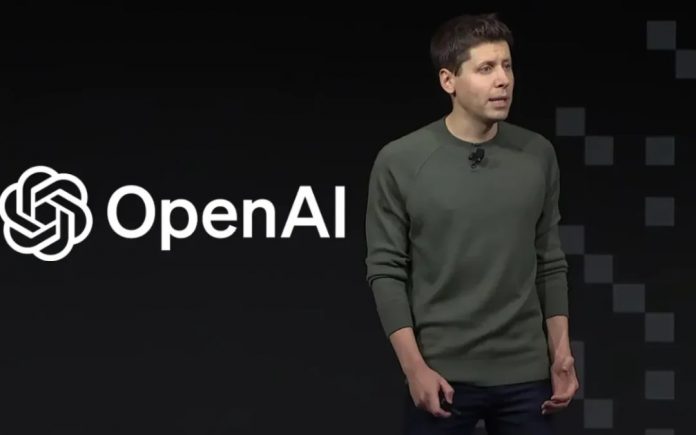
OpenAI CEO Sam Altman says his predictions about the trajectory of artificial intelligence have largely proven correct. What has surprised him, however, is not the technology’s development—but society’s muted response to it.

Speaking on a recent episode of Uncapped with Jack Altman, the OpenAI chief reflected on how far generative AI has come. He believes the company’s latest language model, known as o3, demonstrates reasoning ability on par with a human Ph.D. across many subject domains. But despite the groundbreaking nature of such capabilities, Altman said it feels as though the world hasn’t quite caught up emotionally or institutionally.

“The models can now do the kind of reasoning in a particular domain you’d expect a Ph.D. in that field to be able to do,” Altman said. “And we’re like, ‘Oh okay…’ and we’re not that impressed. It’s crazy.”

Altman admitted he expected society to feel more changed—perhaps even shaken—by the rollout of these highly capable systems. Tools like ChatGPT have entered widespread use across the globe, augmenting everything from corporate workflows to scientific research. Yet everyday life, he noted, remains relatively stable and recognizable.

“If I told you in 2020, ‘We’re going to make something like ChatGPT that’s as smart as a Ph.D. student, and deploy it to a significant portion of the world who use it regularly,’ you’d think the world would look way more different than it does right now,” he said.

Altman believes OpenAI has effectively “cracked” reasoning—a cornerstone of human-level intelligence—and that this is reflected in o3’s performance on math problems, logic tasks, and coding challenges that would traditionally demand years of study and expertise.

However, he concedes that AI remains a co-pilot for now, not a driver. In his view, the real shift will come when AI becomes capable of acting autonomously. For example, AI systems helping scientists triple their productivity are significant, but the game-changer will be when the AI itself can independently conduct research or discover new scientific principles.

“We don’t have AI maybe autonomously doing science,” he said. “But if a human scientist is three times as productive using o3, that’s still a pretty big deal… and as that keeps going… figure out novel physics…”

Is Altman Worried About the Risks?

Unlike other AI leaders—such as Anthropic’s Dario Amodei or DeepMind’s Demis Hassabis—who have publicly warned about catastrophic risks from superintelligent systems, Altman downplayed fears of existential doom. Instead, he acknowledged concerns that are more grounded, even mundane.

“I don’t know about way riskier,” he said, referring to powerful future models. “It gets riskier in sillier ways. Like, I’d be afraid to have a humanoid robot walking around my house that might fall on my baby, unless I really, really trusted it.”

Altman pointed out that damaging outcomes don’t always require high-tech sci-fi scenarios. The ability to cause large-scale disruption—from cyberattacks to bioweapons—can be executed without robotics or even general AI.

But he admitted that beyond the capability frontier, the societal picture remains murky.

“I think we will get to extremely smart and capable models—capable of discovering important new ideas, capable of automating huge amounts of work. But I feel totally confused about what society looks like if that happens,” he said.

Maybe in The Future, With more Capable Models

Altman’s comments highlight a growing disconnect between AI’s actual capabilities and public perception. For a technology now underpinning everything from legal research to code generation, public discourse remains relatively subdued. That gap, he suggests, may soon narrow.

But while AI insiders continue to push boundaries, Altman said it’s time for a broader conversation—not just about what the technology can do, but how society should adapt to and benefit from it.

“Maybe at this point more people should be talking about: how do we make sure society gets the value out of this?” he concluded.

Altman, long at the forefront of the AI boom, remains bullish on progress. But even he is unsure what a future shaped by autonomous, Ph.D.-level AI might actually look like—or how prepared the world will be when it finally arrives.

Would you switch jobs for $100 million? Mark Zuckerberg hopes so — if you’re a top-flight AI researcher, that is. The Meta CEO has tried to poach staffers from OpenAI and Google DeepMind for his new “superintelligence” unit with compensation packages worth more than $100 million, according to OpenAI chief Sam Altman. But so far, Altman added, “none of our best people have decided to take him up on that.” Altman said his employees believe OpenAI has the best shot at achieving artificial general intelligence.