DD
MM
YYYY

PAGES

DD
MM
YYYY

spot_img

PAGES

Home Blog Page 105

How Sky’s Halo Is a Business Lesson in Balancing Demographic Appeal

0

Aiming a product or a service at a given demographic is tough. Get it right, and you can have a lifelong fanbase. Get it wrong, and the backlash can be immense. So how do companies navigate this most tricky of situations in the digital era, and does demographic even matter anymore in the age of digital solutions?

Sky’s Halo Service

After three days in mid-November, broadcasting giant Sky decided to axe its new female-focused TikTok channel. The backlash to it had been extremely negative, with many branding it patronising and sexist. One commentator even described it as  “infantilising” and said it put back women’s sport years. Sky’s original aim had been to create an “inclusive, dedicated platform for women to enjoy and explore content from all sports, while amplifying female voices and perspectives.”

The company did apologise, saying that they “didn’t get it right”. They then added, “we’re learning and remain as committed as ever to creating spaces where fans feel included and inspired.” However, by then, the damage was done, and the social media parodies were out.

Getting Demographics Right

While Sky’s channel was condescending and a huge blunder, getting demographics right is always a tricky issue. Aiming a product at a particular niche is always tough, as you are generally grouping many individuals by a broad common thread.

One sector of entertainment that has worked hard to do this is the iGaming industry. When it comes to slot games, it has done this through providing extensive choice. You will find that many games by developers have similar mechanics or functions and share bonuses. Yet by changing elements, such as graphical themes, music, and difficulty levels, they can appeal to whole new audiences. This has provided everything from kawaii-style fairground themes like Fluffy Favorites slot to mythology-themed outings like Mega Zeus. Each appeals to a different demographic, but provides a similar entertainment experience.

Learning from Demographic Mistakes

The first step in demographics is defining your product or service. This involves understanding what it provides, its special features, and its unique approach. By checking this, you can consider what demographic this would appeal to. After, start to dig into analytics to see who your customers already are. It could include looking at social media statistics or website traffic. You may already have solid market data on this.

The next step is to begin conducting market research amongst this group. Ask what they’re looking for, and test different approaches. It is unlikely this is something Sky tried with the Halo channel, instead making assumptions about what consumers wanted and what would attract them. Once you have this information, you can start to break this demographic down into target personas. This increases personalization even further and can help shape your marketing efforts.

Targeting demographics has some huge advantages. It is almost accepted business practice. Yet making assumptions about what your customer wants, and how it should be presented, can lead to disaster. If you are considering it, invest time and money into quality research and avoid these mistakes.


Cybertruck’s Market Uncertainty

0

Recent reports from various technology and automotive sources indicate that Tesla’s Cybertruck, once considered a design icon for electric pickups, is experiencing a decline in sales and an increase in public criticism. The contrast is notable, especially as some investors have shifted their attention toward more stable, income-generating assets, such as high dividend stocks, during periods of volatility in the EV sector.

The Tesla Cybertruck was initially expected to achieve strong sales, with projections of around 250,000 units per year.

However, the reality has fallen short of expectations with only an estimated 5,300 units delivered in the third quarter of 2025, representing a 63% drop from the previous year’s figures — a setback for Tesla stock performance.

Moreover, various industry trackers have reported that the used vehicle market is experiencing unusually steep depreciation. Some Cybertrucks depreciate by approximately 35% within a year, with Tesla now offering lower trade-in prices to early buyers.

Additionally, the rollout of the Cybertruck has been impacted by technical issues. A recent report indicated that the U.S. National Highway Traffic Safety Administration (NHTSA) — on behalf of Cybertruck owners — initiated a recall for almost all Cybertrucks built before mid-2025 due to a trim panel defect that could detach while driving.

Many owners have expressed dissatisfaction with the Cybertruck’s quality, reporting issues such as malfunctioning doors, spontaneous glass cracking, and vehicles requiring multiple service calls.

Tesla has addressed some of these complaints through software updates, though questions remain as to why a vehicle starting at around $80,000 faces such quality challenges.

Secret purchases to offset expenses

Some industry sources claim that several companies controlled by Elon Musk have purchased significant numbers of Cybertrucks for internal logistics and other company operations. These purchases have been consuming a significant amount of unsold inventory.

But why would companies buy multiple units of the same vehicle unless they are attempting to downplay concerns about its quality by presenting the Cybertruck as part of their fleet? These purchases may have absorbed some of the excess stock Tesla had on hand.

Elon Musk could also use this strategy to hide disappointing sales. The more the case is examined, the more negative signals it reveals about the situation, which may explain the lengths to which Musk might go to maintain the appearance of robust performance.

Purchasing their own vehicles affects delivery figures, which in turn impact revenue and the company’s overall image, positively influencing investor sentiment and the company’s representation on stock screens.

Cybertruck’s success in the mass market remains uncertain. Experts worry that the vehicle’s unconventional design may hinder its popularity outside the U.S. Currently, the claims that Tesla purchased Cybertrucks haven’t been proven beyond observations made by outlets.

However, the combination of low sales, recalls, and the recent reports of Musk’s companies buying Cybertrucks illustrates the difficulties Tesla faces in sustaining both demand and investor confidence for one of the brand’s most ambitious vehicles to date.

Meesho Targets Valuation of Up to $5.6bn in IPO as India’s Listing Boom Accelerates

0

Meesho, the Indian e-commerce platform that built its brand by targeting value-conscious shoppers in smaller cities, is aiming for a valuation of up to 501 billion rupees ($5.6 billion) as it prepares to go public next week.

The listing marks one of the most anticipated tech market debuts of the year and reflects the momentum building in India’s public markets, where investors have been snapping up consumer-tech offerings at a pace not seen in years.

The company has set a price band of 105 to 111 rupees per share ($1.18 to $1.24) for its three-day initial public offering that opens on December 3. Anchor investors can place bids starting December 2. According to Meesho’s prospectus, shares are expected to begin trading on India’s main exchanges on December 10.

Based on Reuters calculations, the IPO could raise roughly 54 billion rupees ($604 million) at the top of the price range. Meesho plans to issue new shares worth 42.5 billion rupees, while existing shareholders Elevation Capital and Peak XV Partners will sell a combined 105.5 million shares. That is lower than the 175.7 million shares they initially planned to sell. SoftBank, one of Meesho’s largest backers, is not selling its stake in the offering.

The company intends to use proceeds from the share sale to invest in cloud infrastructure, expand its technology operations, and cover general corporate expenses.

Meesho’s listing comes during one of India’s busiest IPO cycles on record. The domestic market is widely expected to surpass the $20.5 billion raised last year, with as much as $8 billion still anticipated in the final quarter of 2025 alone. The platform now joins a growing cohort of technology-driven companies that have already tested investor appetite this year, including Groww, Lenskart, and PhysicsWallah.

The rush of listings has been supported by stable macroeconomic conditions, strong domestic liquidity, and renewed enthusiasm for consumer-facing digital businesses. The government’s decision to cut consumption and income taxes in an effort to boost household demand has also provided companies like Meesho with a more supportive environment heading into 2026.

Meesho’s bet on India’s next wave of online consumers

Founded as a platform that enables small sellers and micro-entrepreneurs to reach online shoppers, Meesho grew by focusing on middle and lower-income consumers outside major metros. This market has been largely underserved by Amazon and Walmart-owned Flipkart, which command a significant share of India’s premium online retail segment but have had a tougher time building deep penetration in the country’s smaller towns.

Meesho built its business around low prices, minimal commissions, rapid seller onboarding, and tight cost controls. That formula resonated strongly in Tier 2 and Tier 3 cities, where shoppers are sensitive to price and lean toward unbranded or lightly branded products. Market analysts say the company’s ability to convert these customers into repeat online buyers has been a key advantage.

By going public now, Meesho is attempting to cement its position in a segment of the e-commerce market that is expanding faster than premium online retail. Investors who have followed the company’s growth believe its lighter operating model could help it maintain margins in a market where scale is often expensive to achieve.

Why the valuation matters

The targeted valuation of 501 billion rupees is significant not only for Meesho but for India’s broader tech ecosystem. During the post-pandemic funding boom, several private companies were assigned valuations that later became difficult to justify. The market has since become far more disciplined.

A successful debut for Meesho would signal that investors are willing to reward sustainable growth, profitability, and differentiated market positioning rather than just sheer user numbers. It also reinforces the idea that Indian investors are increasingly ready to back homegrown consumer-tech platforms with large domestic user bases.

One notable feature of the offering is that Elevation Capital and Peak XV Partners are selling fewer shares than originally planned, cutting the offer from 175.7 million shares to 105.5 million. Their decision suggests confidence in Meesho’s long-term story and reduces selling pressure at the time of listing. SoftBank’s choice to hold onto its stake instead of trimming its position further strengthens that narrative.

Analysts say the combination of reduced selling and fresh capital for cloud and tech infrastructure is likely to reassure prospective investors, particularly those concerned about cash burn in Indian e-commerce.

Meesho’s challenge in a market ruled by giants

Despite its gains, Meesho continues to operate in a fiercely competitive market. Amazon and Flipkart remain deeply entrenched, and competition is intensifying across categories like fashion, personal care, and household goods. Tax cuts may be boosting consumption, but margins remain thin across the sector, and logistics costs in India have not fallen as quickly as platforms had hoped.

Even so, Meesho’s early advantage among price-driven consumers gives it a foothold that is not easy to replicate. The company’s rapid expansion into smaller markets, along with its push into cloud efficiency and tech optimization, will be key to maintaining its edge after the IPO.

Meesho’s public listing will test whether a business built on affordability, low-friction selling, and deep penetration outside India’s major metros can achieve long-term investor confidence. If the offering succeeds, it could shift how Indian e-commerce companies are valued and open the door for similar platforms to consider public markets.

The West’s Climate Double Standards, and Africa’s Need for Pragmatism

0

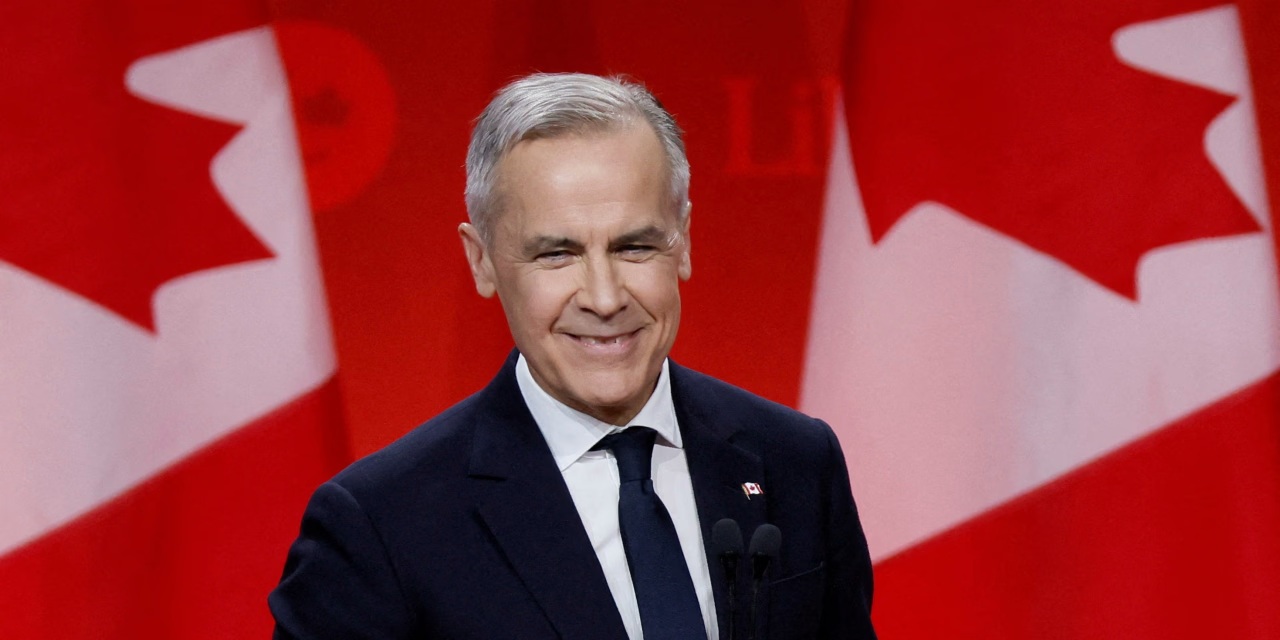
To my African leaders, I hope you are paying attention to the latest global developments: “Canada’s Prime Minister Mark Carney has sealed a sweeping agreement with Alberta that removes two major federal climate rules, clears the path for a West Coast oil pipeline, and exposes what many see as deep hypocrisy in the country’s energy politics.”

The move is echoing far beyond Ottawa and Edmonton as it is also being read internationally as another example of how Western governments push tough climate measures on developing nations while choosing flexibility for themselves when economic pressure rises.

Carney and Alberta Premier Danielle Smith signed the deal on Thursday, scrapping Ottawa’s planned emissions cap on the oil and gas sector and dropping nationwide clean electricity rules. Alberta, in exchange, will strengthen industrial carbon pricing and endorse the massive Pathways Plus carbon capture-and-storage project, which aims to capture emissions from the oil sands and funnel them into a shared storage network.

Yes, Prime Minister Mark Carney and Alberta Premier Danielle Smith have agreed to scrap key federal climate policies in the name of energy security. The deal eliminates the federal emissions cap on the oil and gas sector, suspends national clean electricity regulations in Alberta, and even supports a new oil pipeline to the West Coast. In short, the agreement is designed to boost energy production, not restrict it.

When Russia invaded Ukraine and Europe cut back on Russian energy, Germany reopened coal mines instead of holding the climate line. As we know, the United States is out of the Paris Agreement at the moment. But for many observers, Canada’s latest move is especially surprising, given its loud and moralistic position in the global climate crusade.

I remain an advocate for protecting our planet. Climate change is real, and Africa will bear disproportionate consequences since we do not have the insurance systems and resources to build more resilient-infrastructures. But I want African leaders to see clearly the double standards of the very nations that caused most of the environmental damage in the first place. They are not fully honest about their commitments when their national interests are at stake.

And that means Africa must therefore be pragmatic, not naïve. In climate geopolitics, there is no absolute climate “right” or “wrong”, only national interest. Let us protect our environment, but let us also protect our development, understanding that global players will always choose themselves first.

Canadian PM Strikes Deal With Alberta to Scrap Key Climate Rules for Energy Security

0

Canada’s Prime Minister Mark Carney has sealed a sweeping agreement with Alberta that strips away two major federal climate rules, clears the path for a West Coast oil pipeline, and underlines what many see as hypocrisy in the country’s energy politics.

The move is echoing far beyond Ottawa and Edmonton as it is also being read internationally as another example of how Western governments push tough climate measures on developing nations while choosing flexibility for themselves when economic pressure rises.

Carney and Alberta Premier Danielle Smith signed the deal on Thursday, scrapping Ottawa’s planned emissions cap on the oil and gas sector and dropping nationwide clean electricity rules. Alberta, in exchange, will strengthen industrial carbon pricing and endorse the massive Pathways Plus carbon capture-and-storage project, which aims to capture emissions from the oil sands and funnel them into a shared storage network.

The agreement instantly triggered political ripples inside Carney’s minority government. Steven Guilbeault, who served as environment minister under Justin Trudeau, resigned from cabinet hours after the announcement, arguing that key parts of Canada’s climate architecture were being taken apart.

For Carney, the shift is tied to economic survival. Speaking at an industry event in Calgary, he said President Donald Trump’s tariffs and the uncertainty around them will remove about $50 billion from Canada’s economy, an amount he likened to $1,300 per Canadian. With ninety percent of the country’s oil exports heading to the United States, Carney said it is no longer feasible to let one market determine the fate of such a central industry. He reaffirmed Canada’s goal of net-zero emissions by 2050 while acknowledging the need to adjust Trudeau-era environmental restrictions.

Industry players welcomed the deal, calling it overdue. The Canadian Association of Petroleum Producers said the end of the emissions cap, the planned changes to the Competition Act, and the commitment to open new markets amount to an important policy reset. Environmental organizations expressed alarm, warning that the move weakens national standards at a time when climate action requires stronger coordination, not fragmentation.

A Pipeline Alberta Has Wanted For Years

Alberta is exploring a new crude oil pipeline to British Columbia’s northwest coast that would finally offer direct access to Asian markets. No private company has taken on the project, largely due to federal rules that operators say made approvals nearly impossible. Companies and the Alberta government have said repeatedly that Ottawa would need to remove the emissions cap and reconsider the Oil Tanker Moratorium Act before anyone in the private sector would take on such a high-risk infrastructure plan.

Carney has now stepped in, promising a “clear and efficient” approval pathway and confirming that the marquee piece of the project — a pipeline carrying one million barrels of low-emission Alberta bitumen a day — would be financed and built by private operators. The federal government will amend tanker legislation so that Canadian crude can reach Asian buyers.

That promise lands in a province where opposition is already entrenched. British Columbia Premier David Eby said the tanker law should remain untouched. Several Indigenous groups along the northwest coast issued their own statement saying they will not accept oil tankers in their waters and that the proposed pipeline “will never happen.”

Even with the C$34 billion expansion of the federally owned Trans Mountain pipeline, which tripled its capacity last year, analysts expect existing routes to hit their limit by the end of the decade, especially as Alberta increases output.

What This Means for the West’s Climate Posture

In global energy circles, the Carney-Alberta deal is being watched closely for what it says about Western climate diplomacy. For years, wealthy governments in Europe and North America have pushed African nations to move rapidly toward clean energy and scale back fossil fuels, often tying funding and international support to those commitments.

Canada, the United States, and the European Union have repeatedly urged African oil-producing nations such as Nigeria, Angola, and Mozambique to drop new oil and gas projects and pivot toward renewables, arguing that the world cannot meet its climate goals without such transitions. At the same time, African leaders have countered that Western economies continue to rely heavily on fossil fuels, build new LNG projects, and relax emissions rules whenever national interests are at risk.

This new Canadian deal is now being cited as a fresh example of that imbalance. It shows how Western governments can lean toward energy security during moments of economic risk while expecting developing nations to move faster and with fewer options. Carney’s decision to roll back domestic climate restrictions illustrates the kind of concessions major economies are willing to make when their own industries face pressure.

African officials and analysts who follow global climate negotiations have long argued that Western expectations should not shape the continent’s economic future. Carney’s agreement with Alberta reinforces that view, making it harder for Western countries to demand strict fossil-fuel cuts abroad when they are publicly loosening their own rules at home.

Carbon Pricing, Power Infrastructure, and a New National Electricity Strategy

Along with the major reversals, the federal government and Alberta plan to finalize a new industrial carbon pricing deal by April 1 next year. They will also collaborate on building the Pathways Plus carbon capture system, promoted as the world’s largest planned CCS project.

Ottawa will support Alberta’s push into nuclear power, help strengthen its electricity grid to accommodate the needs of AI data centers, and back the construction of transmission lines linking the province with neighboring regions. Carney said the federal government will unveil a new electricity strategy aimed at doubling Canada’s clean-grid capacity.