DD
MM
YYYY

PAGES

DD
MM
YYYY

spot_img

PAGES

Home Blog Page 1091

Florida Proposed Bill to Eliminate State-Level Tax Gains on Crypto

0

Florida has proposed a bill to eliminate state-level capital gains tax on cryptocurrencies like Bitcoin and XRP, as well as traditional stocks. Introduced in May 2025, this legislation aims to make Florida the first U.S. state to explicitly exempt these assets from state capital gains tax, although federal capital gains taxes would still apply. Florida already lacks a state income tax, so this move primarily clarifies and codifies the tax-exempt status for crypto and stock gains, aiming to attract investors and businesses by providing legal certainty.

Governor Ron DeSantis, a known supporter of digital assets, backs the proposal, which aligns with a broader pro-crypto trend in Republican-led states. If passed, it could position Florida as a hub for crypto and financial innovation, potentially influencing other states to adopt similar policies. Critics warn it may complicate federal tax compliance and impact state revenue, while supporters argue it could drive Bitcoin prices toward $135,000 within months, citing bullish market indicators.

Florida’s proposed bill to eliminate state-level capital gains tax on cryptocurrencies and equities could have significant implications, with a clear divide in perspectives on its impact. Florida could become a magnet for high-net-worth individuals, crypto investors, and financial firms, boosting local economies through increased investment, job creation, and business relocation. The state’s lack of income tax already makes it attractive; this would further sweeten the deal.

Bitcoin could surge to $135,000-$150,000 if the bill passes, reflecting market optimism about Florida’s pro-crypto stance. Critics argue the revenue loss from forgone taxes, even if small due to no state income tax, could strain public services like infrastructure or education, especially if crypto volatility leads to unpredictable economic outcomes. By exempting crypto gains from state taxes, Florida could solidify its position as a blockchain and fintech hub, encouraging startups and innovation.

This aligns with Governor DeSantis’s push for digital asset adoption, as seen in his 2021 proposal to allow businesses to pay state fees in crypto. Regulatory uncertainty at the federal level (e.g., SEC vs. crypto industry) could undermine state-level efforts, creating compliance headaches for businesses navigating a patchwork of laws. The bill could pressure other states to follow suit, creating a race to attract crypto wealth and potentially influencing federal policy toward more crypto-friendly regulations.

Federal capital gains taxes (up to 20% for long-term gains) still apply, and the IRS may scrutinize Florida residents more closely, suspecting tax evasion schemes. This could complicate compliance for individuals and businesses. Supporters on X and crypto forums predict a bullish market response, with increased liquidity and investment in Bitcoin, XRP, and equities. It could also democratize wealth-building for retail investors.

Critics warn of exacerbating wealth inequality, as high earners and crypto whales benefit most, while low-income residents see little direct gain. There’s also the risk of speculative bubbles in crypto markets. Crypto investors, blockchain entrepreneurs, Republican lawmakers, and figures like DeSantis. They view it as a bold move to foster innovation, reduce government overreach, and position Florida as a leader in the digital economy. They argue it aligns with the decentralized ethos of crypto and could drive economic growth.

Some fiscal analysts, federal regulators, and progressive groups concerned about tax fairness. They argue it risks revenue shortfalls, even if minor, and could fuel speculative crypto markets prone to crashes (e.g., 2022’s crypto winter). Progressives see it as favoring the wealthy, while regulators worry about undermining federal tax enforcement or enabling money laundering.

The divide reflects a national split on crypto’s role in finance. Proponents see Florida’s move as a test case for state-led deregulation, while opponents fear it could destabilize markets or widen inequality. If successful, it might inspire states like Texas or Wyoming to follow, but federal pushback like from the SEC or IRS could limit its impact. The bill’s outcome will hinge on legislative debates in 2025 and market reactions to its passage or failure.
Super Bullish Pattern Associated with Ethereum’s (ETH) 9504% Bull Surge in 2017 Reappears, But Not in ETH

0

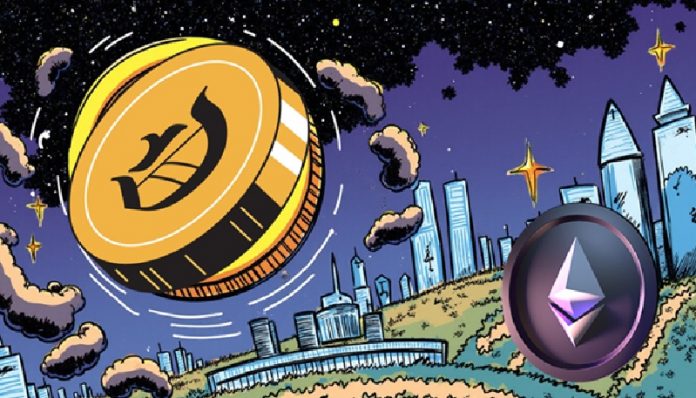
A historical price pattern in Ethereum’s legendary 2017 rally is back—but it’s not ETH leading the charge. Ethereum (ETH) is trading at $2,648.55, showing a clear Bullish Megaphone formation that once propelled it to a 9504% gain in under a year. However, the spotlight in 2025 is shifting elsewhere. Investors and analysts are turning to Salamanca (DON), a meme coin with a cult narrative and viral momentum.

Introduction to $DON

$DON isn’t just another meme coin; it’s a movement born from the Salamanca family of Breaking Bad and Better Call Saul fame. Built on the Binance Smart Chain (BSC), $DON combines storytelling with meme finance. The coin is community-driven with real traction, NFTs, DAO features, and pop culture branding. It’s gone viral and is now known as the “Best BSC Meme of 2025.”

Market Performance and Patterns

Like ETH in 2016-2017, Salamanca (DON) is blowing up. According to traders comparing historical data, DON’s chart looks like ETH’s Bullish Megaphone breakout. While ETH went parabolic from $2.79 to over $4000, Salamanca is just starting.

Trading on Gate.io, MEXC, and PancakeSwap, DON has already gained traction with retail and meme investors. The price has already hit early highs in the days of launch. Based on current volume, liquidity, and early community activity, analysts are projecting 2000% from here. Early adopters are already seeing significant gains.

Trade $DON now on Gate.io: https://www.gate.io/zh/trade/DON_USDT

Strong Exchange Presence and Volume Growth

Salamanca (DON) is already listed on MEXC and Gate.io, the latter being one of the top 3 exchanges in the world. Multiple exchange support means global exposure and high liquidity for traders.

Insiders say a Binance listing is next. Binance listings have triggered massive volume spikes in the past, with some meme coins seeing 10x gains in hours. With DON already at $20 million in daily volume, a Binance listing could send it to the moon. The market is saying a Binance listing is the trigger for the parabolic move.

Community, Culture, and Brand Identity

What makes Salamanca different is its community-driven, thematic identity. Using the Salamanca cartel universe, the coin is full of gritty storytelling and meme lore. The DON ecosystem supports NFT cards, meme competitions and a growing DAO system that shapes its future.

This cultural mix has turned it into a social media phenomenon. On Twitter, Reddit, and Telegram, memes flood daily feeds, tying characters from the show to crypto narratives. This crowd-sourced virality once propelled DOGE and SHIB, now it’s powering DON.

Is Salamanca (DON) the Next Big Thing?

Ethereum knows how to rally, and DON acts like ETH did when it first started rising. DON is the most tracked BSC token this year with decent listings, meme popularity, and a vast potential 2000% increase. Even if Binance doesn’t list it, the story-focused strategy and increasing community put this meme coin among the top contenders.

For more information about Salamanca (DON), visit:

Germany’s DAX Stock Index Surged To A Record High of 24,161 Points

0

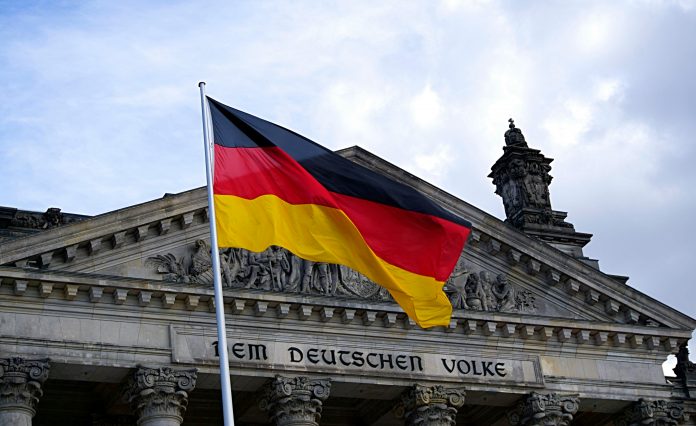
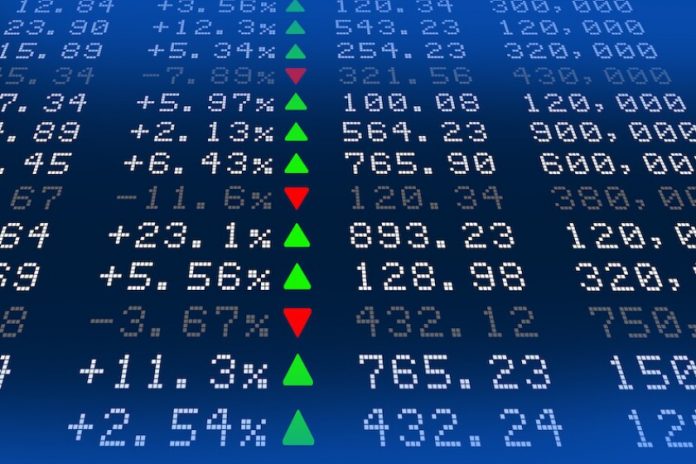
Germany’s DAX stock index surged to a record high of 24,161 points on May 27, 2025, marking a 21% increase since the start of the year. This rally was driven by U.S. President Donald Trump’s announcement on May 25, 2025, delaying 50% tariffs on EU goods until July 9, boosting investor confidence in export-heavy sectors like autos, machinery, and pharmaceuticals.

Strong performances in defense stocks, particularly Rheinmetall, which tripled in value since January and rose over 20 times since February 2022, also fueled the gains, supported by Germany’s increased military spending and anticipated NATO expenditure hikes. Despite global market turbulence and a domestic economic contraction, the DAX outperformed.

The record high of Germany’s DAX index at 24,161 points on May 27, 2025, following the U.S. delay of 50% tariffs on EU goods until July 9, has significant implications for Germany’s economy and highlights a growing economic divide both domestically and globally.  The tariff delay provides temporary relief to Germany’s export-heavy industries, such as automotive (e.g., Volkswagen, BMW), machinery, and pharmaceuticals, which are heavily represented in the DAX. These sectors benefit from sustained access to the U.S. market, a key destination for German goods.

For instance, auto stocks likely contributed significantly to the DAX’s 1.7% daily gain to 24,028, as noted in posts on X. However, the temporary nature of the delay (until July 9) introduces uncertainty. Companies may face pressure to diversify supply chains or markets to mitigate future tariff risks, potentially increasing costs. The DAX’s rise was partly driven by defense stocks like Rheinmetall, which has seen a 20-fold increase since February 2022, fueled by Germany’s increased military spending and anticipated NATO budget hikes.

This reflects a structural shift toward defense as a growth sector amid geopolitical tensions, particularly in Europe. This trend could attract further investment but may divert resources from other industries, raising questions about long-term economic balance. Despite Germany’s economic contraction (0.1% GDP decline in Q4 2024, per web sources), the DAX’s 21% year-to-date gain signals investor optimism in large, globally exposed firms. This resilience suggests a disconnect between stock market performance and domestic economic health, as smaller businesses and consumers face inflationary pressures and high energy costs.

The tariff delay may temporarily stabilize trade, but persistent domestic issues like labor shortages and energy costs could cap broader economic recovery. The U.S. tariff delay reflects a strategic pause in trade policy, likely to assess negotiation outcomes with the EU. If tariffs are implemented in July, German exporters could face significant revenue losses, potentially triggering a DAX correction.

The delay also underscores Germany’s vulnerability to U.S. policy shifts, highlighting the need for the EU to strengthen trade ties with other regions, such as Asia or Latin America. The DAX’s surge benefits large, listed companies, but Germany’s Mittelstand (small and medium-sized enterprises) faces challenges from high energy costs, inflation, and bureaucratic hurdles. These firms, less represented in the DAX, are critical to Germany’s economy but lack the global reach and financial buffers of DAX giants.

The stock market rally primarily benefits investors and wealthier households with equity exposure, while wage growth lags inflation (3.5% inflation vs. 2% wage growth in 2024, per web data). This exacerbates income inequality, as lower-income groups struggle with rising living costs. The outsized gains in defense stocks like Rheinmetall contrast with slower growth in traditional sectors like manufacturing. This shift could reshape Germany’s industrial landscape, prioritizing defense over consumer goods or green tech, despite Germany’s push for sustainability.

Export-oriented DAX firms thrive on global demand, while domestically focused businesses suffer from weak consumer spending and economic contraction. This divergence could widen regional disparities, with industrial hubs faring better than rural areas. Germany’s DAX outperformance contrasts with weaker European indices (e.g., France’s CAC 40 up only 8% in 2025, per web data). This reflects Germany’s stronger corporate earnings and export resilience but could strain EU cohesion if other economies lag.

The tariff delay highlights the EU’s dependence on U.S. trade policy. While the DAX benefits now, the threat of future tariffs underscores a power imbalance, with the U.S. holding leverage over EU markets. The DAX’s record high reflects optimism in financial markets, driven by short-term tariff relief and defense spending. The DAX’s record high signals short-term optimism but masks deeper divides.

Large exporters and defense firms benefit disproportionately, while smaller businesses and consumers face ongoing pressures. Globally, Germany’s reliance on U.S. trade policy and its outperformance within the EU highlight uneven economic dynamics. Investors should remain cautious, as the tariff delay is temporary, and unresolved domestic challenges could undermine long-term stability.

FlixTrain’s Ambitious 65 Trainset Order Signals a Transformative Shift in Germany’s Rail Market

0

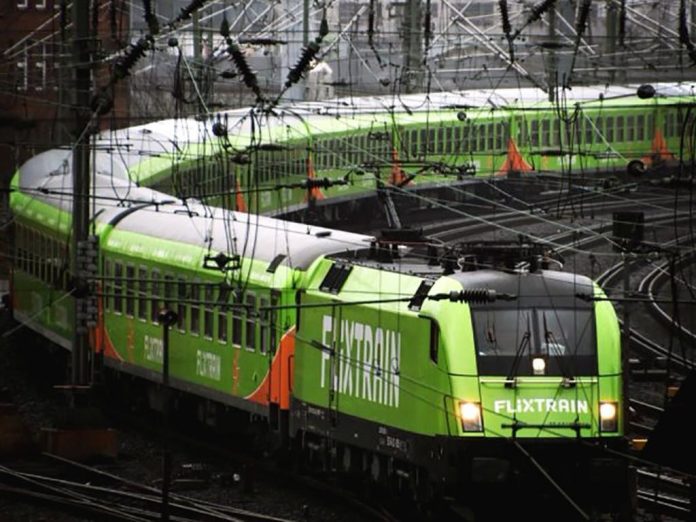
In May 2025, FlixTrain, a German private rail operator and subsidiary of Flix SE, announced a major order for 65 high-speed trainsets from Spanish manufacturer Talgo, with Siemens supplying Vectron locomotives, in a deal valued at up to €2.4 billion. A firm commitment of €1.06 billion covers the initial 30 trains, with an option for 35 more, and includes 15 years of maintenance by Talgo. The trains, based on the Talgo 230 platform, are designed for speeds up to 230 km/h, featuring lightweight, accessible push-pull designs similar to Deutsche Bahn’s ICE L trains. They are interoperable across Germany, Austria, the Netherlands, Denmark, and Sweden, aiming to enhance cross-border travel.

This move intensifies competition with Deutsche Bahn, Germany’s state-owned rail operator, by expanding FlixTrain’s network, which already connects 50 cities directly and 650 via regional partnerships. FlixTrain’s budget-friendly model, offering fares 25-50% lower than Deutsche Bahn’s, targets cost-conscious travelers with modern amenities like Wi-Fi, power outlets, and guaranteed seating. The expansion aligns with a projected 45% growth in Germany’s high-speed rail market by 2030 and a €27 billion European market. FlixTrain aims to grow its market share and the overall rail market, challenging Deutsche Bahn’s dominance while promoting sustainable travel.

FlixTrain’s order of 65 high-speed trains positions it as a formidable challenger to Deutsche Bahn (DB), which has long dominated Germany’s rail sector. FlixTrain’s low-cost model, with fares 25-50% cheaper, directly targets price-sensitive passengers, potentially eroding DB’s market share, especially on high-demand routes. The interoperable Talgo 230 trains enable FlixTrain to expand its network across Germany, Austria, the Netherlands, Denmark, and Sweden. This cross-border capability could pressure DB to enhance its international offerings, which are currently limited by operational and pricing constraints.

FlixTrain’s modern trains, equipped with Wi-Fi, power outlets, and accessible designs, set a new standard for passenger experience. DB may need to accelerate upgrades to its aging ICE fleet and improve service reliability to compete, especially given recent criticisms of delays and cancellations. FlixTrain’s expansion aligns with a projected 45% growth in Germany’s high-speed rail market by 2030. By offering affordable fares, FlixTrain could stimulate demand, growing the overall rail market rather than just redistributing DB’s share.

Rail travel is significantly greener than air or car travel, and FlixTrain’s push for efficient, high-capacity trains supports Europe’s climate goals. Increased competition could drive more passengers to rail, reducing carbon emissions. The €1.06-2.4 billion deal with Talgo and Siemens will create jobs in manufacturing and maintenance, boosting local economies in Germany and Spain. However, DB may face financial pressure, potentially leading to cost-cutting or job losses if it loses significant market share.

DB’s higher fares and state-backed structure make it less agile than FlixTrain, which operates without subsidies. DB may need to lower prices or improve service quality, straining its finances, especially given its €30 billion debt (as of recent reports). As a state-owned entity, DB’s struggles could spark debates about privatization or further deregulation of Germany’s rail market, which was liberalized in 1994 but still heavily favors DB.

DB’s recent performance issues, including frequent delays and infrastructure bottlenecks, could push passengers toward FlixTrain’s newer, potentially more reliable services. FlixTrain’s budget model will likely force DB to offer competitive pricing or promotions, benefiting consumers. Competition could drive both operators to enhance amenities, punctuality, and customer service.

Expanded routes and frequent services give travelers greater flexibility, particularly in underserved regions or cross-border travel. FlixTrain (Private, Low-Cost) operates a lean, profit-driven model focused on affordability and efficiency. It leverages modern technology and partnerships (e.g., with regional operators) to minimize costs and maximize reach. Its lack of reliance on subsidies allows flexibility but limits its ability to serve less profitable routes.

Deutsche Bahn (State-Owned, Full-Service) offers a comprehensive network, including regional and less profitable routes, subsidized by the government. Its higher operating costs and bureaucratic structure make it less competitive on price but essential for universal service. FlixTrain targets price-conscious travelers, particularly younger demographics and leisure travelers, with a focus on high-demand, high-speed routes. Its cross-border expansion aims at the growing European market.

Deutsche Bahn serves a broader audience, including business travelers and rural communities, but struggles with balancing profitability and public service obligations. Both operators rely on Germany’s state-managed rail infrastructure, operated by DB Netz, which is plagued by underinvestment and congestion. FlixTrain’s expansion could exacerbate capacity issues unless infrastructure upgrades keep pace.

As part of the DB Group, Deutsche Bahn has closer ties to infrastructure management, potentially giving it preferential access to slots and maintenance, though this has sparked accusations of unfair practices. FlixTrain viewed as a dynamic, consumer-friendly disruptor but lacks the political clout and public funding that DB enjoys. Its growth may face regulatory hurdles if DB lobbies for protection.

Deutsche Bahn benefits from its status as a national institution but faces public frustration over service disruptions and high costs. Political support for DB may wane if FlixTrain proves more reliable or popular. FlixTrain’s success could push for further deregulation, encouraging more private operators to enter the market. However, this risks fragmenting services and neglecting unprofitable routes.

Infrastructure investment needs competition which underscores the urgent need for Germany to invest in rail infrastructure to support multiple operators, as current bottlenecks limit growth for both FlixTrain and DB. FlixTrain’s ambitious order signals a transformative shift in Germany’s rail market, challenging Deutsche Bahn’s dominance with lower fares, modern trains, and cross-border expansion.

This competition promises consumer benefits like cheaper tickets and better services but highlights systemic challenges, particularly infrastructure limitations. The divide between FlixTrain’s lean, private model and DB’s state-backed, comprehensive approach will drive innovation but also spark debates about fairness, subsidies, and the role of rail in a sustainable future.

German Climate Group Announced A Week of Protests In Berlin

0

A German climate group, described as a successor to Last Generation, announced a week of protests in Berlin starting May 27, 2025. In recent years, climate activism in Berlin has included disruptive tactics like road blockades by groups such as Last Generation, which glued themselves to streets to demand stronger government action on climate change.

These protests often caused significant traffic disruptions and drew mixed public reactions, with some supporting the cause but criticizing the methods. For instance, Last Generation’s 2023 protests involved blocking key roads, leading to traffic jams and debates over their tactics. The group later shifted to “disobedient assemblies” in 2024, moving away from gluing themselves to roads.

The week of protests announced by a German climate group in Berlin starting May 27, 2025, could have significant social, political, and economic implications, while deepening existing divides in German society. Based on past actions by groups like Last Generation, protests may involve road blockades, airport disruptions, or symbolic acts like gluing to streets or defacing property.

These tactics, seen in 2023 with 550 protests in Berlin alone, caused significant traffic jams and commuter frustration. Such disruptions could again alienate parts of the public, with some commuters labeling activists as “terrorists” or “scum,” while others offer support, like food and water during blockades.
Protests are designed to spark debate, and a 2024 study found that climate protests in Germany increased public concern about climate change by 1.2 percentage points, even for confrontational tactics.

However, public support for disruptive activism has waned, dropping from 68% in 2021 to 34% in 2023, as many feel tactics harm the cause. This could lead to polarized reactions, with some praising the urgency and others decrying the methods. Past protests, like a 2022 blockade that delayed emergency services, were blamed for a cyclist’s death, fueling media and public backlash. Similar incidents in 2025 could escalate tensions and lead to calls for harsher crackdowns.

The German government has historically responded to disruptive protests with crackdowns, such as the 2023 raids on Last Generation properties, seizing assets and investigating finances. German Chancellor, Merz called such tactics “completely nutty,” and new laws, like those proposed in 2024 to punish airport intrusions, signal tougher penalties. The 2025 protests could pressure the incoming conservative-Social Democrat coalition to balance climate goals with public order, especially as they negotiate a joint climate policy.

Activists may push for measures like a universal highway speed limit or a fossil fuel phase-out by 2030, as demanded by Last Generation in 2024. However, resistance from parties like the Free Democrats, who control the Transport Ministry, and skepticism from the conservative CDU could stall progress. The protests might amplify criticism of Germany’s failure to meet 2030 climate targets, as warned by experts in 2022.

Harsh political rhetoric, such as comparisons of activists to the Taliban or Nazis, risks normalizing hostility toward climate movements. This could embolden legal restrictions, as Amnesty International noted in 2023 when Germany was added to a list of countries curbing protest rights. Blockades on roads or at airports, like those at Berlin and Cologne-Bonn in 2024, could disrupt passenger and cargo transport, impacting local businesses and logistics.

The 2024 Leipzig/Halle Airport protest halted cargo flights for three hours, showing the economic ripple effects. Berlin police deployed 500 officers for a single day of protests in 2023, and similar resource demands in 2025 could strain public budgets. Protests may highlight resistance to renewable energy projects, particularly in rural areas where the Alternative for Germany (AfD) party has capitalized on discontent against wind turbines and power lines. This could complicate Germany’s Energiewende (energy transition), as financial concerns over energy costs fuel opposition.

Urban areas, especially in western Germany, show stronger support for climate action (82.9% believe in climate change vs. 78% in the east), driven by historical green politics in regions like Baden-Württemberg. Rural communities, particularly in eastern Germany, often oppose renewable projects due to landscape changes or economic concerns, with the AfD exploiting this discontent. Protests in urban Berlin may be seen as disconnected from rural realities, widening this gap.

Climate activism faces a political split. The Greens and Fridays for Future enjoy broader support, but Last Generation’s confrontational tactics have drawn criticism even from progressive allies like the Greens’ Britta Hasselmann, who called them “not productive.” Conservative parties, like the CDU, and climate-skeptic AfD voters are more likely to oppose protests, especially if they disrupt daily life. The 2025 election of a conservative-led government under Friedrich Merz, who critiques excessive green policies, could intensify this divide.

Younger activists, inspired by figures like Greta Thunberg, push for urgent action, as seen in the 2021 Fridays for Future rallies with over 100,000 participants in Berlin. Older generations, like retirees supporting protests like Reinhart Kraft in 2023, share concerns but may disagree on tactics. However, some older citizens, especially in rural areas, prioritize economic stability over climate goals, creating friction.

While 83% of Germans see climate change as a serious threat and 86% want stronger government action, only 68% support specific policies, and disruptive protests have eroded broader movement support. Activists argue that disruption is necessary to highlight government inaction, but public frustration with tactics like road blockades or art vandalism risks alienating supporters, as seen in the drop from 60% to 25% who believe the climate movement prioritizes society’s well-being.

Historical differences persist, with western Germany showing higher climate concern (58.3% vs. 51.2% in the east) and support for collective action (85.3% vs. 79.8%). Eastern Germany’s economic challenges and weaker green political tradition fuel skepticism, which protests may exacerbate if perceived as urban-centric. The 2025 Berlin protests could heighten public awareness of climate issues but risk deepening societal divides by alienating commuters, rural communities, and conservative voters.

Politically, they may pressure the government but face resistance from a conservative-led coalition and a public increasingly critical of disruptive tactics. Economically, disruptions could strain local businesses and public resources. To navigate these divides, activists might need to balance visibility with broader public appeal, while policymakers must address legitimate climate concerns without escalating crackdowns that further polarize society.