DD
MM
YYYY

PAGES

DD
MM
YYYY

spot_img

PAGES

Home Blog Page 111

Upbit Suffers ~$30M Hack, Suspected Involvement Tied to Lazarus Group

0

Upbit, South Korea’s largest cryptocurrency exchange, suffered a major security breach where approximately 44.5 billion South Korean won around $30 million USD in Solana-based tokens was drained from its hot wallet.

The incident occurred at approximately 4:42 a.m. local time, prompting Upbit to immediately suspend all deposits and withdrawals for emergency maintenance.

This marks the second major hack for Upbit in its history, eerily timed on the sixth anniversary of a 2019 breach that stole 342,000 ETH worth about $50 million at the time, now over $1 billion.

Suspected Involvement of North Korea’s Lazarus Group

South Korean authorities, including government and business sources, strongly suspect the Lazarus Group—a notorious state-sponsored hacking collective linked to North Korea’s Reconnaissance General Bureau spy agency—behind the attack.

The breach mirrors tactics used in the 2019 Upbit hack, which was definitively attributed to Lazarus. Exploitation of a hot wallet vulnerability on the Solana network.

On-chain analysis shows the stolen assets were quickly swapped for Wrapped Solana (WSOL) and SOL, then scattered across 185 wallets, bridged to Ethereum, and partially laundered via mixers.

About $1.6 million in LAYER tokens has already been frozen, with ongoing tracing efforts. Blockchain security firms like CertiK have noted the “speed and scale” of the withdrawals as reminiscent of prior Lazarus operations, though they lack definitive on-chain proof yet.

The U.S. FBI has long described Lazarus as one of the world’s most advanced persistent cyber threats, responsible for stealing over $2 billion in crypto in 2025 alone to fund North Korea’s nuclear and weapons programs.

Recent Lazarus-linked incidents include a $1.5 billion Ethereum theft from ByBit in February 2025 and a $44 million breach at India’s CoinDCX in June. South Korean officials are conducting an on-site investigation at Upbit’s facilities, focusing on system inspections and potential ties to North Korean intelligence.

Upbit operator Dunamu has pledged to fully reimburse affected users using its own corporate assets, ensuring no direct losses for customers. They’ve also moved remaining funds offline and frozen traceable wallets.

The hack coincides with Dunamu facing a record 35.2 billion won ($25 million) fine for past compliance failures, including inadequate customer due diligence on 5.3 million accounts and unblocked unauthorized transactions.

This has delayed Virtual Asset Service Provider (VASP) license renewals for Upbit and other Korean exchanges. A three-month partial business suspension is under appeal. The breach hit just hours before Naver, South Korea’s internet giant announced a $10.3 billion all-stock acquisition of Dunamu, raising doubts about the deal’s viability amid heightened scrutiny.

The crypto community on X is buzzing with concern over exchange security and geopolitical risks. Recent posts highlight:Warnings about Lazarus’s persistence: “Lazarus continues to be suspected… everything points to Lazarus” from Vietnamese crypto analyst GFIResearch.

Upbit hit with a $32M hack… North Korea’s Lazarus Group suspected. “Is this just another hack… or a wake-up call for the entire exchange ecosystem?. Multiple threads link the hack to the Dunamu-Naver deal, with one calling it a “K-drama twist”.

This incident underscores ongoing vulnerabilities in crypto infrastructure, especially amid rising state-sponsored attacks. As investigations continue, expect tighter regulations in South Korea and global calls for enhanced wallet security.

Bitcoin Bullish Rebound Sparks Investors Interest, Cathie Wood Bullish on $1.5M Bitcoin Price Target

0

Bitcoin’s latest bullish rebound is reigniting interest across the global investment landscape, signaling renewed investor confidence in the world’s largest cryptocurrency.

After weathering recent volatility, BTC’s sharp recovery has not only pulled fresh capital back into the market but also strengthened long-term sentiment among major institutional players.

The crypto asset traded above $93,000 on Friday, showing new signs of strength after its sharp decline, with buyers stepping back in and momentum shifting upward. The crypto asset which is still on a bullish movement, slightly retraced to $91,078 at the time of writing this report.

With price reclaiming key support levels, the path toward the major $98,000 imbalance zone is now back on the table, but bulls still need to prove this rebound has real conviction.

Part of this rebound appears to be driven by improving macro sentiment. Softer expectations around Federal Reserve tightening, a rise in overall risk appetite, and a shift back toward risk-on assets are all contributing to Bitcoin’s recovery attempt. 

Crypto analyst Crypto Patel, in a recent market update, noted that Bitcoin has now completed a key technical move by filling the Fair Value Gap (FVG) and tapping directly into the Bearish Order Block exactly as previously projected. He emphasized that traders who avoided shorting the $81,000–$85,000 region and instead positioned for the upside likely captured a clean and predictable long setup.

With that phase now complete, the focus shifts to Bitcoin’s next major target. Patel highlights the $96,800–$98,000 FVG as the upcoming high-timeframe imbalance zone. From a broader perspective, he expects Bitcoin to make a move toward the $98,000 zone before any significant corrective leg unfolds.

Notably, among the most vocal Bitcoin optimists is Ark Invest CEO Cathie Wood, who continues to stand by her bold $1.5 million Bitcoin price target. The CEO and chief investment officer, said the company’s $1.5 million Bitcoin bull market price prediction remained unchanged, pointing to billions in returning liquidity following the end of the US government shutdown.

She noted that the current “liquidity squeeze” limiting the upside of the cryptocurrency and artificial intelligence markets is set to “reverse in the next few weeks.  Recall that earlier in April this year, ARK Invest predicted a 2030 Bitcoin price target of $1.5 million in the company’s “bull case,” and a $300,000 price target in the “bear case.”

According to CoinGlass Bitcoin is down nearly 16.9% so far this month as it trades around $91,087, nearing losses from November 2019, when it lost almost 17.3% over the month.

The crypto asset is likely to close November at its worst loss since at least 2019, but analysts say it sets the cryptocurrency up for a good start to 2026 as some investors could buy back in.

Outlook

On a technical view, the bullish case for Bitcoin now hinges on holding the defensive zone at $83K–$85K, where strong demand must appear for a bottom to form.

As Cointelegraph reported, spot markets were entering recovery mode, with Bitcoin’s taker cumulative volume delta (CVD) edging back to neutral from negative territory.  If this turns buyer-dominant, Bitcoin could experience a sustained rally as seen between May and July when the BTC price rallied 32% to its previous all-time high around $123,000.

As momentum accelerates and investor appetite grows, the conversation is shifting from short-term fluctuations to Bitcoin’s massive future potential.

Explosive x402 Growth and SIMD-0411 Proposal Are Pushing Uptick Solana Rally

0

Solana (SOL) has experienced a notable uptick, climbing approximately 5% over the past 24 hours to reach around $138–$139 as of November 28, 2025.

This movement comes amid heightened network activity and a key governance proposal that’s sparking debate in the community.

While the rally isn’t isolated—broader market sentiment has Bitcoin pushing toward $91K and Ethereum gaining ground—Solana’s gains appear tied to two specific catalysts: explosive growth in the x402 protocol and the advancement of SIMD-0411, a proposal aimed at accelerating token disinflation.

x402 is an emerging protocol on Solana designed for AI agents to execute autonomous micropayments. Think of it as plumbing for an “agentic economy,” where AI bots can pay for APIs, compute, data, or services in real-time without human intervention.

Launched relatively recently, it’s gaining traction due to Solana’s low fees and high throughput, which make tiny, frequent transactions economically viable. Over the weekend leading into this week, x402 transaction volume spiked dramatically—up 500% in just 48 hours, with over 500,000 transactions and $100K in volume.

Daily txns have grown 25x in the last 10 days, hitting 250K+ per day. This isn’t just hype; it’s real on-chain activity, outpacing some centralized exchanges in niche flows. This surge demonstrates Solana’s edge in hosting scalable, cost-efficient apps. As AI agents proliferate via projects like HeyElsaAI or PayAINetwork.

x402 positions Solana as the go-to chain for “pay-per-call” infrastructure. Related tokens like $PAYAI an early x402 facilitator have seen valuations hit $60M in hours, signaling investor bets on this narrative.

Community buzz on X is electric, with devs and degens building “x402 labs,” hackathons, and even “dark” (private) facilitators for anonymous txns. Solana’s on-chain SOL/USDC volume recently surpassed Binance + Coinbase combined for a week, with $5.5B USDC minted in November acting as a “permanent bid” for liquidity.

Tools like Jupiter DEX crossing $2.1B daily volume and Orca are capturing this flow, saving traders 10–100 basis points vs. CEXs. Add in upgrades like Firedancer now live on mainnet and spot ETFs launching in Brazil/Canada this December, and the network’s handling 70M daily txns at 99.9% uptime—proving it’s no longer “fast but fragile.”

SIMD-0411 Proposal: A Push for Token ScarcityThe “new proposal to cut token supply” refers to SIMD-0411, tabled by Helius Labs and now under active debate in Solana’s developer forums. It’s not a outright burn but a structural tweak to make SOL scarcer over time.

Potential short-term dip could pressure smaller validators but boosts scarcity premium. The goal is aggressive disinflation to reward holders and align incentives as adoption grows like TVL up 30%, 1.2M daily users.

Proponents see it as a “turning point” for SOL’s economy, potentially driving price via supply shock—especially with institutional inflows like Trump’s World Liberty Financial deploying $300M into SOL/stSOL. Critics worry about reduced staking returns sidelining small validators, though only 2% of supply unlocks annually not the exaggerated 10% FUD.

Community votes could wrap in weeks; if passed, it rolls out via a network upgrade, similar to recent inflation tweaks. This 5% pop aligns with a green day across majors; BTC +4.7% to $91.5K, ETH +3.8% to $2.8K, but Solana’s outperformance underscores its beta to AI/DeFi narratives.

On-chain metrics are robust: $420M in fees this month from memecoins and perps alone, plus whale accumulation. Price predictions vary—some forecast $230 by early 2025, others $482 average—but scarcity + agent flows could catalyze a leg higher if macro holds.

Validator pushback on SIMD-0411 or broader crypto pullback like if BTC tests $80K support could cap gains. Still, with $75B market cap and real utility trumping “paid liquidity” on L2s, Solana’s setup feels primed for the next rotation.

If you’re trading or building, eyes on x402 hackathon winners and proposal votes—these could extend the rally.

Understanding $AFC and the Emergence of Prediction Dynamics in Fan Tokens

0

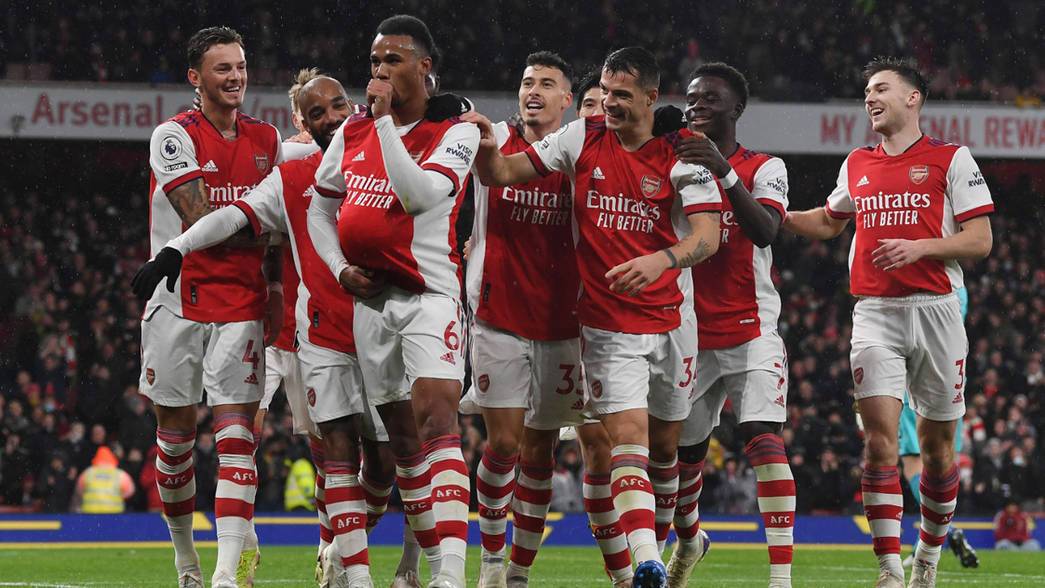
The Arsenal Fan Token ($AFC), a blockchain-based utility token launched on the Chiliz platform, empowers Arsenal FC supporters with voting rights on club decisions, access to exclusive rewards, and a stake in the team’s digital ecosystem.

Priced around $0.40–$0.45 as of late November 2025, $AFC has a market cap of approximately $4.8 million and daily trading volumes exceeding $2–5 million. But beyond its utility, $AFC exemplifies a broader trend in fan tokens.

Their evolution into dynamic prediction assets that reflect and forecast sports outcomes, decoupling from traditional crypto market forces. Fan tokens like $AFC are increasingly behaving as “prediction markets” embedded within the sports-crypto intersection.

Unlike static betting platforms with fixed odds, these tokens enable continuous, 24/7 speculation on team performance through price movements. Their value shifts in real-time based on fan sentiment, match results, and tournament probabilities, allowing traders to position for ongoing season arcs rather than isolated events.

This dynamic emerges because during low-engagement periods, fan tokens correlate with the broader crypto market like Bitcoin or $CHZ. But high-stakes football moments—wins, streaks, or advancements—trigger buy pressure from fans and speculators, driving independent price discovery.

Token prices aggregate global fan expectations, repricing probabilities as events unfold. For instance, a winning streak can boost implied win probabilities on platforms like Polymarket, which in turn amplifies token demand.

Traders can enter long/short positions, hedge across tokens (e.g., long $AFC vs. short $CITY for Manchester City), or scale bets dynamically, making fan tokens more versatile than binary prediction tools like Polymarket or Kalshi.

This shift positions fan tokens as accessible on-chain alternatives to traditional sportsbooks, blending engagement with speculative trading. Arsenal’s remarkable 10-game winning streak across the Premier League and Champions League provides a textbook example.

Following a crypto market crash on October 11—where over $20 billion in liquidations wiped out positions and Bitcoin fell ~15%—$AFC bucked the trend. Fan confidence from wins; implied EPL win probability rose from 35% to 55% on Polymarket.

This outperformance highlights how $AFC’s price became a barometer for Arsenal’s momentum, attracting traders betting on continued success ahead of key fixtures like the UCL clash with Bayern Munich.

Trading volume for $AFC jumped 18% in the days leading up to that match, signaling building investor confidence. The pattern isn’t unique to $AFC. Other tokens show similar decoupling.

Tottenham Hotspur ($SPURS): Surged +83% during their 2025 Europa League quarter-final win and final hype, far outpacing Bitcoin’s +13% gain, with correlation to BTC dropping sharply during peak engagement.

Paris Saint-Germain ($PSG): Climbed +40% after reaching the Champions League semi-finals, against Bitcoin’s +17%, fueled by tournament stakes and fan-driven liquidity.

These cases illustrate how prediction dynamics create arbitrage opportunities—e.g., longing a token with undervalued win odds relative to prediction markets—while enhancing fan loyalty through tokenized speculation.

As football seasons intensify, fan tokens are poised to deepen their role in prediction ecosystems, offering transparent, liquid ways to bet on sports without macro noise. For $AFC holders, this means potential for further gains tied to Arsenal’s title chase, though risks like injury slumps or market-wide crashes persist.

Analysts forecast $AFC could test $0.50–$0.60 by mid-2026 if Arsenal sustains form, but long-term value hinges on expanding utilities like NFT integrations or metaverse experiences.

In essence, $AFC isn’t just a fan perk—it’s a live oracle for sports probabilities, merging crypto’s speed with football’s passion to redefine how we predict and profit from the beautiful game.

MegaETH Will Refund All $500M Raised through its Pre-Deposit Bridge Campaign

0

MegaETH, a real-time blockchain project, announced that it will refund all approximately $500 million raised through its Pre-Deposit Bridge campaign.

The decision stems from a chaotic launch on November 25, 2025, marred by technical failures, operational errors, and misaligned user expectations.

The team described the execution as “sloppy,” emphasizing that the campaign deviated from its core goal: preloading collateral to ensure 1:1 USDm stablecoin conversions upon the Frontier mainnet launch.

This refund represents a full reset for the project, with no funds at risk, but it has sparked discussions on trust, transparency, and execution in DeFi launches.

The Pre-Deposit Bridge was designed to allow users to deposit USDC for early access to USDm (MegaETH’s native stablecoin) at a 1:1 ratio on mainnet. However on Launch Day, the event started at 9 a.m. ET with a $250 million cap.

Within minutes, the third-party bridge provider crashed due to overwhelming traffic, causing nearly an hour of downtime. Once resolved, the cap filled in just 156 seconds.

MegaETH attempted to raise the cap to $1 billion to accommodate demand, but a misconfigured multisig transaction set to a 4-of-4 signature threshold instead of 3-of-4 allowed a community member to execute it ~34 minutes early.

This triggered an uncontrolled surge, pushing deposits past $400 million. KYC system bugs, communication breakdowns, and infrastructure misconfigurations led to accusations of mismanagement.

The team eventually froze deposits at $500 million and enabled withdrawals, but the process was widely criticized as unfair. In a detailed X thread, MegaETH admitted the flaws and committed to a full refund via a new, audited smart contract. The bridge will reopen with improved controls before mainnet.

Data from on-chain analysis shows:~4,589 unique addresses participated. Average deposit: ~$102,396; median: $3,100. Top 10 depositors contributed 29% of the total. In their official statement, the team highlighted a “blow-by-blow breakdown” of small technical failures compounded into a “chaotic, unfair sale process.”

Users anticipated a capped, orderly raise, but the event prioritized speed over stability, clashing with the goal of secure collateral preloading. To align with regulatory best practices and protect users, a reset ensures proper disclosures and avoids further erosion of confidence.

The team stressed: “No funds were ever at risk,” and depositor contributions “will not be forgotten” for future opportunities. Some users mocked the irony of a “real-time” chain fumbling a basic launch, while others praised the transparency.

Crypto media labeled it “one of the most disorderly raise attempts of the year,” but noted the short memory in crypto—expectations are that this “will blow over quickly” given no losses. Earlier presale frustrations amplified skepticism.

As mainnet nears, the project plans to relaunch the USDC-USDm bridge with fixes. This could strengthen foundations if executed well, but rebuilding trust is key. Stakeholders are advised to monitor updates and conduct due diligence.

Refunds are expected “shortly” via the audited contract, returning funds to original wallets. These incidents often stem from rushed infrastructure, bot exploitation, or misaligned incentives, leading to rapid value erosion or project abandonment.

Developers launched a token sale on Copper Launch, attracting $60 million in deposits. Minutes before the end, they drained all liquidity via a rug pull, leaving participants with worthless tokens.

Sudden liquidity freeze/extraction; users locked out during chaos, mirroring MegaETH’s cap surge and freeze. High demand overwhelmed the system, enabling insider exploitation.

Total loss for depositors; project vanished. Pre-launch audits and immutable liquidity locks are essential to prevent insider dumps. Bot swarm flooded the network during the Initial DEX Offering (IDO), causing total shutdown. Thousands of users couldn’t participate, sparking FUD over fairness.

Network congestion from bots and traffic, akin to MegaETH’s bridge crash and uncontrolled deposits. Emphasized speed over stability. Team refunded users, relaunched with anti-bot measures. Project survived but lost momentum.

Stress-test infrastructure and implement queue systems for high-demand events. Governance token launch via airdrop led to backlash when the DAO vote revealed opaque allocations (e.g., 11.6% to Offchain Labs insiders). Community accused centralization; token dropped 20%+ on day one.

DEX-only launch on Telegram’s TON chain caused network congestion; trading started an hour early, allowing insiders to sell at peaks. Users waited 3-4 hours for claims, selling 45-60% lower. Token lost 75% value in 24 hours; no CEX listings added friction.

Delayed access and insider advantages, paralleling MegaETH’s early multisig execution and cap flip-flops. Congestion hit retail hardest. Devs’ reputation damaged; $PX at ~$0.01 from $0.10 launch. Staggered claims and CEX integration reduce congestion and insider edges.

Cross-chain DeFi lender’s IDO saw 300+ simultaneous deposits overwhelm the new Aptos network, causing congestion and token-claiming failures. Team went dark post-launch.

Overwhelming traffic and infrastructure collapse, directly like MegaETH’s provider downtime and surge. Botched on a fresh chain. Platform offline; funds inaccessible. Lesson: Gradual rollouts and fallback claiming prevent total blackouts.

On Coinbase’s Base L2, a hyped token rug pulled shortly after bridging influx. Then, Aerodrome DEX, the main liquidity hub suffered an LP drain exploit, halting trading. Users couldn’t bridge out for hours.

Bridge rushes leading to rugs/exploits; trapped funds during chaos, echoing MegaETH’s withdrawal enables after freeze. Millions lost; Base TVL dipped temporarily. Lesson: Post-launch monitoring and emergency bridges mitigate secondary failures.

Like MegaETH, 80%+ of these involved traffic overloads or config errors (e.g., multisigs, queues), per industry reviews of ICO failures. Bots and insiders often amplify damage, with 81% of 2017-2018 ICOs failing within a year due to similar execution gaps.

These cases underscore DeFi’s innovation-vs-maturity tension: MegaETH’s refund pivot is rare candor, but the ecosystem’s “short memory” means scrutiny fades quickly if mainnet delivers.