DD
MM
YYYY

PAGES

DD
MM
YYYY

spot_img

PAGES

Home Blog Page 111

Flipping Strategy 2025: Why Converting SOL and ADA Gains Into Ozak AI Could Be Genius

0

As investors search for the next high-growth utility token ahead of the 2025 bull cycle, Ozak AI ($OZ) has become a central talking point, especially among holders of established coins such as Solana and Cardano. Ozak AI positions itself as an artificial intelligence ecosystem powered by a decentralized physical infrastructure network. Instead of being a basic AI-token narrative, it combines predictive intelligence, smart automation, and multi-chain interoperability, offering a blend of innovation that traditional Layer-1 assets do not focus on.

Why Ozak AI Is Gaining Momentum During Phase-7

The Phase-7 presale is currently live at a price of $0.014. So far, investors have purchased 1,009,723,914.94 $OZ, bringing total funds raised to $4,536,172.73. With its target listing price of $1.00, analysts tracking early-stage entries point to a wide gap between current pricing and post-listing expectations, especially compared to mature tokens like SOL and ADA that have already seen multiple multipliers. For traders considering a flipping strategy, allocating a portion of profits from established altcoins into an AI-based presale offers asymmetrical upside that is harder to access once a token hits major exchanges.

AI + DePIN: The Advantage SOL and ADA Do Not Have

Ozak AI’s strength lies in its structure as a DePIN-enabled AI network. Its predictive AI agents operate across multiple chains, using real-time analytics to improve data accuracy and user decision-making. The decentralized infrastructure layer gives the project scalable power without relying on centralized cloud systems. While Solana and Cardano are both strong Layer-1 chains, neither focuses exclusively on AI-powered automation or intelligence-as-a-service. This is the key reason investors exploring long-term repositioning strategies consider moving a slice of returns into $OZ while its valuation is still at presale levels.

A Growing Ecosystem Supported by Strategic Partnerships

One of the biggest strengths behind Ozak AI’s momentum is its expanding list of strategic collaborations. Hive Intel supplies blockchain intelligence APIs to increase analytical speed and precision. Weblume integrates Ozak AI’s predictive signals into no-code dashboards and Web3 applications. Meganet supports the network with distributed computational power through millions of bandwidth-sharing nodes. The SINT partnership adds cross-chain operability, voice interface tools, and one-click execution of AI models. These developments are backed by a completed security audit from @sherlockdefi confirming zero unresolved issues within presale contracts. The combination of distributed infrastructure, verified security, and growing real-world integrations makes Ozak AI stand out from typical speculative AI tokens.

How a Flipping Strategy Works in 2025

Solana and Cardano have both delivered strong returns during market recoveries, but because they are already large-cap assets, the probability of 50× or 100× jumps becomes smaller as they mature. A flipping strategy involves taking a percentage of profits from stable gainers and moving them into early-stage tokens with higher upside potential. Ozak AI’s $0.014 presale price gives investors a chance to accumulate a large supply before exchange listings and staking integration. If demand rises once AI utility launches publicly, early entries benefit from both price appreciation and ecosystem utility, creating return potential not easily accessible in fully priced market-cap giants.

Conclusion

There is no guarantee of future performance in any crypto investment, but long-term investors often balance established coins with early-stage growth opportunities. Ozak AI has positioned itself at the center of AI-driven blockchain utility, backed by cross-chain functionality, a decentralized infrastructure layer, predictive agents, and a rapidly expanding partner network. For traders planning a flipping strategy in 2025, converting a portion of SOL or ADA gains into Ozak AI introduces a high-growth element with significantly more room to expand than mature large-caps. With its presale now approaching the final phase, the window for discounted entry continues to narrow.

For more information about Ozak AI, visit:
Website: https://ozak.ai/
 Twitter/X: https://x.com/OzakAGI
 Telegram: https://t.me/OzakAGI
HPE Secures Defense Department $931m Cloud Contract as Pentagon Navigates “War Department” Rebrand

0

Hewlett Packard Enterprise (HPE) announced on Tuesday that it has secured a $931 million contract to provide cloud services for the Defense Information Systems Agency (DISA).

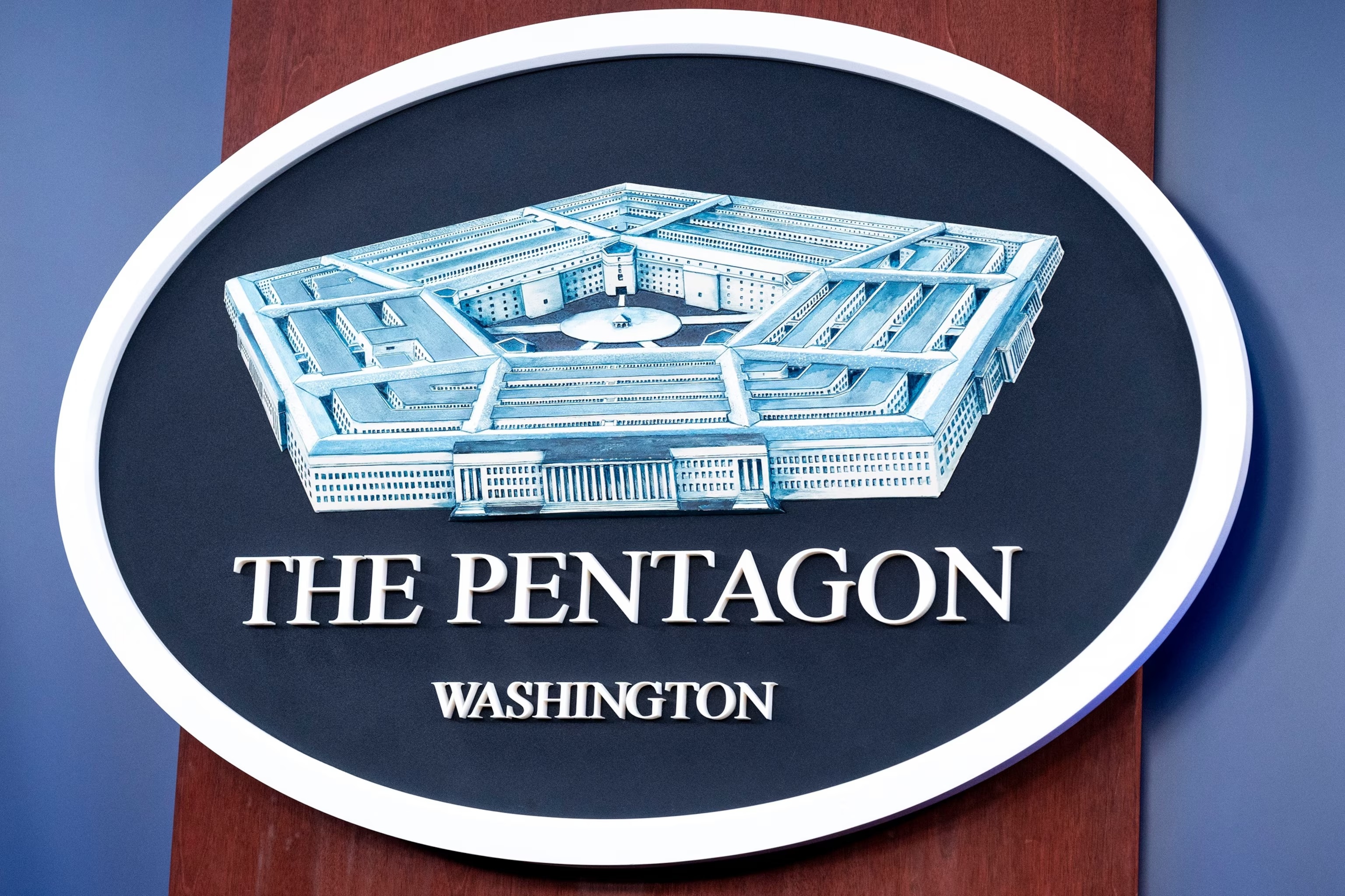
The deal, aimed at creating a rapidly deployable cloud environment for “warfighters,” comes at a moment of profound symbolic and structural transition for the Pentagon, following President Donald Trump’s directive to revert the agency’s name to the Department of War.

The 10-year agreement solidifies HPE’s role in the federal government’s aggressive push for digital modernization. Under the terms of the deal, HPE will deploy its GreenLake hybrid cloud platform, which allows the agency to manage data across both public and private clouds while maintaining the stringent security required for classified operations.

The contract is explicitly designed to accelerate the deployment of artificial intelligence and data analytics directly to the tactical edge. By modernizing DISA’s data centers, the initiative aims to improve decision-making speeds for combat units—referred to in the contract language as “warfighters,” a term that aligns with the administration’s renewed focus on lethality and combat readiness.

The contract award arrives amidst a controversial rebranding of the nation’s defense apparatus. President Trump has signed an executive order directing the Department of Defense to rename itself the Department of War, a moniker the agency has not held since the National Security Act of 1947.

While the President has ordered the change to instill a “warrior ethos” and strip away what he termed “woke” bureaucracy, the rebranding faces a constitutional hurdle. As the Department of Defense was established by statute, the official name change requires action by Congress.

To bypass this, the executive order designates “Department of War” as a secondary official title, authorizing its use in speeches, signage, and internal memos immediately.

While legislation has been introduced by allies on Capitol Hill to codify the shift, the agency is currently operating in a transitional phase, adopting the “Department of War” branding in executive communications while navigating the legislative process.

The move has sparked a sharp divide. New bronze signage has already been installed at the Pentagon’s River Entrance. But the cost of a full rebrand—updating everything from letterheads to thousands of facility signs globally—is estimated at nearly $2 billion. Critics in Congress, including Rep. Teresa Leger Fernández, have dismissed the move as a costly distraction. But polling suggests 54% of Americans oppose the change, viewing it as aggressive posturing rather than a substantive policy shift.

However, the Broader AI Arms Race HPE’s victory is part of a massive surge in federal spending on artificial intelligence and supercomputing. The government is rapidly pivoting away from legacy hardware toward systems capable of running power-hungry AI models.

Amazon’s $50 Billion Bet

Just a day prior to the HPE announcement, e-commerce and cloud giant Amazon (AWS) revealed plans to invest up to $50 billion to expand its own AI and supercomputing capabilities specifically for U.S. government customers.

Both the HPE and Amazon investments underscore a unified federal strategy: leveraging private-sector innovation to maintain technological superiority over global adversaries, particularly in the realms of AI and cyber warfare.

The contract is seen as a validation of HPE’s hybrid approach, which appeals to government agencies wary of moving sensitive data entirely to the public cloud. By offering a “cloud experience” that resides on-premises, HPE provides the agility of modern software with the physical control of a government fortress—a selling point that has become increasingly critical as the Department of War prepares for a new era of digital conflict.

Unlike Nigeria, Ghana Cuts Benchmark Rate to 18% as Inflation Drops to Its Lowest Level in Over Four Years

0

The Bank of Ghana has lowered its benchmark rate by 350 basis points to 18 percent, the third successive cut, as inflation tumbles and economic conditions ease.

Governor Johnson Asiama, speaking in Accra, said the decision reflected improved real interest rate conditions and a sustained outlook for stable inflation through mid-2026. The governor explained that elevated real rates created enough room to ease monetary policy in order to support growth recovery. The central bank projects inflation to remain near its target band well into the first half of 2026.

Ghana’s recent inflation trajectory has been dramatic. After peaking at over 54 percent in December 2022 — the highest in two decades — consumer price inflation fell sharply, returning to the BoG’s 6–10 percent target range by September this year. By October, inflation had dropped to 8 percent, the lowest in more than four years.

Key factors behind the decline include improved fiscal discipline and a rally in global gold prices. As the continent’s largest gold producer, Ghana benefited from surging commodity prices; the resulting strengthening of the cedi — up roughly 30 percent against the U.S. dollar this year — helped lower import costs and ease inflationary pressures.

Ghana’s government, through Finance Minister Cassiel Ato Forson, has pledged continued fiscal consolidation as the country prepares to exit its programme with the International Monetary Fund (IMF). The budget projection targets a primary surplus of 1.5 percent of GDP by 2026, with the overall fiscal deficit expected to narrow from a projected 2.8 percent in 2025 to 2.2 percent in 2026.

Forson also forecasts economic growth of at least 4.8 percent in 2026, up from an estimated 4 percent for the current year. Data from national sources show food inflation dropped sharply to 9.5 percent in October from 11.8 percent in September, supported by harvest season supply and favorable base effects.

In contrast to Ghana’s aggressive easing, Nigeria’s central bank opted to hold its benchmark rate steady at 27 percent even as inflation has come down markedly. As of October 2025, headline inflation in Nigeria stood at 16.05 percent, nearly a full percentage point lower than the previous reading. The decision to maintain the Monetary Policy Rate (MPR) was announced by CBN Governor Olayemi Cardoso following the bank’s latest Monetary Policy Committee meeting.

While many had expected at least a modest cut, given inflation’s steady decline, the CBN resisted. Officials argued that despite the recent disinflation, double-digit inflation remains too high to warrant a rate cut. Instead, the central bank adjusted the interest-rate corridor around the MPR, narrowing it to plus 50 / minus 450 basis points, and kept other tools such as the Cash Reserve Ratio and liquidity ratio unchanged. The adjustment is widely interpreted as an effort to encourage banks to lend rather than hoard deposits, hinting at cautious optimism about liquidity conditions and future stability.

Nigeria’s measured approach reflects concern that inflation remains elevated and underlying price pressures persist. While lower inflation is recognized, policymakers appear to prefer waiting for a sustained trend, especially in food and core inflation, before loosening monetary policy further.

The diverging strategies between Ghana and Nigeria highlight contrasting assessments. For instance, Ghana, benefiting from strong external tailwinds, improved currency strength, and a steep inflation reversal, feels confident enough to ease rates aggressively. Nigeria, on the other hand, appears more cautious despite disinflation to 16 percent. The central bank appears unwilling to loosen against a backdrop of still-high inflation and structural uncertainties.

The apex bank seems committed to ensuring that the disinflation path is durable before reducing borrowing costs, even if that means foregoing some short-term economic boost.

However, analysts have noted that if Nigeria’s inflation fails to moderate significantly, the decision to hold could preserve macro stability — but also risk keeping borrowing costs high just as economy-wide costs remain steep.

Apple Poised to Overtake Samsung in 2025 Smartphone Shipments for the First Time Since 2010, Counterpoint Says

0

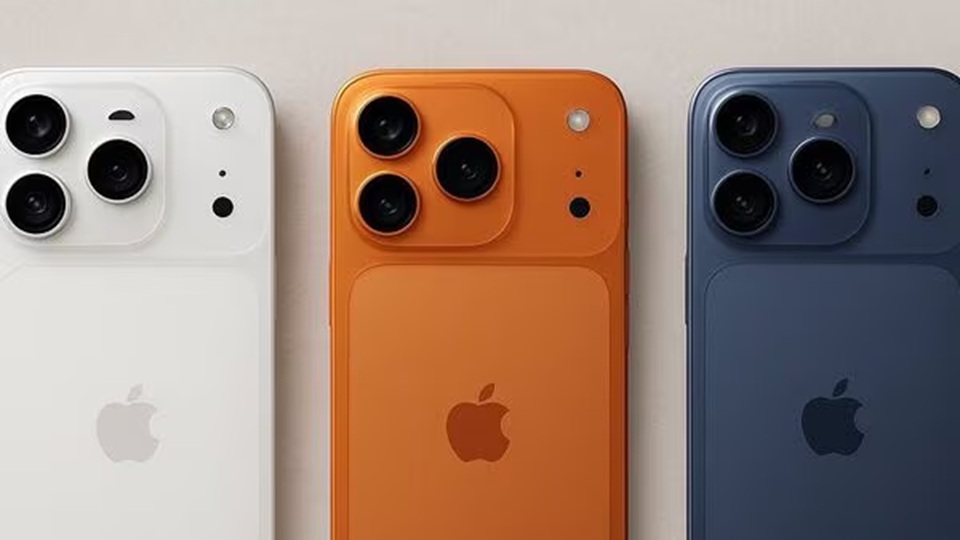
Apple is on track to ship more smartphones than Samsung in 2025, marking the first time in 14 years the iPhone maker will displace its long-time rival at the top of the global market, according to new data from Counterpoint Research.

The research firm told CNBC that Apple is projected to ship around 243 million iPhones this year, compared with Samsung’s expected 235 million shipments. That places Apple at an estimated 19.4% share of the global smartphone market, ahead of Samsung’s 18.7%.

While shipments don’t directly equate to sales, they remain a core indicator of how smartphone vendors measure demand and gauge expected retail performance across regions.

The shift is being driven by the momentum behind Apple’s latest flagship lineup. Counterpoint said the iPhone 17 series — launched in September — delivered a “bumper” holiday season, outpacing expectations and helping lift Apple’s shipment outlook for the year.

In the United States, sales of the iPhone 17 series, including the iPhone Air, were 12% higher during the first four weeks after launch when compared with the iPhone 16 series, excluding the iPhone 16e. In China, which remains one of Apple’s most strategically important markets, sales of the iPhone 17 lineup were 18% higher than its predecessor during the same four-week window.

Counterpoint Research Senior Analyst Yang Wang said the strong reception for the iPhone 17 series is only part of the story. He highlighted an industry-wide shift as the primary driver behind the boost in Apple’s shipment forecast.

“Beyond the highly positive market reception for the iPhone 17 series, the key driver behind the upgraded shipment outlook lies in the replacement cycle reaching its inflection point. Consumers who purchased smartphones during the COVID-19 boom are now entering their upgrade phase,” Wang said.

Samsung, meanwhile, faces a tougher landscape. Counterpoint noted that Chinese manufacturers are applying pressure in the low-to-mid-tier segments of the market, making it harder for the South Korean company to reclaim the top spot. That competition is particularly intense in regions where value-priced Android devices continue to outsell premium phones.

Long-term advantage for Apple

Looking further ahead, Counterpoint Research forecasts that Apple will maintain the number-one position through 2029. The firm points to several structural advantages underpinning Apple’s long-term dominance.

One key factor is the vast second-hand market for iPhones. Counterpoint noted that about 358 million second-hand iPhones were sold between 2023 and the second quarter of 2025. Many of those users remain locked into Apple’s ecosystem and are likely to upgrade to brand-new models in the coming years, maintaining a steady demand pipeline.

Apple has also benefited from external and macroeconomic factors. The company experienced a lower-than-expected impact from tariffs under the existing U.S.–China trade truce, which helped stabilize its supply chain. Meanwhile, growth in emerging markets and a weaker U.S. dollar supported demand for iPhones during periods when other premium smartphone brands faced slower consumer spending.

“With these structural tailwinds, Apple is well-positioned to surpass Samsung in annual shipments in 2025,” Wang said.

Counterpoint added that Apple’s product roadmap could help preserve its lead through the decade. The firm expects Apple to launch the entry-level iPhone 17e in 2026, alongside a foldable iPhone that would allow the company to compete directly with foldable-focused brands such as Samsung and Huawei.

The research firm also pointed to ongoing improvements to Apple’s virtual assistant Siri and said a major iPhone design overhaul is expected in 2027 — changes that could reinvigorate demand across regions.

Apple’s strategy now includes widening price tiers to reach more consumers. Apple aims to strengthen its grip on the lower premium smartphone segment — an area projected to grow faster than the broader market- by expanding the “e” series, adjusting the launch cadence for its Pro and base models, and tailoring devices for aspirational buyers in emerging markets.

“Given an increasing preference for the iOS ecosystem, compatibility between devices and a substantial number of older models within Apple’s installed base due for renewal, Apple will retain the lead over other smartphone OEMs through the end of the decade,” Counterpoint said.

Implications of Klarna’s KlarnaUSD Launch on Tempo Blockchain

0

Klarna, the Sweden-based digital bank and buy-now-pay-later giant, announced the launch of KlarnaUSD, its first stablecoin.

This USD-pegged token is designed to enable faster and lower-cost cross-border payments, targeting Klarna’s massive user base of over 114 million customers and $112 billion in annual gross merchandise volume (GMV).

The announcement marks a significant pivot for Klarna, whose CEO Sebastian Siemiatkowski previously expressed skepticism about crypto but now sees it as “fast, low-cost, secure, and built for scale.”

KlarnaUSD is fully backed by U.S. dollars and issued via Bridge a Stripe subsidiary acquired for $1.1 billion earlier in 2025. It’s initially focused on internal uses, like reducing international payment costs for Klarna’s operations, with no immediate plans for integration into its consumer installment services.

The token is live on the testnet of Tempo often stylized as “tempo” in announcements, a new layer-1 blockchain developed by Stripe and crypto investment firm Paradigm specifically for payment use cases. A mainnet launch is planned for 2026, enabling broader adoption.

Klarna positions itself as the first bank to launch on Tempo, highlighting its role as a pioneer in blending traditional banking with blockchain infrastructure. This aligns with Tempo’s goal of challenging legacy payment networks, which rack up ~$120 billion in annual cross-border fees.

This move comes amid surging stablecoin adoption, with global transaction volumes hitting $27 trillion annually—rivaling Visa and Mastercard combined. Klarna joins peers like PayPal which launched PYUSD and Stripe (via Bridge in leveraging stablecoins for efficiency.

Regulatory tailwinds, such as the U.S. GENIUS Act passed in July 2025 and Europe’s MiCA framework, have accelerated institutional entry into the space. Community reactions highlight excitement for real-world crypto applications, though some noted the 2026 mainnet delay as a cautious rollout.

Klarna’s announcement positions the company as a trailblazer in bridging traditional fintech with blockchain, leveraging its 114 million customers and $112 billion annual GMV to drive real-world stablecoin adoption.

While the stablecoin is initially testnet-bound and focused on internal efficiencies, its 2026 mainnet rollout could reshape payments, competition, and regulatory landscapes.

KlarnaUSD targets the $120 billion annual cost of cross-border payments, where traditional networks like correspondent banks impose high fees and delays. By settling on Tempo—a payments-optimized Layer-1 blockchain from Stripe and Paradigm—Klarna can slash these by up to 90%, using blockchain for instant, low-cost transfers.

This starts internally like treasury operations, merchant settlements before expanding to peer-to-peer and remittances, reducing reliance on external credit lines and FX desks. The stablecoin also lets Klarna capture yield on reserves backed by USD cash/bills, which it couldn’t previously earn on U.S. deposits.

As one analyst noted, this “turns all of that into its own payments and funding layer,” boosting margins by minimizing “rent” paid to banks. For a BNPL leader bleeding on FX friction, this could transform liquidity ops across 26 markets, potentially integrating with consumer services long-term despite CEO Sebastian Siemiatkowski’s past crypto skepticism.

Stablecoins already process $27 trillion annually—rivaling Visa/Mastercard— with supply hitting $300 billion, Tether at $184B, USDC at $75B. Klarna’s entry, as the first bank on Tempo, validates “stablecoin chains” like Tempo for enterprise use, drawing in more fintechs beyond PayPal’s PYUSD or Visa’s expansions on Stellar/Avalanche.

It signals a shift from crypto experimentation to core infrastructure, with projections of $1.9 trillion issuance by 2030.This intensifies rivalry in the $304 billion stablecoin sector, prompting incumbents to prioritize proprietary blockchains for settlement.

Tempo gains immediate scale via Klarna’s volume, fostering integrations and ecosystem investments like its $25M in Commonware. Community buzz highlights this as “crypto entering the real economy,” with faster/cheaper transfers becoming the “checkout default.”

Consumers especially Klarna’s U.S.-heavy base stand to gain from seamless, borderless payments—think instant refunds or remittances without $120B in hidden fees. Merchants benefit from quicker settlements, reducing working capital needs.

Near-instant cross-border transfers; lower fees on BNPL/remittances. Limited initial rollout; education on stablecoin use. Faster settlements; yield-earning reserves. Integration costs; dependency on Tempo’s uptime. 90% fee cuts; yield capture on $112B GMV.

U.S. GENIUS Act and Europe’s MiCA have cleared paths for institutional stablecoins, but Klarna’s launch tests boundaries—e.g., yield remuneration rules in the U.S./EU. As a EU-licensed bank, Klarna’s compliance focus could set precedents for “self-repaying loans” or retail integrations, though regulators may eye centralized control.

Market-wise, it underscores blockchain’s edge over legacy rails, potentially sparking a fintech arms race independent of crypto volatility. This isn’t hype—it’s a pragmatic step toward $27T-scale disruption, proving stablecoins can move as fast as the internet.