DD
MM
YYYY

PAGES

DD
MM
YYYY

spot_img

PAGES

Home Blog Page 1119

Top EHR Software Firms Specializing in Small Practice Growth

0

In today’s evolving healthcare environment, small and independent medical practices face increasing pressure to deliver high-quality care while navigating limited budgets, staffing challenges, and complex regulatory requirements. Among the most critical tools supporting these efforts are Electronic Health Record (EHR) systems.

For smaller practices, choosing the right EHR software is not simply about compliance—it’s a strategic decision that can shape everything from patient satisfaction to financial sustainability. Unlike larger healthcare systems that may employ dedicated IT staff and custom infrastructure, smaller practices often seek out platforms that are intuitive, cost-effective, and easy to implement.

Over the last decade, numerous EHR vendors have responded to this demand by designing solutions tailored specifically to small and mid-sized practices. These platforms typically focus on streamlining workflows, improving billing accuracy, and supporting clinical documentation without overwhelming users with unnecessary complexity.

Key Features Driving Small Practice Adoption

The ideal EHR for a small practice will often include essential features such as customizable templates, integrated scheduling, e-prescribing, and lab order management. Cloud-based deployment is a common preference, eliminating the need for local servers or intensive maintenance. Mobile access has also become a valuable addition, particularly for providers working across multiple locations or offering home visits.

Several platforms go beyond basic functionality to incorporate tools that aid in care coordination, preventive care tracking, and revenue cycle management. These features are vital for practices engaged in chronic disease management or value-based care models.

Integration capabilities are another key concern. Many small practices rely on third-party billing services, telehealth tools, or diagnostic imaging systems. EHR vendors that support seamless integration with these tools often gain favor due to reduced administrative burden and data duplication.

Notable EHR Vendors for Small Practices

A variety of EHR vendors have emerged as popular choices among small practices. These include DrChrono, Kareo, Elation Health, AdvancedMD, and athenahealth. Each brings different strengths to the table—whether it’s mobile-first design, robust analytics, or specialty-specific configurations.

DrChrono, for example, is often selected for its ease of use and mobile app support, making it well-suited for fast-paced environments like urgent care. Kareo offers a fully integrated platform that combines EHR, billing, and practice management, with features designed for independent practices and billing companies.

Elation Health focuses on primary care workflows, delivering clinical-first tools that are praised for reducing charting time. AdvancedMD and athenahealth are frequently chosen for their scalable, cloud-based solutions and comprehensive revenue cycle tools.

Platforms such as these typically offer subscription-based pricing models, allowing small practices to avoid large upfront investments. This predictable cost structure is especially appealing to providers who are just starting or looking to modernize without disrupting existing operations.

CureMD, while often associated with larger organizations, also provides scalable solutions that include EHR, practice management, and medical billing tools. Some small practices choose vendors like this when they need an all-in-one platform that can grow with them.

Specialty Support and Flexibility

Small practices are not always generalists. Many are specialty-focused—serving dermatology, pediatrics, orthopedics, or behavioral health. As a result, specialty-specific templates, clinical decision support tools, and custom workflows are increasingly important. Vendors that support multiple specialties or allow easy customization tend to have a broader appeal.

In recent years, Mental Health EHR solutions have seen particularly strong demand. Mental health providers often require note-taking formats that differ significantly from those used in primary care. Features like progress note templates for therapy sessions, outcome tracking, and medication reconciliation are critical. Vendors such as SimplePractice, TherapyNotes, and Valant have developed dedicated platforms for mental and behavioral health providers, while some general-purpose EHRs have added specialized modules to support this domain.

The Role of Care Management in Small Practice Growth

As small practices begin participating more in coordinated care and population health initiatives, EHR systems that include Care Management Software have become increasingly valuable. These tools support chronic care management (CCM), transitional care management (TCM), and annual wellness visits—often qualifying the practice for additional reimbursement under CMS guidelines.

Care management tools typically help identify high-risk patients, automate follow-ups, and track progress across various health goals. For practices managing patients with diabetes, heart disease, or COPD, this functionality allows for more proactive care delivery. EHR vendors that include these capabilities often help small practices align with both quality reporting standards and long-term patient engagement strategies.

Implementation, Training, and Support

Ease of implementation is a common concern for small practices. Without the support of in-house IT departments, providers need systems that can be deployed quickly, with minimal disruption. Most modern EHR vendors offer cloud-based solutions that can be set up in a matter of days or weeks, rather than months.

Training and ongoing support are equally important. Many vendors now provide self-paced learning resources, live chat, and phone support to help users navigate issues. Some also assign onboarding specialists to assist with data migration and workflow configuration. The quality of this support can be a major differentiator—especially for practices that operate with lean administrative teams.

Compliance and Data Security

EHR systems used by small practices must meet the same regulatory and security requirements as those used by large organizations. HIPAA compliance, audit logging, role-based access control, and data encryption are essential. In recent years, multi-factor authentication has become a standard security feature across many platforms.

Practices involved in MIPS reporting or other CMS quality programs also require tools for generating and submitting quality metrics. EHRs that include built-in compliance tracking and reporting dashboards reduce the administrative workload and help practices avoid penalties.

The Future of EHR for Small Practices

The EHR market continues to evolve with advancements in artificial intelligence, voice recognition, and predictive analytics. For small practices, the focus is expected to remain on simplicity, affordability, and efficiency.

Ambient clinical documentation and AI-powered scribing tools are emerging trends that may reduce the time clinicians spend on charting. These tools are particularly relevant to solo providers looking to maximize patient interaction time.

At the same time, increased interoperability requirements under initiatives like TEFCA (Trusted Exchange Framework and Common Agreement) will push EHR vendors to prioritize data exchange capabilities. Practices that want to remain competitive—and compliant—will need systems that communicate easily with labs, hospitals, payers, and referral networks.

Final Thoughts

Choosing the right EHR software is a strategic decision for small medical practices aiming to grow while maintaining quality care. The best systems support not only clinical documentation but also billing, compliance, and patient engagement. They integrate with third-party tools, offer specialty-specific features, and provide the flexibility to evolve alongside the practice.

While several well-known vendors continue to compete in this space, the best solution depends on the unique needs of each practice—whether it’s behavioral health, internal medicine, or family care. Cost, usability, support, and functionality must all be evaluated carefully. CureMD and other reputable providers offer viable options, but ultimately, the right EHR is the one that aligns with the practice’s workflow, budget, and long-term goals.


SafeMoon CEO Found Quilty On All Counts Charges Bordering on Crypto Investment Fraud

0

Braden John Karony, the former CEO of SafeMoon, was found guilty on all counts in a criminal case tied to a major cryptocurrency fraud scheme. A New York federal jury convicted him on May 21, 2025, in the U.S. District Court for the Eastern District of New York. The charges included conspiracy to commit securities fraud, wire fraud, and money laundering.

Prosecutors alleged that Karony, along with co-conspirators Thomas Smith and Kyle Nagy, misled investors about the accessibility of SafeMoon’s “locked” liquidity pools, diverting millions of dollars for personal gain. Karony personally acquired over $9 million in crypto assets, which he used to purchase luxury items such as a $2.2 million home in Utah, additional properties, two Audi R8 sports cars, a Tesla, and custom trucks. The SafeMoon token, which once reached a market capitalization of over $8 billion, collapsed after the fraud was exposed, with its value dropping significantly.

Thomas Smith, the former CTO, pleaded guilty and testified against Karony, while Kyle Nagy, the platform’s creator, reportedly fled to Russia and remains at large. Karony faces up to 45 years in prison, with sentencing yet to be scheduled. The case was investigated by the FBI, IRS Criminal Investigation, and Homeland Security Investigations, with assistance from the SEC.

The conviction of SafeMoon CEO Braden John Karony carries significant implications for the cryptocurrency industry and highlights a growing divide between regulatory efforts and the decentralized ethos of crypto. Karony’s conviction underscores the U.S. government’s aggressive stance on crypto fraud. Agencies like the SEC, FBI, and IRS are intensifying efforts to crack down on scams, signaling that even decentralized platforms are not beyond reach. This could lead to stricter regulations, potentially stifling innovation but also protecting investors.

The SafeMoon case, where a token once valued at over $8 billion collapsed, erodes trust in speculative crypto projects. Investors may become more cautious, favoring established cryptocurrencies like Bitcoin or Ethereum over newer, less transparent tokens. This could reduce liquidity in smaller altcoin markets. The guilty verdict sets a legal precedent for holding crypto executives accountable for misrepresenting token mechanics, such as liquidity pool “locks.” It may deter similar schemes but also pressure developers to ensure transparency in smart contracts and tokenomics.

With co-conspirator Kyle Nagy reportedly fleeing to Russia, international cooperation in crypto fraud cases is under scrutiny. This could push regulators to demand more robust KYC (Know Your Customer) protocols or centralized oversight, clashing with crypto’s decentralized principles. Supporters of oversight, including regulators and cautious investors, argue that cases like SafeMoon justify stricter rules to prevent fraud, protect retail investors, and stabilize markets. They view convictions like Karony’s as necessary to weed out bad actors and legitimize crypto as an asset class.

Crypto enthusiasts who prioritize decentralization see such crackdowns as overreach, arguing that they undermine the industry’s core principles of autonomy and freedom from centralized control. They contend that investor education and self-due-diligence should take precedence over regulatory intervention, and that cases like SafeMoon are outliers exploited to justify broader control.

This divide fuels debates over how to balance innovation with accountability. Pro-regulation forces may push for clearer legal frameworks, while purists advocate for community-driven solutions like DAOs (Decentralized Autonomous Organizations) to self-regulate. The SafeMoon case, with its high-profile fraud and dramatic fallout, could tilt the scales toward stricter oversight, potentially alienating those who view crypto as a rebellion against traditional financial systems.

INEC Creates AI Division to Bolster Electoral Reform in Nigeria, But Critics Say Human Factor Still The Problem

1

The Independent National Electoral Commission (INEC) has taken a major step toward integrating advanced technologies into Nigeria’s electoral process with the creation of a dedicated Artificial Intelligence (AI) Division under its ICT Department.

Announced on Thursday, the initiative is part of a broader reform drive aimed at modernizing election management systems and strengthening the credibility of future polls—especially the 2027 general elections.

According to the Commission, the newly approved AI Division will focus on harnessing AI to enhance logistical planning, voter engagement, data-driven decision-making, and combatting disinformation. INEC says the initiative will also be critical in automating internal processes to mitigate risks and detect irregularities in real-time.

But while the move is being touted as forward-thinking and innovative, several electoral experts, civil society actors, and former government officials believe that the deployment of technologies—no matter how advanced—cannot substitute for institutional integrity and political will. The consensus remains that the biggest threat to Nigeria’s elections is not the absence of technology but the persistent manipulation of the process by human actors.

In its statement, INEC explained that the AI Division was approved during its weekly meeting in Abuja after evaluating recent global conversations on the relevance of artificial intelligence in electoral activities. These discussions, the Commission noted, emphasized both the risks posed by AI in the spread of fake news and its utility in electoral planning, risk detection, and service automation.

“The Division will enable the Commission to better coordinate and maximize existing technology investments through centralized AI governance,” said Sam Olumekun, National Commissioner and Chairman of INEC’s Information and Voter Education Committee.

“Furthermore, it will strengthen electoral credibility through predictive analytics, automation and intelligent safeguards.”

INEC added that the Division will focus on geospatial intelligence to support logistics and polling unit allocation, which have often posed significant logistical nightmares in past elections.

Human Factor: The Persistent Weak Link

However, this optimism is being met with cautious skepticism by Nigerians who point to Nigeria’s long history of election malpractice rooted in manipulation by individuals within and outside the electoral commission.

It is believed that while AI may help reduce technical glitches and improve planning, it cannot resolve the deeper systemic issues that have plagued Nigeria’s elections for decades—issues tied to collusion, manipulation, and noncompliance with established rules.

One of the most referenced examples is the 2023 general elections, during which INEC’s Results Viewing Portal (IREV)—a platform touted as a transparency tool for real-time results uploads—allegedly suffered a glitch during the presidential election. The failure to transmit results from polling units as promised led to widespread public outcry, eroded trust in the process, and sparked legal challenges that resulted in the courts deciding the winner of the presidential election.

The alleged glitch, which INEC attributed to technical failures, is still viewed by many as evidence of how the human element continues to compromise technological innovations in the electoral space.

Jonathan’s Call for Automation for Credibility

In February, former President Goodluck Jonathan, widely praised for his role in reforming Nigeria’s electoral system during his tenure, reinforced the argument that without full automation, electoral integrity will remain elusive. Speaking at the YIAGA Africa reflection conference on democratic elections in West Africa, Jonathan used the IREV incident to underscore the importance of eliminating human discretion in key technological processes.

“The issue of controversy about BVAS and IREV for example—if BVAS captures data, that data should be automatically uploaded to the IREV,” Jonathan said.

“It should not depend on an interface by a human factor who will now come and tell us about glitches. Because if it is so automated that no human factor will stop it, then of course it will be seamless.”

“But if I am to direct the BVAS before the BVAS is supposed to do the work that has been automated, then I can do what I think soothes my interest,” he added.

Jonathan’s remarks highlighted a growing demand for end-to-end electoral automation—particularly in critical phases such as accreditation, voting, and result transmission. In his view, unless systems are designed to function without discretionary interference, electoral technologies will continue to be tools in the hands of those determined to undermine the process.

The Call for Parallel Institutional Reform

While welcoming the AI Division as a step in the right direction, many Nigerians insist that its success will depend on broader institutional reforms, staff reorientation, and strict enforcement of electoral laws.

Others have urged INEC to publicly disclose the framework that will govern the deployment of AI, including ethical guidelines, audit trails, and safeguards against internal sabotage.

INEC maintains that the AI Division will help it prepare more efficiently for the 2027 elections, allowing for better planning, quicker response to emerging threats, and enhanced transparency. But the Commission also acknowledges that the reforms fall within areas that only require its administrative authority and do not depend on legislative approval.

While this gives INEC the flexibility to act swiftly, it also raises questions about oversight and accountability. For the reforms to succeed, observers say, INEC must not only invest in intelligent machines but also build a culture of integrity among those who run the systems.

OpenAI Teams Up with Cisco, Oracle, G42, Nvidia, and SoftBank to Unveil $1GW Stargate UAE Data Center in Abu Dhabi

0

OpenAI has officially launched its first large-scale data center initiative in the Middle East, announcing the Stargate UAE project — a massive artificial intelligence infrastructure hub that will be developed in Abu Dhabi with a consortium of global tech giants including Cisco, Oracle, Nvidia, SoftBank, and the UAE’s G42.

The facility will have a target capacity of 1 gigawatt (GW), with the first 200 megawatts (MW) expected to come online in 2026. The announcement, made Thursday via OpenAI’s blog, marks a significant milestone in the company’s plan to build out global AI infrastructure under a new initiative called “OpenAI for Countries.”

“This is […] the first partnership under OpenAI for Countries?, our new global initiative to help interested governments build sovereign AI capability in coordination with the U.S. government,” the company wrote. “Under the partnership, the UAE will become the first country in the world to enable ChatGPT nationwide — giving people across the country the ability to access OpenAI’s technology.”

The Stargate UAE data center will not only be one of the largest AI-focused data centers globally but will also serve as a sovereign digital asset for the UAE, providing advanced AI capabilities across the wider region. OpenAI said the facility would be able to provide computing capacity within a 2,000-mile radius, effectively extending its AI services to parts of Africa, Asia, and Eastern Europe.

OpenAI is establishing one of its most significant regional footholds outside of the United States by partnering with the Abu Dhabi-based G42, an artificial intelligence and cloud computing firm backed by the Emirati government. The project is also designed to align with U.S. strategic interests, following a landmark deal sealed during Donald Trump’s recent visit to the Gulf nation – to build what will be the largest artificial intelligence campus outside US borders.

OpenAI’s reference to working “in coordination with the U.S. government” thus underscores Washington’s influence in shaping how AI infrastructure is distributed globally, particularly in allied countries.

The UAE, in turn, gains a powerful edge in its race to become a digital economy leader. It positions itself as a key destination for compute-intensive AI research and deployment by hosting one of the world’s largest AI clusters.

A Multinational Effort with Major Tech Players

Several major technology companies are involved in the project, underlining the scale and ambition behind Stargate UAE. Oracle is expected to provide cloud and database infrastructure; Nvidia will likely supply the high-performance chips and GPUs needed to power large language models; Cisco will handle the networking infrastructure; and SoftBank, through its Vision Fund, may be contributing funding and strategic support.

OpenAI’s long-time partner Microsoft, which has invested over $13 billion in the company, is not named as a direct stakeholder in the UAE project, though its Azure platform continues to power much of OpenAI’s existing cloud operations globally. However, OpenAI’s new sovereign infrastructure strategy indicates a move toward more diversified partnerships that allow countries to build AI capabilities on their own terms — albeit with safeguards endorsed by the U.S.

G42, the Emirati tech firm anchoring the UAE end of the partnership, is already a known player in AI development and has existing collaborations with both Microsoft and OpenAI. In recent months, the company has been distancing itself from its earlier ties with Chinese tech firms, including withdrawing from agreements involving Chinese-made hardware, in a bid to strengthen ties with U.S. allies and tech ecosystems.

ChatGPT, Nationwide and Unrestricted

In addition to the infrastructure rollout, the Stargate UAE project will make the UAE the first country in the world to provide nationwide access to ChatGPT. This suggests that AI applications powered by OpenAI — including generative tools for text, code, and potentially voice or video — will be integrated into various aspects of public life, including education, government services, business development, and digital governance.

The implementation of ChatGPT across a national digital framework is expected to serve as a model for future deployments under the “OpenAI for Countries” initiative. Though few technical details have been disclosed, such a nationwide rollout could involve government APIs, localized language models, AI support for public administration, and regulated access frameworks tailored to regional governance norms.

The UAE already ranks among the top countries in digital government initiatives, and this integration could further position it as a front-runner in AI adoption at the state level.

A Week of Escalating AI Infrastructure Rivalries

OpenAI’s announcement came just days after Elon Musk, CEO of Tesla and founder of OpenAI’s rival firm xAI, revealed that his company plans to build what he described as “the world’s first gigawatt-scale AI training cluster.” The timing of Musk’s statement appeared to preempt OpenAI’s news — although OpenAI’s UAE data center now takes the lead as the first major gigawatt-class facility officially announced with clear partners and a deployment timeline.

While xAI’s proposed project remains largely conceptual, OpenAI’s Stargate UAE has now moved into the development phase. The project not only intensifies the race for AI infrastructure supremacy but also places the Middle East, particularly Abu Dhabi, at the center of a high-stakes geopolitical and technological transformation.

While OpenAI did not disclose the financial cost of the Stargate UAE initiative, data centers of this magnitude typically require multi-billion-dollar capital investment. Estimates for similar-sized facilities, especially those tailored for AI workloads, often surpass $10 billion when factoring in land acquisition, energy infrastructure, cooling systems, advanced chips, and cybersecurity.

The 1GW capacity suggests Stargate UAE could become one of the largest AI-dedicated installations on the planet. For comparison, most hyperscale data centers operated by Amazon Web Services, Google Cloud, or Microsoft Azure range from 100MW to 500MW.

OpenAI had earlier stated that its Stargate project, first revealed in the U.S. as part of long-term infrastructure ambitions, could require as much as $100 billion in global capital. The UAE hub now appears to be the first concrete step toward realizing that scale.

What It Means for AI Development

With Stargate UAE, OpenAI is laying the groundwork not just for local deployment, but for global scalability. The proximity of Abu Dhabi to emerging AI markets in Africa, Central Asia, and South Asia may prove to be a strategic advantage, especially as demand for AI-driven tools — including large language models and image or video generators — continues to grow.

The announcement also adds pressure on other governments to consider similar partnerships. “OpenAI for Countries” is pitched as a new form of sovereign AI collaboration — combining local control, state-level deployment, and access to cutting-edge research, all backed by U.S. diplomatic and technological alignment.

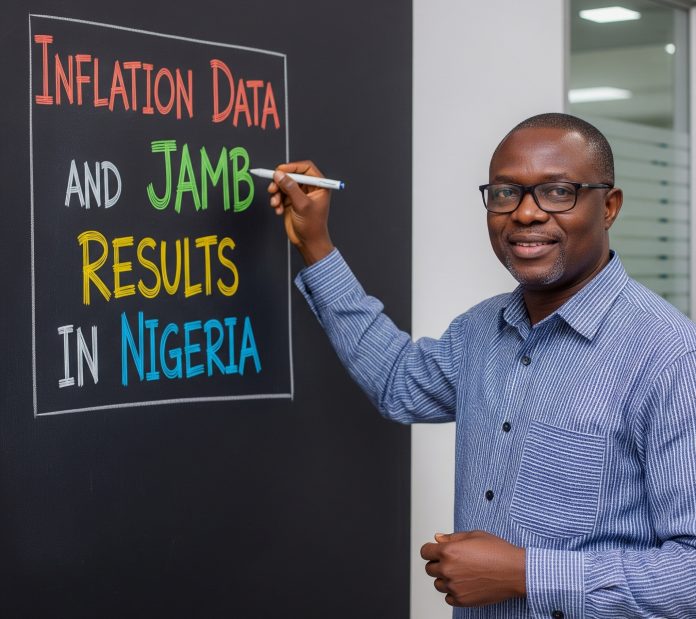
Nigeria’s Recent Inflation Data And The Failure in JAMB Headquarters

0

Comment: ‘Guys, I agree that we can panel beat and brandish figures anyhow in Nigeria but National Bureau of Statistics (NBS) in its CPI April 2025 included this disclaimer “In analyzing price movements under this section, it should be noted that CPI is weighted by consumption expenditure patterns that differ across States and locations. Accordingly, the weight as-signed to a particular Food or Non-Food item may differ from State to State, making interstate comparisons of consumption baskets inadvisable and potentially misleading.”‘ This was a response on the piece where I asked the National Bureau of Statistics to check its latest inflation data.

My Response: The absence of evidence is not the evidence of absence. A disclaimer does not solve the issue because the very fact these states are published together, most readers will think the baseline benchmark is the same. But where they are not, it is the job of NBS to re-weigh everything, to compensate for variances in baselines, if those states would be put on the same table.

Simply, you need to explain why Ekiti  (34% inflation) and Ogun (~10%) states have that level of deviation with or without disclaimers. Understand that economics is a social science, but it is “science” nonetheless. So, putting a disclaimer does not fix the issue. I do not buy into your explanation until someone can explain how homogenous economic states like Ekiti and Ogun could be attributed to have the deviation noted.

Respectfully, you cannot use “disclaimer” to cover laziness. It is like the JAMB mess. When the results were published, I noted that I did not believe the results and avoided castigating our young people. Why? In the last two decades, Lagos, Anambra, Imo and Abia states have always outperformed in JAMB. So, when JAMB published what that mess, I rejected it because it made no sense, looking at historical data!

Later, I argued that while JAMB could have technical glitches or poor software, as it claimed, the fact that its statisticians approved those results is a validation that they did not apply statistics, post-exam. In other words, when a center within the University of Nigeria Nsukka recorded 100% failure, despite its previous great records, no human there in JAMB cared to understand why?

So, in the grand scheme, the biggest failure of JAMB is not the software problem, but the fact they approved garbage as “results” without anyone knowing it was garbage. It is in that spirit I want someone to explain how Ekiti and Ogun states could record the inflation data being paraded right now with both published together, making the citizens assume similar baselines. A disclaimer is not an answer!

RESPONSE on Feed: I think NBS has made it clear that the baseline is not the same. And if that is the case, comparing them will not be fine. My position is this: if the baseline is not uniform, why put them in the same table without adjustment? I have put another piece on this. My position is that if you must publish all the states in one table, adjust the baseline to compensate for any variation. 

Example, if you use Ekiti baseline to be 30 and Ogun 2, and you end up with whatever, and you did not adjust for the different baselines, while putting them in one table, that is not fair for the readers. Your pricing case does not matter because the baselines according to the disclaimer makes it so. But I can assure that if the baselines are adjusted, the variation between Ogun and Ekiti will not be up to the 25% as we have now. You can have 10%.

Nigeria’s National Bureau of Statistics, Check Your Inflation Computation Again