DD
MM
YYYY

PAGES

DD
MM
YYYY

spot_img

PAGES

Home Blog Page 1123

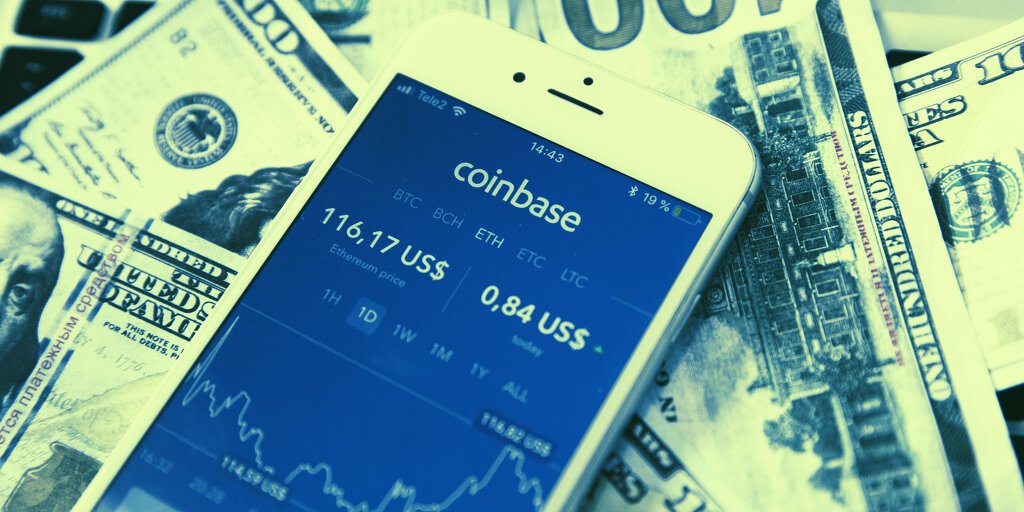
The Implications of Coinbase’s Push for On-Chain Stock Trading

0

Coinbase is seeking approval from the U.S. Securities and Exchange Commission (SEC) to offer tokenized equities, allowing stock trading on blockchain networks. This move, described as a “huge priority” by Coinbase’s Chief Legal Officer Paul Grewal, aims to enable 24/7 trading, reduce transaction costs, and provide faster settlements compared to traditional markets. If approved, Coinbase would compete with retail brokerages like Robinhood and Charles Schwab, potentially disrupting equity markets with features like fractional ownership and real-time settlement.

To proceed, Coinbase needs a “no-action letter” or exemptive relief from the SEC, as it is not registered as a broker-dealer, a requirement for securities trading. The company owns a dormant broker-dealer license from a 2018 acquisition, which could be leveraged. This follows a 2021 attempt to offer tokenized stocks, halted under former SEC Chair Gary Gensler, but recent regulatory shifts under a crypto-friendly administration and the SEC’s dismissal of a 2023 lawsuit against Coinbase have renewed optimism.

Challenges include insufficient secondary-market liquidity and the lack of global standards, as noted by the World Economic Forum. Rival exchange Kraken launched xStocks for non-U.S. markets, indicating global demand. Approval could set a precedent, pressuring the SEC to formalize tokenized securities frameworks and encouraging traditional brokers to adopt blockchain technology.

Tokenized equities on blockchain could transform stock trading by enabling 24/7 access, fractional ownership, and near-instant settlements, reducing reliance on traditional clearinghouses. This could lower costs for retail investors and challenge established brokerages like Robinhood and Charles Schwab. Fractional ownership via tokens could democratize investing, allowing smaller investors to buy portions of high-value stocks. This aligns with Coinbase’s goal to expand financial inclusion but may raise concerns about speculative trading.

SEC approval would signal a shift toward integrating blockchain in traditional finance. It could force the SEC to clarify rules for tokenized securities, potentially creating a framework for other exchanges. However, regulatory hurdles, like Coinbase’s lack of a broker-dealer registration, remain significant. Approval could push traditional financial institutions to adopt blockchain to stay competitive. Firms like BlackRock, which tokenized a money-market fund on Ethereum, show growing interest, but widespread adoption hinges on liquidity and regulatory clarity.

With Kraken’s xStocks targeting non-U.S. markets, Coinbase’s move could accelerate global demand for tokenized assets. However, inconsistent international regulations may fragment markets, as seen in the World Economic Forum’s concerns about liquidity and standards. Retail investors may benefit from lower costs and accessibility, but institutional players could resist due to entrenched systems and potential loss of control over market infrastructure. This could widen the gap between tech-forward retail platforms and traditional finance.

Coinbase’s initiative bridges crypto and traditional markets, but it deepens the divide between crypto advocates pushing for decentralization and regulators wary of systemic risks. The SEC’s decision will reflect this tension, especially under a crypto-friendly administration. The U.S. lags behind regions like Europe and Asia in tokenized asset adoption. Approval could narrow this gap, but without global standards, U.S. investors may face limited access to international tokenized markets, while non-U.S. platforms like Kraken gain traction.

The crypto industry seeks clear rules, but the SEC’s historical caution, as seen in its 2021 rejection of Coinbase’s tokenized stock plan, highlights a divide between innovation and oversight. A favorable ruling could reduce this friction, but denial risks further uncertainty. Tokenization could empower smaller investors, but without proper safeguards, it might exacerbate speculative bubbles, disproportionately harming less sophisticated traders.

This underscores a divide between financial inclusion and investor protection. Coinbase’s bid could reshape equity markets, but it amplifies tensions between innovation and regulation, retail and institutional interests, and U.S. and global financial systems. The SEC’s response will be pivotal in determining whether these divides narrow or widen.

The Truth About Free People Search Services: Safe, Useful or Risky?

0

In just a few clicks, you can uncover someone’s name, address history, phone number, workplace, or even relatives — all for free. Sounds convenient, right? But behind this digital magic lies a complex mix of usefulness, privacy concerns, and potential risks that most users overlook.

Free people search services have exploded in popularity, offering free search people fast and simple ways to learn more about others — from lost friends to online dates. But are these tools as harmless as they seem? Let’s unpack the truth.

The Promise: Instant Access to Public Information

At first glance, free people search sites look like digital detectives for the everyday user. By pulling together public records, social media, and online directories, they can reveal surprising levels of detail about just about anyone.

Common uses include:

  • Reconnecting with classmates or relatives
  • Checking out someone you’re about to meet offline
  • Verifying who’s calling or texting you
  • Researching potential roommates, tenants, or dates

And yes — all without spending a cent.

For many, this feels empowering. You’re in control. You get answers fast. But is that the whole story?

The Grey Area: Where “Free” Becomes Unclear

While many services claim to be “100% free,” that’s often not entirely true. Here’s what they usually don’t tell you upfront:

  • Limited data: You might see only a name and age — everything else is paywalled.
  • Upselling traps: After showing basic info, the site nudges you into purchasing full reports.
  • Ads and tracking: Your searches may be tracked and sold to third-party advertisers.
  • Fake progress bars: Some sites simulate searches that aren’t actually connected to real-time databases.

The idea is to lure users in with the promise of transparency — then capitalize on curiosity. In many cases, “free” is just a preview.

The Safety Question: Is It Risky to Use These Tools?

That depends — on both how you use them and who you’re using them on.

? Potential Risks:

  • Your own data exposure: Many people are shocked to discover that their own private info is public.
  • Mistaken identity: Merging data from different sources can lead to false matches or confusing reports.
  • Privacy violations: In some countries or states, using people search data for certain purposes (like employment decisions or harassment) may be illegal.
  • Phishing threats: Some fake search sites exist purely to harvest your data or install malware.

Using a shady site might mean you’re the one being searched next.

When These Services Are Genuinely Useful

Despite the pitfalls, there are times when free people search tools really shine:

  • Reuniting with lost connections: An old friend, an estranged family member, or a former colleague.
  • Phone number or email lookups: Great for stopping spam or identifying unknown contacts.
  • Tenant or roommate screening: While not a replacement for professional checks, it gives a rough first impression.
  • Dating safety: A quick search might save you from walking into a dangerous situation.

The key? Use them as starting points — not as final truth.

How to Use Them Safely and Ethically

  1. Choose reputable sites (with clear privacy policies and opt-out options).
  2. Verify across sources — don’t trust one result blindly.
  3. Never use data to harass, dox, or threaten someone.

  4. Check your own digital footprint and remove anything you don’t want public.

And most importantly — treat every search like you’re searching for yourself.

Final Thoughts: Power Comes With Responsibility

Free people search services are changing the way we learn about others — and ourselves. They’re fast, powerful, and often helpful. But they’re not toys. They handle real information about real lives.

So, are they safe? Sometimes. Useful? Often. Risky? Absolutely — if used carelessly.

In the end, it’s not just about what these tools can show you. It’s about how wisely you choose to look.

Why Accurate Company Contact Databases Matter for Business Growth

0

In the fast-paced world of modern business, information isn’t just power — it’s the fuel behind every sale, partnership, and strategic move. At the heart of this engine lies a seemingly simple asset: the company contact information database. But not all databases are created equal — and in an age of automation, personalization, and data-driven decisions, accuracy isn’t just important. It’s everything.

An outdated or messy contact list doesn’t just slow you down — it can cost you real revenue, damage your brand, and put your growth strategy on shaky ground.

The Foundation of Every Outreach Strategy

Whether you’re in sales, marketing, partnerships, or customer success, your success often begins with a single question: “Who do I talk to?” And if your answer is based on inaccurate or incomplete data, you’re starting every conversation on the wrong foot.

Accurate company contact databases allow businesses to:

  • Target the right decision-makers

  • Personalize messaging based on real-time job roles or company events
  • Segment and prioritize leads by industry, size, or growth stage
  • Avoid embarrassing missteps like contacting ex-employees or the wrong department
  • Streamline outreach and reduce bounce rates

The difference between a deal closed and a lead ignored often comes down to one thing: relevance. And that starts with the data.

The Hidden Costs of Bad Data

Dirty data isn’t just an inconvenience — it’s a silent killer of productivity and reputation. According to industry reports, up to 30% of B2B data becomes outdated every year due to job changes, company rebranding, or staff turnover.

What that means for your business:

  • Wasted outreach to invalid or irrelevant contacts
  • Damaged sender reputation due to high email bounce rates
  • Misaligned sales efforts, chasing leads that will never convert
  • Skewed analytics that misinform your marketing strategy
  • Loss of trust if you contact someone with outdated or incorrect info

Your outreach is only as good as the list it’s built on.

Accurate Data = Smarter Growth

On the flip side, accurate contact data becomes a growth multiplier. Here’s how:

Better Targeting

With precise roles, locations, industries, and company sizes, your team can reach out to the most relevant people — not just “anyone.”

Higher Email Deliverability

Clean contact data ensures your emails land in inboxes, not spam folders.

More Personalization

Knowing who you’re talking to — and what matters to them — enables tailored messaging that converts faster.

Actionable Insights

Accurate databases reveal trends about your audience, allowing smarter segmentation and campaign planning.

Stronger Relationships

When your data reflects real people in real roles, every touchpoint feels more thoughtful — and more human.

Where to Get (and Maintain) Accurate Company Data

Smart businesses don’t just buy a contact list and call it a day. They build a dynamic data system using:

  • Trusted B2B data providers (like ZoomInfo, Apollo, Cognism, Lusha)
  • CRM enrichment tools that auto-update entries using verified sources
  • LinkedIn Sales Navigator for real-time insights and job changes
  • Data hygiene software to flag duplicates, expired entries, or errors
  • Manual verification processes — especially for enterprise accounts or high-value targets

Accurate data isn’t a one-time project — it’s a continuous effort.

Final Thoughts: Growth Begins With Precision

In today’s hyper-competitive landscape, businesses can’t afford to shoot in the dark. A clean, accurate, and well-maintained company contact database is more than a sales asset — it’s a strategic advantage.

Because when you know exactly who to talk to, what matters to them, and when they’re most likely to engage — growth stops being a guessing game and becomes a data-backed, repeatable process.

So don’t just grow. Grow smart — with data you can trust.

Caught Off Guard by Ethereum’s (ETH) $1,400-$2,600 Pump? These 4 Tokens Could Be Next to Move

0

If you blinked, you might’ve missed Ethereum’s sharp rally from roughly $1,400 to $2,600 in recent weeks—an impressive surge driven by renewed institutional demand, a flurry of DeFi activity, and global macro tailwinds.  But if you weren’t ready, that rally may have left you on the sidelines wondering: what’s next? While ETH’s momentum is undeniable, smaller?cap tokens are gearing up for their breakout performances. Here are four altcoins to watch—each with unique catalysts that could send them soaring in the season ahead.

1.  Rexas Finance (RXS): Real Assets, Real Returns

Imagine owning tokenized fractions of a skyscraper in Dubai or a barrel of Swiss gold without leaving your couch. That’s precisely the vision behind Rexas Finance (RXS), a platform turning real?world equity into digital tokens that anyone can buy, sell, or trade. Unlike many crypto projects chasing niche use?cases, RXS is focused on the trillion?dollar asset markets most people already understand—real estate, commodities, private debt—and bringing them on?chain with a compliant, no?code toolkit. RXS is nearing the completion of its presale that kicked off at $0.03 and now sits at $0.20, raising close to a record-breaking $50?million along the way. With the public launch scheduled for June?19 at $0.25, early backers will secure immediate gains. But long?term, the platform’s expanding partner network—ranging from property registries to precious?metal custodians—could drive sustained token demand. As Ethereum’s gas fees push users toward alternative chains for high?value transactions, platforms like Rexas that combine real utility with mainstream appeal are primed to outperform.

2.  Sei (SEI): The Swift DeFi Network

Transaction speed and delay in settlement finality have been a bottleneck choking DeFi’s growth. Sei addresses that head?on by offering a Layer?1 network built specifically for trading and high?frequency DeFi applications. Sei’s parallelized architecture enables it to process thousands of transactions per second with sub?second finality—ideal for order?book DEXs, synthetic assets, and even real?time collateral rebalancing. While most blockchains tout one or two seconds of confirmation, SEI consistently delivers near?instant settlements, dramatically reducing slippage and front?running risk. Over the past month, its daily on?chain volume has ticked upward as new apps migrate their liquidity. As portfolio managers and market makers look for faster, cheaper rails than Ethereum or alternate Layer?2s, SEI could see a sharp uptick in token velocity, and with a modest market cap compared to comparable chains, that uptick can translate into outsized price moves.

3.  Celestia (TIA): Plug?Play Modular Scaling

While Ethereum struggles with scalability, Celestia offers a third path by decoupling consensus from execution. In simple terms, TIA powers a modular network where projects can deploy their execution environments without reinventing the wheel for consensus and data availability. This “plug?and?play” model slashes development time and reduces costs for teams building bespoke blockchains. By handling the heavy lifting of ordering and publishing data to its network, Celestia enables developers to focus solely on programming their application logic. As more projects seek this specialization, particularly those requiring complex data workflows, such as on?chain machine learning or multi?chain games, TIA benefits from the growing demand for modular scaling. With its token still under $3 and substantial developer interest underway, a sharp uptick in deployments could push TIA into serious breakout territory.

4.  Near Protocol (NEAR): User?Friendly, Developer?Friendly

NEAR Protocol tackles the challenge of onboarding new users and developers in Web3 with an innovative account model and developer toolkit designed for simplicity. Human?readable account names replace unwieldy wallet addresses, and the Rainbow Bridge makes cross?chain transfers nearly frictionless. From a developer’s perspective, NEAR provides familiar frameworks—like Rust and AssemblyScript—plus automatic fee allocation, so even small?time dApp creators don’t need to worry about gas management. The result is an ecosystem buzzing with activity, featuring gaming projects, NFT marketplaces, and localized DeFi apps designed to serve users in emerging markets. As Ethereum fatigue grows—thanks to complex UX and unpredictable fees—NEAR’s ease of use could attract a wave of new participants. With its token trading well below major Layer?1 peers, NEAR has room to skyrocket if it continues to onboard mainstream dApp developers and demonstrate real?world user growth.

Timing Your Entry

These four tokens have shown promising on?chain activity and community engagement recently, a sign of the likely breakout that is to follow.  If Ethereum’s rally is any guide, the coming weeks could be a high?octane period for altcoins that have laid the groundwork months ago. By identifying with RXS, SEI, TIA, and NEAR, the perfect tokens with clear, real?world use cases and low supply relative to projected demand, you’ll position yourself not just to chase ETH’s gains, but to outpace it.

For more information about Rexas Finance (RXS) visit the links below:

Website: https://rexas.com

Win $1 Million Giveaway: https://bit.ly/Rexas1M

Whitepaper: https://rexas.com/rexas-whitepaper.pdf

Twitter/X: https://x.com/rexasfinance

Telegram: https://t.me/rexasfinance

XRP Could Hit This Price If It Captures 25% of the $10 Trillion Cross-Border Market; Meanwhile, Little Pepe (LILPEPE) Explodes in June 2025

0

XRP has struggled to break past $3 for months, yet its potential in cross-border payments sparks optimism. Analysts have predicted a surge if XRP captures 25% of the $10 trillion cross-border liquidity market. This could propel XRP to new heights, with estimates ranging from $4.25 to $42.50, depending on token velocity.

Meanwhile, Little Pepe (LILPEPE) has ignited the crypto market with its presale success. The opening phase sold out in three days, raising $500,000 at $0.001 per token.  Stage 2 is now underway, with tokens priced at $0.0011, and the presale has amassed $920,000. Investors are flocking to this meme coin, drawn by its innovative Layer 2 blockchain.

XRP’s Cross-Border Potential

XRP has positioned itself as a key player in international transfers. Banks and institutions hold $8 trillion to $12 trillion in cross-border reserves, averaging $10 trillion. If XRP secures 25% of this market, its value could soar. For instance, a full capture of $2.5 trillion could push XRP to $42.50 per token.

However, with a velocity of 5, meaning tokens are reused multiple times yearly, the price could settle at $8.50. Higher velocities, like 10, might lower it to $4.25. These crypto predictions highlight XRP’s potential but hinge on adoption. Consequently, XRP’s utility in crypto investing remains a focal point for market watchers.

Little Pepe (LILPEPE) Meme Coin Launchpad

Little Pepe (LILPEPE) has emerged as a standout in the crypto market. Unlike XRP, it focuses on meme coins, offering a Layer 2 blockchain designed for speed and low costs. This chain, immune to sniper bots, has attracted anonymous experts who’ve backed top meme coins. Little Pepe (LILPEPE) has finalized its audit with FreshCoins.io, scoring 81.75 out of 100, with no critical issues. The smart contract, free of mint functions and taxes, ensures security.

Moreover, Little Pepe (LILPEPE) has allocated 26.5% of its 100 billion tokens to its presale, fueling investor excitement. Join the presale now to secure tokens at their lowest price.

Little Pepe (LILPEPE) Presale and Listings

The presale for Little Pepe (LILPEPE) quickly concluded stage 1, raising $500,000 in three days. Stage 2 is currently underway, with tokens priced at $0.0011, and stage 3 will see a price increase to $0.0012. The entire presale has raised over $920,000, reflecting strong demand. Little Pepe (LILPEPE) has plans to list on two top centralized exchanges at launch, with ambitions to join one of the largest exchanges globally. This strategic move enhances its appeal in crypto investing. Furthermore, the project’s 10% DEX allocation ensures smooth trading, making Little Pepe (LILPEPE) a top crypto to buy now.

Little Pepe (LILPEPE) $777k Giveaway

Little Pepe (LILPEPE) has launched a $777,000 giveaway to celebrate its rise. Ten winners will each receive $77,000 in LILPEPE tokens by participating in the presale with a minimum $100 contribution and completing tasks like following and sharing. This initiative has boosted community engagement, driving crypto predictions of a post-launch price between $0.5 and $5.  In addition, the project’s zero-tax policy and fast transactions make it a compelling choice for investors. Don’t miss out on this opportunity to join a high-potential meme coin.

Looking Ahead to Market Gains

XRP could hit impressive prices if it captures 25% of the $10 trillion cross-border market, with estimates suggesting $4.25 to $42.50. However, Little Pepe (LILPEPE) has stolen the spotlight in June 2025. Its innovative Layer 2 chain, secure smart contract, and upcoming exchange listings position it as a top crypto to buy now.

The presale’s success and $777,000 giveaway have fueled investor enthusiasm. With a projected post-launch price of $0.5 to $5, Little Pepe (LILPEPE) offers significant returns. Act now to join the presale and ride the wave of this meme coin’s explosive growth.


For more information about Little Pepe (LILPEPE) visit the links below:

Website: https://littlepepe.com

Whitepaper: https://littlepepe.com/whitepaper.pdf

Telegram: https://t.me/littlepepetoken

Twitter/X: https://x.com/littlepepetoken