DD
MM
YYYY

PAGES

DD
MM
YYYY

spot_img

PAGES

Home Blog Page 1188

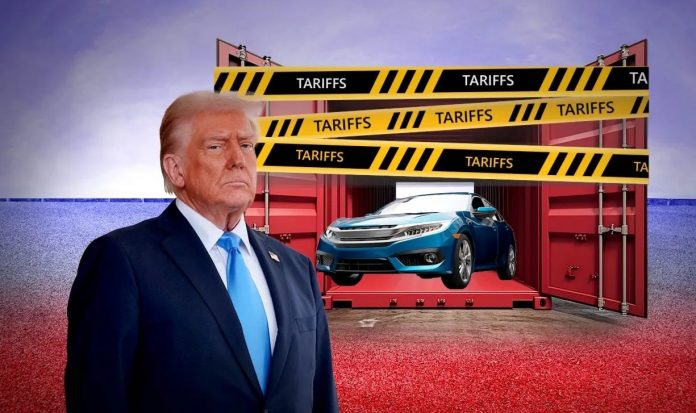
Trump Locks in 10% Tariff Baseline as Cornerstone of Trade Policy

0

President Donald Trump’s administration has reaffirmed its commitment to a 10% baseline tariff on nearly all imports, signaling a new era in U.S. trade relations that prioritizes protectionism and bilateral negotiation.

The decision, confirmed by White House Press Secretary Karoline Leavitt, comes amid ongoing global trade uncertainty and mounting concerns from international trading partners and domestic businesses.

Speaking at a briefing on Friday, Leavitt stated, “The president is committed to the 10% baseline tariff — not just for the United Kingdom, but for his trade negotiations with all other countries as well.”

When asked if the tariff was intended to be permanent, she replied, “The president is determined to continue with that 10% baseline tariff. I just spoke to him earlier.”

Since its introduction on April 2, the baseline tariff has become the anchor of Trump’s broader trade doctrine, layered atop a series of more aggressive measures targeting specific countries and industries. The administration has raised tariffs on Chinese imports to a staggering 145%, paused some country-specific tariffs for 90 days, and exempted certain electronics from duties, all while keeping the 10% general tariff intact.

This tariff stance has already shaped negotiations with key allies. On Thursday, Trump announced his first post-tariff trade deal with the United Kingdom. The agreement includes a cut in U.S. tariffs on British car exports from 27.5% to 10%, and the removal of tariffs on British steel. In return, the UK agreed to lower tariffs on American agricultural exports, including beef and ethanol. However, Leavitt made it clear that “the 10% baseline remains in place across the board.”

Trump’s approach to China has been notably more volatile. Despite asserting earlier in the week that he would not consider easing tariffs on Beijing, he appeared to soften that stance days later. In a Truth Social post, Trump hinted that the 145% tariff on Chinese goods “could come down substantially” and mentioned a possible reduction to “around 80%.” The contradiction has drawn scrutiny from observers trying to decipher the administration’s ultimate strategy.

Meanwhile, trade experts and economists are watching with unease. Trump’s tariffs, particularly the sweeping 10% levy, have disrupted global supply chains and triggered significant market reactions. Since the announcement in early April, investors have grappled with volatility, and businesses have expressed concern over long-term predictability in their international operations.

Negotiations with other nations are also underway, with Trump’s team seeking tailor-made agreements. However, the fixed 10% duty remains a sticking point, complicating talks for countries hoping to negotiate exemptions or favorable terms. According to sources close to ongoing discussions, multiple governments have raised objections to the uniform tariff, viewing it as a blunt instrument that disregards nuanced trade relationships.

The tariff policy underscores Trump’s broader message of economic nationalism. During his campaign and into his presidency, Trump has consistently argued that the U.S. has been treated unfairly in global trade and has vowed to use tariffs as leverage to reset these dynamics.

But critics warn that such a wide-reaching tariff risks isolating the U.S. economy and inviting retaliation. In 2018 and 2019, during Trump’s previous tariff battles, most notably with China, American farmers and manufacturers suffered losses amid tit-for-tat tariffs and disrupted trade flows.

The situation remains fluid. Trump has indicated that his administration is open to adjusting specific tariffs based on negotiations but insists the 10% rate serves as a necessary baseline for fairness.

“We’re done being taken advantage of,” he wrote in a recent Truth Social post. “The 10% tariff is about leveling the playing field.”

Against this backdrop, the 10% tariff has become the new norm, influencing the responses of global partners as businesses brace for cost adjustments. However, it is not clear whether the tariffs will ultimately deliver the desired economic gains or continue to deepen global trade tensions.
Nigeria Needs 100,000MW to Solve Power Crisis, Says Barth Nnaji, as Report Flags Electricity as Top Bottleneck for Businesses

0

Nigeria must urgently scale its power infrastructure to at least 100,000 megawatts of installed capacity if it hopes to meet current and future energy demands, former Minister of Power, Professor Barth Nnaji, has said.

Nnaji made the declaration during an interview on The Morning Show on Arise TV, stressing that the country’s installed power capacity falls woefully short of what is needed to support a growing population and a struggling industrial base. According to him, unless Nigeria moves with speed to make deliberate, large-scale investments in power generation, transmission, and distribution infrastructure, the country will remain trapped in its cycle of persistent load shedding and unreliable electricity.

“We need at least 100,000 megawatts of power—not just available capacity, but installed capacity—to support our development goals,” Nnaji said.

He indicated that Nigeria needs to generate power aggressively, improve its infrastructure, and have a deliberate, coherent policy that supports both traditional and renewable energy sources.

His comments come at a time when fresh data from the NESG-Stanbic IBTC Business Confidence Monitor (BCM) for May 2025 paints a bleak picture of Nigeria’s business environment, highlighting electricity supply as the top constraint faced by firms operating across the country. The report underscores a frustrating continuity: structural bottlenecks, especially in the power sector, continue to choke productivity, stall investment, and erode confidence in the private sector.

The BCM findings reflect a common experience for businesses across Nigeria, which consistently cite poor electricity supply, logistics challenges, policy inconsistency, and macroeconomic instability as barriers to growth. But power shortages, in particular, remain the most frequently mentioned concern, more than inflation, interest rates, or currency volatility.

Infrastructure, Not Just Policy

While welcoming the recent approval of the National Integrated Electricity Policy (NIEP) by the Federal Government, Prof. Nnaji warned that policy frameworks will yield little if not matched by real infrastructure investment.

He pointed to the urgent need for Distribution Companies (Discos) to modernize and expand their networks.

“Discos must invest in substations to ensure efficient power delivery. Without such infrastructure, no matter how much you generate, people won’t get the power. And we’ll continue load shedding,” he said.

Referencing the experience in Aba, where 90 substations were developed to improve local power delivery, Nnaji argued that localized efforts with tangible infrastructure upgrades could serve as a model for other parts of the country.

He proposed that some of the large Discos, whose operations span up to five states, should be broken into smaller regional entities or franchises.

Solar Ban Not A Good Move

In addition to concerns about existing bottlenecks, Nnaji addressed the government’s controversial move to restrict or ban solar panel imports, raising alarm over the lack of capacity in Nigeria to produce solar panels at scale.

He expressed support for domestic production in principle, but warned that imposing a ban without a phased transition plan would create more harm than good.

He echoed the warnings from Dr. Muda Yusuf, CEO of the Centre for the Promotion of Private Enterprise (CPPE), who similarly in April warned that such a move would stifle access to clean energy and frustrate rural electrification efforts.

Nnaji also urged the Federal Government to strategically utilize Nigeria’s abundant natural gas reserves to power thermal plants.

He noted that while solar energy has a critical role to play, wind energy may not be viable in most parts of Nigeria due to geographic limitations.

The combination of gas, hydro, and solar—with carefully phased industrial policies and regulatory clarity—could, he said, pave the way for a more stable and modern energy sector.

Financial Discipline Needed in Discos

Another key issue Nnaji raised was the need to restore financial credibility to the power value chain, particularly at the distribution level. He explained that unless Discos become financially stable and pay generating companies (Gencos) for the electricity they receive, investors will remain reluctant to enter the generation segment.

The NESG-Stanbic IBTC BCM report adds quantitative context to these concerns. The index shows that business optimism remains subdued, with power outages and high operating costs frequently cited as major deterrents to expansion. Manufacturers and service providers say they spend an increasing portion of their revenue on diesel and alternative power sources.

Several businesses surveyed reported being unable to operate at full capacity for more than 12 hours per day due to blackouts and unstable grid supply.

The recently approved National Integrated Electricity Policy (NIEP) is billed as a turning point for the power sector. It aims to streamline regulatory oversight, encourage private capital, and close gaps in generation, transmission, and distribution.

But analysts note that without simultaneous reform of sector financing, enforcement of performance-based contracts for Discos, and fast-tracked infrastructure projects, the NIEP could join the long list of policy blueprints that falter at the implementation stage.

Nnaji, who was instrumental in the initial push for power sector privatization over a decade ago, believes Nigeria must not waste any more time.

Nigeria’s Manufacturing Sector Shows Modest Growth Amid Power Woes, High Costs and Insecurity

0

Nigeria’s Business Performance Index (BPI) rose to +12.29 in April 2025, signaling a positive outlook for private sector activities and showing an improvement from the +6.58 recorded in March 2025.

This uptick reflects a gradual, albeit cautious, return of business confidence, driven by improvements in operational outlook, production activity, and marginal gains in the macroeconomic environment.

This was disclosed in the latest NESG-Stanbic IBTC Business Confidence Monitor (BCM) for May 2025, titled “Private Sector Sustains Growth Momentum Amid Obvious Business Risks and Challenges.”

Nigeria’s April BCM paints a familiar picture of structural bottlenecks frustrating enterprise growth, with power supply shortages still topping the list of concerns for businesses. According to the latest findings, the ranking of business constraints remained virtually unchanged from March, underscoring the deep-rooted nature of these challenges.

The power supply problem—chronic and systemic—was again ranked as the most critical obstacle to business expansion. It was closely followed by rising costs of commercial leases and rental spaces, limited access to finance, unclear economic policy direction, and persistent difficulties in accessing foreign exchange.

While these barriers remain largely unaddressed, the report revealed that businesses are not folding their arms. Instead, some sectors, particularly manufacturing, continue to exhibit resilience.

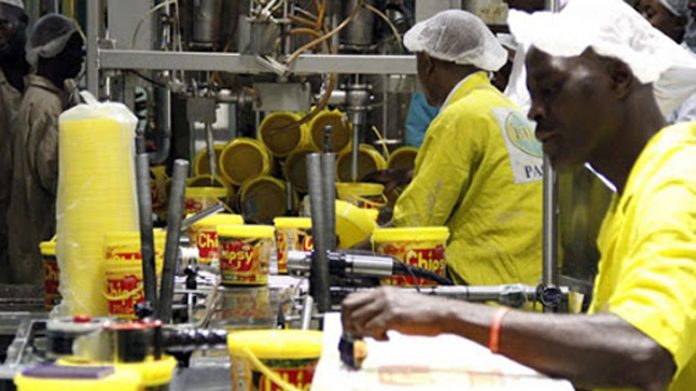
Nigeria’s manufacturing sector posted a modest increase in the BCM Index, rising from +8.25 in March to +8.78 in April 2025. Though marginal, the uptick is noteworthy, given the dual pressure of poor infrastructure and insecurity that continues to weigh on production and investor sentiment.

The report credited the sector’s endurance to strategic caution, as manufacturers scaled back their production planning in April in anticipation of disruptions.

“This situation is exacerbated by widespread insecurity and an unstable macroeconomic environment. As a result, manufacturing firms adopted an extremely cautious approach to production planning in April to mitigate potential losses,” the report noted.

Lack of production space was also flagged as a growing concern. As manufacturers look to scale up output, especially with export opportunities tied to the African Continental Free Trade Area (AfCFTA), inadequate facilities have hampered growth.

Despite these hurdles, Nigerian businesses showed tentative hope for the months ahead. The Future Business Expectation Index ticked up to +28.98 in April from +28.04 in March. This measured optimism was especially evident in the Trade and Non-Manufacturing sectors, where operators anticipate slight increases in demand and profitability.

Businesses expect output to rise modestly, despite capacity constraints. Exporters see some opportunity, though not enough to fuel major growth. There is also a high level of expectation for improved profitability, likely buoyed by anticipated consumer demand recovery. Improved liquidity is foreseen in the near term, and firms are moderately optimistic about expanding their workforce, a signal of tentative hiring plans.

However, the report tempers this outlook with realism. It warns that Nigeria’s macroeconomic conditions remain fragile. Inflation remains high, interest rates are elevated, and consumer purchasing power continues to shrink—factors that could derail the mild recovery if left unaddressed.

The BCM report urged policymakers to step in with reforms that can deliver immediate relief to businesses and unlock private sector-led growth. Chronic outages and rising diesel costs are choking productivity across sectors, necessitating urgent attention to the electricity supply.

Monetary policy clarity is also essential. The Central Bank’s communication has been inconsistent, and businesses remain unsure about long-term borrowing costs or currency stability. Access to finance continues to be a challenge, particularly for small and medium-sized enterprises (SMEs) that struggle to secure affordable credit. Furthermore, many rural and informal businesses remain cut off from the formal financial system, limiting their scalability and contribution to the national economy.

As businesses brace for mid-year performance reviews, the general tone across sectors is one of measured anticipation. There is hope, but it is guarded, heavily reliant on whether policymakers can deliver the necessary fixes in time.

Google Strikes Deal with Elementl Power to Develop 1.8GW of Nuclear Energy as AI Demands Surge

0

Google has announced a major partnership with Elementl Power, a nuclear energy startup, to develop three new advanced nuclear reactor sites in the United States.

The deal underscores the tech giant’s growing urgency to secure reliable, carbon-free power for its data centers as artificial intelligence (AI) drives unprecedented energy demand across the company’s global infrastructure.

The agreement, announced this week, sets out plans for each site to contribute at least 600 megawatts (MW) of generating capacity, totaling a potential 1.8 gigawatts (GW) of nuclear energy. The reactors will be designed to feed power into the grid, with a commercial off-take option allowing Google to directly purchase electricity generated from the sites.

“Our collaboration with Elementl Power enhances our ability to move at the speed required to meet this moment of AI and American innovation,” said Amanda Peterson Corio, Google’s Global Head of Data Center Energy.

AI Push Fueling Massive Energy Investments

Google’s energy demand is exploding. The company plans to spend $75 billion this year alone on expanding its data center footprint, primarily to support its rapidly evolving AI ambitions. As AI models become more powerful and data-intensive, tech companies are facing growing scrutiny over their energy consumption. Nuclear power, especially small modular reactors (SMRs), has emerged as a promising solution due to its reliability, carbon-free credentials, and suitability for deployment near data centers.

The deal with Elementl Power marks a shift in Google’s energy strategy toward nuclear energy in a more direct and developmental role. The company will provide early-stage capital to help Elementl prepare the three sites, whose specific locations have not yet been disclosed.

Elementl Power Enters the Spotlight

Until now, Elementl Power had operated largely under the radar. The company was launched by infrastructure firm Breakwater North and is backed by the investment group Energy Impact Partners. Although it has not yet built a nuclear power plant, its team reportedly includes veterans of the nuclear industry.

In a statement, Elementl described itself as “technology agnostic,” meaning it has not yet committed to a specific SMR technology for the planned sites. This approach allows the company to remain flexible and potentially choose from several competing reactor technologies, depending on regulatory approvals and performance benchmarks.

That said, Kairos Power, one of the more advanced SMR developers, may emerge as a leading contender. Google has an existing agreement with Kairos Power to purchase up to 500 MW from its future reactors. Kairos’ demonstration plant is expected to produce 50 MW, with full-scale commercial deployment reaching 150 MW across two reactors.

Silicon Valley’s Nuclear Turn

Google’s nuclear pivot reflects a wider embrace of SMRs across the tech industry. The promise of modular manufacturing, quicker deployment timelines, and the ability to site reactors close to high-consumption hubs like data centers has made SMRs an attractive proposition for tech firms looking to meet carbon goals while ensuring 24/7 power.

Startups such as Oklo, X-Energy, and Kairos Power have all signed deals with major tech firms or utilities, but real-world progress has been slow. Despite strong investor interest and government backing, no SMR has yet been completed outside China. In the United States, NuScale Power came close to building the country’s first SMR before its flagship project collapsed in 2023. Its utility partner withdrew after costs more than doubled, even as NuScale scaled down its plans in a bid to salvage the deal.

However, Elementl Power believes the time is ripe for nuclear energy’s next chapter. The company says it aims to bring over 10 GW of advanced nuclear capacity online in the U.S. by 2035 and is working with utilities and regulators to identify viable project locations and partnerships.

A Crucial Step for Google’s Clean Energy Goals

For Google, the move into nuclear isn’t just about supply; it’s about securing future-proof, sustainable energy in a volatile and energy-hungry era. The company has pledged to run on 24/7 carbon-free energy by 2030, an ambitious goal that will require it to go beyond intermittent renewables like solar and wind.

The ability to tap into nuclear power, especially from modular reactors that can be co-located with or near data centers, represents a key component of that strategy. If successful, the partnership with Elementl could signal a new model for how Big Tech sources energy, blending private capital, next-gen infrastructure, and advanced technology to meet a growing climate and operational imperative.

The projects remain in the early stages, with development timelines, reactor types, and permitting processes still to be finalized.

Arizona’s Bitcoin Reserve Fund is a Bold Experiment

0

Arizona Governor Katie Hobbs signed House Bill 2749 into law, establishing a Bitcoin and Digital Assets Reserve Fund. This makes Arizona the second U.S. state, after New Hampshire, to create a state-managed crypto reserve. The fund will hold unclaimed digital assets, such as Bitcoin and other cryptocurrencies, that remain unclaimed for at least three years.

The state can stake these assets or earn airdrop rewards, with earnings deposited into the reserve fund without using taxpayer money. The law aims to modernize Arizona’s unclaimed property framework and position the state as a leader in digital asset management.

However, Governor Hobbs vetoed a separate bill, Senate Bill 1025, on May 3, 2025, which would have allowed the state’s retirement and pension funds to invest up to 10% in cryptocurrencies, citing concerns over “untested investments.” Another bill, Senate Bill 1373, which would authorize the state treasurer to allocate up to 10% of Arizona’s Budget Stabilization Fund into Bitcoin, is still awaiting the governor’s signature or veto. Supporters, including Bitcoin Laws founder Julian Fahrer, are hopeful that Hobbs’ approval of HB 2749 signals potential support for SB 1373.

Arizona’s establishment of a Bitcoin and Digital Assets Reserve Fund positions the state as a pioneer in integrating cryptocurrencies into state financial systems. By managing unclaimed digital assets and potentially earning staking or airdrop rewards, Arizona could generate revenue without taxpayer burden, modernizing its unclaimed property framework.

The law signals a crypto-friendly environment, potentially attracting blockchain startups, crypto investors, and tech talent to Arizona. This could boost the state’s economy through job creation and increased tax revenue from crypto-related businesses. As the second state after New Hampshire to create a crypto reserve, Arizona’s move may inspire other states to explore similar funds, normalizing digital assets in public finance. However, the success of the fund will depend on effective management and market conditions.

State involvement in holding and staking Bitcoin could influence local crypto markets, potentially stabilizing prices if managed well, or adding volatility if mismanaged. The scale of the fund’s holdings remains unclear, but significant state-backed buying could impact Bitcoin’s price. Governor Katie Hobbs’ approval of HB 2749 but veto of SB 1025 (allowing pension fund crypto investments) highlights a cautious approach.

This creates a mixed signal: supporting innovation in unclaimed property management while limiting riskier public fund exposure to crypto volatility. Her pending decision on SB 1373 (allowing Bitcoin in the Budget Stabilization Fund) will further clarify her stance. The law may polarize residents. Crypto advocates may see it as progressive, while skeptics may worry about the risks of state involvement in volatile assets. Public trust will hinge on transparent fund management and clear communication of benefits.

Arizona’s move could amplify debates about cryptocurrency’s role in governance, especially as the U.S. approaches the 2026 midterm elections. It may pressure federal regulators to clarify crypto policies, given the growing state-level adoption. Bitcoin Laws founder Julian Fahrer, crypto investors, and blockchain enthusiasts view the law as a step toward mainstream adoption. They argue it diversifies state assets, hedges against inflation (Bitcoin is often called “digital gold”), and aligns with Arizona’s tech-forward identity.

Proponents emphasize that the fund uses unclaimed assets, not taxpayer money, minimizing risk. They also see staking rewards as a passive income stream and believe the law could make Arizona a hub for crypto innovation, rivaling states like Texas or Wyoming. Republican legislators, who dominate Arizona’s legislature, largely supported HB 2749 and SB 1373, reflecting a broader GOP trend of embracing crypto as a free-market innovation.

Governor Hobbs’ veto of SB 1025 suggests wariness about crypto’s volatility and untested nature, particularly for sensitive public funds like pensions. Critics, including some Democrats and financial traditionalists, argue that Bitcoin’s price swings (e.g., 2022’s crypto winter) pose unacceptable risks for state-managed assets.

Opponents highlight regulatory uncertainty, environmental concerns (Bitcoin mining’s energy use), and potential mismanagement of digital assets. They fear the fund could become a liability if crypto markets crash or if unclaimed assets are mishandled. Posts on X reflect this split. Some users praise Arizona’s “forward-thinking” approach, predicting it will “moon” Bitcoin’s adoption, while others call it a “reckless gamble” with unproven assets, citing past crypto scams like FTX.

Arizona’s law underscores a growing state-federal divide on crypto. While states like Arizona and New Hampshire experiment with digital assets, federal regulators like the SEC, CFTC remain cautious, with no comprehensive U.S. crypto framework as of May 2025. This patchwork approach creates uncertainty for investors and policymakers.

The divide mirrors broader ideological debates: crypto advocates champion decentralization and financial freedom, while critics prioritize stability and consumer protection. Arizona’s fund may deepen this rift, especially if its success or failure becomes a political flashpoint.

Arizona’s Bitcoin Reserve Fund is a bold experiment with potential to boost innovation and state revenue, but it carries risks tied to crypto’s volatility and regulatory ambiguity. The divide—evident in Hobbs’ mixed policy decisions, public sentiment on X, and legislative debates—reflects broader tensions over cryptocurrency’s role in governance. The outcome of SB 1373 and the fund’s performance will shape Arizona’s crypto trajectory and influence other states. For now, Arizona is a test case in a fractured national crypto landscape.