DD
MM
YYYY

PAGES

DD
MM
YYYY

spot_img

PAGES

Home Blog Page 1191

Bitcoin Surpassing Amazon in Market Capitalization is a Watershed Moment

0

As of May 8, 2025, Bitcoin has surpassed Amazon in market capitalization, with Bitcoin reaching $2.04 trillion and Amazon at $2.039 trillion, according to a post on X by Cointelegraph. This milestone marks Bitcoin as the 6th largest asset globally, having previously overtaken Amazon and silver on April 23, 2025, when Bitcoin’s market cap hit $1.857 trillion compared to Amazon’s $1.837 trillion.

The surge was driven by a 16.8% price increase from $93,546 to over $100,000, fueled by institutional interest, ETF inflows, and positive macroeconomic sentiment, including eased U.S.-China trade tensions and pro-crypto regulatory signals. However, Bitcoin’s ranking fluctuated, briefly hitting 5th globally by surpassing Google and Meta, before slipping to 8th by April 24, 2025, with a market cap of $1.83 trillion.

The crypto’s volatility, institutional adoption, and growing perception as a store of value continue to drive its market cap dynamics, with analysts predicting potential price ranges of $120,000 to $180,000 by year-end. Bitcoin surpassing Amazon in market capitalization, as reported on May 8, 2025, carries significant implications for finance, technology, and societal perceptions of value.

Legitimization of Crypto as an Asset Class

Bitcoin’s market cap of $2.04 trillion, overtaking Amazon’s $2.039 trillion, signals growing institutional and retail acceptance. Posts on X highlight Bitcoin’s rise to the 6th largest global asset, surpassing silver and tech giants like Amazon, reinforcing its status as a “digital gold” or store of value. Institutional inflows into Bitcoin ETFs, custody by major firms, and pro-crypto regulatory shifts (e.g., Trump administration’s stance) bolster its credibility. This could accelerate mainstream adoption, with Bitcoin potentially challenging other top assets like Apple ($3.6 trillion) or gold ($18 trillion).

Bitcoin, a decentralized, non-income-generating asset, flipping Amazon, a cash-flow-driven tech titan, underscores a paradigm shift. Investors increasingly view Bitcoin as a hedge against inflation, fiat devaluation, and geopolitical uncertainty, especially amid U.S. debt concerns and dollar weaponization debates. This milestone fuels narratives of decentralized finance (DeFi) challenging traditional markets, as Bitcoin’s fixed supply contrasts with equity markets’ reliance on earnings and central bank policies.

Bitcoin’s 6.24% price surge from $93,546, driven by ETF flows and macroeconomic optimism (e.g., U.S.-China trade thaw), highlights its volatility. Analysts predict $120,000–$180,000 by year-end, but warn of corrections, as seen when Bitcoin briefly fell to 8th globally ($1.83 trillion) on April 24, 2025. This volatility could deter risk-averse investors but attract speculators, amplifying crypto’s boom-bust cycles compared to Amazon’s relatively stable equity growth.

Bitcoin’s rise pressures regulators to clarify crypto frameworks. Pro-crypto policies, like a U.S. strategic Bitcoin reserve or SEC leadership changes, could further boost adoption. Conversely, restrictive regulations in other jurisdictions (e.g., China’s crypto bans) may concentrate Bitcoin’s growth in favorable markets.

Amazon, subject to antitrust scrutiny and labor regulations, faces different regulatory risks, potentially slowing its market cap growth relative to Bitcoin’s less regulated ecosystem. Amazon’s displacement by Bitcoin may prompt investors to reassess tech valuations. While Amazon’s revenue ($600 billion annually) dwarfs Bitcoin’s transaction volume, crypto’s speculative appeal and scarcity narrative drive its market cap. This could divert capital from tech stocks to crypto, impacting Nasdaq-heavy portfolios.

The Bitcoin-Amazon flip exposes a deepening divide between traditional finance (TradFi) and the crypto ecosystem, with cultural, economic, and philosophical dimensions. TradFi (Amazon): Represents centralized, profit-driven corporations reliant on tangible revenue, supply chains, and regulatory compliance. Amazon’s value is tied to its dominance in e-commerce, cloud computing (AWS), and consumer trust.

Crypto (Bitcoin): Embodies decentralization, sovereignty, and distrust in centralized systems. Bitcoin’s value stems from its fixed supply (21 million coins), censorship resistance, and community-driven ethos, appealing to those skeptical of fiat systems or Big Tech. TradFi Investors, institutional funds, pensions, and retail investors favoring Amazon prioritize predictable cash flows, dividends, and ESG compliance. They may view Bitcoin as speculative or risky due to its volatility and lack of intrinsic revenue.

Crypto Investors are Youngersters, tech-savvy, or libertarian-leaning investors embrace Bitcoin for its potential to disrupt fiat systems. X posts show crypto enthusiasts celebrating Bitcoin’s flip as a “generational wealth transfer,” while dismissing Amazon’s slower growth. Bitcoin’s rally has minted millionaires among early adopters, but its high entry price $103,135 limits accessibility for retail investors. Amazon’s stock, while expensive, is more accessible via fractional shares and ETFs.

Bitcoin’s borderless nature enables adoption in underbanked regions (e.g., Africa, Latin America), unlike Amazon’s geographically constrained services. However, crypto’s volatility risks exacerbating wealth inequality if corrections wipe out latecomers. TradFi Culture is Corporate, hierarchical, and tied to legacy finance. Amazon’s brand evokes reliability but faces criticism for labor practices and monopolistic behavior.

Crypto Culture is rassroots, anarchic, and community-driven. Bitcoin’s ethos, amplified on X, emphasizes “HODLing,” freedom, and anti-establishment sentiment, but faces skepticism for scams and energy use (mining’s environmental impact). TradFi operates under strict SEC, antitrust, and labor laws, constraining Amazon’s agility. Bitcoin, while increasingly regulated, benefits from regulatory ambiguity in some markets, allowing rapid growth but risking future crackdowns.

Bitcoin flipping Amazon in market cap is a watershed moment, signaling crypto’s growing influence and challenging traditional finance’s dominance. It amplifies debates over value, decentralization, and economic systems, with Bitcoin’s speculative allure contrasting Amazon’s operational stability.

The divide—philosophical, economic, and cultural—will deepen as crypto adoption grows, forcing investors, regulators, and society to grapple with competing visions of the future. While Bitcoin’s volatility poses risks, its momentum suggests further disruption, potentially eyeing larger targets like Apple or gold. Conversely, Amazon’s resilience and revenue base ensure its relevance, highlighting the ongoing tension between TradFi and crypto.

Understanding Startup Funding Rounds

0
CREATOR: gd-jpeg v1.0 (using IJG JPEG v80), quality = 82

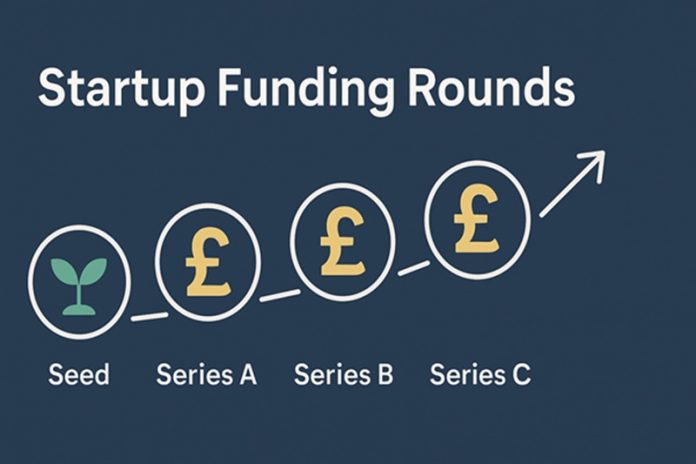
Startup funding plays a critical role in supporting and accelerating a company’s growth. It occurs in distinct stages or rounds, named according to how mature the company is, such as Seed, Series A, Series B, and Series C. Each stage aligns with specific business milestones, including validating products, entering markets, expanding operations, and undertaking strategic acquisitions.

The round names primarily reflect the development stage of the startup rather than the specific amounts raised, although investment sizes generally increase as companies like casinos not on GamStop progress through these stages.

Types of Companies Eligible for Venture Capital

Venture capital suits companies capable of significant growth, typically tripling revenue annually and eventually generating millions in income. Not all companies qualify:

  • Marketing agencies
  • Consulting firms
  • Development studios
  • Blogs and YouTube channels
  • Standard eCommerce sites

Instead, venture capitalists prefer businesses like Shopify, which enable thousands of companies and customers to interact differently through technology.

Pre-Seed Funding

What is Pre-Seed?

Pre-Seed funding is the earliest form of investment. Typically, it involves:

  • Validating a product idea
  • Developing initial prototypes

Characteristics of Pre-Seed Funding

  • Usually below £400,000
  • Often sourced from friends and family
  • Based on a pitch deck and team credibility
  • Primarily to build a basic prototype

Common Mistakes at Pre-Seed Stage

A frequent mistake founders make at this stage is to raise money prematurely, before validating if there’s a market for their product. Early validation steps include market surveys and simple test websites, achievable without external funding.

Seed Funding

Purpose of Seed Funding

Seed funding is raised when a product is ready or nearly ready to enter the market. The money should position the startup to achieve the next funding round, Series A.

Key points for Seed Rounds

  • Usually ranges significantly (£200,000 – £1.6 million)
  • Must provide at least 12 months of operation without fundraising interruptions
  • Aims to demonstrate market potential clearly

Goals for Seed-Funded Companies

  • Solid product launch
  • Initial customer acquisition
  • Clear demonstration of market potential

Series A Funding

Criteria for Series A Funding

Companies qualifying for Series A typically earn around £1.2 million in annual recurring revenue (ARR). Essential indicators include:

  • Proven product-market fit
  • Strong customer engagement
  • Low customer turnover

Growth momentum also influences funding success significantly. Rapid growth (reaching Series A within 12-18 months) attracts more investment interest.

Typical Series A Funding Amounts

Small Series A Large Series A Average (2020)
£1.6 million £8 million+ £12.4 million

Investment Structure

Series A funding usually involves an anchor or lead investor, who performs due diligence, negotiates terms, and attracts further investors. Investors often seek board seats and prefer structured stock agreements for protection.

Limbo Between Funding Rounds

Seed to Series A Limbo

A frequent scenario involves companies unable to achieve the momentum required for Series A. This situation, called ‘Post-Seed’, often leads to unfavourable deal terms.

Series A Limbo

Companies that raise significant amounts (£8 million to £25 million) but fail to achieve fast growth may become stuck in funding limbo. Finding acquisitions or further investment becomes challenging due to previous high valuations.

Series B Funding

Series B rounds help startups expand substantially. Companies at this stage must demonstrate:

  • Proven financial health
  • Strong market position
  • Detailed financial forecasting

Average Series B Funding

The average Series B round in recent years is approximately £26 million but varies considerably based on sector and strategic plans.

Company Series B Raised Primary Use
UpKeep £28 million Customer metrics and expansion
Membersy £52 million Growth and acquisitions

Companies at this stage require detailed financial models, five-year forecasts, and clarity on growth strategies.

Series C and Beyond

Series C rounds are for mature startups poised for major expansion. At this point, businesses:

  • Have established markets
  • May begin strategic acquisitions
  • Receive investments from large venture capital firms, hedge funds, and private equity

Funding at this stage is data-driven, based on solid financial history and realistic projections.

Beyond Series C

Companies may continue raising Series D, E, or pursue an Initial Public Offering (IPO). IPOs often represent the exit strategy for investors seeking a return on investment.

Summary of Funding Rounds

Pre-Seed

  • Friends and family investors
  • Pre-product
  • Usually under £400,000

Seed

  • Launch and initial growth
  • Sufficient to reach Series A milestones
  • Typically £200,000 – £1.6 million

Series A

  • Growth validation
  • Usually £1.6 million – £12 million
  • Proven product-market fit essential

Series B and C

  • Strategic expansion
  • Detailed financial oversight
  • Investment averages from £26 million upwards

Startup funding stages clearly indicate a company’s growth and development, helping investors and entrepreneurs navigate their business plans effectively.

Frequently Asked Questions (FAQ)

What is the main purpose of Seed funding?

Seed funding aims to help startups launch their product and achieve enough growth for Series A funding.

Who usually invests in Pre-Seed funding?

Pre-Seed funding typically comes from friends and family or close connections.

What revenue milestone is common for Series A funding?

Around £1.2 million in annual recurring revenue (ARR) is usually needed for Series A funding.

Why might a startup end up in funding limbo?

Startups often enter limbo if they fail to reach necessary growth milestones for their next funding round.

What do investors typically look for in Series B?

Investors look for detailed financial forecasts, proven financial health, and a clear growth strategy.

What is the typical exit strategy for venture capital investors?

An Initial Public Offering (IPO) or acquisition typically provides venture capital investors with their return on investment.

Thank You Malabites and Malabresses for the Honour

0
CREATOR: gd-jpeg v1.0 (using IJG JPEG v80), quality = 82

The Malabites and Malabresses, thank you for the honour.  As our University celebrates its 50th year anniversary, I appreciate the recognition. Yes, THANK YOU.

As an entry level banker, I needed to understand business. I looked around and did my matrix modelling. My conclusion was clear: UNICAL had the best program in Business Strategy in Nigeria within its MBA program. The University had hired and attracted retired executives in companies to deepen its faculty. I registered and chose UNICAL for my MBA. I got it right. Yes, I learnt strategy which I consider the soul of business.

On some days, I would begin the day flying from Lagos to Calabar, and returning to Lagos, to work the night shift in the bank’s IT organization. One could go for days pushing the limit of tenacity. The very first day Prof Ose taught and explained Porter’s Five Forces, it was like a business strategic revelation. Those Forces liberated my minds through knowledge, and provided the pillars to understand competition, markets and industries.

FUT Owerri provided the electrons via electrical & electronics, FUT-Akure where I earned a Master’s degree in IT gave the networking paths and UNICAL transmuted them, turning knowledge into anchors of personal economic stability. A symphonic education, from an amazing country – Nigeria. Thank you. And of course, the endless Diamond Bank which supported and funded my knowledge aspirations!

Fellow Malabites and Malabresses, thank you as the public announcement arrives on 31st May, 2025.

US-UK Trade Agreement is a Targeted Deal Reducing Tariffs and Job Supports

0
CREATOR: gd-jpeg v1.0 (using IJG JPEG v80), quality = 82

The United States and the United Kingdom has reached a trade agreement, announced on May 8, 2025, described as a significant step in strengthening economic ties between the two nations. However, the characterization of the deal as “full and comprehensive” requires scrutiny, as the details suggest it is more limited in scope than a traditional free trade agreement (FTA).

Key Details of the US-UK Trade Agreement

US tariffs on UK cars reduced from 25% to 10% for a quota of 100,000 vehicles. Steel tariffs eliminated, with the UK implementing tariffs and quotas on foreign steel to protect domestic industries. Ethanol tariffs removed, benefiting industries like beer production. New reciprocal market access for beef, with UK farmers granted a tariff-free quota of 13,000 metric tonnes for exports to the US. Expanded access for US agricultural products, machinery, and ethanol to the UK market.

The White House claims the deal will unlock $5 billion in export opportunities while enhancing national security. UK officials, including Prime Minister Keir Starmer, emphasize that the deal will save thousands of jobs and boost British businesses. The UK is reportedly purchasing $10 billion worth of Boeing planes, though it’s unclear if this is directly tied to the trade deal or a separate agreement. No changes to UK food standards, addressing concerns about lowering regulations to align with US practices.

The term “full and comprehensive” typically implies a broad agreement covering goods, services, investment, intellectual property, and regulatory alignment, as seen in FTAs like the US-Mexico-Canada Agreement (USMCA). However, this US-UK deal appears narrower: The agreement focuses on specific sectors (e.g., steel, cars, beef, ethanol) rather than a wide-ranging elimination of trade barriers. It includes quotas and partial tariff reductions, which are more characteristic of a sectoral trade deal than a comprehensive FTA.

There’s no mention of services, digital trade, or broader regulatory harmonization, which are staples of comprehensive trade agreements. Concerns about digital services and product standards were raised by critics but not addressed in the deal’s publicized terms. Some UK voices, like @LizWebsterSBF on X, argued the deal offers minimal US concessions while potentially compromising UK standards, though official statements refute this. Frontier Economics data cited in posts suggests the deal’s economic impact (-0.7% GDP) is less favorable than a potential EU deal (+1.5% GDP).

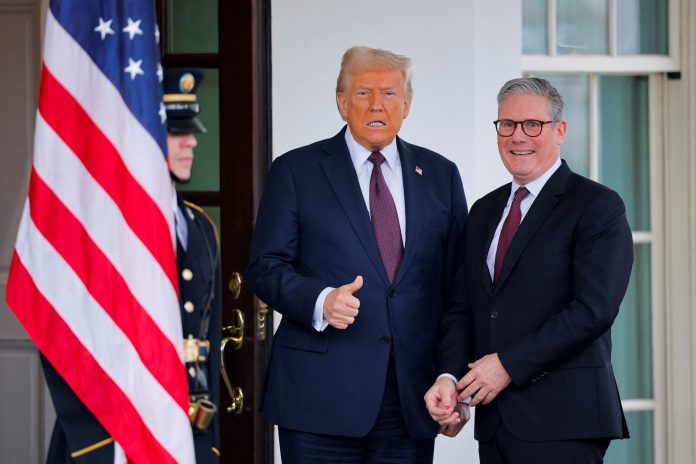
The White House and President Trump have framed the deal as a historic achievement, emphasizing reciprocity and fairness in trade. It’s presented as the first major trade deal since Trump’s return to office, with a focus on American economic and security interests. Prime Minister Keir Starmer’s government highlights job creation and industry protection, positioning the deal as a win for British workers.

While official accounts celebrate the deal, critics question its benefits, citing limited scope and potential long-term costs compared to rekindling EU trade ties. While the deal marks a milestone in US-UK relations, calling it “full and comprehensive” may be an overstatement. It addresses specific trade barriers but falls short of the depth and breadth of a true FTA. The agreement seems designed to deliver quick wins—e.g., tariff cuts and market access in politically sensitive sectors—while avoiding contentious issues like regulatory alignment or services trade, which could require lengthier negotiations.

The economic impact, as suggested by Frontier Economics, appears modest or even negative for the UK relative to other options like an EU deal. However, the deal’s strategic value—strengthening the US-UK alliance amid global trade uncertainties—may outweigh its immediate economic footprint. Claims about job creation and export growth should be monitored, as quotas (e.g., 100,000 cars, 13,000 tonnes of beef) limit the scale of benefits.

The US-UK trade agreement is a targeted deal reducing tariffs and opening markets in select sectors, but it is not a “full and comprehensive” FTA in the traditional sense. It delivers measurable benefits, such as tariff cuts and job support, but its scope is limited, and its long-term impact depends on implementation and future negotiations.

MTN Nigeria Crosses 90m Subscribers as Industry Recovers from SIM-NIN Cleanup; 9mobile Struggles

0

MTN Nigeria has surged past the 90 million active subscriber milestone, reinforcing its dominance in the country’s telecom industry as of March 2025.

This is according to the latest figures released by the Nigerian Communications Commission (NCC), which puts the total number of active mobile lines in the country at 172.4 million.

The new data points to a broader recovery in the sector, just over a year after the government-mandated National Identification Number (NIN) and SIM linkage audit wiped out over 60 million lines across networks. That cleanup exercise rattled the industry, slashing subscriber numbers and, to some extent, affecting revenues.

But MTN now controls 52.48% of the Nigerian mobile telecom market, with 90.4 million active connections — a major lead over rival Airtel Nigeria, which holds 33.78% market share and reported 58.2 million subscriptions. Globacom trails with 20.7 million active users, giving it a 12.01% slice of the market.

The most troubling trend, however, remains with 9mobile.

Once a vibrant player with ambitions to challenge incumbents, 9mobile now accounts for just 1.72% of the total market, with only 2.8 million active lines — a figure that remained static between February and March. While other operators reported modest growth month-on-month, 9mobile saw no movement, suggesting that subscribers neither joined nor exited the network in that time.

Industry insiders say this anomaly is not due to customer satisfaction but stems from technical issues that prevented users from porting out, a lifeline for subscribers hoping to escape worsening service quality.

A Crisis 9mobile Can’t Hide

For months, 9mobile has faced a cascade of complaints over network disruptions, slow internet speeds, and poor call quality. These concerns culminated in widespread rumors in March that the company was planning to shut down.

In response, 9mobile issued a statement vehemently denying any such intention, calling the speculation “false and misleading” and aimed at sowing panic among its subscriber base.

“We understand that some customers have recently faced challenges, particularly with Mobile Number Portability (MNP),” the company said. “We want to clarify that 9mobile has never restricted customers from porting to other networks.”

However, the company’s explanation — that the inability to port was due to “temporary technical challenges” — has done little to calm frustrated users. While 9mobile insists that the issues have been “largely resolved,” it also acknowledged lingering delays due to “ongoing system optimizations.”

The network further attributed some of the service disruptions to a transformation effort aimed at modernizing infrastructure and expanding coverage. It promised that its continued investment would “soon yield significant improvements,” even as subscribers in many parts of the country remain doubtful.

Contrasts in Fortunes

While MTN has not only regained its lost subscribers but expanded its reach, 9mobile appears trapped in a downward spiral of declining trust and technical setbacks.

Airtel, meanwhile, continues to consolidate its position as the second-largest network, even as it battles similar currency-related challenges that have plagued the entire telecom industry in Nigeria.

Analysts note that while MTN has managed to shield itself from some of the sector’s most disruptive shocks — thanks in part to aggressive network expansion and investments in digital infrastructure — 9mobile has lagged behind, hampered by weak capital inflow, management turnover, and legacy debt issues.

Industry observers believe the NCC may need to intervene more assertively to ensure that customers are not held hostage by underperforming networks. Mobile Number Portability is a regulatory right in Nigeria, designed to give consumers the freedom to switch providers when dissatisfied. Any hindrance, technical or otherwise, undermines that framework.