DD
MM
YYYY

PAGES

DD
MM
YYYY

spot_img

PAGES

Home Blog Page 12

S&P 500 Hits Fresh Intraday Record as AI Rally Reignites and Rate-Cut Bets Return

0

U.S. stocks pushed into uncharted territory on Wednesday, with the S&P 500 notching its first intraday record in more than a month as investors returned aggressively to artificial intelligence-linked stocks and renewed bets that the Federal Reserve will cut interest rates again next year.

The benchmark index rose as much as 0.2% to 6,920.88 points, edging past its previous intraday high of 6,920.34 set on October 29. That earlier peak came during a powerful surge in heavyweight technology names, led by Nvidia, which helped lift the combined market value of the index above the $5 trillion mark for the first time.

Wednesday’s move underscores a revival in risk appetite following a turbulent November, when markets pulled back sharply on concerns over stretched valuations in big technology stocks and fears that enthusiasm around AI-linked companies had run too far, too fast. From its October high, the S&P 500 slid as much as 5.7% last month as investors reassessed positioning, even as Nvidia delivered upbeat third-quarter earnings that reinforced its dominance in the AI chip market.

Sentiment has since turned more constructive. A benign U.S. inflation report and a steady jobs print have reinforced expectations that the Fed is nearing the end of its tightening cycle, with markets increasingly pricing in further rate cuts in 2026. Lower borrowing costs tend to support equity valuations, particularly for growth stocks whose earnings are expected further into the future, helping to draw investors back into large-cap technology and AI names as the year-end approaches.

The renewed momentum in the AI trade gathered pace last week after Micron Technology issued a stronger-than-expected profit forecast, signaling sustained demand for memory chips used in data centers and AI applications. CEO Sanjay Mehrotra delivered the warning during the company’s latest earnings call, telling investors that tight conditions across memory markets are likely to persist for years rather than quarters.

“Sustained and strong industry demand, along with supply constraints, are contributing to tight market conditions and we expect these conditions to persist beyond calendar 2026,” Mehrotra said, tempering expectations that new capacity will quickly ease shortages.

The outlook helped lift sentiment across the semiconductor space, which remains a key pillar of the broader U.S. equity rally.

Market leadership, however, has broadened beyond technology alone. As tech stocks swung in recent weeks, investors also rotated into more cyclical sectors such as financials and materials, providing additional support for the S&P 500 and aiding its recovery from November’s slump. Financial stocks have benefited from resilient economic data and stable credit conditions, while materials have drawn support from expectations of improved industrial demand.

So far this year, U.S. equities have delivered strong gains. The S&P 500 is up more than 17% year to date, the tech-heavy Nasdaq has climbed over 21%, and the blue-chip Dow Jones Industrial Average has advanced more than 13%. The performance gap highlights the continued dominance of technology and AI-linked stocks in driving market returns, even as other sectors have recently joined the rally.

With major indexes hovering near record levels, investor focus is shifting toward the sustainability of earnings growth and the path of monetary policy in the months ahead. For now, optimism around artificial intelligence, combined with expectations of easier financial conditions, is keeping U.S. stocks firmly supported as markets head into the final stretch of the year.

BP Sells 65% Stake in Castrol to Stonepeak for $6bn, Advancing $20bn Divestment Plan

0

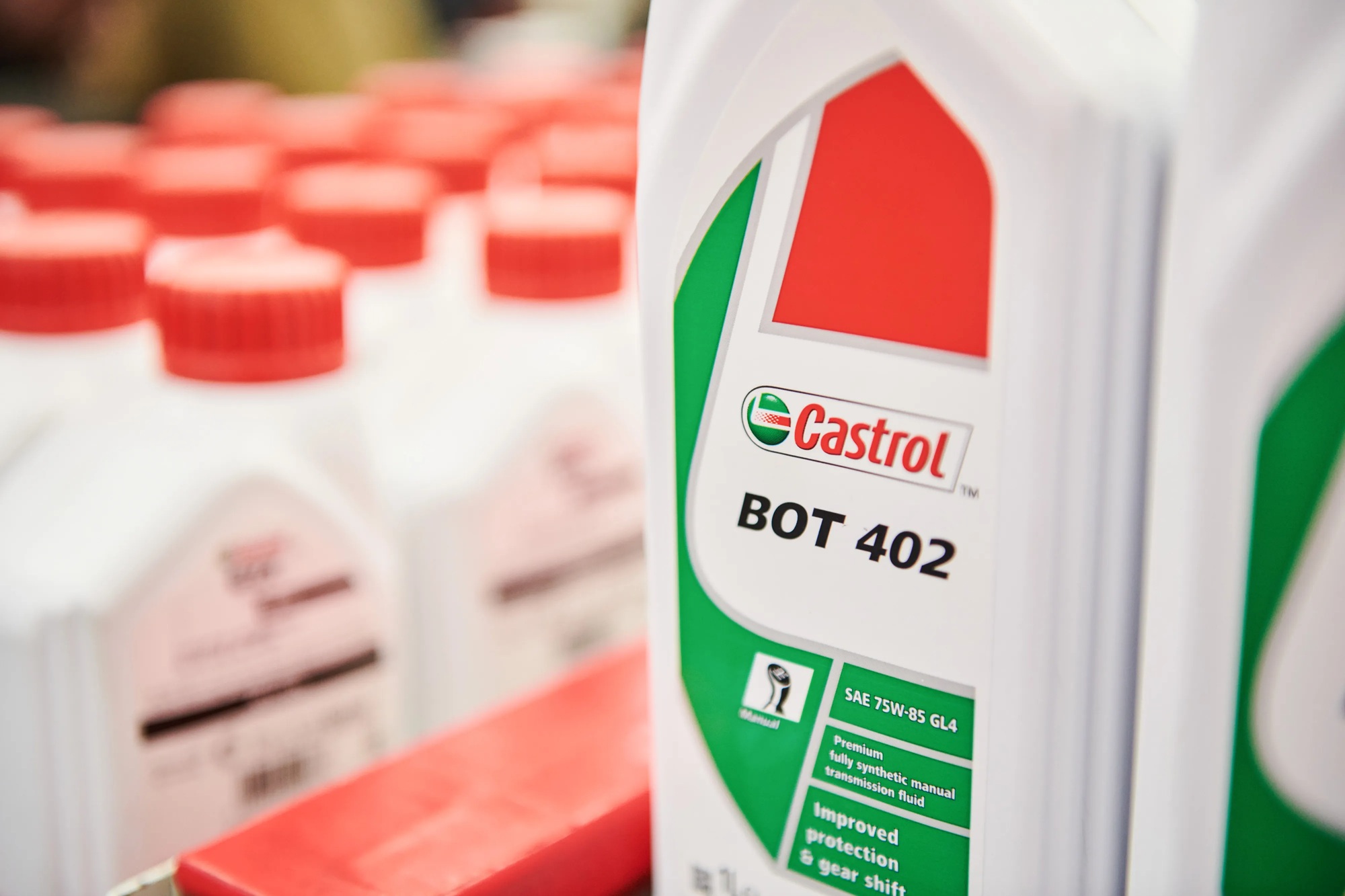
British Petroleum has agreed to sell a 65% stake in its iconic Castrol lubricants business to U.S.-based infrastructure investor Stonepeak in a deal generating approximately $6 billion in net proceeds, valuing the unit at an enterprise value of $10.1 billion, including debt.

The transaction, announced on Christmas Eve, represents BP’s largest asset sale to date and propels the company past the halfway mark in its ambitious $20 billion divestment program by 2027, aimed at strengthening the balance sheet and simplifying operations amid a volatile energy market.

BP will retain a 35% minority interest in a newly formed joint venture, preserving exposure to Castrol’s growth while allowing an option to exit fully after a two-year lock-up period.

All proceeds will be directed toward reducing net debt—standing at $26.1 billion as of Q3 2025—toward a target range of $14-18 billion by 2027, while funding accelerated shareholder returns, including potential share buybacks or dividend enhancements.

Interim CEO Carol Howle, who assumed the role in October 2025 following Murray Auchincloss’ abrupt departure, described the deal as “a very good outcome for all stakeholders,” highlighting its role in realizing shareholder value amid Castrol’s strong momentum (nine consecutive quarters of year-over-year earnings growth).

“With this, we have now completed or announced over half of our targeted $20 billion divestment programme,” Howle said, emphasizing reduced complexity and sharper focus on integrated core businesses like upstream oil/gas and low-carbon energy.

Stonepeak, managing $71 billion in assets with a focus on energy infrastructure and real assets, is partnering with Canada Pension Plan Investment Board (CPPIB)—which will commit up to $1.05 billion for an indirect stake through its infrastructure arm—to drive Castrol’s expansion.

Stonepeak Managing Director Trent Vichie praised Castrol’s “iconic brand” and innovation pipeline, including emerging products like immersion cooling fluids for data centers and sustainable lubricants.

The sale process, initiated in May 2025 with extensive bidder interest, attracted suitors including India’s Reliance Industries (potentially expanding its Jio-BP joint venture), Saudi Aramco (seeking downstream diversification), and private equity firms Apollo Global Management and Lone Star Funds.

Stonepeak emerged victorious after competitive bidding, with UBS advising the buyer and Goldman Sachs handling BP’s side.

Castrol, established in 1899 as “CC Wakefield & Company” and rebranded in 1960, was acquired by BP (then Burmah-Castrol) in 2000 for $4.7 billion. The business, generating $2.5 billion in 2024 revenue with ~7,000 employees across 100+ countries, specializes in premium lubricants for automotive, marine, aviation, and industrial applications, including EV fluids and data center cooling solutions.

It holds a 20% global market share in passenger car lubricants and has partnerships with automotive giants like BMW, Volkswagen, and Ford.

Market and Analyst Reaction

BP shares opened up 1.3% on Wednesday before settling around 0.9% higher, trading near 426p in thin holiday volume.

The stock is up approximately 9% year-to-date after a 15.7% decline in 2024, buoyed by leadership changes, cost cuts (targeting $2 billion savings in 2026), and upstream discoveries like the Tiber field extension in the Gulf of Mexico (adding 200 million barrels equivalent).

Analysts hailed the deal as an “early Christmas present” and a “positive step,” reinforcing debt reduction and downstream refocus.

Stephen Isaacs of Alvine Capital, a BP shareholder, noted the CEO change as potentially “the last piece of the jigsaw” for turnaround, while Dan Boardman-Weston of BRI Wealth Management predicted further divestments to refocus on “bread and butter” oil/gas exploration.

The transaction aligns with BP’s broader strategic reset under new Chairman Albert Manifold, including a partial U-turn on aggressive renewables targets (capping low-carbon spend at $6-8 billion annually through 2030) to prioritize hydrocarbons amid shareholder demands for returns.

It follows last week’s appointment of Meg O’Neill—current Woodside Energy CEO—as BP’s next permanent chief executive, effective April 1, 2026.

O’Neill, the first woman and external hire to lead a top-five oil major, replaces Murray Auchincloss after less than two years amid shareholder pressure over underperformance.

BP’s leadership churn—four CEOs in six years—reflects challenges adapting to energy transition pressures.

The London-listed company has underperformed peers like Shell (+15% YTD) and ExxonMobil (+12%), with declining annual profits in 2023 ($13.8 billion from 2022’s record $27.7 billion) and 2024 ($9.3 billion), driven by lower oil prices (Brent averaging $80/bbl in 2024 vs. $100 in 2022) and refining margins.

Q3 2025 results showed underlying replacement cost profit of $2.3 billion, beating estimates on higher production (2.4 million boe/d) but down from the prior year.

Expected to close by the end of 2026, subject to regulatory approvals (including antitrust in key markets like India, where Castrol holds 25% share), the Castrol divestment underscores BP’s pivot toward simplicity, profitability, and shareholder returns—potentially paving the way for further portfolio rationalization in a volatile energy landscape marked by OPEC+ cuts and net-zero transitions.

$50M Crypto Heist: Binance Ex-CEO Changpeng Zhao Proposes Blacklists to Combat Address Poisoning Scams

0

In recent years, cryptocurrency scams have become increasingly personalized, directly targeting individual wallet holders with alarming frequency and devastating consequences.

While these scams have already cost victims billions of dollars, another type of crypto scam is also on the rise, address poisoning attacks.

A fresh wave of concern is rippling through the crypto industry after a sophisticated address-poisoning scam led to losses exceeding $50 million, once again exposing vulnerabilities in on-chain transactions.

A post on X exposed a $50 million USDT loss from an address-poisoning scam: the victim successfully tested a small transfer but then copied a similar-looking poisoned address from history, sending the full amount within an hour.

The attached image from a security tool illustrates the scam, contrasting the real recipient address (0xcb807…6019) with the attacker’s mimic (0xbafr1…f8b5), marking it as high-risk and detailing the transaction flow.

The wallet has been active on-chain for around 2 years and was mainly used for $USDT transfers. The $50M was withdrawn from Binance shortly before the poisoned transfer took place.

This incident, confirmed by reports from SlowMist and Unchained, underscores ongoing Web3 UX flaws, with replies advocating for mandatory address verification, whitelists, and ENS integration to mitigate such exploits for large transfers.

Notably, the incident has reignited debate around user safety, wallet design, and the limits of decentralization. Weighing in on the fallout, Binance founder and former CEO Changpeng Zhao (CZ)has proposed the introduction of blacklists as a defensive measure to curb address-poisoning attacks, an idea that challenges long-standing norms in the crypto ecosystem.

In his vision, promoting heightened security measures across all blockchain platforms could cultivate a more robust protective aura for participants and safeguard their financial assets.

His ambitious agenda includes the establishment of dynamic blacklists accessible across multiple platforms, alongside strong commitments to swiftly filter out suspicious transactions. “We must eradicate these poison attacks entirely and ensure the safety of our users,” he asserted.

As crypto scams grow more complex and costly, CZ’s suggestion underscores a pivotal question for the industry, how far should crypto platforms go in prioritizing security over absolute permissionless freedom?

How the Address Poisoning Scam Works

An address poisoning attack is a particularly pernicious crypto scam that uses customized on-chain infrastructure to deceive victims out of their funds.

These scams often focus on high-value targets or those with frequent, regular crypto transactions.

Address poisoning exploits users copying addresses from transaction history; scammers send micro-transactions from near-identical addresses to insert fakes, a tactic increasingly common in Web3 per security reports.

The approach is simple, yet highly effective:

  1. Scammers begin by studying a target’s transaction patterns, looking for frequently used addresses.
  2. The scammers will then algorithmically generate new crypto addresses until they create one that closely resembles the address that the target most often interacts with.
  3. Once they have a convincing lookalike address, the scammer then sends a small, seemingly harmless transaction from this newly generated address, effectively “poisoning” the target’s address book.

The hope is that, when the target sends funds in the future, they will rely on their transaction history for convenience and mistakenly send funds to the scammer’s look-alike address instead of to the intended recipient address.

As headlines continue to spotlight the exponential rise of scams and breaches, the urgency for resilient security protocols is paramount. The integration of innovative technologies within blockchain security, together with thorough user education, will serve as pivotal elements in shielding against future threats.

Outlook

Looking ahead, address poisoning scams are likely to become even more sophisticated as attackers leverage automation, AI-driven address generation, and deeper behavioral analysis of on-chain activity.

As transaction volumes grow and wallets continue to optimize for speed and convenience, the attack surface for UX-based exploits will expand unless deliberate safeguards are built into the ecosystem.

On the other hand, CZ’s call for shared blacklists signals a broader shift in philosophy: a growing willingness to trade some degree of permissionless purity for collective security.

While such measures may face resistance from decentralization purists, high-profile losses and institutional participation could accelerate acceptance of coordinated defense mechanisms, especially for large-value transfers.

Hyperliquid’s Foundation formal Burning of HYPE Tokens Signals Continued Scarcity for HYPE

0

The Hyper Foundation officially announced that the governance vote has passed, formally recognizing all HYPE tokens held in the Assistance Fund as permanently burned.

The vote was stake-weighted: 85% in favor, 7% against, and 8% abstaining. This removes approximately 37–37.5 million HYPE tokens worth around $900 million to $1 billion at recent prices from both circulating and total supply metrics.

The tokens were accumulated automatically from protocol trading fees and were already inaccessible no private key exists, making them irretrievable without a hard fork. The “burn” is a social/governance consensus: validators committed to never approving any protocol upgrade to access the funds, plus future fee inflows will continue to this address.

This move enhances supply transparency, eliminates perceived overhang risks, and reinforces Hyperliquid’s deflationary tokenomics, as ongoing fees now effectively act as continuous burns.

Despite the positive development, HYPE’s price saw a slight dip shortly after the announcement around -2-3% to ~$23-24, likely due to broader market conditions or profit-taking. This follows their initial proposal on December 17, 2025, which received strong community and validator support leading into the vote deadline.

The formal recognition of ~37-37.5 million HYPE tokens valued at ~$900M-$1B as permanently burned marks a significant shift in Hyperliquid’s tokenomics. Reduces both circulating and total supply by ~13%, eliminating any perceived future overhang from the Assistance Fund.

Ongoing trading fees will continue routing to the inaccessible address, effectively turning all future fee inflows into permanent burns. This creates a truly continuous deflationary pressure tied directly to protocol revenue and volume.

Net effect: Strengthens HYPE’s value accrual model, where higher trading activity directly benefits holders through reduced supply similar to Ethereum’s EIP-1559 but more aggressive, as ~97-99% of fees historically fuel buybacks/burns.

Aligns reported supply metrics on CoinGecko, CoinMarketCap with on-chain reality—the tokens were already irretrievable, but now they’re officially excluded. Removes ambiguity that previously led to mispricing of circulating market cap and fully diluted valuation (FDV).

Analysts note this corrects “lazy” metrics, potentially leading to revaluation upward as investors recalibrate. Signals strong governance credibility: 85% stake-weighted approval demonstrates community/validator alignment on long-term holder value over short-term flexibility.

HYPE dipped slightly post-announcement— 2-3%, trading around $23-24, likely due to broader market weakness, profit-taking, or ongoing token unlock pressures. Long-term bullish catalyst: Reduces selling pressure, boosts scarcity narrative, and could attract deflationary-asset seekers. If volume sustains, projected annual burns could outpace emissions/inflation significantly.

Ongoing monthly unlocks ~$200M+ recently and competition in perps DEX space may cap upside unless revenue grows 2-3x to fully offset dilution. Permanently forgoes a ~$1B reserve that could have funded grants, ecosystem development, insurance backstops, or emergency interventions.

Hyperliquid now relies purely on organic product strength leading perps volume, no-gas L1 and cash flow for growth—no “war chest” fallback. Some community concern: Increases vulnerability if volume drops sharply, though current dominance mitigates this.

It’s reinforces Hyperliquid’s commitment to decentralized, holder-aligned decisions via stake-weighted voting bypassing traditional on-chain limits. Sets a model for other protocols: Binding social consensus to treat inaccessible funds as burned, enhancing trust without code changes.

Positive for DeFi narrative in 2025—amid competition and unlocks, this prioritizes sustainable tokenomics over incentive farming. This is widely viewed as a net positive for long-term HYPE holders, cementing deflationary credibility at the cost of flexibility.

It addresses key criticisms while Hyperliquid maintains perps leadership, but success hinges on sustained or growing trading volume to maximize ongoing burns.

Key Implications of Upexi’s $1 Billion Shelf Registration Filing

0

Upexi Inc. (NASDAQ: UPXI), a Nasdaq-listed company originally focused on consumer brands and e-commerce, has pivoted heavily into cryptocurrency.

It adopted a Digital Asset Treasury (DAT) strategy centered on Solana (SOL), holding approximately 2–2.1 million SOL tokens (valued at around $250–260 million at current prices near $124 per SOL). This makes it the fourth-largest corporate Solana holder among public companies.

Upexi filed a $1 billion shelf registration with the U.S. SEC. This allows the company to issue up to $1 billion in securities like common stock, preferred stock, debt, warrants, or units over time, providing flexibility to raise capital when market conditions are favorable.

The proceeds are intended for: General corporate purposes. Expanding its Solana DAT strategy acquiring more SOL, staking for yield, and potentially buying discounted tokens. This filing signals strong conviction in Solana as a long-term treasury asset, especially amid a late-2025 price correction that dropped SOL over 50% from its highs and reduced Upexi’s holdings value from over $500 million earlier in the year.

Market reaction was negative initially: Upexi shares fell about 7.5% on the news closing around $1.84–$1.85, likely due to dilution concerns, as the company’s market cap is only ~$115 million. No funds have been raised yet—this is just the registration to enable future offerings.

The company has emphasized it will only pursue raises that are accretive to SOL exposure per share. This move aligns with broader trends of public companies building Solana treasuries; total corporate SOL holdings across firms exceed 15–16 million tokens. though demand slowed in late 2025 alongside the price dip.

SEC Form S-3 shelf registration allows the company to potentially issue up to $1 billion in securities (common stock, preferred stock, debt, warrants, or units) over the next three years. This is not an immediate raise—it’s a flexible toolkit for future capital access.

Proceeds are broadly earmarked for general corporate purposes, working capital, acquisitions, R&D, debt repayment, and explicitly advancing its Solana Digital Asset Treasury (DAT) strategy (buying more SOL, staking for yield, or acquiring discounted tokens).

The market reacted negatively, with shares dropping ~7.5% to close at $1.84— market cap ~$115–125 million. Investors fear equity issuances could flood the market, reducing SOL exposure per share. Upexi emphasizes raises will only be “accretive” increasing SOL per share via smart timing, e.g., buying SOL at dips.

They plan to terminate an unused equity line for more efficient, lower-cost capital via the shelf. High volatility ahead: With heavy crypto exposure ~$250–260 million in 2–2.1 million SOL at ~$122–124 per SOL as of December 24, UPXI acts like a leveraged SOL play. Paper losses are currently ~19% from cost basis.

Potential upside: If executed well during SOL weakness, it could massively scale holdings, positioning Upexi as a top corporate SOL holder. Upexi doubling down amid a 57%+ drawdown from 2025 highs ~$293 ATH shows conviction in SOL as a long-term treasury asset.

Corporate SOL treasuries across public firms exceed 15–16 million tokens, but demand slowed in late 2025. Potential buying pressure: If/when raises occur, funds could flow into SOL purchases, especially at current discounted prices. This aligns with trends like institutional partnerships and regulatory clarity.

Mirrors MicroStrategy’s Bitcoin strategy but for Solana—public companies blending tradfi capital markets with crypto treasuries. Could encourage more firms if SOL recovers. Slowed corporate buying in H2 2025 reflects waning confidence in treasury strategies during bearish phases. No purchases by Upexi since July.

SOL trading ~$122–126, down significantly YTD. Crypto markets remain pressured; L1 tokens underperformed despite institutional wins. Reaction on X is mixed: Some see it as a strong SOL endorsement, others highlight dilution and risks.

This filing underscores maturing crypto-traditional finance bridges but highlights risks in volatile assets. If SOL rebounds, Upexi could benefit enormously; otherwise, dilution and losses amplify downside. It’s a high-conviction bet on Solana’s ecosystem growth.