DD
MM
YYYY

PAGES

DD
MM
YYYY

spot_img

PAGES

Home Blog Page 1216

Africa’s Start-up Ecosystem Rebounds Strongly With $343M Raised in April 2025

0

In April 2025, African start-ups made a remarkable comeback, raising a total of $343 million through deals valued at $100,000 and above (excluding exits), across 39 ventures.

Recall that last month’s March performance was poor in comparison, though, as only $50m in funding was announced, one of the lowest monthly tallies since late 2020. The number of start-ups announcing funding was on par with previous months, with no deals over $10m announced.

Following a disappointing March, April came in hot, which spurred optimism about startup funding across the African continent. This not only marked a strong rebound from a quiet March but also became the second-highest April funding total on record, trailing only the peak days of April 2022’s funding frenzy.

Compared to the same month last year, the difference is dramatic funding has surged by 4.5 times since April 2024. It’s a powerful signal that, while investors remain selective, they still firmly believe in Africa’s long-term potential.

Several mega-deals helped push April’s numbers higher. In South Africa, hearX, a health tech company, secured a $100 million boost through its cross-border merger with U.S.-based Eargo, showing bold ambition in reshaping the global hearing health market. This union marks a significant moment for Africa’s healthtech sector, positioning an African-born innovation at the heart of a global solution for one of the world’s most overlooked health challenges hearing loss. This deal also marks the first mega-deal of 2025.

In Egypt, Islamic fintech platform Bokra raised an impressive $59 million through a sukuk issuance a major leap from its $4.6 million pre-seed round just a year earlier. Meanwhile, South African payments infrastructure firm Stitch attracted $55 million from existing investors as it scales its end-to-end solutions across Africa. The funding is aimed at expanding its in-person payment offerings, improving its online payment suite, and facilitating its entry into card acquiring.

On the exit front, at least four transactions took place, three of which involved fintech:

  • ADVA (Egypt) was acquired by UAE-based Maseera. According to Maseera, this strategic deal positions ADVA as its dedicated technology and data analytics base for North Africa, marking a significant milestone in the company’s regional expansion strategy.

  • Nigeria’s Bankly was taken over by C-One Ventures. The acquisition includes Bankly’s licenses, platform, and team, which will be integrated into C-One’s ecosystem to scale technology-driven financial services.

  • Peach Payments (South Africa) acquired PayDunya, expanding its footprint into Francophone West Africa. In the process, it enters mainland Francophone Africa for the first time, following its expansion to Eswatini (2024), Mauritius (2021) and Kenya (2018).

Adding to the optimism, over $1.3 billion in VC fund capital focused on Africa has been raised since early 2024. Firms like Janngo Capital (with a gender lens), Airnergize Capital, Verod-Kepple Africa Ventures, Saviu’s Fund II (Francophone focus), and LoftyInc Capital are leading the charge.

Looking at the year-to-date figures, the outlook is equally promising. Between January and April 2025, African start-ups raised $803 million across 163 ventures up 43% from the $563 million secured during the same period in 2024. Funding is also reaching more start-ups, up from 147 in the previous year, with 225 unique investors already participating in $100k+ deals in 2025.

This surge suggests more than a temporary rebound. It’s a sign of renewed confidence and growing breadth across sectors, geographies, and stages. While two strong months don’t define an entire year, the momentum is clear.

Join The Ride for a Journey to Knowledge with Tekedia Mini-MBA

0

We just concluded the last edition of Tekedia Mini-MBA. And now we are sending our vehicle to get the next co-learners for the 17th edition. Good People,  we have spacious SUVs for you, and we want you to come along. So, innovators, builders, entrepreneurs, students, lawyers, doctors, freelancers, engineers, makers, businesspeople, etc, jump into this digital SUV by registering here https://school.tekedia.com/course/mmba17/ .

If you do, you will join our trip to KNOWLEDGE which begins on June 9 for 12 weeks at Africa’s finest temple for the mastery of entrepreneurial capitalism and the mechanics of business. At Tekedia Institute, we have one product: knowledge.

Yours truly Ndubuisi Ekekwe is the lead priest of this knowledge temple, and our promise is clear: when you join our program, you will see the abundance in our world, and by co-learning together, we will get you to unlock your portion.

In ancestral Igbo, the elders will say “uwa bu ahia” which has a literal meaning that the world is a marketplace. Come here…and let us learn how to live in the world, and play the markets. I saw the “piece” from the “master” for a Masterpiece, and I am in the “place” in the “market” and I live in the Marketplace!

Tekedia Institute – to discover and make scholars noble, bright and useful. Join us today and get early bird discounts.

How Overused Sentiment in Digital Marketing Undermines Trust

0

Scroll through any social media feed or landing page and you’ll find a familiar language: messages steeped in optimism, filled with phrases promising transformation, success, and empowerment. This emotionally charged tone is no accident. Brands have come to rely heavily on positive sentiment as a strategic tool to cut through the noise and engage audiences. But as this trend becomes ubiquitous, it raises a critical question, what happens when positivity becomes performative? When every brand is relentlessly upbeat, does the message lose its meaning?

The Seduction of Positivity

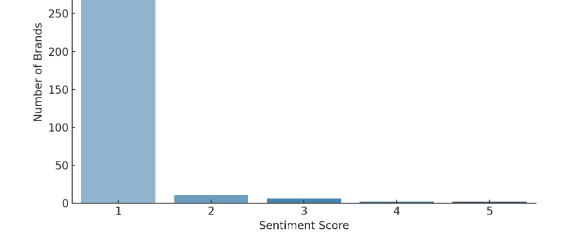
A recent analysis of 223 brands across sectors, spanning education, technology, finance, and lifestyle by Infoprations, reveals a compelling insight: more than 80% of these brands default to a base level of positive sentiment in their digital messaging. While this reflects a well-intentioned effort to appear encouraging and user-friendly, a small but noticeable fraction of brands take it further. Platforms like UNICAF and COROOT, for example, score the highest in sentiment intensity. Their messages are soaked in the language of hope and ambition, “change your future,” “unlock your potential,” “your journey starts here.” While these messages can inspire, they also run the risk of oversaturation, particularly when repeated across the digital ecosystem.

The Risk of Over-Optimism

This overreliance on high positivity isn’t limited to education. In the financial and crypto sectors, it takes on a more precarious tone. Companies like FMCPAY and PariPesa Nigeria project messages that are almost euphoric, talking about financial freedom, winning big, and limitless opportunity. The betting platform Bet9ja and the crypto services of ICRYPEX Global operate in a similar emotional register, using language that frames risk-heavy behaviour as exciting, even liberating. These brands are not just selling a product or service; they’re selling a fantasy. And therein lies the danger.

The problem with this hyper-optimism is that it creates what can be called “sentiment inflation.” When every brand is shouting positive messages into the void, the words start to lose their weight. What once felt motivational starts to feel manipulative. As users begin to notice the disconnect between the language used and the actual experience delivered, skepticism builds. It’s a quiet erosion of trust, one that doesn’t always show up in click-through rates or social shares but reveals itself in dwindling customer loyalty and diminishing credibility.

In industries like finance, education, or wellness, where stakes are personal and outcomes often uncertain, the trust gap can widen quickly. Users lured in by glowing promises may feel disappointed or misled when the experience fails to match the emotional pitch. And as more brands adopt similar tonal strategies, they begin to blend into one another. The emotional sameness makes it harder for consumers to distinguish between genuine value and empty messaging.

Exhibit 1: Majority of brands use a basic level of positive sentiment (score of 1), with fewer brands adopting more intense positivity (scores 3 to 5)

Source: Brands social media accounts, 2025; Infoprations Analysis, 2025

Yet, not all positivity is counterproductive. The real issue isn’t sentiment itself, but the absence of grounding. The brands that manage to strike a balance, Grammarly, LinkedIn, or TGM Education, tend to pair their optimistic tone with specificity and proof. Their messages are still hopeful, but they’re rooted in data, case studies, testimonials, and tangible benefits. Grammarly doesn’t just promise better communication; it shows users how, with measurable improvements. LinkedIn promotes professional growth but supports that vision with stories, connections, and shared experiences. This approach builds what performance marketing alone cannot achieve: emotional equity.

A New Mandate for Marketers

The takeaway for modern marketers is simple but urgent: restraint is no longer a weakness, it’s a competitive edge. The audience has evolved. Consumers today are more media literate, more skeptical, and more attuned to inauthenticity. They crave honesty more than hype. This doesn’t mean abandoning emotion altogether. It means using it judiciously, layering it with transparency, and earning optimism rather than assuming it.

It also means acknowledging that not every user journey is linear or joyful. Sometimes, the most powerful message a brand can send is one that validates struggle or complexity. Not every service will transform lives overnight, and that’s okay. Brands that admit this truth, openly, confidently, can actually deepen their credibility and stand out in a field of exaggerated claims.

As the data reveals, it’s easy to get caught in the loop of high-sentiment messaging. It feels good, tests well, and often yields short-term wins. But over time, when sentiment is divorced from substance, it breeds distrust. If every brand is “life-changing,” consumers begin to ask: what isn’t? In the end, the most persuasive message may not be the most positive, it may simply be the most real.

Infoprations’ Understanding Digital Integrated Marketing Communications Team includes Abdulazeez Sikiru Zikirullah, Moshood Sodiq Opeyemi, and Bello Opeyemi Zakariyha

Buffett’s Departure and Berkshire’s Cash Pile Signal a Pivotal Moment

0

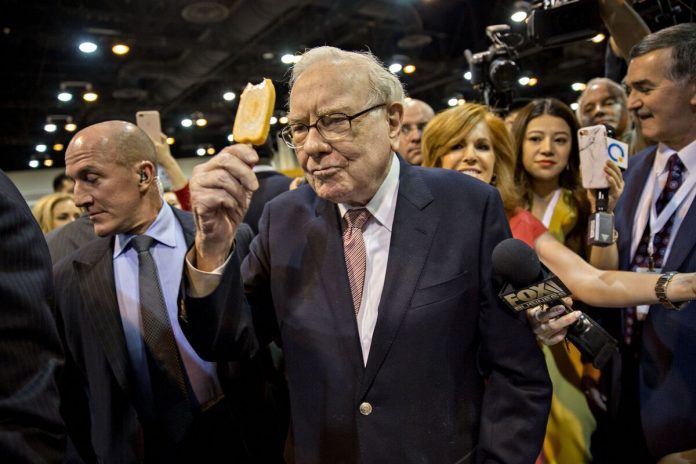
Warren Buffett, aged 94, announced at Berkshire Hathaway’s annual shareholder meeting on May 3, 2025, that he will step down as CEO by the end of 2025, handing the role to Vice Chairman Greg Abel, who has been his designated successor since 2021. Buffett, who transformed Berkshire from a failing textile company into a $1.16 trillion conglomerate over six decades, will remain chairman and plans to stay involved in an advisory capacity, with his son Howard Buffett set to succeed him as chairman upon his death.

The announcement, known only to his children Howard and Susie prior, prompted a standing ovation from shareholders and surprised Abel himself. Buffett emphasized he has no intention of selling his roughly 14% stake in Berkshire, valued at about $164 billion, citing confidence in Abel’s leadership.

Concurrently, Berkshire reported a record cash pile of $347.7 billion as of March 31, 2025, up from $334.2 billion at the end of 2024, driven by a lack of attractive investment opportunities and net stock sales of $1.5 billion in Q1 2025. Operating earnings fell 14% to $9.64 billion, impacted by insurance losses from wildfires and currency fluctuations, while net income dropped 64% to $4.6 billion due to unrealized losses on holdings like Apple.

Buffett’s cash hoarding, which included selling $134 billion in stocks in 2024, has been interpreted as a cautious move amid high market valuations and tariff uncertainties under President Trump’s policies, which Buffett criticized as detrimental to global trade. Market sentiment reflects concern, with some viewing the cash pile and Buffett’s exit as a signal of an impending recession or market turbulence, though these claims remain speculative.

Berkshire’s stock has risen 19% in 2025, outperforming the S&P 500’s 3% decline, bolstered by its perceived stability. Abel, who views the cash as a “strategic asset,” plans to maintain Buffett’s value-investing philosophy, but faces challenges deploying the massive reserves without overpaying in a high-valuation environment. Greg Abel, aged 62, has been groomed as Buffett’s successor since 2021, overseeing non-insurance operations and demonstrating competence in capital allocation. His unanimous board approval and Buffett’s endorsement signal a stable transition.

Abel’s adherence to Buffett’s value-investing principles suggests continuity in strategy. Abel lacks Buffett’s iconic status and deal-making charisma, which historically attracted favorable terms e.g., Goldman Sachs and GE deals during the 2008 crisis. He must prove his ability to deploy Berkshire’s massive cash reserves effectively in a high-valuation market, a task Buffett himself found challenging recently.

As chairman and advisor, Buffett’s continued involvement mitigates risks of a sharp strategic shift. His pledge to retain his 14% stake ($164 billion) stabilizes shareholder confidence and stock price. Berkshire’s stock has risen 19% in 2025, outperforming the S&P 500, reflecting trust in its diversified portfolio and Abel’s readiness. The announcement, met with a standing ovation, suggests shareholder approval, likely limiting immediate volatility.

Buffett’s departure could reduce Berkshire’s “halo effect,” potentially impacting deal flow and investor sentiment. Some express concern that Abel’s less charismatic leadership might weaken Berkshire’s negotiating power, though these are speculative. The $347.7 billion cash reserve, up from $189 billion a year ago, is seen by some analysts sees Buffett’s exit as caution against overvalued markets or economic turbulence, possibly tied to tariff policies under President Trump. This could pressure Abel to justify holding such liquidity if returns lag.

The cash hoard offers flexibility for transformative acquisitions or buybacks but pressures Abel to find undervalued assets in a market Buffett deemed too expensive. Berkshire’s $1.5 billion net stock sales in Q1 2025 and $134 billion in 2024 reflect a disciplined approach but highlight scarcity of attractive investments. The cash pile, equivalent to the GDP of some countries, fuels speculation of Buffett anticipating a downturn. Sentiment suggests fears of a recession or market correction, though no concrete evidence confirms this. Abel has called the cash a “strategic asset,” but prolonged inaction could frustrate shareholders seeking growth.

Berkshire’s $81 billion in share repurchasing since 2018 remains an option, but Buffett’s recent restraint (only $2 billion in 2024) suggests Abel may prioritize acquisitions over buybacks unless valuations drop significantly. Buffett’s cash accumulation and reduced equity exposure e.g., selling Apple and Chevron stakes reinforce his reputation as a contrarian indicator. If Berkshire continues stockpiling cash, it could amplify bearish sentiment, Buffett’s criticism of Trump’s tariff proposals highlights risks to Berkshire’s global operations e.g., BNSF Railway, Precision Castparts.

Higher tariffs could increase costs and disrupt supply chains, impacting earnings. Abel must navigate this while maintaining Berkshire’s diversified strength. Berkshire’s insurance losses from wildfires (Q1 2025) underscore climate-related risks, potentially pressuring Abel to adjust underwriting or diversify further. Reduced stakes in consumer giants like Apple signal caution in tech and retail, possibly influencing sector allocations by other investors.

Shareholder and Cultural Shifts

Buffett’s exit marks the close of a legendary chapter, potentially shifting Berkshire’s culture from founder-driven to professional management. While Abel and Vice Chairman Ajit Jain are respected, they face scrutiny to replicate Buffett’s long-term outperformance. Investors accustomed to Buffett’s market-beating returns (20% annualized vs. S&P 500’s 10% since 1965) may demand quicker capital deployment. Abel’s ability to balance patience with action will be critical to retaining loyalty.

Buffett’s departure and Berkshire’s cash pile signal a pivotal moment. Abel inherits a robust conglomerate but faces challenges deploying capital in an overvalued, uncertain market. The cash hoard offers flexibility but fuels speculation of economic caution, amplified by Buffett’s tariff critiques and stock sales. While short-term stability is likely, Abel’s success hinges on replicating Buffett’s disciplined yet opportunistic approach amid heightened scrutiny and evolving economic risks.

Trader Who Called Ripple’s (XRP) $3.92 ATH and Its Recent Jump to $3.48 Predicts $18 for Undervalued Altcoin at $0.20

0

Cryptocurrency is volatile, so correct predictions are rare, but the community notices. One trader is making a daring prediction, having notably forecasted Ripple’s (XRP) all-time high of $3.92 during the 2017 bull run and, more recently, $3.48. This time, Rexas Finance (RXS), a $0.20 altcoin, is featured. According to this experienced trader, Rexas Finance might reach $18 in the subsequent significant market rise, a 90x gain from its current level. Why is Rexas Finance the next excellent thing? Explore why this undervalued gem is gaining popularity fast.

Rexas Finance (RXS): Blockchain Gold from Real Assets

Rexas Finance is a blockchain infrastructure platform revolutionizing Real-World Asset (RWA) tokenization. It is not simply another cryptocurrency. Rexas opens illiquid markets to everyday investors by fractionalizing tangible assets, including real estate, commodities, and fine art. A sophisticated ecosystem allows anybody to develop, manage, and trade tokenized assets, democratizing investment at Rexas Finance. Investing in high-value physical assets is no longer limited to institutions or wealthy individuals. Rexas Token Builder and QuickMint Bot allow non-technical users to tokenize assets in minutes.  Our new solution solves the problem of unleashing the liquidity of hard-to-divide and sell assets. Rexas is transforming asset management and decentralized trading tactics.

Superior Infrastructure, Transparency, and Security

Rexas Finance uses cutting-edge innovation to handle crypto security and trust. AI-driven Rexas Shield monitors and mitigates real-time risks, protecting against hacks and manipulation. The software uses a secure blockchain architecture to make every transaction transparent. DeFi connectors provide yield farming, staking, and liquidity pools, giving users various portfolio growth options. These measures encourage keeping prices stable and provide long-term utility, which upstart crypto ventures typically lack.

A Successful Presale Signals Investor Confidence

In September, Rexas Finance opened its presale, which has been phenomenal. Rexas raised $48 million in Stage 12 by selling 460 million tokens at increased prices. The token has risen 6x from $0.03 to $0.20. This continuous increase amid a crypto bear market shows investor confidence. Rexas’s public presale instead of venture capital funding is even more noteworthy. This prevents large-scale token dumps tied to VC engagement and ensures a more equitable token distribution. The strategy worked. With early visibility on CoinMarketCap and CoinGecko, savvy global investors are now aware of Rexas, and investor trust is at an all-time high.Audited, Deflationary, and Built to Moon Serious crypto projects undergo security audits. Rexas passed its Certik audit, proving its transparency and sound architecture. In addition, Rexas Finance follows a deflationary tokenomics strategy, which reduces supply and increases scarcity and price appreciation. Rexas Finance held a $1 million giveaway to boost enthusiasm. Twenty chosen community members will get $50,000 in RXS to recognize early supporters, encourage involvement, and increase social buzz.

Upcoming Listings and Massive Growth Catalyst

After the presale, the RXS token will launch at $0.25 on at least three of the top ten cryptocurrency exchanges. These listings will increase liquidity and worldwide exposure, boosting token prices. Furthermore, the RWA tokenization market movement should be followed. Analysts expect the industry will grow from $50 billion in 2025 to $16 trillion by 2030. Rexas Finance’s all-in-one tokenization environment, robust community, and aggressive expansion strategy position it to capture a large piece of that market.

Why the $18 Prediction Is Not Crazy

Put things in perspective. XRP’s $3.92 ATH was reached while blockchain utility was new. Nowadays, utility-driven tokens like Rexas Finance, which solve real-world problems, can rally better.

Rexas would rise 90x from $0.20 to $18. This may seem excessive, but consider the following:

  • Rexas Finance surged 6x in presale without exchange listings.
  • Upcoming exchange listings and liquidity may boost demand.
  • Macroeconomic trends like RWA tokenization could cost trillions.
  • Community incentives like the $1M raffle and Certik audit increase credibility.
  • Deflationary tokenomics increase scarcity.

A trader who correctly predicted XRP’s significant moves—one of the most difficult coins to time—should take this prediction seriously. Historically, wise money favors Rexas Finance.

Conclusion: The Next Crypto Giant?

While the crypto market recovers from its destructive cycle, projects like Rexas Finance discreetly prepare for exponential expansion. The trader who correctly predicted Ripple’s historic highs now views Rexas Finance as the next significant altcoin, and the fundamentals back it. Rexas Finance redefines next-gen crypto projects by democratizing investment through RWA tokenization and hosting one of the year’s most successful presales. The platform is preparing for primary exchange listings, enhanced DeFi utility, and broader market adoption, making Rexas Finance achieve $18, a realistic estimate backed by momentum, utility, and innovation. After missing XRP’s first moonshot, Rexas Finance may be your second opportunity.


For more information about Rexas Finance (RXS) visit the links below:

Website: https://rexas.com

Win $1 Million Giveaway: https://bit.ly/Rexas1M

Whitepaper: https://rexas.com/rexas-whitepaper.pdf

Twitter/X: https://x.com/rexasfinance

Telegram: https://t.me/rexasfinance