DD
MM
YYYY

PAGES

DD
MM
YYYY

spot_img

PAGES

Home Blog Page 1216

Presidency Dismisses Adesina’s Grim Verdict That Nigerians Today Are Worse Off Than In 1960, Amid Growing Alarms Over Poverty

0
AfDB president Akinwumi Adesina
Akinwumi Adesina

The Nigerian Presidency has pushed back forcefully against a statement by the President of the African Development Bank (AfDB), Dr. Akinwumi Adesina, who warned last week that Nigerians today are worse off than they were in 1960.

In a rebuttal issued by presidential spokesperson Bayo Onanuga, the government rejected both the figures and the conclusion of Adesina’s remarks, calling them misleading and inaccurate.

Adesina had told guests at the 20th-anniversary dinner of investment firm Chapel Hill Denham in Lagos that Nigeria’s GDP per capita had fallen from $1,847 in 1960 to just $824 today, suggesting that economic hardship had deepened despite the country’s population and economy growing over the decades.

But Onanuga argued that historical data do not support Adesina’s claims. He stated that in 1960, Nigeria’s GDP stood at $4.2 billion and, with a population of 44.9 million, per capita income was no more than $93. That figure, he said, only rose significantly during the oil boom years of the 1970s and peaked at $3,200 in 2014 after a GDP rebasing exercise.

The rebuttal noted that while Nigeria’s current per capita GDP hovers around $824, the metric itself does not offer a full picture of national development. Onanuga argued that GDP per capita fails to account for inequality, wealth distribution, and informal economic activities—factors that weigh heavily in a country like Nigeria, where a large share of commerce and labor exists outside official statistics.

However, Adesina is not alone in sounding the alarm. Alongside him are other voices—most notably that of Peter Obi, former Anambra State governor and 2023 presidential candidate, who has repeatedly warned that Nigeria is edging dangerously close to collapse due to poor economic management, rising debt, and unchecked poverty. Obi has also criticized what he describes as a lack of urgency and seriousness in governance, warning that leadership appears disconnected from the realities ordinary Nigerians face.

Beyond individuals, international institutions like the World Bank and the International Monetary Fund (IMF) have raised similar concerns in recent months, painting an increasingly grim picture of Nigeria’s poverty situation. Just last week, the World Bank revealed that 75.5 percent of Nigeria’s rural population now lives below the poverty line, with rural dwellers bearing the brunt of inflation, food scarcity, and declining purchasing power. In total, more than 104 million Nigerians are now believed to live in multidimensional poverty, with many unable to afford basic necessities like food, shelter, healthcare, and education.

The IMF, in its own assessment, has called on Nigeria to urgently reform its fiscal system, curb wasteful subsidies, and expand the tax net to address the country’s developmental gaps. But such advice, often regarded as tone-deaf by local critics, has sparked debate, especially at a time when citizens are already overwhelmed by high fuel prices, rising food costs, and collapsing public services.

Meanwhile, growing public sentiment reflects frustration—not just at the worsening living conditions, but also at what many see as a government more preoccupied with defending itself than with tackling poverty. That belief is underlined by the Presidency’s swift dismissal of Adesina’s comments, which is regarded as a display of a broader culture of unwillingness to confront hard truths or accept criticism from experts and institutions.

Even as Onanuga pointed to gains in infrastructure, mobile phone access, and road networks, experts note that the benefits of such development have been unevenly distributed and remain inaccessible to many rural and urban poor. The explosion of mobile telecoms, while revolutionary, has done little to shield people from the crushing weight of inflation and unemployment.

The World Bank itself has warned that unless urgent steps are taken to stimulate inclusive growth, invest in human capital, and revamp agricultural productivity, Nigeria may not meet its poverty reduction goals for decades to come.

Dr. Adesina warned that Nigeria must radically transform its economic structure if it wants to become globally competitive and industrialized by 2050. That transformation, he stressed, must include significant investment in energy, transport, education, and industry—far beyond what per capita GDP can measure.

However, the Presidency remains adamant that progress has been made. Onanuga insisted that Nigeria’s GDP today is 50 to 100 times higher than it was in 1960 and that the country has made giant strides in many sectors, even if not all are captured by a single metric. For millions of Nigerians grappling with daily hardship, the debate over numbers may seem increasingly irrelevant unless it translates into visible improvement in their standard of living.


Mastering Stock Valuation to Spot Strong Investment Opportunities

0

Investing in the stock market can be a lucrative way to grow wealth over time, but it requires skill, strategy, and knowledge. One of the most critical skills for investors is mastering stock valuation. Understanding the true worth of a stock enables you to identify strong investment opportunities, avoid overpaying, and make decisions that align with your long-term financial goals. Stock valuation techniques, when applied correctly, can give you an edge in selecting stocks that are undervalued, poised for growth, or capable of delivering consistent returns.

In this article, we will explore key stock valuation methods, how to use them effectively, and how they can lead to smarter investment decisions. Additionally, we will discuss how the Alpha Spread approach enhances your ability to identify profitable investment opportunities by providing valuable insights into stock performance and potential returns.

Why Stock Valuation is Crucial for Successful Investing

Stock valuation is the process of determining the intrinsic value of a stock. It involves assessing a company’s financial health, growth potential, and market conditions to estimate what the stock is truly worth. Accurately valuing stocks allows investors to make informed decisions based on data and avoid common pitfalls, such as overpaying for a stock or chasing fleeting market trends.

When used correctly, stock valuation can help investors spot opportunities that are either undervalued or set to outperform their industry peers. It helps build a solid investment strategy, ensuring that stocks chosen for a portfolio are priced appropriately in relation to their long-term growth potential.

Moreover, mastering stock valuation gives investors the ability to spot early-stage growth opportunities, which can lead to larger returns. By understanding valuation metrics and the underlying factors that drive stock prices, you can develop a strategic approach that improves your chances of success in the market.

Key Stock Valuation Techniques

To build a strong investment portfolio, it’s essential to understand the different stock valuation techniques available. Below are some of the most commonly used methods to evaluate stocks:

1. Price-to-Earnings (P/E) Ratio

The P/E ratio is one of the simplest and most widely used methods for stock valuation. It compares a company’s market price to its earnings per share (EPS). A high P/E ratio suggests that the stock is priced higher relative to its earnings, which could mean it is overvalued or that investors expect significant growth in the future. A low P/E ratio may indicate that the stock is undervalued or facing challenges.

This ratio is helpful when comparing stocks within the same industry or sector. It gives investors a quick sense of whether a stock is priced reasonably or if it has growth potential relative to its earnings.

2. Price-to-Book (P/B) Ratio

The P/B ratio compares the market price of a stock to its book value, which represents the value of a company’s assets minus liabilities. A P/B ratio below 1 can indicate that a stock is undervalued, while a higher ratio may suggest the stock is overvalued. This valuation technique is particularly useful for companies with significant tangible assets, such as those in real estate or banking.

Investors can use the P/B ratio to assess the underlying value of a company’s physical assets and determine if a stock is priced appropriately based on its book value.

3. Discounted Cash Flow (DCF) Analysis

DCF analysis is a more complex valuation method that calculates the present value of a company’s future cash flows. By estimating the future earnings of a company, adjusting for time value of money, and applying a discount rate, the DCF model helps determine the intrinsic value of a stock. If the calculated intrinsic value is higher than the current market price, the stock may be undervalued.

This technique is particularly useful for long-term investors who are looking at the future potential of a company rather than short-term market trends. DCF analysis is widely used for valuing growth stocks, companies with strong cash flow, and businesses in stable industries.

4. Dividend Discount Model (DDM)

For income-focused investors, the Dividend Discount Model (DDM) is an essential valuation tool. This method calculates the present value of all expected future dividends from a stock, offering insight into the stock’s value from a dividend perspective. The DDM is useful for evaluating mature, dividend-paying companies that generate consistent cash flow.

The model assumes that dividends will grow at a constant rate, and it calculates the stock’s value based on the sum of all future dividend payments. Investors can use the DDM to build a portfolio that generates steady income, helping to balance growth and income goals.

5. Enterprise Value-to-EBITDA (EV/EBITDA)

The EV/EBITDA ratio compares a company’s total enterprise value (EV) to its earnings before interest, taxes, depreciation, and amortization (EBITDA). This ratio is often used to evaluate the profitability of a company relative to its overall value. A lower EV/EBITDA ratio may suggest that a stock is undervalued relative to its earnings capacity, making it a potential investment opportunity.

The EV/EBITDA ratio is especially useful when comparing companies within the same industry, as it disregards capital structure and focuses on operational efficiency. Investors seeking undervalued stocks with solid earnings potential can use this ratio as part of their overall investment strategy.

How Stock Valuation Techniques Help Build Stronger Portfolios

Investors can use stock valuation techniques to select a mix of stocks that align with their investment goals. A well-diversified portfolio includes a combination of growth stocks, value stocks, and income-generating stocks. By applying valuation methods, investors can identify opportunities that are priced attractively based on fundamentals.

Diversification is key to portfolio construction. For example, growth-focused investors might use DCF analysis or the P/E ratio to find stocks with high growth potential. Value investors may focus on the P/B ratio to spot undervalued stocks, while income investors may use the DDM to build a dividend-focused portfolio.

By combining different stock valuation methods, investors can create a balanced portfolio that minimizes risk while maximizing potential returns. Proper stock valuation helps ensure that a portfolio remains resilient in both strong and weak market conditions, positioning investors for long-term success.

Alpha Spread and Stock Valuation

The platform, Alphaspread.com, helps investors navigate stock valuation and uncover strong investment opportunities. It offers a wealth of data, analysis tools, and insights into the performance of individual stocks, making it easier to compare and evaluate investment options.

Using Alpha Spread provides investors with an added layer of research, enabling them to apply valuation techniques more effectively. The platform’s tools allow users to compare stocks across different sectors, analyze key financial ratios, and track stock performance against market benchmarks. This makes it a valuable resource for investors looking to build a portfolio that can deliver strong, consistent returns.

Alpha Spread also provides insights into the alpha —the difference between the return of an individual stock or portfolio and the broader market index. By understanding and applying these insights, investors can enhance their investment strategies and improve their chances of outperforming the market.

Enhancing Your Investment Strategy with Stock Valuation

Mastering stock valuation allows investors to make smarter decisions and build stronger portfolios. By using a combination of valuation methods, including the P/E ratio, DCF analysis, and the DDM, investors can identify stocks with strong growth potential, solid fundamentals, and attractive valuations.

Additionally, platforms like Alpha Spread offer valuable tools to streamline the stock evaluation process and help investors track performance, identify risks, and spot opportunities. Whether you’re an experienced investor or just starting, mastering stock valuation is key to spotting the best investment opportunities and building a portfolio that delivers strong, sustainable returns.

Incorporating stock valuation techniques into your investment strategy will not only help you identify high-quality stocks but also allow you to avoid overpaying for investments. Ultimately, this leads to better decision-making and stronger investment outcomes, ensuring your financial goals are within reach.

Apple Has Updated Its App Store Guidelines to Allow In-app Cryptocurrency Payments

0

Apple has updated its App Store guidelines to allow in-app cryptocurrency payments, reversing previous restrictions. Following a U.S. federal court ruling in the Epic Games antitrust case, Apple can no longer enforce its in-app purchase system exclusively, which charged up to 30% commission. Developers can now link to external payment methods, including those for cryptocurrencies and NFTs, without Apple’s fee.

However, in-app crypto transactions must still comply with regional licensing and legal requirements, and some restrictions remain, such as bans on offering crypto for tasks like app downloads or social media activity. This change is seen as a boost for DeFi and NFT adoption, with posts on X suggesting it could drive mainstream crypto use, though full in-app crypto support may still face hurdles.

Allowing crypto payments within apps could drive mainstream use, as iOS users can now engage with DeFi, NFTs, and other blockchain-based services directly, potentially onboarding millions to crypto ecosystems. Developers can bypass Apple’s 30% commission by using external crypto payment systems, retaining more revenue and incentivizing the creation of crypto-integrated apps.

The ruling weakens Apple’s control over in-app transactions, fostering competition among payment providers, including crypto platforms, which could lead to lower fees and more options for users. In-app crypto payments must comply with regional laws, which may complicate global app deployments. Developers will need to navigate varying licensing and tax requirements, potentially slowing rollout in some markets.

Seamless crypto payments could enhance user convenience, but restrictions (e.g., bans on crypto for app downloads or social media tasks) and wallet integration challenges may limit full adoption. The policy supports NFT transactions, boosting blockchain gaming and digital collectibles on iOS, though Apple’s guidelines still impose some limitations on NFT functionality. Analysts suggest this could spur crypto market growth, as easier access to in-app crypto payments may increase transaction volumes and demand for tokens.

Challenges remain, including technical integration, user education, and regulatory compliance, which could temper the pace of adoption. The lifting of Apple’s ban on in-app cryptocurrency payments creates a divide in perspectives, stakeholders, and outcomes. Developers celebrate greater freedom to integrate crypto payments and bypass Apple’s 30% commission, enabling higher profits and innovation in blockchain-based apps (e.g., DeFi, NFTs, gaming). However, they face challenges in navigating complex regional regulations and ensuring seamless wallet integration.

Apple loses some control over in-app transactions and revenue from its payment system. While Apple still enforces compliance with legal requirements and retains some restrictions (e.g., no crypto for app downloads), the ruling dilutes its walled-garden model, potentially pressuring its App Store profitability.

Crypto Advocates vs. Traditional Finance

View this as a watershed moment for mainstream adoption, with X posts highlighting the potential for millions of iOS users to engage with crypto, boosting DeFi and NFT ecosystems. It aligns with the ethos of decentralization and financial sovereignty. Traditional Finance may see this as a threat to established payment systems, with banks and payment processors potentially losing market share to crypto alternatives. Regulatory bodies might also push back, citing concerns over money laundering or tax evasion.

Crypto-Savvy Users benefit from easier access to in-app crypto transactions, enabling seamless interaction with blockchain apps. However, they may face friction from incomplete wallet support or restrictive Apple guidelines. Mainstream Users could be introduced to crypto through familiar apps, but lack of education, complex UX (e.g., setting up wallets), and volatility risks might deter adoption. The divide between early adopters and cautious newcomers could widen.

The policy opens doors for crypto innovation worldwide, particularly in crypto-friendly regions. It could accelerate blockchain app development and drive token economies. Regional strict regulations in some countries (e.g., China, India) may limit implementation, creating a patchwork of availability. Developers must tailor apps to comply with local laws, potentially fragmenting the user experience.

Posts on X suggest this could “moon” crypto markets, with in-app payments driving transaction volumes and mainstream exposure. They see it as a step toward mass adoption. Analysts argue that Apple’s remaining restrictions, technical hurdles (e.g., wallet integration), and regulatory complexity could slow progress. Some believe the impact will be limited to niche use cases like NFTs or gaming.

The move fuels crypto innovation but invites stricter oversight, as governments may tighten rules to address tax compliance, fraud, or consumer protection. While the policy makes crypto more accessible, the technical and legal complexities of in-app crypto payments could exclude non-tech-savvy users or smaller developers. Immediate excitement may overstate short-term impacts, as full adoption depends on overcoming UX, regulatory, and scalability challenges.

Embedding Neutral Sentiment in Digital Marketing Messages

0

In a digital landscape where every scroll, click, and tap bombards audiences with emotionally charged content, a surprising trend is beginning to emerge: the rise of neutral sentiment in brand messaging. While marketing has historically leaned heavily on emotional storytelling, invoking joy, urgency, fear, or inspiration to prompt action, a quieter, more balanced tone is gaining traction. Neutral sentiment, characterized by objectivity, clarity, and a measured voice, is becoming a strategic choice, especially among forward-thinking organizations navigating complex digital ecosystems.

An analysis of messaging strategies across more than 200 global and national brands revealed telling patterns. Over 80% of these brands employed neutral sentiment only once in the sample, highlighting its limited but intentional use. However, a closer look identified a notable group of brands that adopted neutral sentiment frequently across their digital communications. For them, neutrality is not a passive absence of emotion—it’s an active strategy.

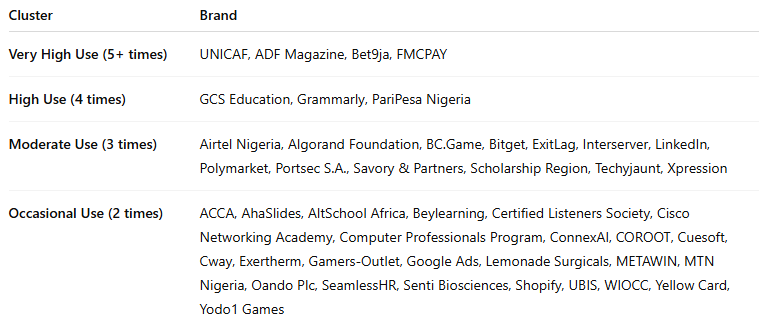
To better understand these usage patterns, five clusters emerged based on frequency. The majority of brands such as Spotify Africa, Stanbic IBTC, and Tesla North America are minimal users, employing neutral sentiment only once. These brands often rely on emotional or promotional tones, prioritizing engagement over explanation. The occasional users, including Shopify, SeamlessHR, and MTN Nigeria, typically blend emotional appeal with a factual tone, using neutrality when explaining tools or services.

Regular users, those employing neutral sentiment three times, include brands like LinkedIn, ExitLag, and Polymarket. These organizations demonstrate a consistent effort to balance tone, particularly when engaging professional or technical audiences. In the high-use cluster, brands such as Grammarly and PariPesa Nigeria appear to prioritize neutral messaging, likely to foster trust and professionalism. At the top are very high users like UNICAF, FMCPAY, and Bet9ja, all of which used neutral sentiment five or more times. These organizations, often operating in education, finance, or regulated sectors, appear to embed neutrality as a core component of their messaging architecture.

Exhibit 1: Clustered of brands by frequency of neutral sentiment use

Source: Brands social media accounts, 2025; Infoprations Analysis, 2025

What do these patterns reveal? Firstly, that neutral sentiment is most prevalent among organizations whose audiences demand clarity and credibility. Consider Grammarly, which often uses a neutral tone in blog posts, email campaigns, and in-app messaging to maintain authority and instructional clarity. Similarly, LinkedIn uses neutral sentiment to discuss features, share professional advice, and present data-driven insights, ensuring messages are relevant to a wide-ranging, international user base.

Brands like UNICAF, operating across Africa and the Middle East, rely on neutral tones to reach diverse educational audiences. Their content often focuses on access to degrees, scholarships, and partnerships in a tone that avoids cultural bias or emotional manipulation. Similarly, fintech platforms such as FMCPAY and Savory & Partners use neutral sentiment to convey trustworthiness in industries where overstated or emotional messaging could raise red flags.

Neutral sentiment also thrives in environments that demand cross-cultural communication. Emotion, after all, is interpreted differently around the world. A tone that feels motivational in one region may seem aggressive or insincere in another. Brands like Google Ads or Cisco Networking Academy, which serve global audiences, apply neutral sentiment to ensure accessibility and relevance across markets. It helps them avoid linguistic ambiguity and maintain a consistent brand voice.

But neutrality doesn’t mean boring. On the contrary, neutral sentiment is precise, informative, and persuasive in its own right. It creates a space where users can process information and form their own conclusions. It supports authority without pressure. Brands can still use emotional storytelling to attract attention, but neutrality is what holds it together when it’s time to educate, explain, or reassure.

Take Adobe Photoshop, for example. In product tutorials and updates, Adobe often maintains a neutral tone, prioritizing clarity over excitement. It allows creative professionals to engage with the tool on their own terms. Similarly, educational content from GCS Education or Cisco is framed in a factual, instructional tone, which builds authority and encourages independent exploration.

For marketers, neutral sentiment is a tool of trust. It signals that your brand respects the intelligence of its audience and that it’s confident enough to present information without emotional coercion. In a time when consumers are increasingly skeptical of over-hyped messages, this can be a powerful differentiator.

To harness it, brands can start by auditing their content. Where is emotion overused? Are complex or sensitive topics being simplified or exaggerated? Could a neutral tone increase clarity, especially in product explanations, FAQs, or customer onboarding? Tools like Intuit QuickBooks and Microsoft Developer have successfully adopted this approach, offering straightforward, neutral content that reduces friction and increases user understanding.

As digital channels become more crowded and audience attention spans continue to shrink, tone will play a critical role in brand credibility. Neutral sentiment may not generate headlines, but it cultivates long-term trust and user empowerment. In an age of hyperbole, neutrality feels real. It gives audiences space to decide and brands the platform to educate with integrity.

Embedding neutral sentiment is not about silencing a brand’s personality, it’s about knowing when to speak plainly and let clarity carry the message. And as we move deeper into a world of cross-border audiences, information fatigue, and rising expectations for transparency, this tone of quiet confidence may well become the loudest statement a brand can make.

Infoprations’ Understanding Digital Integrated Marketing Communications Team includes Abdulazeez Sikiru Zikirullah, Moshood Sodiq Opeyemi, and Bello Opeyemi Zakariyha

Starlink Expands Services to Congo, Deepening Footprint Across Africa

0

Elon Musk-owned satellite internet Starlink, has officially expanded its services to the Democratic Republic of Congo (DRC), extending its reach in Africa to 21 countries.

Starlink’s launch in the Central African country comes after the Congolese government lifted an earlier ban on the satellite internet.

Recall that in March 2024,  Starlink was banned by the DRC government due to security concerns. The Congolese government, particularly military officials, feared that the satellite internet service could be used by rebel groups, such as the Rwandan-backed M23, for unmonitored communication, posing a threat to national security.

The DRC’s low internet penetration (only about 30% of the population had access in 2023) and ongoing conflict in the eastern regions heightened these concerns, as the decentralized nature of Starlink’s service made it difficult to regulate. Additionally, Starlink was operating without a proper license, violating local telecommunications regulations.

However, the ban was reversed on May 2, 2025, when the Congolese Post and Telecommunications Regulatory Authority granted Starlink a license to operate, allowing the company to begin services soon after.

The policy shift was likely influenced by the potential for Starlink to improve connectivity in underserved areas and possibly by diplomatic or economic considerations, though specific reasons for the reversal were not detailed.

For the Democratic Republic of Congo, Starlink’s entry would play a significant role in turning around internet connectivity in the country. According to the International Telecommunication Union, War-torn Congo has low connectivity, and only around 30 percent of the population has internet access as of 2023.

Nearly half of mobile internet users express dissatisfaction with service quality, citing frequent network and connection issues, as well as concerns over rapidly depleting data packages. Internet penetration is notably higher in urban centers like Kinshasa and certain eastern provinces, while rural and conflict-affected areas face limited access.

The DRC’s mobile connectivity sector is poised for continued growth, driven by increasing demand for digital services and strategic investments in infrastructure. However, addressing challenges related to cost, quality, and geographic disparities will be crucial to ensure inclusive and sustainable digital inclusion.

SpaceX Starlink’s entry into the country will aim to provide fast and reliable internet access in remote and underserved regions. Leveraging a constellation of low-Earth orbit (LEO) satellites, the company offers broadband internet with impressive speeds and reduced latency compared to traditional satellite services.

In addition to the Democratic Republic of Congo, Starlink has launched in several other African nations, including Niger, Chad, Mali, Mauritania, Senegal, Gambia, Guinea-Bissau, Guinea, Burkina Faso, and Côte d’Ivoire. This expansion aims to enhance internet access in rural and underserved areas, challenging traditional telecommunications operators.

As Starlink recently launches in DR Congo, the Satellite Internet is deepening its footprint across Africa, as it aims to enhance internet connectivity in underserved and rural areas, where traditional infrastructure is often lacking.

Notably, Starlink’s aggressive push in Africa has prompted traditional telecom companies to adapt their pricing strategies, as the satellite internet service offers low-latency connectivity to areas where traditional infrastructure is lacking. Meanwhile, despite these advancements, some countries, such as South Africa, have yet to approve Starlink’s operations.

Overall, Starlink’s expansion across Africa represents a significant step toward bridging the digital divide and providing reliable internet access to millions of people in underserved regions