DD
MM
YYYY

PAGES

DD
MM
YYYY

spot_img

PAGES

Home Blog Page 1222

Apple Has Updated Its App Store Guidelines to Allow In-app Cryptocurrency Payments

0

Apple has updated its App Store guidelines to allow in-app cryptocurrency payments, reversing previous restrictions. Following a U.S. federal court ruling in the Epic Games antitrust case, Apple can no longer enforce its in-app purchase system exclusively, which charged up to 30% commission. Developers can now link to external payment methods, including those for cryptocurrencies and NFTs, without Apple’s fee.

However, in-app crypto transactions must still comply with regional licensing and legal requirements, and some restrictions remain, such as bans on offering crypto for tasks like app downloads or social media activity. This change is seen as a boost for DeFi and NFT adoption, with posts on X suggesting it could drive mainstream crypto use, though full in-app crypto support may still face hurdles.

Allowing crypto payments within apps could drive mainstream use, as iOS users can now engage with DeFi, NFTs, and other blockchain-based services directly, potentially onboarding millions to crypto ecosystems. Developers can bypass Apple’s 30% commission by using external crypto payment systems, retaining more revenue and incentivizing the creation of crypto-integrated apps.

The ruling weakens Apple’s control over in-app transactions, fostering competition among payment providers, including crypto platforms, which could lead to lower fees and more options for users. In-app crypto payments must comply with regional laws, which may complicate global app deployments. Developers will need to navigate varying licensing and tax requirements, potentially slowing rollout in some markets.

Seamless crypto payments could enhance user convenience, but restrictions (e.g., bans on crypto for app downloads or social media tasks) and wallet integration challenges may limit full adoption. The policy supports NFT transactions, boosting blockchain gaming and digital collectibles on iOS, though Apple’s guidelines still impose some limitations on NFT functionality. Analysts suggest this could spur crypto market growth, as easier access to in-app crypto payments may increase transaction volumes and demand for tokens.

Challenges remain, including technical integration, user education, and regulatory compliance, which could temper the pace of adoption. The lifting of Apple’s ban on in-app cryptocurrency payments creates a divide in perspectives, stakeholders, and outcomes. Developers celebrate greater freedom to integrate crypto payments and bypass Apple’s 30% commission, enabling higher profits and innovation in blockchain-based apps (e.g., DeFi, NFTs, gaming). However, they face challenges in navigating complex regional regulations and ensuring seamless wallet integration.

Apple loses some control over in-app transactions and revenue from its payment system. While Apple still enforces compliance with legal requirements and retains some restrictions (e.g., no crypto for app downloads), the ruling dilutes its walled-garden model, potentially pressuring its App Store profitability.

Crypto Advocates vs. Traditional Finance

View this as a watershed moment for mainstream adoption, with X posts highlighting the potential for millions of iOS users to engage with crypto, boosting DeFi and NFT ecosystems. It aligns with the ethos of decentralization and financial sovereignty. Traditional Finance may see this as a threat to established payment systems, with banks and payment processors potentially losing market share to crypto alternatives. Regulatory bodies might also push back, citing concerns over money laundering or tax evasion.

Crypto-Savvy Users benefit from easier access to in-app crypto transactions, enabling seamless interaction with blockchain apps. However, they may face friction from incomplete wallet support or restrictive Apple guidelines. Mainstream Users could be introduced to crypto through familiar apps, but lack of education, complex UX (e.g., setting up wallets), and volatility risks might deter adoption. The divide between early adopters and cautious newcomers could widen.

The policy opens doors for crypto innovation worldwide, particularly in crypto-friendly regions. It could accelerate blockchain app development and drive token economies. Regional strict regulations in some countries (e.g., China, India) may limit implementation, creating a patchwork of availability. Developers must tailor apps to comply with local laws, potentially fragmenting the user experience.

Posts on X suggest this could “moon” crypto markets, with in-app payments driving transaction volumes and mainstream exposure. They see it as a step toward mass adoption. Analysts argue that Apple’s remaining restrictions, technical hurdles (e.g., wallet integration), and regulatory complexity could slow progress. Some believe the impact will be limited to niche use cases like NFTs or gaming.

The move fuels crypto innovation but invites stricter oversight, as governments may tighten rules to address tax compliance, fraud, or consumer protection. While the policy makes crypto more accessible, the technical and legal complexities of in-app crypto payments could exclude non-tech-savvy users or smaller developers. Immediate excitement may overstate short-term impacts, as full adoption depends on overcoming UX, regulatory, and scalability challenges.

Embedding Neutral Sentiment in Digital Marketing Messages

0

In a digital landscape where every scroll, click, and tap bombards audiences with emotionally charged content, a surprising trend is beginning to emerge: the rise of neutral sentiment in brand messaging. While marketing has historically leaned heavily on emotional storytelling, invoking joy, urgency, fear, or inspiration to prompt action, a quieter, more balanced tone is gaining traction. Neutral sentiment, characterized by objectivity, clarity, and a measured voice, is becoming a strategic choice, especially among forward-thinking organizations navigating complex digital ecosystems.

An analysis of messaging strategies across more than 200 global and national brands revealed telling patterns. Over 80% of these brands employed neutral sentiment only once in the sample, highlighting its limited but intentional use. However, a closer look identified a notable group of brands that adopted neutral sentiment frequently across their digital communications. For them, neutrality is not a passive absence of emotion—it’s an active strategy.

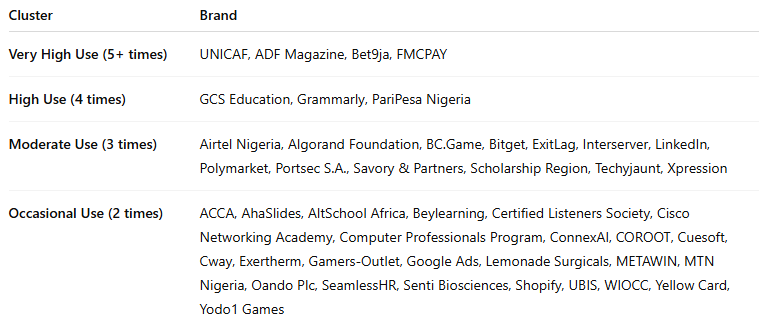
To better understand these usage patterns, five clusters emerged based on frequency. The majority of brands such as Spotify Africa, Stanbic IBTC, and Tesla North America are minimal users, employing neutral sentiment only once. These brands often rely on emotional or promotional tones, prioritizing engagement over explanation. The occasional users, including Shopify, SeamlessHR, and MTN Nigeria, typically blend emotional appeal with a factual tone, using neutrality when explaining tools or services.

Regular users, those employing neutral sentiment three times, include brands like LinkedIn, ExitLag, and Polymarket. These organizations demonstrate a consistent effort to balance tone, particularly when engaging professional or technical audiences. In the high-use cluster, brands such as Grammarly and PariPesa Nigeria appear to prioritize neutral messaging, likely to foster trust and professionalism. At the top are very high users like UNICAF, FMCPAY, and Bet9ja, all of which used neutral sentiment five or more times. These organizations, often operating in education, finance, or regulated sectors, appear to embed neutrality as a core component of their messaging architecture.

Exhibit 1: Clustered of brands by frequency of neutral sentiment use

Source: Brands social media accounts, 2025; Infoprations Analysis, 2025

What do these patterns reveal? Firstly, that neutral sentiment is most prevalent among organizations whose audiences demand clarity and credibility. Consider Grammarly, which often uses a neutral tone in blog posts, email campaigns, and in-app messaging to maintain authority and instructional clarity. Similarly, LinkedIn uses neutral sentiment to discuss features, share professional advice, and present data-driven insights, ensuring messages are relevant to a wide-ranging, international user base.

Brands like UNICAF, operating across Africa and the Middle East, rely on neutral tones to reach diverse educational audiences. Their content often focuses on access to degrees, scholarships, and partnerships in a tone that avoids cultural bias or emotional manipulation. Similarly, fintech platforms such as FMCPAY and Savory & Partners use neutral sentiment to convey trustworthiness in industries where overstated or emotional messaging could raise red flags.

Neutral sentiment also thrives in environments that demand cross-cultural communication. Emotion, after all, is interpreted differently around the world. A tone that feels motivational in one region may seem aggressive or insincere in another. Brands like Google Ads or Cisco Networking Academy, which serve global audiences, apply neutral sentiment to ensure accessibility and relevance across markets. It helps them avoid linguistic ambiguity and maintain a consistent brand voice.

But neutrality doesn’t mean boring. On the contrary, neutral sentiment is precise, informative, and persuasive in its own right. It creates a space where users can process information and form their own conclusions. It supports authority without pressure. Brands can still use emotional storytelling to attract attention, but neutrality is what holds it together when it’s time to educate, explain, or reassure.

Take Adobe Photoshop, for example. In product tutorials and updates, Adobe often maintains a neutral tone, prioritizing clarity over excitement. It allows creative professionals to engage with the tool on their own terms. Similarly, educational content from GCS Education or Cisco is framed in a factual, instructional tone, which builds authority and encourages independent exploration.

For marketers, neutral sentiment is a tool of trust. It signals that your brand respects the intelligence of its audience and that it’s confident enough to present information without emotional coercion. In a time when consumers are increasingly skeptical of over-hyped messages, this can be a powerful differentiator.

To harness it, brands can start by auditing their content. Where is emotion overused? Are complex or sensitive topics being simplified or exaggerated? Could a neutral tone increase clarity, especially in product explanations, FAQs, or customer onboarding? Tools like Intuit QuickBooks and Microsoft Developer have successfully adopted this approach, offering straightforward, neutral content that reduces friction and increases user understanding.

As digital channels become more crowded and audience attention spans continue to shrink, tone will play a critical role in brand credibility. Neutral sentiment may not generate headlines, but it cultivates long-term trust and user empowerment. In an age of hyperbole, neutrality feels real. It gives audiences space to decide and brands the platform to educate with integrity.

Embedding neutral sentiment is not about silencing a brand’s personality, it’s about knowing when to speak plainly and let clarity carry the message. And as we move deeper into a world of cross-border audiences, information fatigue, and rising expectations for transparency, this tone of quiet confidence may well become the loudest statement a brand can make.

Infoprations’ Understanding Digital Integrated Marketing Communications Team includes Abdulazeez Sikiru Zikirullah, Moshood Sodiq Opeyemi, and Bello Opeyemi Zakariyha

Starlink Expands Services to Congo, Deepening Footprint Across Africa

0

Elon Musk-owned satellite internet Starlink, has officially expanded its services to the Democratic Republic of Congo (DRC), extending its reach in Africa to 21 countries.

Starlink’s launch in the Central African country comes after the Congolese government lifted an earlier ban on the satellite internet.

Recall that in March 2024,  Starlink was banned by the DRC government due to security concerns. The Congolese government, particularly military officials, feared that the satellite internet service could be used by rebel groups, such as the Rwandan-backed M23, for unmonitored communication, posing a threat to national security.

The DRC’s low internet penetration (only about 30% of the population had access in 2023) and ongoing conflict in the eastern regions heightened these concerns, as the decentralized nature of Starlink’s service made it difficult to regulate. Additionally, Starlink was operating without a proper license, violating local telecommunications regulations.

However, the ban was reversed on May 2, 2025, when the Congolese Post and Telecommunications Regulatory Authority granted Starlink a license to operate, allowing the company to begin services soon after.

The policy shift was likely influenced by the potential for Starlink to improve connectivity in underserved areas and possibly by diplomatic or economic considerations, though specific reasons for the reversal were not detailed.

For the Democratic Republic of Congo, Starlink’s entry would play a significant role in turning around internet connectivity in the country. According to the International Telecommunication Union, War-torn Congo has low connectivity, and only around 30 percent of the population has internet access as of 2023.

Nearly half of mobile internet users express dissatisfaction with service quality, citing frequent network and connection issues, as well as concerns over rapidly depleting data packages. Internet penetration is notably higher in urban centers like Kinshasa and certain eastern provinces, while rural and conflict-affected areas face limited access.

The DRC’s mobile connectivity sector is poised for continued growth, driven by increasing demand for digital services and strategic investments in infrastructure. However, addressing challenges related to cost, quality, and geographic disparities will be crucial to ensure inclusive and sustainable digital inclusion.

SpaceX Starlink’s entry into the country will aim to provide fast and reliable internet access in remote and underserved regions. Leveraging a constellation of low-Earth orbit (LEO) satellites, the company offers broadband internet with impressive speeds and reduced latency compared to traditional satellite services.

In addition to the Democratic Republic of Congo, Starlink has launched in several other African nations, including Niger, Chad, Mali, Mauritania, Senegal, Gambia, Guinea-Bissau, Guinea, Burkina Faso, and Côte d’Ivoire. This expansion aims to enhance internet access in rural and underserved areas, challenging traditional telecommunications operators.

As Starlink recently launches in DR Congo, the Satellite Internet is deepening its footprint across Africa, as it aims to enhance internet connectivity in underserved and rural areas, where traditional infrastructure is often lacking.

Notably, Starlink’s aggressive push in Africa has prompted traditional telecom companies to adapt their pricing strategies, as the satellite internet service offers low-latency connectivity to areas where traditional infrastructure is lacking. Meanwhile, despite these advancements, some countries, such as South Africa, have yet to approve Starlink’s operations.

Overall, Starlink’s expansion across Africa represents a significant step toward bridging the digital divide and providing reliable internet access to millions of people in underserved regions

MTN Nigeria’s Records N529.4bn Data Revenue, Overtaking Voice for the First Time Amid Tariff Hike.

0

In a significant turning point for Nigeria’s largest telecom operator, MTN Nigeria has reported that data revenue outpaced voice income for the first time in its history, marking a significant shift in consumer behavior and the structure of telecom revenue in the country.

According to the company’s unaudited financial results for the first quarter of 2025, MTN earned N529.4 billion from data services, representing a 51.5 percent year-on-year increase compared to N349.5 billion recorded in Q1 2024. Voice revenue, which traditionally held the lion’s share of earnings, stood at N407.4 billion, now clearly trailing behind.

This development comes as the telco’s total service revenue hit N1.05 trillion, reflecting a 40.5 percent growth from the same quarter last year. On a quarter-on-quarter basis, data earnings rose by 17 percent, while voice revenue climbed by 15.5 percent, reinforcing the momentum behind Nigeria’s data-driven telecom market.

While MTN attributes the growth in data revenue to factors such as network investments, rising smartphone penetration, and increased average usage per subscriber — now at 12.8GB per user — some analysts are pointing to a more immediate trigger: the recent approval of data and voice tariff hikes by the Nigerian Communications Commission (NCC).

Tariff Adjustment Driving Behavioral Shift

In March 2025, mobile operators implemented a modest increase in data and voice tariffs following approval by the NCC, citing operational cost pressures driven by inflation, currency devaluation, and persistent energy challenges. The price hike is believed to have forced many subscribers to rethink how they communicate and consume services.

Although data prices have also risen, voice call charges have increased proportionately, leading many users to pivot to more cost-effective, internet-based alternatives such as WhatsApp, for voice communication. This shift is believed to have been reflected in MTN’s Q1 results, which show data traffic increasing by 46.4 percent and smartphone penetration rising to 60.7 percent, following the addition of approximately four million new smartphones to the network.

Industry analysts believe that many Nigerians are now relying more heavily on data bundles to access multiple services rather than spending on traditional voice airtime — a trend that is unlikely to reverse anytime soon.

Continued Momentum Expected in Q2

With the Q2 period already underway, analysts predict that MTN’s data revenue will continue to rise, as the full effect of the tariff hike continues to shape user behavior. The growing entry-level smartphones, alongside MTN’s investments in network expansion, especially in its 4G and 5G infrastructure, are expected to sustain — if not accelerate — this trajectory.

MTN’s 4G coverage expanded to 82.7 percent of the population in Q1 2025, while 5G coverage held at 12.7 percent, with the company prioritizing capacity enhancements over fresh rollouts. Its efforts to dominate the home broadband space also continued, with 233,000 new subscribers added during the quarter, bringing its total broadband user base to 3.5 million. Much of this growth was driven by the company’s 5G fixed wireless access and fiber-to-the-home services.

“These efforts align with our commitment to expanding broadband access and accelerating digital inclusion across Nigeria,” the company said.

MTN’s strong Q1 performance signals a broader transition that may reshape how telecoms operate and price their services in Nigeria. As voice revenue stagnates, data is becoming the new battleground, not just for earnings, but also for user loyalty and market share.

Trump To Impose 100% Tariff On Foreign Films to Protect Hollywood

0

President Donald Trump on Sunday, announced a slap of a 100% tariff on all foreign-made films imported into the United States, marking a dramatic escalation in his ongoing trade crusade — this time extending deep into the cultural and entertainment spheres.

While his administration has long railed against foreign trade practices, the move now seeks to bring the global film industry under the same protectionist lens, with implications likely to reverberate through Hollywood more than anywhere else.

“The Movie Industry in America is DYING a very fast death. Other Countries are offering all sorts of incentives to draw our filmmakers and studios away from the United States,” Trump declared on Truth Social. “Therefore, I am authorizing the Department of Commerce, and the United States Trade Representative, to immediately begin the process of instituting a 100% Tariff on any and all Movies coming into our Country that are produced in Foreign Lands. WE WANT MOVIES MADE IN AMERICA, AGAIN!”

Although the post did not single out any particular country, trade observers and studio executives see the measure as a direct response to China’s tightening control over its domestic entertainment market. In recent years, Beijing has implemented its own form of protectionism against Hollywood, drastically limiting the number of American films allowed into its theaters and giving preferential treatment to homegrown productions. The move was aimed at promoting local cinema and insulating cultural narratives from outside influence — a policy that, by design, undermined U.S. studios’ long-standing dominance.

Hollywood, which once reigned as a global cinematic powerhouse, has watched its influence in China shrink. Between 2011 and 2019, China’s box office revenues skyrocketed from under $1 billion to over $9 billion, with American blockbusters like Fast & Furious and Avengers: Endgame generating jaw-dropping returns. The latter film alone grossed $632 million in China — more than its earnings in most other markets combined. Despite only pocketing about 25% of Chinese box office receipts, studios saw the volume as too lucrative to ignore.

But that era of dominance has faded. Today, Chinese films dominate the local market, accounting for around 80% of total box office earnings — a sharp increase from the 60% share held before the COVID-19 pandemic. The shift is more than economic; it signals a cultural recalibration. Local audiences, once captivated by the scale and spectacle of Hollywood fare, are now flocking to homegrown stories that reflect Chinese experiences and values. American films, once event staples in Chinese theaters, are now often delayed, censored, or excluded altogether.

Trump’s tariff appears crafted not only as retaliation but also as a preemptive move to reposition American filmmaking in a world where its cultural exports are no longer guaranteed dominance.

“Hollywood, and many other areas within the U.S.A., are being devastated,” he wrote. “This is a concerted effort by other Nations and, therefore, a National Security threat.”

The tariff, if implemented, will have sweeping consequences. While China is the assumed primary target, the measure will apply globally — impacting countries like India and Nigeria, whose burgeoning film industries trail Hollywood in scale but are gaining international attention. Nollywood, for instance, has become a force in African and diaspora markets, while India’s Bollywood continues to churn out hundreds of films annually with a significant global footprint.

Still, Hollywood itself is expected to feel the sharpest sting. For decades, major studios have relied on foreign locations for filming and post-production, drawn by tax incentives and lower labor costs in cities like Toronto, London, Budapest, and Johannesburg. These films, although American in origin and direction, would fall under the new tariff umbrella if produced outside U.S. borders — potentially adding significant costs to the final product.

The entertainment industry, still recovering from a post-pandemic slump, has already seen movie ticket sales in the U.S. fall far below their 2018 peak of nearly $12 billion. In 2020, revenue plummeted to just over $2 billion due to theater closures. Although box office numbers have improved since, they remain well below pre-COVID levels, while fewer major releases and the dominance of streaming continue to alter viewer behavior.

Studios, which increasingly depend on streaming platforms to recoup investment, may struggle to absorb new tariff-related costs. Despite Disney+ and Max recently posting their first profits, most streaming networks, with the exception of Netflix — continue to operate at a loss.

Trade experts also note the legal ambiguity of Trump’s proposal. Because films are considered intellectual property rather than physical goods, current U.S. trade laws don’t easily accommodate tariffs on them. Services like film are typically governed under separate international trade frameworks, meaning any attempt to impose import duties could provoke disputes or retaliation under World Trade Organization rules.