
DD
MM
YYYY

PAGES

DD
MM
YYYY

spot_img

PAGES

Home Blog Page 1229

Tesla’s Europe Sales Collapse Deepens as Musk’s Politics Overshadows EV Strategy

0

Elon Musk’s Tesla continues to experience an alarming collapse in key European markets, with high double-digit drops in car registrations reported across France, Sweden, the Netherlands, and Switzerland in April.

While the Model Y remains the world’s best-selling vehicle overall, its updated “Juniper” variant appears to be falling flat in a region where Tesla once thrived. The exception, Norway, showed only a modest gain of 12%, offering little relief for the embattled automaker.

Europe, the second-largest EV market after China, has become increasingly hostile territory for Musk’s brand. The latest figures show a 59% drop in France, 81% in Sweden—where a labor dispute continues to roil operations—74% in the Netherlands, and 50% in Switzerland. These are not peripheral markets but countries with strong economies, extensive EV infrastructure, and historically high electric vehicle adoption rates.

Political Controversy Meets Commercial Fallout

However, Tesla’s crumbling momentum in Europe is not solely due to manufacturing delays or market fatigue. A growing consensus among analysts and insiders is that the company’s woes are deeply entangled with Elon Musk’s increasingly far-right political advocacy, both in the U.S. and abroad.

Musk’s polarizing political conduct has drawn concern even from Tesla’s most loyal customers. In Germany, Musk openly supported the far-right Alternative für Deutschland (AfD), a party recently declared an extremist organization. In the UK, his vocal support for white nationalist figures like Tommy Robinson has alienated mainstream consumers, leading to widespread disillusionment with Tesla’s brand image.

The fallout appears to be reaching Tesla’s boardroom. Although publicly denied, a WSJ report claimed that Tesla’s board had begun discreetly searching for a potential CEO successor—an indication of internal unease over Musk’s ability to balance Tesla’s business strategy with his growing political crusade.

DOGE and the Distracted CEO

Adding another layer to the distraction is Musk’s leadership of the Department of Government Efficiency (DOGE), a federal agency created by President Donald Trump in 2025 to reduce wasteful government spending. Musk was appointed to lead DOGE with the goal of cutting $2 trillion from federal expenditures. So far, the agency has managed around $150 billion in reductions—a figure that has fallen far short of expectations.

DOGE’s efforts have been riddled with controversy. Musk’s use of AI to automate federal jobs, along with sweeping cuts that eliminated over 120,000 government positions, has ignited protests and legal challenges. Though Musk recently announced he would step back from DOGE to focus more on Tesla, many believe the damage, both to Tesla’s brand and investor confidence, may already be irreversible.

Critics say the agency, while ambitious in scope, became another platform for Musk’s ideological war against what he calls “woke bureaucracy.” That rhetoric has not played well in Europe, where public sentiment tends to favor institutional stability over brash libertarianism.

Sales Decline, The Cost of Musk’s Refusal to Back Down

Despite growing pressure, Musk has refused to temper his political tone. From attacking judges involved in cases against Trump to mocking opponents of his AI-powered government restructuring, Musk is believed to be leveraging the X platform as an extension of his personal ideology.

Even his limited public recommitment to Tesla, claiming he will “refocus” after stepping back from DOGE, has been met with skepticism. Investors remain uncertain whether the Tesla CEO is truly prepared to separate his political persona from the automaker’s commercial future.

While Germany and the UK have yet to release their April sales data, few expect a dramatic rebound. For a company once viewed as the vanguard of sustainable transport, Tesla now finds itself outpaced not just by rivals, but by its own CEO’s growing list of distractions and controversies.

Unless something changes drastically, either in tone, leadership, or strategy—Tesla risks cementing its decline in a market that once held its greatest promise.
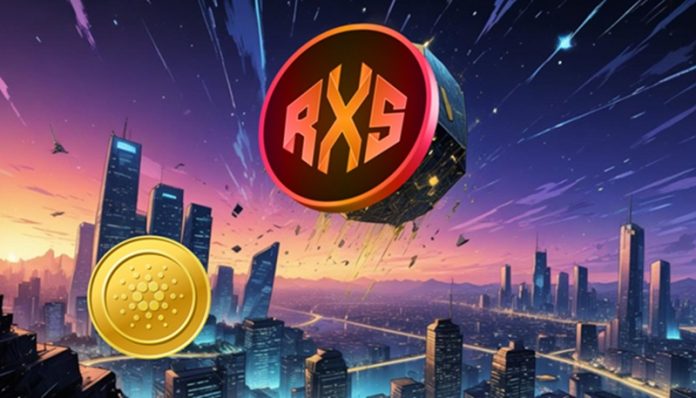

Can Cardano Create a 17100% Price Explosion Like Solana Last Cycle? This Altcoin Has Better Chances

0

The cryptocurrency market is not new regarding astounding increases; a few cases highlight Solana’s explosive ascent over its last cycle. By November, Solana (SOL) surged from a meager $1.50 to an all-time high of $260—a startling 17,100% rise that made early investors overnight millionaires. Driven by lightning-fast transaction speeds, a flourishing DeFi and NFT ecosystem, and perfect market timing, Solana became the altcoin for cryptocurrency success.  As the crypto world prepares for another possible bull run, investors wonder: might Cardano (ADA), a blockchain darling noted for its exacting approach, repeat Solana’s fantastic performance? Although Cardano has advantages, a less-known altcoin called Rexas Finance (RXS) might take center stage, given a better chance for Solana-like gains.

ADA Steady Climb: Impressive, But Not Explosive

Cardano has long been a darling among blockchain purists because of its research-driven development and emphasis on scalability, security, and sustainability. ADA trades at about $0.66 now, due to recent improvements like the Plomin hard fork in January, which brought distributed governance, and continuous efforts like Hydra to increase transaction flow. With a devoted community and a market capitalization of over $22.4 billion, these developments have confirmed Cardano’s status as a significant rival in the smart contract industry. Can it, however, generate a 17,101% increase? The numbers point to a difficult task.

ADA would have to rise from $0.66 to over $130, therefore matching Solana’s last-cycle performance and surpassing the whole crypto market size—far above Bitcoin’s peak valuation. Although Cardano’s systematic approach has gained accolades, it has also come under fire for being overly reluctant to introduce features, allowing faster-moving rivals to rule DeFi and NFT adoption. Under optimistic circumstances—with price projections ranging from $5.5 to $8 by Q4-2025—that translates to a healthy 620% to 900% return. Analysts remain hopeful. That’s a positive comeback, but it’s not like Solana’s tremendous rise.

Rexas Finance (RXS): The Dark Horse with Solana-Like Potential

Cardano continues to progress steadily, while Rexas Finance (RXS) is emerging as a disruptive force capable of outpacing its more established competitors. Unlike ADA, which is competing in the crowded bright contract field, RXS is carving out a unique niche by emphasizing the tokenization of real-world assets (RWAs), such as real estate, commodities, and fine art. This opens trillion-dollar marketplaces and not only serves as a showstopper. With global real estate alone valued at $379.7 trillion, Rexas Finance wants to place a piece of the blockchain with applicable practical value to inspire mainstream adoption. At $0.20, RXS is in its last presale stage and has already raised over $47.9 million.

Analysts are making wild forecasts: a 20,000% increase to $40 or even a 38,000% leap to $76 post-listing. The hype is tangible. Why is this frenzy driven? First, RXS starts from a low base, allowing it significantly more percentage-wise space to expand than Cardano. Its presale success, CertiK-audited security, and user-friendly tools like the Rexas Token Builder and Rexas Estate—which streamline asset tokenizing for the ordinary person—echo Solana’s early momentum to popularity. The parallels between Rexas Finance and Solana’s 2021 run are remarkable. Like SOL in its early years, RXS boasts a low initial market capitalization, a clear use case, and a scalable ecosystem ready for explosive growth. Its deflationary tokenomics and rising communal acceptance.

Solana is under selling pressure so that a new altcoin could be found on the front stage. Should RXS land tier-1 exchange listings and seize the growing market for RWA tokenization, it might follow a shockingly similar path to Solana’s: low entrance price, explosive adoption, and exponential price increase. Cardano finds its success dragging her down. Its $22.4 billion market capitalization serves as a sign of stability and a constraint on the percentage gains smaller-cap tokens can achieve. With its fresh start and unrealized promise, RXS is free from the same limitations. A 17,101% increase for RXS would take it from $0.20 to $34.20—a complex but challenging realistic achievement compared to Cardano’s $5.6 trillion moonshot. RXS, with its fresh start and unrealized promise, is not bound by the same limitations.

Conclusion

Cardano’s fundamentals make it a consistent bet for steady gains; nevertheless, its size and pace make a 17,100% explosion in this cycle improbable. With its creative RWA emphasis, early-stage momentum, and Solana-esque development potential, Rexas Finance stands a higher chance of producing the kind of profits that keep crypto investors awake—in a good way. RXS could be the altcoin to keep an eye on as the market heats up; it could transform present presale customers into success tales of tomorrow. Rexas Finance might be the ticket for people running after the next Solana.


For more information about Rexas Finance (RXS) visit the links below:

Website: https://rexas.com

Win $1 Million Giveaway: https://bit.ly/Rexas1M

Whitepaper: https://rexas.com/rexas-whitepaper.pdf

Twitter/X: https://x.com/rexasfinance

Telegram: https://t.me/rexasfinance


OpenAI expands ChatGPT into shopping, deepening speculation it’s building the next “everything app”

0

OpenAI has announced that users will soon be able to shop for products through ChatGPT, in what is being seen as a significant move to expand the company’s core business beyond its original mission of large language model (LLM) development.

The update will roll out to both logged-in users and anonymous visitors, offering a new layer of interaction where people researching products, like espresso machines or office chairs—will see embedded shopping links. However, purchases will still need to be completed on the retailer’s site.

In a pre-release demonstration shared with WIRED, Adam Fry, OpenAI’s head of ChatGPT search, showed how the new product feature is designed to assist users in deciding between products by synthesizing reviews and tailoring suggestions to individual preferences. For instance, if a user previously indicated they like only black clothing or shop from a particular retailer, ChatGPT would remember this information and personalize its future product recommendations accordingly.

“It’s trying to understand how people are reviewing this, how people are talking about this, what the pros and cons are,” Fry explained, framing the experience as more of a conversation than a search query.

This personalization reflects a deeper strategy within OpenAI to shift ChatGPT from a question-answering AI into a much more multifunctional platform. In the past few months, the company has steadily layered new capabilities onto ChatGPT—ranging from memory features and voice conversation to its Operator AI agent, which can autonomously browse the web and perform actions on behalf of users. While still in the early stages, these developments are giving credence to the belief that OpenAI is laying the groundwork for what many are calling an “everything app.”

The idea of an everything app—a single digital interface where users can chat, shop, work, bank, search, and socialize—has long been floated in Silicon Valley, most notably by Elon Musk. Musk, who owns X, has repeatedly declared his ambition to turn the platform into such a universal tool, dubbing it “accelerant to everything app.” But while Musk’s version of the Everything App is still in a transitional phase, many industry watchers now believe OpenAI may be quietly pulling ahead.

With over a billion web searches occurring weekly on ChatGPT, according to Fry, the chatbot is already rivaling traditional search engines in terms of sheer volume and utility. The addition of shopping links only strengthens its utility in daily consumer decisions. What distinguishes this from Google Shopping, though, is how OpenAI structures its results. ChatGPT’s product suggestions aren’t ranked based on ad spending or paid placements. Fry clarified that all results are organic and derived from product reviews and real-world feedback.

“They are not ads,” Fry emphasized. “They are not sponsored.”

Instead, product listings are based on aggregated insights from editorial content, such as WIRED’s product reviews, and crowd-sourced opinions from forums like Reddit. ChatGPT can also be instructed by users to prioritize certain review sources or types of evaluations when presenting product recommendations. In a demonstration, WIRED’s rigorously tested “Best Office Chairs” guide was featured in the sources tab of ChatGPT’s product recommendations.

However, this also raises important questions about affiliate revenue. In traditional affiliate setups, if a reader purchases a product through a review site’s link, the publisher earns a commission. It’s unclear how this will work with ChatGPT inserting itself between users and publishers.

“We are going to be experimenting with a whole bunch of different ways that this can work,” said Fry, noting that revenue sharing or affiliate frameworks may evolve over time. “Right now, the focus is on the user experience.”

This careful phrasing suggests that OpenAI hasn’t ruled out monetization, but the current emphasis is on trust and usability. That may change soon. OpenAI has stated a goal of reaching $125 billion in revenue by 2029, up from under $4 billion last year. CEO Sam Altman recently mentioned in an interview with Stratechery that affiliate revenue is one potential stream OpenAI is exploring as it builds out consumer-facing services.

The shopping feature is just the latest in a string of releases pointing toward a broader vision. In early 2025, OpenAI launched “Operator,” an autonomous agent that can navigate web browsers to perform actions like filling out forms or booking services. Although the tool is still rudimentary, it signals the company’s aim to not just advise users, but act on their behalf.

This places OpenAI in direct competition with a growing list of companies attempting to turn conversational AI into a digital operating system. Google has already incorporated AI-generated product summaries into its Shopping tab under a “Researched with AI” label. Perplexity, another AI search startup, offers a “Buy with Pro” option, where users can shop directly within its interface.

But while these players are positioning themselves in niche domains, OpenAI appears to be combining all of them. It has built the infrastructure, consumer trust, and technological lead to make ChatGPT the front-end for nearly every digital task. This may be why many now view ChatGPT not merely as a chatbot but as the foundational layer of a larger platform that could soon handle everything from productivity to payments.

For now, the new shopping interface resembles Google Shopping: users can view an image of a product, see prices from retailers like Amazon and Walmart, and click through to buy. But the underlying architecture is fundamentally different. ChatGPT, powered by an LLM, is absorbing preferences, filtering information, generating personalized lists, and refining its recommendations in a way traditional search engines do not.

The global tech industry races to build AI tools that blend functionality with monetization. While Elon Musk continues to reshape X with ambitions of turning it into a one-stop shop for communication, finance, and commerce, OpenAI is quietly rolling out feature after feature—memory, voice, web browsing, autonomous actions, and now shopping—that cumulatively hint at a much larger play.

In a world where users increasingly want fewer apps but more capability, OpenAI’s strategy could position it as the first true realization of the “everything app”—not through rebranding a social media platform, but by turning the very concept of a chatbot into a dynamic digital assistant for all tasks.

4 Bulletproof Altcoins That Will Withstand Trump’s Trade Wars and Deliver 2,500% to 7,500% Returns in 2025

0

As global tensions rise and talk of trade wars under a potential Trump administration intensifies, investors are bracing for volatility in traditional markets. However, certain altcoins are emerging as safe havens—projects with strong fundamentals and real-world utility that can thrive regardless of geopolitical friction. Among these, Lightchain AI is capturing attention with its presale already raising $18.3 million at a price of $0.007 during Stage 15.

Alongside other resilient digital assets, these altcoins are being closely watched for their ability to deliver staggering returns ranging from 2,500% to 7,500% in 2025. In this article, we’ll explore four standout cryptocurrencies built to endure macroeconomic instability and technological shifts, each positioned to not just survive market turbulence—but to grow powerfully through it.

What Things Are Considered When Evaluating Altcoins?

When it comes to evaluating the potential of altcoins, I do not think one should be swayed only by the hype and light scope of short-term price action. The things to consider are the basic technology the project is based on, the practical application of the technology, and the team that works on it. Likewise, Investors evaluate tokenomics by looking at the total supply, distribution model and utility within the ecosystem like these are factors that seriously affect long-term value.

Community involvement, developer activity, and partnerships provide valuable information on the level of acceptance and strength of the network. In the same contest, security provisions, audit history, and scalability solutions are also taken into account when it comes to the decision-making process. On the other hand, the platform’s uniqueness—whether it be through innovation, performance, or specialization—plays an essential role in the determination of whether an altcoin can play the game at the top level of the market or take the lead in the growing sectors.

4 Resilient Altcoins for 2025 and Beyond

In a market where external pressures like trade policies and regulatory shifts can shake investor confidence, certain altcoins stand out for their ability to weather volatility and maintain long-term momentum. These projects aren’t just hype-driven—they’re backed by strong technical foundations and clear real-world use cases. Lightchain AI, for example, is gaining attention for its focus on decentralized AI infrastructure, offering tools that position it for relevance across industries.

Polkadot continues to lead in cross-chain connectivity, while Arbitrum brings scalability to Ethereum’s ecosystem with Layer 2 efficiency. Meanwhile, VeChain provides enterprise-grade blockchain solutions tailored for logistics and data integrity. Together, these four altcoins represent a class of digital assets built to adapt, scale, and deliver sustained performance, even in an uncertain global environment shaped by shifting political dynamics.

Why Lightchain AI is Poised to Deliver Exceptional Returns

Lightchain AI’s potential for exceptional returns stems from its strategic focus on building an AI-compatible blockchain infrastructure that meets the needs of emerging decentralized applications. Unlike many altcoins that lack clear functionality, Lightchain AI is structured to support intelligent computing through a secure and scalable environment. Its ecosystem encourages active participation from developers and contributors, aligning incentives through governance, staking, and utility-based token mechanics.

The roadmap outlines steady evolution, including ecosystem growth, global adoption, and open-source expansion—all of which contribute to increasing long-term demand for the LCAI token. Additionally, the platform’s modular architecture ensures it can evolve with future AI advancements, making it more than just a trend-driven asset. As demand for decentralized, privacy-first AI solutions increases, Lightchain AI’s purpose-built design gives it the edge to deliver outsized gains.

https://lightchain.ai

https://lightchain.ai/lightchain-whitepaper.pdf

https://x.com/LightchainAI

https://t.me/LightchainProtocol

Solana Price Prediction, Can SOL Target 60x Gains in 2025 Like This New Viral Altcoin?

0

Solana has long been seen as a top-tier blockchain thanks to its speed and scalability, but with the evolving crypto landscape, new contenders are entering the spotlight. One such altcoin making waves is Lightchain AI, currently in Stage 15 of its presale and priced at $0.007, having already raised $18.3 million. As traders speculate whether SOL can deliver 60x gains by 2025, comparisons are being drawn to emerging projects like Lightchain AI that are gaining traction with strong narratives and disruptive use cases.

While Solana continues refining its ecosystem, Lightchain AI is capturing attention for its forward-thinking approach and growing community interest. In this article, we explore whether Solana still has the momentum to produce massive gains—and how it stacks up against a fast-rising challenger poised for exponential growth.

Solana’s Impressive Performance and Future Outlook

One of the fastest and most efficient Layer-1 blockchains in the crypto space, Solana has developed a reputation as it can process thousands of transactions per second with minimal fees. To this end, Solana’s unique consensus model, combining Proof of History (PoH) with Proof of Stake (PoS), has enabled it to uphold secure high throughput without sacrificing the decentralization. For the past seasons, Solana has been able to attract developers, thus, becoming a place for creating DeFi, NFTs, and dApps.

Looking forward, the upcoming updates are expected to bring about that which will result in better network stability and scalability, thus increasing the adoption rate. Analysts are still very positive about Solana’s potential in the long run, particularly as the institutional interest in high-performance blockchains is growing. In case market conditions are in favor of Solana as well as the maintainer of its innovativeness, the return of the asset could be remarkable through 2025 and beyond.

What Makes Lightchain AI a Top Challenger to Solana?

What sets Lightchain AI apart as a serious challenger to Solana is its unique positioning in the AI-blockchain space. Unlike general-purpose blockchains, Lightchain AI is purpose-built to support decentralized artificial intelligence operations through a layered and modular architecture. This allows the platform to handle AI-specific tasks efficiently while maintaining scalability and security. Its focus on real-time AI execution, privacy-preserving data handling, and open-source developer collaboration gives it a competitive edge in a rapidly growing niche.

Lightchain AI also integrates governance mechanisms that allow the community to shape platform upgrades and priorities. While Solana focuses heavily on transaction speed, Lightchain AI’s strength lies in its ability to bring meaningful AI computation on-chain. This distinct focus positions it not as a competitor in throughput—but as a new category leader in intelligent blockchain infrastructure.

How To Evaluate the Potential for 60x Gains

Evaluating the potential for 60x gains in any crypto project requires a combination of fundamental analysis, market timing, and realistic projections. First, assess the project’s total token supply and current market cap—smaller caps with real utility often offer the highest upside. Next, examine the team’s ability to deliver on its roadmap, the uniqueness of its technology, and the strength of its community.

Utility plays a major role—tokens that serve a vital function within their ecosystems are more likely to sustain long-term demand. Investor sentiment, exchange listings, and broader market cycles also influence growth potential. Projects that solve real problems, attract developer interest, and scale effectively tend to outperform. Ultimately, the combination of innovation, timing, and execution determines whether a coin can realistically multiply its value by 60x or more.

https://lightchain.ai

https://lightchain.ai/lightchain-whitepaper.pdf

https://x.com/LightchainAI

https://t.me/LightchainProtocol