DD
MM
YYYY

PAGES

DD
MM
YYYY

spot_img

PAGES

Home Blog Page 1232

U.S. Economy Shrinks for the First Time in Three Years as Trump Tariffs Take Toll

0

The United States economy contracted at a 0.2 percent annual pace in the first quarter of 2025, marking the first drop in three years, as President Donald Trump’s aggressive trade policy — including sweeping tariffs — disrupted domestic demand, stoked business uncertainty, and widened the trade deficit.

The Commerce Department revised its initial estimate of a 0.3 percent decline to 0.2 percent, but the downgrade still captures the brunt of the tariff shock that rattled markets and pushed businesses into panic buying. A surge in imports, as U.S. companies raced to bring in foreign goods before the full weight of Trump’s duties took effect, slashed over five percentage points off gross domestic product (GDP) growth.

Imports jumped at a 42.6 percent annual rate, the fastest since the third quarter of 2020, outpacing domestic production and inflating the trade deficit, which by GDP calculation standards is subtracted from economic output. Economists say this spike was a direct response to the administration’s escalating tariffs on a wide range of goods including steel, aluminum, autos, and consumer products from China, Canada, Mexico, and the European Union.

“Businesses front-loaded imports ahead of the tariff deadlines, and that distorted the GDP reading,” said Scott Wendell, a senior economist with Atlanta Capital Economics. “This isn’t sustainable. You’re unlikely to see a repeat in Q2, but the damage has already been done.”

Consumer Spending, Government Outlays Also Slowed

The report also showed a marked slowdown in consumer spending, which grew at just 1.2 percent — a sharp drop from 4 percent in the previous quarter. Household sentiment has weakened amid price hikes linked to the tariffs, which increased costs of everyday goods ranging from cars to appliances and groceries.

Federal government spending also declined by 4.6 percent, the steepest drop in three years, as agencies tightened budgets in response to fiscal pressures and political gridlock in Washington.

However, there were pockets of strength. Business investment surged 24.4 percent, with companies ramping up spending on equipment and construction. A buildup in inventories, as firms stockpiled supplies ahead of tariffs — added 2.6 percentage points to GDP, partially cushioning the overall decline.

Another measure used to gauge the economy’s underlying health, which strips out volatile components like inventories, government spending, and trade, rose at a solid 2.5 percent annual rate, though it was still down from 2.9 percent in the previous quarter.

Court Blocks Key Tariffs, Offering Hope for Recovery
In a major twist, a federal court on Wednesday blocked Trump’s sweeping 10 percent tariffs, including targeted levies on imports from Canada, Mexico, and China, ruling that the president had exceeded his legal authority.

“Today a court ruled exactly what I said from the beginning: the power to tax lies with Congress, not one man, and tariffs must originate in the House.  So if House Republicans want to impose tariffs, let them vote to enact them,” Peter Schiff, Chief Economist & Global Strategist at Europe Pacific, said.

The decision immediately halted further implementation of the contested duties and is expected to ease some pressure on both consumers and businesses going into the second quarter.

The ruling comes on the heels of mounting criticism from industry leaders and economists who described the tariffs as illegal and warned that although Trump intended to use them as a measure to protect American manufacturing, they would backfire.

Outlook for Q2 and Beyond

Economists now expect some reprieve in the second quarter. With the panic-induced import surge unlikely to repeat, and with tariffs on pause, growth could rebound modestly. Forecasts for Q2 range between 1.5 to 2 percent annual growth, although risks remain.

President Trump has insisted that the trade policies are part of a long-term strategy to rebuild domestic industry and reduce dependence on foreign supply chains. But analysts note that the near-term cost to the broader economy — particularly consumers and small businesses — is too high.

Thursday’s data was the second of three GDP estimates for the first quarter. The final number will be released on June 26. Until then, markets and policymakers will be watching for signs of stabilization or further fallout from one of the most turbulent trade experiments in recent U.S. history.

SOL Strategies Files $1B Preliminary Short-Form Tokenized Shares on Solana

0

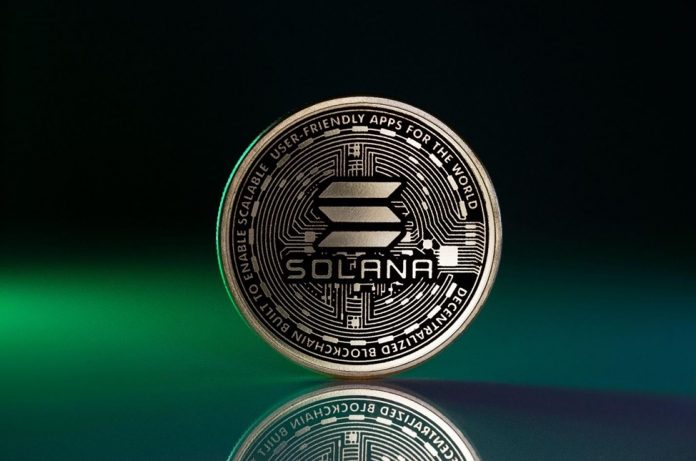
SOL Strategies, a Canadian public company focused on the Solana blockchain, has filed a $1 billion preliminary short-form base shelf prospectus with securities regulators across Canada. This filing aims to provide financial flexibility to capitalize on opportunities within the Solana ecosystem without delays from additional regulatory approvals.

The prospectus, once finalized, will allow the company to issue various securities, including common shares, debt securities, warrants, and subscription receipts, over the next 25 months.
No immediate offerings are planned, but the move positions SOL Strategies to act swiftly on future investment opportunities, such as acquiring Solana (SOL) tokens or expanding infrastructure for the Solana network. This follows their April 2025 announcement of a $500 million convertible note to fund additional Solana purchases.

The company, formerly Cypherpunk Holdings, trades under the ticker HODL on the Canadian Securities Exchange and is exploring tokenized equity issuance on Solana’s blockchain in partnership with Superstate. CEO Leah Wald emphasized that the filing enhances their ability to act decisively in the rapidly evolving Solana ecosystem.

The $1 billion shelf offering by SOL Strategies has several implications for the company, the Solana ecosystem, and broader markets. The offering provides SOL Strategies with significant capital to invest in Solana (SOL) tokens, infrastructure, and related projects. This could boost Solana’s ecosystem by funding decentralized applications (dApps), DeFi platforms, or NFT projects, potentially increasing SOL’s utility and demand.

Market Signal for Solana: A high-profile investment move like this signals strong confidence in Solana’s long-term potential, which may attract other investors and developers to the ecosystem. It could drive SOL’s price higher if market sentiment aligns, though volatility is a risk if expectations aren’t met.

Financial Flexibility for SOL Strategies: The shelf offering allows the company to raise funds opportunistically over 25 months without repeated regulatory filings. This agility could help them capitalize on market dips or strategic opportunities, such as acquiring distressed assets or funding innovative Solana-based startups.

Potential Dilution for Shareholders: If SOL Strategies issues new shares under the offering, existing shareholders could face dilution of their ownership. The impact depends on the scale and pricing of any share issuance, which isn’t yet specified.

Tokenized Equity Innovation: Their exploration of tokenized equity on Solana’s blockchain (in partnership with Superstate) could pioneer new financial instruments, blending traditional finance with DeFi. Success here might set a precedent for other public companies, enhancing Solana’s reputation as a hub for financial innovation.

Regulatory and Market Risks: The filing’s success hinges on regulatory approval and market conditions. A bearish crypto market or regulatory hurdles could limit the offering’s impact. Additionally, SOL Strategies’ heavy focus on Solana ties its fortunes to the blockchain’s performance, which carries risks if Solana faces technical or competitive challenges.

A $1 billion commitment to a single blockchain could draw attention to Solana as a competitor to Ethereum and other layer-1 networks, potentially shifting capital and developer focus. However, it may also raise concerns about over-concentration in one ecosystem. Overall, this move positions SOL Strategies as a major player in Solana’s growth, but its success depends on execution, market dynamics, and Solana’s ability to maintain its competitive edge.

REKT DRINKS By REKT Nft Launched Web3 YouTube Series

0

Rekt Drinks launched a YouTube series titled “Get Rekt or Die Trying,” with the first episode announced on May 28, 2025. The series is described as an unfiltered and raw look inside the Rekt Drinks brand, which produces flavored sparkling water with zero alcohol and zero caffeine. The launch was shared via a post on X by @rektdrinks directing viewers to watch the first episode on YouTube.

Additionally, posts on X indicate engagement with influencers and community members, suggesting the series may feature behind-the-scenes content and collaborations to boost brand visibility. The launch of Rekt Drinks’ YouTube series, “Get Rekt or Die Trying,” announced on May 28, 2025, carries several implications for the brand and highlights a potential divide in its audience reception, particularly given its non-alcoholic beverage focus and Web3 community roots.

The series strengthens Rekt Drinks’ brand identity by leveraging its Web3 community, built around the Rektguy NFT project. With 222,000 cans sold in 48 hours, the brand has demonstrated strong community support, which the YouTube series can amplify through visual storytelling and influencer collaborations. By showcasing behind-the-scenes content, the series aims to deepen engagement with its “die-hard” Web3 audience while attracting new viewers unfamiliar with the crypto space.

The 50% fiat purchases of Rekt Drinks suggest a broader appeal beyond crypto enthusiasts, which the series could further expand. The use of platforms like YouTube aligns with Rekt’s strategy to bridge digital and physical markets, potentially onboarding “normies” (non-crypto users) into its ecosystem, as noted by co-founder Ovie Faruq.

Positioning itself as a zero-alcohol, zero-caffeine beverage, Rekt Drinks taps into the growing trend of sober and health-conscious lifestyles, particularly among Gen Z, who drink 20% less than Millennials. The series could highlight this ethos, appealing to audiences seeking alternatives to alcohol-focused content. The series may emulate successful influencer-driven beverage launches like Prime by KSI and Logan Paul, using YouTube’s reach to replicate their model of cult-like followings, though Rekt’s community is smaller.

The series could integrate Web3 mechanics, such as rewarding viewers with DRANK points for engagement (e.g., liking or sharing content), similar to the rewards system used for Rekt Drinks purchases. This gamification could drive viewership and loyalty but risks alienating non-Web3 audiences unfamiliar with such systems. Potential monetization through YouTube ads, sponsorships, or merchandise could diversify Rekt’s revenue beyond beverage sales, building on the $1.5M seed funding secured in November 2024.

Although Rekt Drinks is non-alcoholic, the brand name and its slogan, “Get Rekt Responsibly,” could evoke associations with alcohol or reckless behavior, potentially raising concerns about normalizing drinking culture on platforms like YouTube. Studies on alcohol-related YouTube content show 89% of such videos glorify drinking, with minimal age restrictions or warnings, suggesting Rekt must navigate content portrayal carefully to avoid scrutiny.

The series’ unfiltered, raw style may attract younger viewers, but without clear messaging about its non-alcoholic nature, it could face backlash from regulators or advocacy groups concerned about adolescent exposure to drinking-adjacent content.  Rekt’s core audience, rooted in the Rektguy NFT project, is likely to embrace the series as an extension of the brand’s rebellious, crypto-native ethos. The use of DRANK points and potential airdrops (e.g., the REKT token launch) will resonate with this group, who are accustomed to Web3 incentives.

Non-crypto audiences, drawn by the beverage’s health-conscious appeal, may find the Web3 jargon (e.g., NFTs, airdrops) or the “Rekt” branding confusing or off-putting. The 50% fiat purchases indicate a significant non-Web3 customer base, but the series’ crypto-heavy tone could alienate them if not balanced with accessible content. Rekt Drinks’ zero-alcohol, zero-caffeine formula aligns with the rise of sober-friendly content on social media, appealing to Gen Z and health-focused viewers. The series could emphasize this to capture the growing low-alcohol trend.

The brand’s name and “Get Rekt” slogan, combined with YouTube’s history of glorifying alcohol in videos (e.g., 92.8% of sulbang videos depict binge drinking), may lead some viewers to assume the series promotes partying or drinking, creating a misaligned perception. This divide could spark criticism from those advocating for stricter regulation of alcohol-adjacent content. Research shows 83.1% of surveyed adults support regulating alcohol-related social media content, particularly among older viewers and women, due to its impact on adolescents.

If the series’ edgy branding is mistaken for alcohol promotion, it could face calls for restrictions, especially given YouTube’s lax age-restriction enforcement (only 0.6% of drinking videos are age-restricted). Rekt’s Web3 and influencer-driven audience may resist perceived censorship, valuing the series’ unfiltered style as authentic. Heavy drinkers, who are less likely to support regulation, may align with this view, creating tension with public health advocates.

The launch of Rekt Drinks’ YouTube series is a strategic move to amplify its Web3-rooted brand while tapping into broader markets through a health-conscious, non-alcoholic beverage. It offers opportunities for community engagement, cultural relevance, and monetization but risks widening a divide between crypto-savvy fans and mainstream viewers, as well as between those who see the branding as fun versus those who view it as problematic.

To mitigate this, Rekt should ensure the series clearly communicates its non-alcoholic identity, balances Web3 elements with accessible content, and adheres to responsible content guidelines to avoid regulatory pushback. By doing so, it can bridge the divide and maximize the series’ impact.

Grammarly Secures $1bn in Non-Dilutive Funding to Cement Role in AI-Powered Work

0

Once known as a grammar checker trusted by students and professionals alike, Grammarly is now staking its claim as a core player in the future of work. The Ukrainian-founded unicorn has secured a $1 billion non-dilutive financing deal from longtime backer General Catalyst, marking a significant pivot in its evolution from a writing assistant to a full-scale AI productivity platform.

Unlike traditional funding rounds, this capital injection doesn’t dilute Grammarly’s ownership structure. Instead, it comes from General Catalyst’s Customer Value Fund (CVF), a financing model that ties repayment to revenue generated from new customers. If those gains fail to materialize, Grammarly owes nothing—General Catalyst takes the loss.

The deal comes at a pivotal moment for Grammarly, which began as a writing enhancement tool and now offers a growing ecosystem of AI-powered agents embedded across emails, documents, enterprise software, and websites. With this expansion, the San Francisco-based company aims to become an intelligent backbone for how people work, rather than just how they write.

Founded in 2009 by Ukrainian entrepreneurs Alex Shevchenko, Max Lytvyn, and Dmytro Lider, Grammarly initially focused on education, offering grammar and style suggestions to help users write more clearly. Its real breakout came when it adopted a freemium model and integrated its service across browsers, mobile apps, and desktops, allowing it to reach millions beyond the academic sphere.

Today, Grammarly supports more than 40 million users and 50,000 organizations. Its AI now assists with brainstorming, tone adjustments, and content reviews—including the detection of AI-generated material, working seamlessly across over 500,000 platforms and tools.

The recent acquisition of Coda, a document and collaboration platform, has further broadened Grammarly’s reach. Coda’s former CEO, Shishir Mehrotra, stepped into the CEO role at Grammarly in December 2024, ushering in a new phase of leadership and strategy. With this merger, Grammarly now combines its communication intelligence with Coda’s enterprise-grade document system, transforming static documents into live, data-connected workspaces.

That transformation has put Grammarly at the heart of a new class of AI-native platforms—not just tools, but intelligent systems that understand context and deliver proactive assistance. Coda Brain, the AI engine at the center of Coda Docs, integrates with internal company data while preserving access permissions. In combination with Grammarly’s own AI agents, the platform now helps teams organize knowledge, surface insights, and execute tasks with minimal manual effort.

Grammarly’s role is no longer confined to proofreading. Its technology is now embedded into the daily workflows of major companies like Atlassian, Databricks, and Zoom. With more than $700 million in annual revenue, 80 percent gross margins, and a 97 percent annual retention rate among paying users, the company remains profitable while continuing to scale.

General Catalyst, which raised an $8 billion fund in October 2024, has identified Grammarly as a strategic pillar in its broader AI push. The firm’s investment strategy spans sectors like defense, fintech, climate, and healthcare, but Grammarly’s evolution into an AI productivity engine has become central to its AI thesis.

With the new funding, Grammarly plans to ramp up its global marketing and sales efforts, targeting new sectors and regions. It is also eyeing additional acquisitions to strengthen product capabilities, deepen integrations, and expand its reach. Internally, the company continues to invest in AI innovation, refining its agents to work across every layer of enterprise software—from wikis and CRMs to slides and messaging apps.

Grammarly’s raise mirrors a broader trend in the venture capital landscape, where artificial intelligence continues to dominate funding. In the first quarter of 2025 alone, AI startups attracted $59.6 billion in venture funding—more than half of the total capital deployed during the period. Late-stage deals like Grammarly’s represented 61 percent of that activity.

This funding surge comes even as competition intensifies from generative AI giants such as ChatGPT and Microsoft Copilot. These rivals have slowed Grammarly’s growth pace but haven’t knocked it off its pedestal as a market leader.

By deepening its capabilities and infrastructure, Grammarly is preparing for a future where AI not only assists but fundamentally shapes how teams collaborate and get work done. The company is also building an open ecosystem that will allow third-party developers to plug into its platform, further embedding it into the enterprise fabric.

Shishir Mehrotra, now leading Grammarly’s next chapter, said the combined force of Grammarly and Coda has unlocked new possibilities for how people work and communicate.

“I’m energized by the innovation happening across our teams,” he said. “Grammarly has become a productivity platform serving everyone from individual students to growing businesses to large enterprises. The breadth of what we can now offer is truly compelling.”

Nvidia CEO Warns US Export Sanctions Are Fueling ‘Quite Formidable’ Chinese AI Rivalry

0

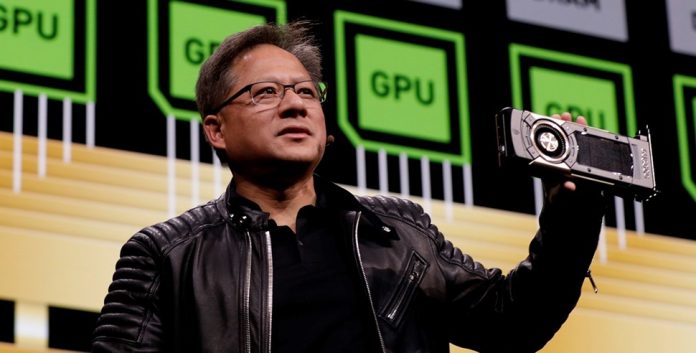
Nvidia Corp. CEO Jensen Huang has warned that U.S. export controls on high-end chips have failed to blunt China’s tech progress, with the country’s artificial intelligence ecosystem rapidly advancing to a point where it could no longer be taken for granted.

Instead of slowing China’s rise, Huang argued, the sanctions are strengthening domestic alternatives and eroding the technological gap once enjoyed by American firms.

“The Chinese competitors have evolved,” Huang said in an interview with Bloomberg Television on Wednesday. “Huawei has become quite formidable.” He added that major Chinese firms like Tencent are “doubling, quadrupling capabilities every year,” warning that the volume and sophistication of their systems are rising sharply.

Huang’s remarks underscore a growing concern in the U.S. semiconductor industry that Washington’s restrictive measures are not only ineffective but counterproductive—shutting out American companies from one of the most lucrative global markets while pushing China toward technological self-reliance.

Huawei’s Success As Evidence of Defiance

Huang’s assessment is backed by mounting evidence that Chinese companies are defying U.S. restrictions and accelerating their development of domestic AI chips, particularly as U.S. suppliers like Nvidia are blocked from shipping high-performance processors to China.

Huawei, a central target of American sanctions, has emerged as a leading example of China’s defiance. The tech giant, long blacklisted by Washington, recently unveiled an AI chip comparable in performance to Nvidia’s H200, a GPU that until recently was among the most powerful available. This represents a dramatic leap in capability for a firm once seen as hobbled by U.S. restrictions.

Under updated U.S. export rules, even Nvidia’s downgraded chip, the H20, cannot be shipped to China.

Huang said that the company currently has no substitute chips for the Chinese market. Any future alternatives would require U.S. government approval, further complicating Nvidia’s position.

Backing Huang’s warning is a report by the Financial Times on Thursday, which revealed that China’s largest technology companies—Alibaba, Tencent, and Baidu—have already begun the process of switching to homegrown semiconductors. According to industry executives cited by the FT, these firms are testing domestic alternatives in response to dwindling stockpiles of Nvidia chips and increasingly stringent U.S. export rules.

The move marks a significant pivot in China’s tech industry, driven not only by necessity but also by a broader state-led push for semiconductor independence. The companies are actively sourcing chips from domestic suppliers such as Huawei and other emerging players, hoping to meet the growing demand for generative AI applications across the Chinese market.

A Market of Lost Billions

The stakes for Nvidia are enormous. Huang said the company expects to lose up to $8 billion in sales this quarter alone due to its inability to supply chips to China—the world’s largest market for AI infrastructure.

“You cannot underestimate the importance of the China market,” he stressed. “This is the home of the world’s largest population of AI researchers.”

Nvidia’s GPUs have long been the gold standard for training advanced AI models, but with U.S. policy now locking them out of China, the company risks ceding market share to domestic players who were once reliant on American hardware.

Risks to America’s AI Leadership

Huang’s concern goes beyond Nvidia’s bottom line. He warned that American export policy is threatening the broader ecosystem of U.S. technology leadership.

“We want all of the world’s AI researchers and developers to be using American technology,” he said. But that ambition is at odds with Washington’s current stance, which has effectively alienated a large swath of global talent and enterprise.

In his interview, Huang also responded to recent reports that the U.S. is revoking visas for Chinese students involved in sensitive research areas. He noted the importance of immigration to innovation, recalling his own journey as an immigrant from Taiwan to the United States.

“Look, I’m an immigrant. I know many immigrants that came to the U.S. to build a great life, and many of us have contributed greatly to the technology industry in the U.S.,” he said. “We would like the brightest to come here.”

Currently, Washington’s export policy has created an unintended consequence: instead of freezing China out of the AI race, it has sparked a faster-than-expected maturation of China’s own capabilities. Huang’s comments reflect a growing realization in the industry that while the geopolitical battle over technology continues, China is quietly narrowing the gap—and American firms are left watching from the sidelines.