DD
MM
YYYY

PAGES

DD
MM
YYYY

spot_img

PAGES

Home Blog Page 1239

BUA Foods Posts N136.3bn Pre-Tax Profit in Q1 2025, Doubling Year-on-Year as Sugar, Flour Sales Surge

0
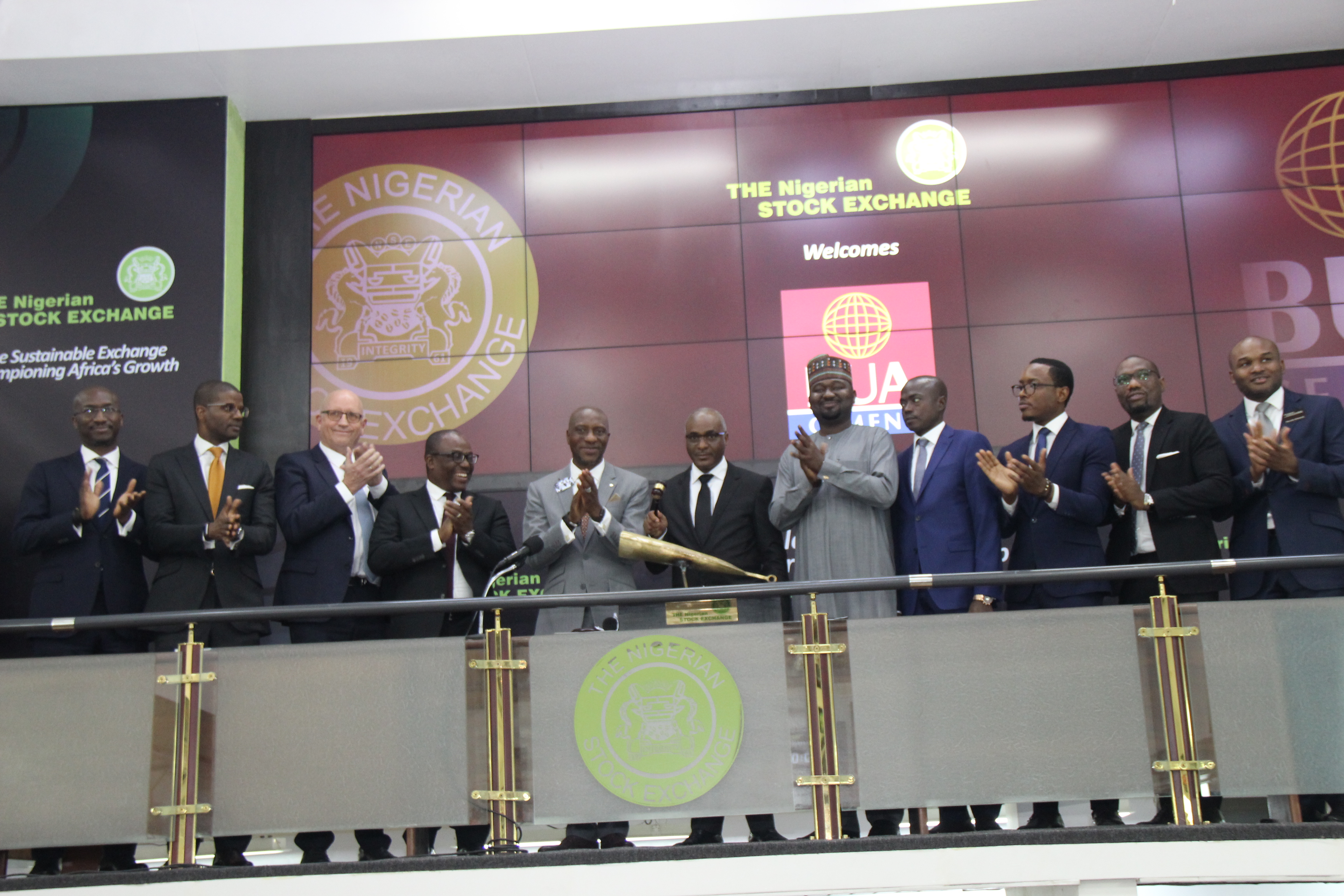
BUA at NSE

In a quarter where many Nigerian companies are still contending with currency volatility and weakened consumer demand, BUA Foods Plc has reported a staggering N136.3 billion in pre-tax profit for the first quarter of 2025, a performance that has doubled its year-on-year figure.

The company’s unaudited financial results for the period ended March 31 show a 118.7% increase from N62.3 billion recorded in Q1 2024, a growth rate that stands out amid the broader sluggishness in the Nigerian economy.

At the heart of this leap was a significant rise in turnover and a sharp decline in finance costs, which helped boost the company’s operating efficiency even as inflation and operating expenses remained a drag on consumer-facing businesses.

Sugar and Flour Dominate As Revenue Surges

Total revenue for the period stood at N442.06 billion, representing a 23.85% year-on-year increase compared to the N356.9 billion the company posted in the same quarter last year. The growth was powered by higher volumes and steady pricing across product categories, with fortified sugar and bakery flour emerging as the top-performing segments.

A breakdown of revenue by category shows:

  • Fortified sugar: N165.8 billion
  • Bakery flour: N163.2 billion
  • Non-fortified sugar: N45.1 billion
  • Pasta: N41.5 billion
  • Other products: Unspecified remainder

The prominence of fortified sugar in revenue contribution reflects BUA’s increased investments in refining capacity and possibly stronger demand from industrial buyers, particularly in the beverage and food manufacturing sectors. Bakery flour, which continues to play a vital role in the bread-making industry, also held up well amid rising costs of wheat and energy.

Cost Pressures Persist, But Gross Margin Expands

While sales grew, the cost of sales also rose, though at a slower pace — reaching N281.1 billion, a 16.42% increase from N241.5 billion in Q1 2024. This cost moderation relative to revenue growth allowed the company’s gross profit to rise sharply by 39.41%, from N115.4 billion to N160.9 billion, effectively improving BUA’s gross margin.

However, the company wasn’t entirely insulated from inflationary pressures. Administrative expenses surged to N11.3 billion, a 149.5% increase, suggesting elevated costs around personnel, technology, or internal operations. At the same time, selling and distribution expenses climbed to N11.07 billion, a 13.3% increase from the N9.77 billion spent in the same period last year. This uptick is consistent with the firm’s broader market push to retain shelf space and expand distribution despite strained consumer wallets.

Despite these rising overheads, operating profit stood at N138.9 billion, representing a 32.67% increase from N104.7 billion in Q1 2024, a sign that the core business remains profitable even as costs rise.

Finance Costs Slashed, Boosting Bottom Line

One of the most striking aspects of BUA’s Q1 2025 performance is the 75.13% reduction in finance costs, which dropped from N15.1 billion to just N3.7 billion. The company did not provide full details in the statement, but analysts suggest this could be the result of significant debt repayments or refinancing into lower-interest instruments in the wake of the Central Bank’s monetary tightening.

This drop in finance costs played a decisive role in lifting pre-tax profit to N136.3 billion, putting BUA Foods among the highest-earning Nigerian companies for the quarter.

Stronger Balance Sheet, Retained Earnings Grow Nearly 30%

On the balance sheet, total assets increased to N1.1 trillion, representing a 4.3% uptick, while retained earnings rose to N546.2 billion, up by 29.76% year-on-year. These figures signal both an improved asset base and greater reinvestment potential, offering the company strategic flexibility in the quarters ahead.

Retained earnings, in particular, reflect the company’s growing internal capital base — a key metric for long-term sustainability and dividend-paying capacity. BUA Foods, like its peers in the consumer goods segment, has had to navigate a turbulent economic landscape where currency devaluation, higher import costs, and fuel price increases have reshaped input pricing and consumer habits.

Market Response and Share Price Outlook

Despite its strong fundamentals, the market response was measured. As of April 30, 2025, BUA Foods shares closed at N418, reflecting a modest 0.72% year-to-date gain. Analysts attribute this to broad investor caution amid Nigeria’s macroeconomic uncertainties rather than company-specific concerns.

However, BUA’s consistent quarterly growth and expanding profitability may draw fresh attention from institutional investors as the year progresses — especially if inflation continues to moderate and consumer spending stabilizes.

Going forward, BUA Foods is expected to focus on consolidating its market share across product lines while exploring operational efficiencies to cushion the effect of further cost pressures. Its ability to pass on input costs without significantly dampening demand has so far worked, but risks remain, particularly in the pasta and premium flour segments, where consumers are more price-sensitive.

Nigeria Set to Conclude IMF Emergency Loan Repayments by 2029, But Broader Governance Concerns Persist

0

Nigeria is on course to fully repay its International Monetary Fund (IMF) Rapid Financing Instrument (RFI) loan by 2029, marking a key milestone in the country’s recovery from the COVID-19-induced economic crisis of 2020.

In April 2020, the IMF approved emergency support worth 2,454.50 million Special Drawing Rights (SDR), roughly equivalent to $3.32 billion at the current exchange rate of SDR1 to $1.35404 as of May 1, 2025. The support came at a time when Nigeria was grappling with plunging oil prices, capital flight, and widespread macroeconomic shocks triggered by the pandemic.

As per the repayment schedule published on the IMF website, Nigeria’s repayment timeline begins in 2025 and concludes in 2029. This year, the country is expected to make its final principal payment of SDR 306.81 million, along with charges and interest of SDR 22.81 million, bringing total payments in 2025 to SDR 329.62 million, or about $446.21 million.

From 2026 to 2029, remaining repayments will consist mainly of annual interest and charges, each year estimated at SDR 26.7 million, amounting to approximately $36.14 million annually. In total, Nigeria will pay back SDR 436.42 million ($590.78 million) over the five-year period.

Earlier in 2024, Nigeria paid a substantial $1.63 billion to the IMF, made up entirely of principal payments on past disbursements, which contributed to a 67.6 percent reduction in the country’s debt to the Fund—from $2.47 billion in 2023 to $800.23 million in 2024.

This reduction came against the backdrop of increased external debt servicing, which rose to $4.66 billion in 2024, compared to $3.5 billion in 2023. Multilateral creditors, led by the IMF, accounted for the largest share of that burden.

Unlike traditional IMF loans, the RFI support came with minimal conditionalities and was disbursed in full immediately. The absence of policy strings made it a quick-response tool during the pandemic but also raised concerns among some observers then about how judiciously the funds would be used.

Those concerns haven’t entirely disappeared.

Despite Nigeria’s progress in repayment, critics warn that structural issues, particularly endemic corruption, weak transparency mechanisms, and the absence of institutional accountability—continue to raise doubts about how such emergency funds were deployed and whether they achieved their intended impact.

Moreover, while the IMF commended Nigeria’s macroeconomic reforms and its effort to meet repayment obligations without refinancing or restructuring, governance challenges remain. President Bola Tinubu’s administration has pushed through key reforms, including the elimination of petrol subsidies, exchange rate unification, and steps to improve tax revenue collection.

However, the macroeconomic gains from these reforms are yet to trickle down meaningfully. Inflation remains high at 24.23 percent as of March 2025, and purchasing power for many Nigerians continues to decline. Debt servicing costs still crowd out critical development spending, and social safety nets remain inadequate.

Still, global institutions appear to be betting on Nigeria’s reform momentum. Both the IMF and World Bank project modest economic growth in the near term, with the latter expecting a 3.6 percent expansion in 2025, slightly ahead of the IMF’s 3.0 percent forecast. The country’s external reserves have remained stable due to improved oil earnings and diaspora remittances. A current account surplus is also anticipated by 2026.

The IMF has praised Nigeria’s strides in macroeconomic stability, but it has also issued a note of caution, urging more aggressive structural reforms and stronger anti-corruption safeguards to consolidate gains.

Analysts note that Nigeria’s ability to wrap up its IMF loan by 2029 would indeed improve its international credit profile, potentially easing access to global capital markets. But repayment, in itself, is not a sign of long-term recovery. For that to happen, Nigeria has been urged to diversify its economy, build infrastructure, eradicate systemic corruption, and create a friendly business environment.

Adesina Warns of Nigeria’s Deepening Economic Decline: ‘Nigerians Are Worse Off Than in 1960’

0
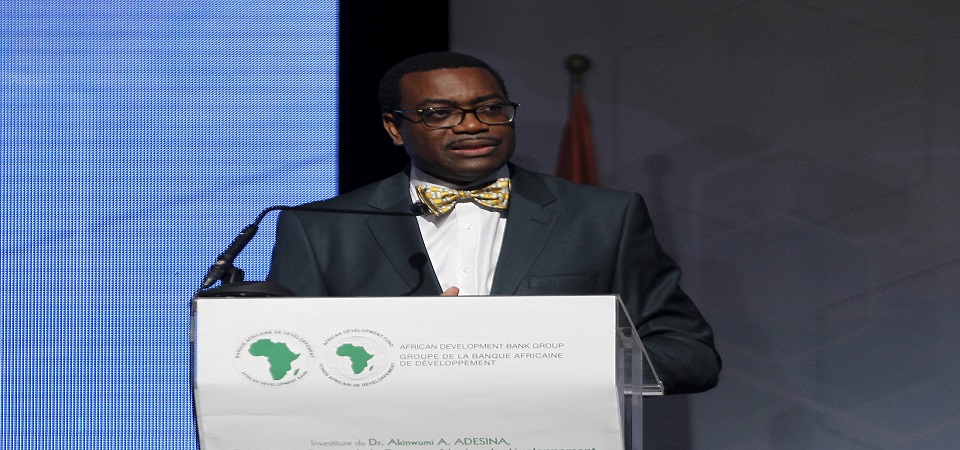
AfDB president Akinwumi Adesina
Akinwumi Adesina

The President of the African Development Bank (AfDB), Dr. Akinwumi Adesina, has issued a stark warning that Nigeria is in the grips of an economic regression deeper than many realize, declaring that the average Nigerian today is poorer than at the dawn of independence in 1960.

Speaking during the 20th-anniversary dinner of investment firm Chapel Hill Denham in Lagos, Adesina laid bare Nigeria’s economic contradictions, drawing attention to the country’s low GDP per capita, which now stands at $824less than half the $1,847 recorded in 1960, when Nigeria gained independence from Britain.

“Our GDP per capita in 1960 was $1,847. Today, it stands at $824. Nigerians are worse off than 64 years ago,” Adesina said in a statement released on Thursday following his keynote address. “Underdevelopment should not be accepted as our destiny. We must break free from this pattern.”

Despite claims by the federal government that its economic reforms will yield a $1 trillion economy by 2030, Adesina warned that Nigeria’s economic structure remains “deeply flawed and unsustainable.” The AfDB chief blamed the country’s economic slide on decades of policy failures, institutional decay, over-dependence on crude oil exports, and an inability to invest meaningfully in critical sectors.

A Country of Wasted Potential

Adesina contrasted Nigeria’s stagnant growth with the meteoric rise of South Korea, a country that had a lower GDP per capita than Nigeria in 1960 but has since industrialized to become a global economic power, with a per capita income of more than $36,000. South Korea’s success, he noted, was driven by a deliberate policy shift that prioritized manufacturing, innovation, and education — areas Nigeria continues to neglect.

“Nigeria belongs in the league of developed nations. To get there, we must shift our mindset and pursue rapid economic growth,” Adesina said. “We must become Africa’s industrial powerhouse.”

The former Nigerian agriculture minister said the current state of Nigeria’s economy — one plagued by deindustrialization, extreme poverty, unreliable power supply, and widespread youth unemploymentis not the result of fate, but of years of neglect and poor leadership.

“The Nigeria of 2050 must be deliberately shaped, developed, corruption-free, and lead the rest of Africa,” he said.

Five Pillars for Economic Redemption

In his speech, Adesina laid out five urgent priorities to pull Nigeria out of its current trajectory and place it on a path to inclusive, sustainable growth:

  1. Universal access to electricity, which he described as non-negotiable for industrialization and innovation
  2. Development of world-class infrastructure, especially in transportation and digital networks
  3. Rapid industrialization that shifts Nigeria’s economy away from primary commodity dependence
  4. Innovation-driven growth, with significant investment in education, research, and technology
  5. Competitive agriculture, not just for food security but as a strategic export sector.

Adesina stressed that these reforms cannot be superficial or cosmetic but must involve deep structural changes supported by effective governance and institutional strength.

“Without credible reforms, Nigeria will continue to miss out on global opportunities and fail its growing population,” he warned.

He cited the Dangote Refinery, Africa’s largest oil refinery, as an example of the kind of private sector-led industrial project that represents a step in the right direction. He urged policymakers to see such projects not as exceptions but as models to replicate and scale up across different sectors.

Funding Transformation Through Domestic Capital

To finance Nigeria’s transformation, Adesina urged the government and private sector leaders to harness the country’s domestic resources, including its massive pension fund assets, which now exceed N19 trillion, its capital markets, and the global Nigerian diaspora. These, he said, should be leveraged to fund large-scale industrial and infrastructure projects, rather than relying excessively on foreign debt or aid.

“There is no shortage of capital. What is missing is the confidence in governance and the consistency of policy that gives investors the courage to commit,” Adesina said.

Governance Still the Elephant in the Room

Adesina was unequivocal in stating that structural reforms alone would not be enough. He emphasized that the success of any economic agenda would depend on the strength of institutions, the rule of law, and the eradication of corruption. Without these, he warned, reforms risk being undermined or reversed.

“This is not just about economic plans. It’s about leadership, integrity, and the political will to do what is right, even when it is hard,” he said.

Adesina’s sobering remarks come on the heels of the World Bank’s April 2025 Africa’s Pulse report, which paints an even grimmer picture of Nigeria’s development path. According to the report, Nigeria is home to 19% of sub-Saharan Africa’s extremely poor population, the highest share in the region. That means roughly one in every seven of the world’s poorest people now lives in Nigeria.

The World Bank noted that sub-Saharan Africa accounted for 80% of the world’s 695 million extremely poor people in 2024, with Nigeria contributing the largest share. The statistics directly challenge claims by Nigerian officials who often tout GDP growth without addressing its failure to reduce poverty and improve human development outcomes.

The collapse of real incomes, double-digit inflation, and currency instability have eroded living standards for millions of Nigerians, many of whom now struggle to afford basic necessities. Despite being a major oil producer, Nigeria remains one of the most energy-poor countries in the world, with over 90 million people lacking reliable electricity.

Adesina’s message, that Nigeria is poorer today than it was 64 years ago, directly contradicts decades of government rhetoric celebrating nominal economic expansion. Amid growing public disillusionment with the political and economic elite, he urged the Nigerian leadership to up the ante.

“We cannot continue to squander our potential. The time to act is now,” he said.

How To Bet On Kentucky Derby 2025 In Illinois

0

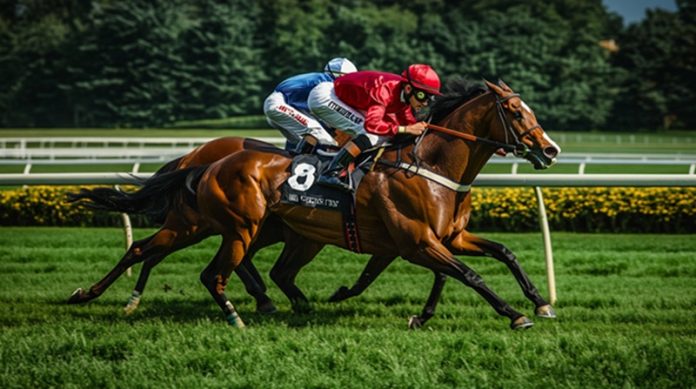
The 2025 Kentucky Derby is upon us, and the most famous race of them all is scheduled to take place on Saturday, May 3rd in Louisville.

Residents of Illinois can get in on the betting action with TwinSpires, but there are other options in the sportsbook market that are featuring big bonus bets this year. Offshore sportsbooks to bet on the Kentucky Derby like BetOnline have more than $5,000 in free bets available to new users, who can place wagers straight from the comfort of their own homes no matter where the location.

Read below and learn how to bet on the 2025 Kentucky Derby in Illinois, and claim up to $5,000 in promotional bets.

How To Bet On Kentucky Derby 2025 in Illinois

  1. Click here to get $250 in free bets at BetOnline
  2. Sign up and deposit $50 or more
  3. Get your free bets
  4. Place wagers on the 2025 Kentucky Derby

Best Kentucky Derby 2025 Betting Offers In Illinois

  1. BetOnline$250 in free bets for Kentucky Derby 2025
  2. BetUS125% bonus, up to $2,625 on your first 3 deposits
  3. BetWhale$1,250 Kentucky Derby betting offer
  4. MyBookie$1,000 horse racing betting offer
  5. BetNow$500 Kentucky Derby bonus

1. BetOnline — $250 in free bets for Kentucky Derby 2025

One of the best and longest running betting options for the 2025 Kentucky Derby is BetOnline. This year, new users can earn up to $250 in free bets upon enrollment, and without any hidden rollover requirements. All it takes is a minimum of a $50 initial deposit. They are also featuring Kentucky Derby betting contests with over $20,000 in prize money set to be given away.

Why Sign Up For BetOnline?

  • Available in all 50 U.S. states
  • Better Kentucky Derby odds
  • Sign-up bonus has 1x rollover requirement
  • Fast payouts and secure payment methods

Join BetOnline Now!

2. BetUS — 125% bonus, up to $2,625 on your first 3 deposits

BetUS has been a mainstay in the industry, and are featuring arguably the best promotions for this year’s Kentucky Derby. They not only have a 125% deposit match bonus, but the offer is eligible for your first three deposits, worth up to $2,625 in free bets. A crypto bonus is available as well, which gives users of the currency a 200% boost upon deposit. It doesn’t stop there, though, as there is also a 300% bonus for referring a friend.

Why Sign Up For BetUS?

  • Huge welcome bonus offer on first 3 deposits
  • Competitive Kentucky Derby odds
  • 200% crypto deposit bonus
  • 300% refer-a-friend bonus

Join BetUS Now!

3. BetWhale — $1,250 Kentucky Derby betting offer

BetWhale has one of the easiest to use mobile platforms of the available options, and have an extensive betting menu for the 2025 Kentucky Derby. But it is their deposit bonus for this year’s big event that make them a solid choice, as they are offering a promotion of free bets that is worth up to $1,250. They also feature fast and secure payouts, which is an important aspect when deciding on which option to select.

Why Sign Up For BetWhale?

  • Up to $1,250 in welcome bonuses
  • Full range of Derby betting options
  • Fast, secure payouts
  • Mobile-friendly platform

Join BetWhale Now!

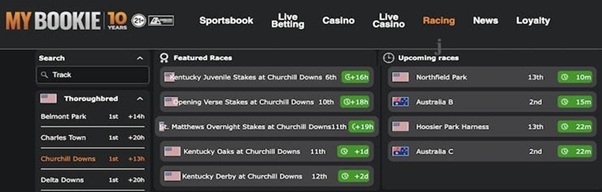
4. MyBookie — $1,000 sports betting offer

MyBookie is one of the most trusted sites when it comes to sports wagering of any kind, and hose racing fans in Illinois should take advantage this weekend. New members can earn a 100% welcome bonus on their first deposit, which is worth up to $1,000 in free bets. They have one of the deepest betting menus, which include bets like exatcas, trifectas, and more for this year’s Run for the Roses.

Why Sign Up For MyBookie?

  • Trusted betting site for U.S. players
  • $1,000 welcome bonus offer
  • Wide variety of horse racing bets
  • Better odds for top contenders

Join MyBookie Now!

5. BetNow — $500 bonus for Kentucky Derby

BetNow has a wide variety of sign-up bonuses. The betting boost for new users is valued at 150% for initial deposits, and there is a 200% bonus for those funding their accounts with cryptocurrency. There is another 200% boost that BetNow is offering, which is available for those who refer a friend to the site.

Why Sign Up For BetNow?

  • 150% deposit bonus up to $500
  • Registration is quick and easy
  • Competitive Derby odds
  • Reliable customer support

Join BetNow Now!

Is It Legal To Bet On Kentucky Derby 2025 In Illinois?

The best Kentucky Derby betting sites according to businessinsider.com is legal in the state of Illinois at a Federal level, and has been since 2020. There are more than a handful of physical locations throughout the state, as well as online betting being available as well. But there are plenty of limitations when it comes to legalized gambling, and bettors may find the offshore sportsbook options to be more advantageous to them.

Potential users of offshore options typically only need to be 18 years old as opposed to 21. There is also the factor of the aforementioned promotions and bonus bets that are available via the non-local options, which are offering more than $5,000 in free wagers this year for the 2025 Kentucky Derby.

Who Can Bet On the Kentucky Derby In Illinois?

  • Must be at least 18 years old
  • Sign up for your sports betting without ssn account with a valid email address
  • Fund your account with an accepted deposit method

Kentucky Derby 2025 Odds

The 2025 Kentucky Derby odds are set following the post position draw. Journalism is currently listed as the overall favorite, featuring +285 odds to nab the first leg of a potential Triple Crown. The favorite hasn’t won the race since 2015, but it is hard to ignore the gap between Journalism and the next horse on the board. Sovereignty is second on the list at +600, with Sandman rounding out the top three while sitting at +1000. Neoequos and Render Judgment are brining up the rear when it comes to the betting odds, as they share the designation of being the biggest long shots at 80-to-1.

Horse Odds
Journalism +285
Sovereignty +600
Sandman +1000
Luxor Cafe +1100
Rodriguez +1400
Burnham Square +1400
Baeza +1400
Final Gambit +1600
Citizen Bull +1800
American Promise +1800
East Avenue +1800
Grande +2000
Tiztastic +2500
Coal Battle +2500
Publisher +3300
Admire Daytona +4000
Flying Mohawk +5000
Chunk of Gold +5000
Owen Almighty +5000
Neoequos +8000
Render Judgement +8000

Kentucky Derby 2025 Picks and Predictions

Sandman is listed at +1000 odds and is third on the betting board this year, and might hold the most value despite others having larger numbers attached. The colt was foaled in 2022, and has started 8 races in its career. All of them have features finishes in the top-5, including three first place finishes, one of them being the Arkansas Derby back in late March. In its five races run since September 2024, Sandman has finished in the top-3 in each.

The value is hard to pass up, as a $100 winning wager on Sandman would net bettors $1,000. 

Kentucky Derby 2025 Prediction: Sandman (+1000)

What Is The Best Betting Site In Illinois For Kentucky Derby 2025?

All in all, potential Kentucky Derby bettors in Illinois are best off using a site like BetUS. The total of over $5,000 in promotions and Kentucky Derby free bets available from the offshore sportsbooks makes going non-local a solid option. These outlets make it easy and fun for Illinois residents to boost their bankroll and maximize profits when betting on free horse racing tips.

Claim $250 in free Kentucky Derby bets!

Fidelity Bank Posts N107.77bn Q1 Profit, Rewarding Investor Confidence Amid Recapitalization Drive

0

Fidelity Bank Plc has opened 2025 with a powerful earnings statement, reporting a pre-tax profit of N107.77 billion for the first quarter, a 167.79% year-on-year leap – signaling that its recent strategic moves, including a successful capital raise, are already delivering returns to investors.

The performance, announced in the bank’s unaudited financial statement for the quarter ended March 31, 2025, confirms a continuation of the bank’s growth trajectory, with earnings underpinned by a sharp increase in interest income, disciplined cost management, and improved asset quality.

The result also bolsters investor sentiment following last year’s oversubscribed public offers and rights issue, which Fidelity Bank launched as part of its plan to meet the Central Bank of Nigeria’s (CBN) N500 billion minimum capital requirement for tier-one banks. The recapitalization directive, issued in March 2024, gave banks a 24-month window to bolster their capital base to improve financial system stability.

Fidelity Bank’s combined capital raise via public offer and rights issue, which closed in late 2024 — drew massive interest from investors, who were betting on the bank’s profitability and management’s strategy. This Q1 result now serves as proof that those bets are beginning to pay off. Fidelity Bank raised a total of N231.97 billion through its public offer. The offer received applications for 23.79 billion shares valued at N231.97 billion. The bank initially aimed to raise N97.5 billion through the public offer, with a total capital raise of N127.1 billion including a rights issue.

Core Earnings Drive Profit Surge

Gross earnings rose to N315.42 billion in Q1 2025, a 64.21% increase from the N192.1 billion recorded in the same period last year. The bulk of this came from interest income, which surged 65.44% year-on-year to N281.47 billion. Notably, 75% of interest income came from loans and advances to customers, affirming the bank’s aggressive but disciplined lending stance. Investment in securities added another 18.31% to interest income.

At the same time, interest expenses rose to N90.65 billion, a 28.58% increase, largely due to rising deposit rates. However, this accounted for just 32% of total interest income, a marked improvement from 41.14% in Q1 2024, meaning Fidelity is now retaining a greater share of its income.

Net interest income jumped 91.52% to N190.82 billion, while net interest income after credit loss provisions grew 111.45% to N184.53 billion. The bank’s cost of risk fell significantly, with credit loss expenses dropping by nearly half to N6.28 billion, down from N12.37 billion a year earlier — indicating fewer bad loans and improved loan book quality.

Non-Interest Income and Fee Growth

Fidelity Bank also made significant headway in its non-lending business. Fees and commission income rose 30.10% year-on-year to N23.82 billion. While income from account maintenance fees slightly declined, the bank saw a 57% jump in earnings from traveler’s cheques and foreign bills and a 23.38% increase in commissions from letters of credit. Fee and commission expenses, however, rose by 37.56% to N2.67 billion.

Ultimately, net profit for the period rose to N91.10 billion, up from N31.44 billion in Q1 2024 — a growth of 189.75%. This translated to earnings per share of N1.81, representing an 84.69% improvement from N0.98 recorded a year earlier.

Balance Sheet Expansion and Liquidity Strength

Fidelity Bank’s balance sheet continues to expand at pace. Total assets climbed to N10.45 trillion, representing an 18.48% growth from the same quarter in 2024. The bank also recorded a sharp increase in cash and cash equivalents, which jumped by 128.90% to N1.62 trillion — a key indicator of the bank’s healthy liquidity position.

Loans and advances to customers rose 4.96% to N4.61 trillion, underlining controlled lending growth despite aggressive interest income expansion. Customer deposits also grew by 11.15% to N6.60 trillion, reflecting sustained depositor confidence and strong mobilization of retail and institutional funds.

Shareholders’ funds rose slightly by 3.39% to N933.14 billion, boosted by retained earnings and capital injection from the recently concluded public offers.

A Payout for Investor Faith

With its Q1 profit now standing at over N107 billion, roughly 75% of its full-year 2024 pre-tax earnings of N140 billion, Fidelity has effectively rewarded investor confidence just months after their commitment. The performance suggests the bank is on track to deliver another record-breaking year.

The Q1 earnings also improve the bank’s capacity to retain profits for future capital buffers while maintaining dividend potential — a key attraction for retail shareholders.

On the Nigerian Exchange (NGX), Fidelity Bank began the year trading at N17.50 per share. As of the close of Q1 2025, the stock had gained 14%, making it the 48th best-performing stock on the exchange in year-to-date rankings. This upward movement mirrors growing investor optimism, especially as the broader banking sector enters a period of transformation under the CBN’s capital restructuring directive.

Analysts say Fidelity Bank’s result strengthens its positioning to become one of the strongest indigenous players in the tier-one banking space. Its ability to mobilize deposits, grow interest income, maintain cost discipline, and manage risk effectively, while also attracting market capital, puts it in a favorable spot as Nigerian banks adjust to tougher regulatory and economic conditions.