DD
MM
YYYY

PAGES

DD
MM
YYYY

spot_img

PAGES

Home Blog Page 1252

Global Payment Service Provider SPAYZ.io Expands Operation Into Three Dynamic African Markets

0
A customer makes a purchase. 

SPAYZ.io, a global payment service provider that enables hassle-free payment acceptance and growth in the Asian, African, and European markets, has expanded operations into three dynamic African markets, South Africa, Egypt, and Cameroon.

This marks a major step forward in its mission to deliver localized payment solutions across high-growth regions in Africa. As it continues to scale, its focus remains on empowering businesses with region-specific infrastructure that meets the needs of modern commerce.

Speaking on SPAYZ.io expansion to these African markets, Dmitrii, Head of Strategic Partnerships said,

“It is important that we don’t rush into new markets just for the sake of expansion. Instead, we take a deliberate and thoughtful approach to growth that is long-term, ensuring our payment solutions are stable and easy to access. Every market we enter is the result of careful research, strategic planning, and a deep understanding of the local ecosystem. It’s the reason why Africa is a priority region for us. Our planned launches in South Africa, Egypt, and Cameroon reflect our approach. We are giving our clients access to markets with a burgeoning consumer base, driven by the rapid adoption of new technologies. I look forward to seeing the new opportunities these launches will open to our partners and look forward to discussing our plans during our participation at FMAS later this month.”

SPAYZ.io’s launch in these African countries comes after the company earlier this month, expanded operations to Nigeria, Japan, and the Philippines, providing merchants access to high-growth markets through innovative financial solutions.

Africa is currently attracting mounting interest from merchants seeking access to some of the region’s fastest-growing, consumer-led markets. The adoption of digital payments and the transition away from physical cash has sparked domestic demand for online transactions that cater to local payment methods.

SPAYZ.io has revealed a commitment to enhance financial transactions across the African continent, providing seamless and efficient payment methods that cater to the needs of consumers alike. The payment provider offers a range of payment solutions designed to facilitate secure and efficient transactions for businesses, particularly in Asian, African, and European markets.

Their offerings include the following:

QR Code Payments: Allows users to scan a QR code for instant, secure transactions.

Bank Card Processing: Supports quick and secure processing for major international credit and debit cards, compliant with PCI DSS standards.

E-Wallets: Provides fast and easy electronic transactions for users without online bank accounts, including services like GCash P2P in the Philippines, Jazzcash and Easypaisa in Pakistan, Touch’n’Go and FPX in Malaysia, Dana and OVO in Indonesia, and MobileMoney and Viettel in Vietnam.

Online Banking/Internet Banking: Enables customers to access bank accounts and make transactions via mobile devices or computers.

Payment Acquiring: Simplifies accepting payments from customers securely through SPAYZ.io’s platform.

Open Banking: A flagship solution for the EU, offering seamless integrations and compliance with PSD2 regulations for enhanced security and customer experience.

Local Bank Transfers: Supports pay-in and payout transactions, such as EFT Bank Transfers in South Africa and bank transfer services in Nigeria.

Mobile Money Solutions: Available in markets like Egypt, Cameroon, Kenya (M-Pesa), Ghana, and Congo, catering to regions with high mobile money adoption.

API Integration: Allows businesses to integrate SPAYZ.io’s payment solutions into their CRM systems, with access to a merchant account for monitoring operations and API keys.

SPAYZ.io is on a mission to redefine the world of payments. By offering innovative, secure, and scalable payment solutions, we’re helping businesses navigate the complexities of global finance with ease. Its commitment to excellence and our passion for technology drive us to constantly evolve and adapt to the needs of its clients.

4 Top Crypto Gems to Buy Now for Massive Gains: BlockDAG, AVAX, BNB & TRON!

0

With changing narratives shaping the market and buyers focusing on real results instead of hype, timing your entry point has become critical. Whether aiming for short-term gains or building a longer strategy, narrowing down the top crypto gems to buy now depends on three main factors: real use, easy access, and growth potential.

Some coins are securing major exchange listings, while others grow by forming partnerships and driving regular user activity. This article highlights four options gaining traction, BlockDAG, Avalanche, BNB, and TRON. Each has a unique strength, and all are being looked at as top crypto gems to buy now before the next big market jump.

1.  BlockDAG: Price Frozen at $0.0020 and Raised $269M

BlockDAG keeps surprising the market with its strong presale, having already raised $269 million and sold more than 21.2 billion BDAG coins. The current price is fixed at $0.0020 until June 13, and with a confirmed launch price of $0.05, there’s a potential for 2,400% gains. The network runs on a combined model of Directed Acyclic Graph (DAG) and Proof-of-Work, offering both speed and security. Its testnet is already active, including features like a no-code dApp creator and a refreshed blockchain explorer. Over 1 million users are now mining BDAG through the X1 crypto mining software, and more continue joining.

The project has sold more than 17,600 ASIC miners and is preparing for its listing on 20 centralized platforms such as MEXC, LBank, BitMart, and Coinstore. These listings will go live right after the presale ends. Partnerships with Inter Milan and UFC fighter Alex Pereira have improved its reach.

What sets BlockDAG (BDAG) apart is its working system, wide promotions, and real user data. With the entry price still open and listings locked in, BDAG stands as one of the few coins still offering meaningful early access. That’s why many consider it a top crypto gem to buy now before the next big price rally.

2.  Avalanche: Increased Whale Activity Boosts Confidence

Avalanche (AVAX) trades at $22.25 after falling 3.76% in the past 24 hours. Despite the dip, big holders are buying in large amounts. Net inflows are up by 380%, suggesting experienced buyers are preparing early. Analysts see AVAX hitting $27 soon, with some aiming as high as $55 in the near future.

Support from the VanEck Web3 Fund and continued progress with its Fusion program are bringing more attention from DeFi projects and institutional players. Avalanche’s growing ecosystem and quiet upward trend keep it listed among the top crypto gems to buy now, especially for those watching background signals like accumulation and developer activity.

3.  BNB: Reliable Utility Supports Its Price

BNB trades at about $602 and is holding up well compared to other large caps. What keeps BNB stable is its strong use across Binance, from lower trading fees to rewards from burns and staking. Even when the market dips, BNB stays active, and this built-in use is what helps it stay strong.

Though it hasn’t made big moves recently, BNB still ranks on many lists of top crypto gems to buy now for those who want something stable. It’s not a coin expected to spike overnight, but with global rules getting clearer, BNB’s purpose and backing from Binance make it a strong option to hold over time.

4.  TRON: Real-World Use Adds Strength

TRON (TRX) is priced at $0.115 with a modest 0.49% gain today. Though it’s not making headlines, TRON continues showing steady use across its network. It’s a major option for USDT transactions and has a strong base in Asia and Latin America. This everyday use gives TRON a strength that many other coins don’t have.

The project also sees steady work from developers and has grown its DeFi space by adding more apps and protocols. These elements are why TRX is often counted among the top crypto gems to buy now for those looking at coins with real daily use. It may not rise fast, but its base and use case make it a strong choice.

Wrapping Up!

Each coin here brings something different. Avalanche is seeing more big holder action, BNB keeps its value with steady Binance use, and TRON adds real-world activity and DeFi growth. But BlockDAG is showing another level of progress.

With $269 million raised, a locked presale price of $0.0020, and 20 exchange listings nearing, BDAG is giving early buyers special access before it hits $0.05. Its testnet is working, hardware has been sold, and the number of users is rising. These steps aren’t future plans, they’re already happening. That’s what puts BlockDAG among the top crypto gems to buy now. With only a short window before listings begin, it could be the last low-price entry available.

#1 Challenge in the Nigerian Entrepreneurial Startup Ecosystem Right Now

0

Good People, share with us what you think is the #1 challenge in the Nigerian entrepreneurial startup ecosystem right now? [Note: I do not mean “SME” or “small business”, I mean “startup”, and typically the bulk of the funding for this has been priced in US dollars in Nigeria]

I will begin by listing Currency. Why is that the case? Let me explain with math.

April 2023: Startup A reports N1,500,000,000 for Feb; log that as $3 million revenue. (N500/$ exchange rate)

Dec 2024: Startup A reports N3,000,000,000 for Nov; log that as $2 million. (N1,500/$ exchange rate)

So, even though this company has grown revenue by 2X, but at a dollarized pricing, its revenue is down by 50%. And using revenue multiples in calculating valuation, this company has to be marked down. In other words, if the multiple is 10 at $3m revenue, you must still use the same factor when it is $2m. And just like that,  you see valuation move from $30m to $20m despite the revenue growth!

Also, because this currency mess is beyond the startups, they cannot control the trajectory considering the fact that everything is priced in USD. As that happens, foreign investors who fund these startups stay away, and since rich people in Nigeria do not invest in startups, the system fails. You may ask: why not price in Naira? The problem is that most great startups in Nigeria have since japa’d to Delaware USA, and not legally Nigerians! Solution to this? I have shared here.

What other challenges do you see there?

What Nigeria Can Do To Save Naira Right Now

Speaker Abbas Bows to Pressure, Withdraws Mandatory Voting Bill Amid Backlash over Nigeria’s Broken Electoral System

0

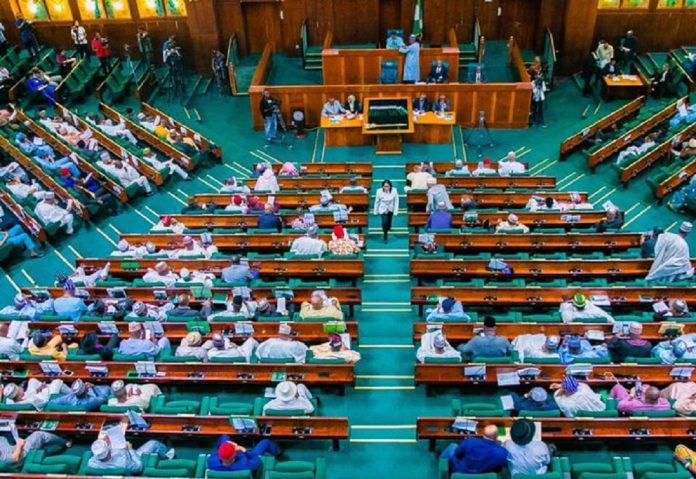
Tajudeen Abbas, Speaker of Nigeria’s House of Representatives, has withdrawn a controversial bill that sought to make voting compulsory for all eligible citizens, a move that marks a dramatic climbdown in the face of widespread public criticism.

The bill, co-sponsored by Abbas and Daniel Asama Ago, the lawmaker representing Bassa/Jos North federal constituency in Plateau State, had already passed a second reading in the green chamber on May 15.

The proposed legislation aimed to amend the Electoral Act 2022 by criminalizing voter apathy and compelling participation through fines and jail time. Specifically, it proposed a six-month jail sentence or a fine of N100,000 for eligible voters who failed to cast their ballots during elections.

According to Ago, the legislation was intended to address Nigeria’s chronic voter apathy, citing the dismal turnout figures recorded in recent elections. He argued that compulsory voting would not only enhance civic engagement and democratic representation but also curb vote-buying by increasing the voter pool. Ago’s position, he said, was based on the principle that democracy is weakened when only a fraction of the population decides the fate of the entire nation.

However, those lofty intentions met a wall of public resistance, with critics arguing that the bill missed the point entirely.

Why the Bill Collapsed

The core of the backlash, which ultimately forced the withdrawal of the bill, was rooted not in the rejection of civic responsibility, but in widespread frustration with the state of Nigeria’s electoral process. Many Nigerians, including civil society organizations (CSOs), lawyers, and political commentators, pointed out that voter apathy is not the disease — it is a symptom of a deeper institutional crisis.

They note that in a country where rigging, ballot snatching, voter intimidation, falsification of results, and widespread irregularities routinely mar elections, compelling citizens to vote under threat of punishment seemed not just misplaced, but absurd.

The Nigerian Bar Association (NBA) was among the most vocal opponents of the bill, calling it “regressive” and in direct conflict with constitutional protections.

“The NBA finds it unacceptable that a democratic government would seek to criminalize non-participation in an electoral process marred by voter apathy, mistrust, insecurity, and systemic failures. Instead of fixing the conditions that discourage voter turnout, such as electoral violence, vote buying, among others, the state is attempting to force participation through punitive legislation,” the association said, warning that coercion undermines the principles of a free and fair democratic process.

Civil society groups and rights activists similarly noted that instead of criminalizing abstention, the National Assembly should focus its energy on electoral reforms that guarantee that every vote counts. These groups cited the 2023 general elections, where over 93 million people were registered to vote, but less than 30% actually turned out, as a glaring example of the credibility gap plaguing Nigeria’s democracy.

Many of those who stayed away in 2023 did so out of despair. Despite technological improvements like the Bimodal Voter Accreditation System (BVAS) and promises of real-time result transmission, the elections were still widely criticized for lacking transparency. The Independent National Electoral Commission (INEC) failed to upload results as promised, and courts later decided several outcomes, further damaging public trust in the process.

In that context, it is believed that forcing people to vote felt not like empowerment, but like punishment.

Speaker Abbas Walks Back

In a statement issued Monday by his spokesperson Musa Krishi, Speaker Abbas said the bill was being withdrawn after “extensive consultations with a broad spectrum of stakeholders.” He said the original intention of the bill was noble — to bolster democracy by encouraging mass participation — and drew examples from countries like Australia, Belgium, and Brazil, where compulsory voting laws have pushed turnout rates above 90%.

“Nevertheless, the Speaker acknowledges that lawmaking is ultimately about the people it serves and that any reform must respect individual freedoms and public sentiment,” the statement read.

Abbas added that instead of forcing participation, the National Assembly would now explore “positive incentives and innovative approaches” to make voting more appealing and accessible. The decision to pull the bill, he said, would open space for “further dialogue” on how to encourage voluntary civic participation in a way that aligns with Nigeria’s democratic values.

A System Many Believe is Already Rigged

Underlying this entire debate is the backdrop of the notion that in Nigeria, elections are not always won by the people’s vote.

It’s a sentiment echoed across the country, in public discourse, social media commentary, and community forums — that elections often reflect the will of those who can manipulate the system, not the will of the people.

Even the introduction of the Electoral Act 2022, touted as a major reform, has failed to guarantee credible outcomes. The use of technology, though promising in theory, has been undermined by human interference and institutional failures. Political thuggery, vote suppression, and the widespread belief that the courts, rather than voters, decide the outcome of elections have all contributed to an erosion of faith.

Analysts say the National Assembly should now turn its attention to enforcing existing electoral laws, strengthening the independence of INEC, sanitizing political financing, and punishing electoral offenders.

Remittance Inflows to Nigeria Hit $328.76M in First Four Months of 2025 Amid U.S. Tax Concerns

0

A recent report revealed that Nigerians living abroad sent a total of $328.76 million in direct remittances back home between January and April 2025.

According to data from the Central Bank of Nigeria (CBN), inflow began at $54.44 million in January, then surged to $125.59 million in February, representing a more than 130 percent increase and the highest monthly inflow recorded this year.

However, the upward trend slowed in March, with remittances dropping to $110.98 million, and further declined in April to $37.75 million, the lowest monthly figure year-to-date.

With the U.S. proposing a 5% remittance tax, analysts suggest that it may likely impact inflows for the next month. Recall that earlier this month, the Trump administration proposed a bill titled “The One Big Beautiful Bill”, seeking to place a 5% excise tax on all International money transfers sent by non-citizens from the U.S. to other countries. For the millions of Nigerian migrants who send money home to support families or invest in their country of origin, this could mean billions of dollars in new costs.

The United States is the largest source of remittances to Nigeria. According to the World Bank and other sources, the U.S. consistently leads as the top remittance-sending country globally, with a significant portion directed to Nigeria. In 2023, Nigeria received about $19.5 billion in remittances, with approximately 60% of these flows coming from the U.S. and the U.K. combined, and the U.S. contributing the largest share due to its sizable Nigerian diaspora, estimated at over 5 million people.

It is however worth noting that the steady increase of remittances to Nigeria is driven by the increasing adoption of mobile money payment systems. Over the past five years, Nigeria has received over $99 billion in diaspora remittances, underscoring the significant role of the Nigerian diaspora in the country’s economic landscape. 

To enhance efficiency and security within the payments ecosystem, countries like Nigeria and South Africa have strengthened industry regulations to curb fraud and enhance cybersecurity. The positive impact of these measures extends beyond traditional financial services, influencing the adoption of virtual assets and increasing regulatory attention to
cybersecurity development.

In 2024, Nigeria recorded total remittance inflows of $20.98 billion, the highest level in five years and a 9 percent year-on-year increase. Formal remittance channels saw a significant 43 percent growth, rising from $3.3 billion to $4.73 billion. This growth, according to CBN Governor Olayemi Cardoso, was driven by reforms such as the “willing buyer, willing seller” forex regime, increased licensing of International Money Transfer Operators (IMTOs), and currency convergence.

Also, Cardoso attributed the improvement in remittances to recent economic reforms, noting a remarkable rise in monthly remittance inflows from $250 million earlier in 2024 to $600 million by September 2024. He explained that more Nigerians in the diaspora are choosing formal channels to remit funds, thanks to new CBN policies that have made official remittance platforms more appealing.

To further boost inflows, the CBN has rolled out several initiatives, including the introduction of the Non-Resident Bank Verification Number (NRBVN), aimed at achieving a bold target of $1 billion in monthly remittances. The Bank is also promoting the use of the Non-Resident Ordinary Account (NROA) and the Non-Resident Nigerian Investment Account (NRNIA), which channel diaspora funds into productive sectors such as capital markets, real estate, insurance, and pensions.

Notably, Governor Cardoso emphasized the need to move beyond viewing remittances merely as a source of consumption support. “These flows can be transformative if properly harnessed,” he said.