DD
MM
YYYY

PAGES

DD
MM
YYYY

spot_img

PAGES

Home Blog Page 1259

Mastercard to Support Stablecoin Payments Globally

0

Mastercard announced a comprehensive global initiative to support stablecoin payments, enabling seamless transactions from digital wallets to merchant checkouts at over 150 million locations worldwide. This “360-degree approach” includes wallet enablement, card issuance, merchant settlement, and on-chain remittances.

Key partnerships with crypto platforms like MetaMask, Kraken, Gemini, Bybit, Crypto.com, Binance, Monavate, Bleap, OKX, Nuvei, Circle, and Paxos facilitate this ecosystem. Consumers can spend stablecoins via Mastercard-branded cards, such as the OKX Card, and withdraw them to bank accounts.

Merchants can receive payments in stablecoins like USDC and USDP, regardless of payment method. Mastercard’s Multi-Token Network (MTN), launched in 2023, supports real-time settlements across currencies. This move positions Mastercard as a leader in bridging traditional and digital finance amid growing stablecoin adoption.

Mastercard’s stablecoin payment support, significantly impacts crypto payments and DeFi by bridging traditional finance and blockchain ecosystems. Enabling stablecoin payments at over 150 million Mastercard-accepting merchants globally mainstreams crypto use. Consumers can spend stablecoins like USDC and USDP directly from digital wallets (e.g., MetaMask, OKX) via Mastercard-branded cards, making crypto a practical payment option.

Integration with platforms like Binance, Kraken, and Crypto.com simplifies spending, with features like card issuance and ATM withdrawals. This reduces friction for non-crypto-native users, encouraging broader adoption. Merchants can accept stablecoin payments without needing blockchain expertise, as Mastercard handles settlement in stablecoins or fiat. This expands crypto’s utility in retail, e-commerce, and remittances.

By supporting regulated stablecoins, Mastercard mitigates volatility concerns, making crypto payments more appealing for everyday transactions compared to volatile assets like Bitcoin. Partnerships with Circle, Paxos, and others leverage Mastercard’s Multi-Token Network (MTN) for real-time, cross-currency settlements, enhancing efficiency in global crypto transactions.

Mastercard’s infrastructure connects DeFi wallets to traditional payment rails, enabling DeFi users to spend on-chain assets in real-world scenarios. This integration could drive DeFi protocol usage for payments and remittances. Increased stablecoin circulation through Mastercard’s network enhances liquidity in DeFi ecosystems, as users move funds between DeFi platforms and merchant payments seamlessly.

Support for on-chain remittances via stablecoins reduces reliance on centralized intermediaries, aligning with DeFi’s ethos of decentralization while leveraging Mastercard’s global reach. Partnerships with DeFi-adjacent platforms (e.g., MetaMask, Bybit) may spur new financial products, such as DeFi-based lending or yield farming tied to stablecoin payment flows.

Mastercard’s focus on compliant stablecoins (e.g., USDC, USDP) could push DeFi projects toward regulatory frameworks, fostering trust but potentially limiting fully decentralized protocols. Mastercard’s move may pressure competitors like Visa (already active in crypto) to accelerate their blockchain initiatives, intensifying innovation in crypto payments.

Stablecoin transaction volumes could surge, benefiting issuers like Circle and Paxos. However, non-stablecoin cryptocurrencies may see reduced payment use due to volatility. While integration boosts DeFi’s reach, reliance on centralized players like Mastercard could raise concerns about centralization among DeFi purists.

Increased stablecoin use may influence monetary policies, as central banks monitor their impact on fiat systems, potentially accelerating CBDC development. Mastercard’s initiative accelerates crypto payment adoption by making stablecoins a viable, mainstream option while enhancing DeFi’s real-world utility. However, it may favor regulated, centralized stablecoins over fully decentralized DeFi protocols, shaping the ecosystem’s evolution.
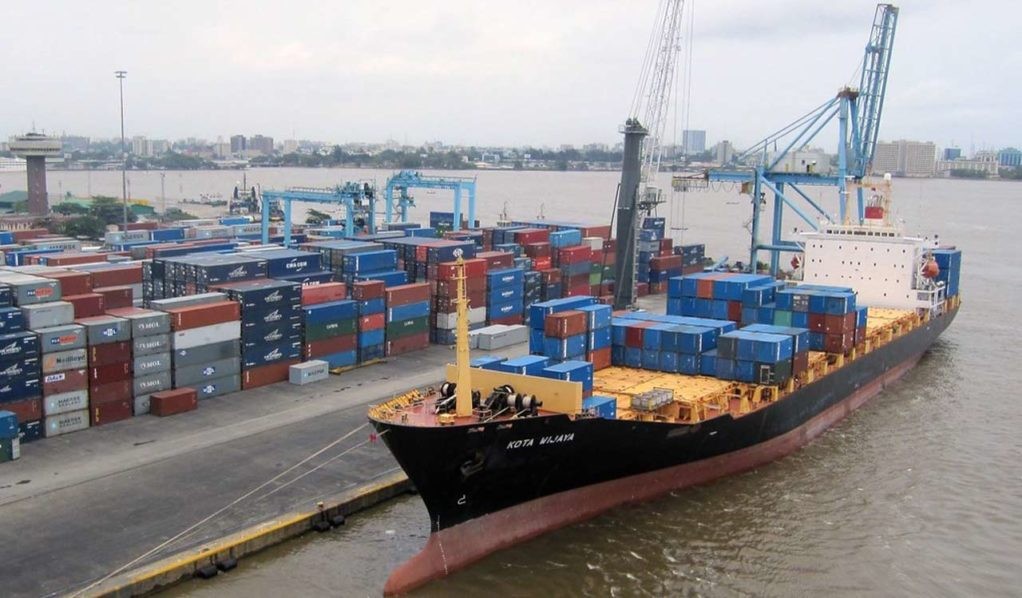
NEPC Reports $1.791bn Surge in Non-Oil Exports as Nigeria’s Economic Diversification Drive Gets Boost from PAPSS and AfCFTA

0

Nigeria’s push to diversify its economy away from oil dependency gained fresh momentum in the first quarter of 2025, with non-oil exports surging by nearly 25% compared to the same period last year.

According to the Nigeria Export Promotion Council (NEPC), the country recorded $1.791 billion in non-oil exports between January and March 2025 — up from $1.436 billion in Q1 2024.

The Council’s Director-General, Dr. Nonye Ayeni, revealed this during the public presentation of the First Quarter Progress Report on Non-Oil Export Performance in Abuja on Monday. She described the uptick as a promising signal of growth in Nigeria’s export diversification agenda.

“In the first quarter of 2025, a total of 197 distinct products were exported,” Ayeni said, a clear improvement from the 162 products recorded in Q1 2024. The list includes manufactured and semi-processed goods, industrial extracts, and a wide range of agricultural commodities.

Cocoa and its derivatives — cocoa butter, cocoa liquor, and cocoa cake — were the dominant exports, making up 45.02% of the total. Urea/fertilizer followed with 19.32%, while cashew nuts accounted for 5.81%. Other key products included sesame seeds, soya bean meal, rubber, gold dore, aluminum ingots, and copper ingots.

The volume of exports also rose sharply. According to the NEPC, Nigeria shipped out 2.416 million metric tons of non-oil products in the quarter — a staggering 243.44% increase from the 1.937 million metric tons reported in Q1 2024. Dr. Ayeni said the leap indicates that more stakeholders are tapping into the country’s expanding non-oil export landscape.

Corporate exporters such as Indorama Eleme Fertilizer and Chemical Ltd, Starlink Global and Ideal Ltd led the charge, contributing 12.07% and 10.00% respectively of the total export value.

Boost from PAPSS and Regional Integration

While the export gains highlight growing confidence in Nigeria’s non-oil sector, they also reflect broader efforts by the Bola Tinubu administration to embed Nigeria more firmly into regional and continental trade frameworks.

One of the key pillars designed to support this effort is the Pan-African Payment and Settlement System (PAPSS), a cross-border financial infrastructure designed to facilitate payments in local currencies across African nations. PAPSS allows businesses to settle transactions efficiently, reduce costs, and mitigate currency risks by eliminating the need for third-party currencies like the U.S. dollar in intra-African trade.

The NEPC report noted that Nigeria’s exports to 10 ECOWAS countries grew significantly — reaching $63.060 million in Q1 2025, an increase of 223.10% from the $19.517 million recorded in the same period last year. Exports to other African countries stood at $32.732 million, representing 1.83% of total non-oil exports.

Officials believe there will be improvement in the next quarter due to the PAPSS initiative, which has been promoted as a major lever under the African Continental Free Trade Area (AfCFTA). Launched by the African Export-Import Bank (Afreximbank) in collaboration with the African Union and AfCFTA Secretariat, PAPSS aims to harmonize trade payments, improve liquidity, and strengthen economic integration across the continent.

Through PAPSS, Nigeria is positioning itself to capitalize on AfCFTA’s goal of creating a single market of over 1.3 billion people with a combined GDP of over $3 trillion. In practical terms, this could mean faster transactions, lower banking fees, and improved competitiveness for Nigerian exporters within the continent.

Dr. Ayeni emphasized that the NEPC is working closely with the Federal Ministry of Industry, Trade and Investment to drive the implementation of export-focused initiatives. This includes scaling up trade facilitation, simplifying export documentation, improving logistics infrastructure, and expanding support to small and medium-scale exporters.

In January, the NEPC reported the highest annual non-oil export value in its 49-year history — rising from $4.517 billion in 2023 to $5.456 billion in 2024, a year-on-year increase of 20.77%. The Q1 2025 numbers suggest that the country may be on course to surpass last year’s figures if the current momentum is sustained.

“The Council’s strategy aligns with the national agenda to diversify Nigeria’s economy, reduce over-reliance on oil revenues, and build a more sustainable, export-driven economy,” Ayeni said.

Analysts say that by coupling export growth with tools like PAPSS and strategic engagement with AfCFTA, Nigeria is gradually beginning to shift the structure of its trade relationships — from oil-centric exports to a broader portfolio of value-added products across multiple African markets.

Alibaba Unveils Qwen3 Next-Generation Open-Source Large Language Model, Intensifies China’s AI Advancement

0

Alibaba, China’s largest e-commerce company, has introduced Qwen3, the latest iteration of its open-source Qwen family of large language models.

According to a blog post, Qwen3 delivers significant advancements in reasoning, instruction following, tool usage, and multilingual capabilities, positioning it as a strong competitor to leading models like DeepSeek’s R1, o1, o3-mini, Grok-3, and Gemini-2.5-Pro across various industry benchmarks. The flagship model, Qwen3-235B-A22B, excels in coding, mathematics, and general tasks.

Part of the post reads,

Today, we are excited to announce the release of Qwen3, the latest addition to the Qwen family of large language models. Our flagship model, Qwen3-235B-A22B, achieves competitive results in benchmark evaluations of coding, math, general capabilities, etc., when compared to other top-tier models such as DeepSeek-R1, o1, o3-mini, Grok-3, and Gemini-2.5-Pro. Additionally, the small MoE model, Qwen3-30B-A3B, outcompetes QwQ-32B with 10 times the activated parameters, and even a tiny model like Qwen3-4B can rival the performance of Qwen2.5-72B-Instruct.”

Alibaba noted that it believes that the release of Qwen3 will significantly advance the research and development of large foundation models. It further emphasized that the goal of the model is to empower researchers, developers, and organizations worldwide to build innovative solutions using these cutting-edge models.

Key Features of Qwen 3

Hybrid Thinking Modes

Qwen3 introduces a dual-mode approach to problem-solving:

Thinking Mode: Enables step-by-step reasoning for complex tasks, ideal for in-depth problem-solving.

Non-Thinking Mode: Delivers near-instant responses for simpler queries, prioritizing speed.

This hybrid design allows users to adjust the model’s “thinking” based on task complexity, ensuring efficient resource use. Qwen3’s performance scales smoothly with the allocated computational reasoning budget, enabling users to balance cost and inference quality effectively.

Multilingual Support

Qwen3 supports 119 languages and dialects, enhancing its applicability for global users and diverse international applications.

Enhanced Agentic Capabilities

Optimized for coding and agentic tasks, Qwen3 also strengthens support for Multi-Context Processing (MCP). These improvements enable the model to interact more effectively with its environment, offering robust performance in dynamic scenarios.

Agentic Usages

Qwen3 excels in tool calling capabilities. This Qwen-Agent encapsulates tool-calling templates and tool-calling parsers internally, greatly reducing coding complexity.

Qwen Intensifies China’s AI Advancement

AI analysts disclosed to CNBC that Alibaba’s Qwen3 represents a serious challenge to the company’s counterparts in China, as well as industry leaders in the U.S.

China’s AI landscape is increasingly competitive as competitors like Baidu have also rushed to roll out new AI models after the emergence of DeepSeek, in early 2025 particularly its open-source R1 and V3 models spurring rapid advancements. Alibaba’s Qwen3 release reflects the intense pressure to innovate.

Other Chinese tech giants, are also accelerating their AI efforts. Baidu released a multimodal foundational model and a reasoning-focused model in March 2025, while ByteDance updated its flagship model to outperform OpenAI’s o1 in certain benchmarks.

Despite U.S. restrictions on advanced semiconductors since 2022, which limit access to Nvidia’s high-end chips and chip-manufacturing equipment, Chinese AI firms like Alibaba have shown resilience. Qwen3’s success, particularly its cost-efficient MoE models, demonstrates China’s ability to innovate under constraints, raising questions about the long-term efficacy of U.S. export controls.

Analyst Ray Wang notes that Qwen3 underscores the “strong capabilities of Chinese labs to develop highly competitive, innovative, and open-source models” despite these challenges.

Alibaba’s release of over 200 generative AI models, including Qwen3, and its ModelScope platform hosting China’s largest open-source AI community, have positioned it as a global leader in this space. DeepSeek’s open-source R1 model in early 2025 catalyzed this trend, and Alibaba’s Qwen series has capitalized on it.

Qwen3’s performance, rivaling models like OpenAI’s o1 and DeepSeek’s R1, signals that Chinese AI models are closing the gap with Western counterparts. Also, Qwen3 marks a significant step in advancing open-source AI, fostering innovation across industries worldwide.

CBN Orders Banks to Adopt PAPSS for Cross-Border Transactions, Targets Boost in Intra-African Trade

0

In a bold step aimed at improving cross-border payment efficiency and deepening regional trade integration, the Central Bank of Nigeria (CBN) has directed all banks operating within the country to commence the use of the Pan-African Payment and Settlement System (PAPSS) for originating transactions.

The directive, which took effect through a circular issued on April 28, 2025, marks a significant shift in Nigeria’s approach to facilitating payments across African borders. It comes amid efforts to fully align Nigeria’s banking system with the African Continental Free Trade Area (AfCFTA) initiative.

According to the apex bank, the decision follows a recent overhaul of the documentation framework governing PAPSS transactions in Nigeria. The new rules are designed to streamline participation for financial institutions, corporate exporters, and importers, as well as individuals, in order to maximize the benefits of intra-African commerce.

The statement, signed by the CBN’s Acting Director of Corporate Communications, Mrs. Hakama Sidi Ali, underscores the bank’s intention to promote inclusive financial systems while reducing the country’s reliance on the U.S. dollar for regional trade settlements.

Simplified Requirements for Low-Value Transactions

Under the revised policy, the CBN introduced a key change that simplifies documentation for low-value transactions. Individuals transacting up to $2,000—or the naira equivalent—can now rely on Know Your Customer (KYC) and Anti-Money Laundering (AML) documents already filed with their banks. The same applies to corporate entities engaging in transactions up to $5,000.

For higher-value deals, however, full documentation as stipulated in the CBN’s Foreign Exchange Manual remains mandatory. The bank reiterated that exporters and importers are solely responsible for ensuring regulatory documents are submitted to relevant government agencies during goods clearance.

In a move that points to greater liberalization of the forex market, the CBN also granted Authorized Dealer Banks permission to source foreign exchange for PAPSS settlements directly from the Nigerian Foreign Exchange Market, eliminating the need for CBN intervention.

The circular makes it clear that all export proceeds routed through PAPSS must be certified by the processing bank. This is to ensure compliance with Nigeria’s export laws and prevent abuse of the new framework.

Banks have been given the mandate to upgrade their internal infrastructure to accommodate PAPSS transactions, while businesses and individuals are encouraged to familiarize themselves with the updated documentation rules and take advantage of the opportunities PAPSS offers.

A System Built for African Trade

Launched in January 2022 by Afreximbank in partnership with the African Union and AfCFTA Secretariat, PAPSS was designed to tackle one of Africa’s biggest trade bottlenecks: inefficient and expensive cross-border payment systems that depend heavily on third-party currencies like the U.S. dollar or the euro.

PAPSS eliminates conversion delays, lowers transaction costs, and increases liquidity within Africa’s trading corridors by enabling instant settlement in local currencies.  For Nigeria, which remains one of Africa’s largest economies, the adoption of PAPSS is expected to create new avenues for trade expansion, especially among West African neighbors.

The system also allows for real-time payment settlement across participating countries, strengthening confidence among trading partners and reducing the administrative burden associated with currency exchanges.

Implications for Nigeria’s Regional Trade Position

This latest directive from the CBN sends a strong signal of Nigeria’s commitment to the AfCFTA agenda. It represents a decisive effort to harmonize trade infrastructure with continental objectives and to shift Nigeria’s trade reliance away from global currencies toward a more self-sustaining regional ecosystem.

For Nigerian banks, the immediate task will be to operationalize PAPSS functionality, adapt to new compliance requirements, and educate customers on how to take advantage of the platform. This could mean revamping internal compliance systems and increasing awareness among corporate clients.

Exporters and importers stand to gain the most, particularly small and medium-sized businesses that often struggle with access to foreign exchange and the costs associated with cross-border transactions. With PAPSS, they can now trade using the naira while their trading partners receive payment in their local currency—eliminating the need for U.S. dollars or euros as intermediaries.

While the new rules may take some time to embed across the banking sector, the long-term benefits for the economy are clear: faster transaction times, lower costs, and deeper trade linkages with African counterparts.

Against the backdrop of Nigeria’s forex shortages and external pressures on its reserves, financial experts believe that PAPSS could offer a strategic solution to reduce the economy’s dollar dependency and improve financial sovereignty.

Ethereum’s Next Upswing Could Push It to $5.7K, But XRP and This $0.20 Altcoin Will Have Cleared the $8 Barrier Long Before That

0

After a forgettable Q1 performance, the cryptocurrency market is poised for a breakout. Ethereum’s (ETH) next leg up is positioned at $5.7K. However, two altcoins, Ripple (XRP) and a fast-rising token trading at barely $0.20, Rexas Finance (RXS), are poised to take the spotlight first.

Ethereum Price Action Signals a Bullish Run

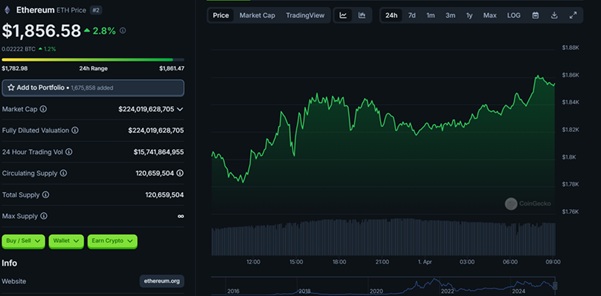
After months of consolidation, Ethereum has broken out of an ascending triangle shape, with a forecast advance to $5,700. According to a TradingView analyst, the breakthrough has set the ground for a 207% rally, with Ethereum poised to retest the $4,000 level before making a clear push to new all-time highs. While ETH recently dropped to $1,769, the trend reversal is already taking hold, with a 4.8% rise to $1,855. Momentum indicators and volume surges show the market is entering a fresh bullish phase. Analysts see $3,000 and $4,000 as critical support levels on the way to the expected $5,700 top.

Ethereum Price Chart (24-Hour), Apr. 1, 2025 | Source: CoinGecko

Spot ETF inflows in the United States also signal a significant turnaround in attitude, ending a four-week outflow skid with a $4.7 million net inflow. With accumulation zones remaining strong and macro momentum shifting, Ethereum enters April with bullish tailwinds.

Rexas Finance (RXS): The Under $0.20 Token Primed For $8 Rally

Rexas Finance (RXS) uses blockchain to tokenize traditionally illiquid assets like real estate, gold, and artwork, transforming them into accessible, tradable tokens. A $5 million property or commodity can now be divided into micro-token units, allowing investors to get in for as little as a few dollars. The ongoing RXS presale has experienced consistent growth. RXS began at $0.03 and is now in its 12th and final stage, selling at $0.20—a 566% increase—with 91% of tokens now sold. The initiative has raised $47.8 million and sold over 459 million tokens, demonstrating strong demand and early trust. The token already has over 50,000 active holders. Thus, the mounting FOMO is understandable. Rexas Finance turned down any VC backing, eliminating the possibility of massive selloffs that often crush post-listing prices.

This dedication to decentralised, retail-first growth has been favourably appreciated. RXS tokenomics are equally beneficial. The overall supply is 1 billion RXS, with 50% designated for presale, 22.5% for staking, and 15% for liquidity. Long-term holders are well-positioned, thanks to no backdoor allocations and a burn-based deflationary approach. Strategic execution has helped to increase visibility. Rexas Finance was listed early on CoinMarketCap and CoinGecko, which boosted visibility and investor confidence. A Certik audit was done before launch, adding another degree of confidence to the security of its smart contracts. Beyond tokenization, RXS’s utility is extensive. The Rexas Launchpad facilitates fundraising and token launches, while the Rexas Treasury optimizes yield across all DeFi protocols. These real-world use cases elevate Rexas Finance above the level of a speculative token, establishing it as a viable ecosystem. As the presale nears its conclusion, attention turns to its forthcoming exchange debut. On June 19, 2025, the token will be listed on at least three tier-1 exchanges for $0.25. With analysts predicting a parabolic spike (100,000% upside potential), Rexas is building a compelling case for being one of 2025’s most explosive cryptocurrency tales.

Ripple (XRP) Is Gaining Traction Again

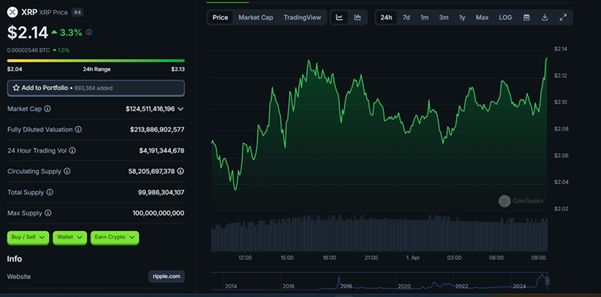
XRP is finally emerging from its legal obscurity. With the SEC litigation largely resolved, Ripple is restarting global expansion, and XRP’s price is responding. XRP, which is currently trading around $2.14, has already risen by more than 3.2% in the past day.

XRP Price Chart (24-Hour), Apr. 1, 2025 | Source:

Analysts foresee an $8 increase by the end of Q2, fueled by positivities from the SEC lawsuit and new institutional collaborations, including a significant new cooperation with Chipper Cash to facilitate African cross-border payments. Another significant factor is the potential approval of the XRP ETF. With about 84% approval odds, the sentiment shift is now reflected in pricing, and the next step higher may arrive sooner than most anticipate.

Conclusion: The Altcoin Race Is On—But Not Everyone’s Moving at the Same Speed.

Ethereum may be on track for a big rally to $5.7K, but XRP and Rexas Finance are the current breakout stories as they are set to hit $8 faster. XRP leverages legal clarity and adoption, whereas RXS uses tokenization to rewrite asset ownership regulations. With the RXS presale nearing its end and the listing scheduled for June 19, this could be the last chance to purchase the token before it breaks the $8 barrier, far before Ethereum reaches $5.7K.


For more information about Rexas Finance (RXS) visit the links below:

Website: https://rexas.com

Win $1 Million Giveaway: https://bit.ly/Rexas1M

Whitepaper: https://rexas.com/rexas-whitepaper.pdf

Twitter/X: https://x.com/rexasfinance

Telegram: https://t.me/rexasfinance