DD
MM
YYYY

PAGES

DD
MM
YYYY

spot_img

PAGES

Home Blog Page 1396

While The Trump’s 100% Tariff Aims to Bolster U.S. Filmmaking, It Risks Raising Costs and Reducing Cultural Diversity

0

President Donald Trump announced via Truth Social his intention to impose a 100% tariff on all movies produced outside the United States and imported into the country, claiming the American film industry is “DYING a very fast death” due to foreign incentives luring filmmakers abroad. He described this as a “national security threat” and “propaganda,” authorizing the Department of Commerce and the U.S. Trade Representative to begin the process. Commerce Secretary Howard Lutnick confirmed action with a post on X, stating, “We’re on it.”

The announcement lacks clarity on implementation, including whether tariffs apply to streaming services, theatrical releases, or how they would be calculated (e.g., production costs or box office revenue). It’s uncertain if the policy targets only foreign companies or includes U.S. studios filming overseas, like Disney’s Avengers: Doomsday or Warner Bros.’ Supergirl: Woman of Tomorrow, both shooting in the UK. Films are intellectual property, not physical goods, making tariff application complex and unprecedented, as services typically face non-tariff barriers like regulations.

Trump’s move follows his broader trade policies, including a 10% universal tariff on goods, 25% tariffs on steel and autos from Canada and Mexico, and a 145% tariff on Chinese imports. The film tariff could disrupt Hollywood, already struggling with a 40% production drop in Los Angeles over the past decade, as countries like Canada, the UK, and Australia offer tax incentives. Industry experts warn of retaliation, with China already reducing U.S. film quotas in April 2025, potentially harming American studios’ global market access.

Critics, including economist Justin Wolfers, argue the policy could backfire, raising costs for studios and consumers while failing to address competitive dynamics like California’s high production costs. Governor Gavin Newsom, criticized by Trump, has proposed tax credits to boost local filming, but some producers, like Randy Greenberg, warn tariffs may increase ticket prices and reduce theater attendance. The Motion Picture Association and major studios have not commented, and Hollywood executives are scrambling for details.

The policy’s impact on independent films, foreign-language cinema, or major franchises shooting abroad remains unclear. Global industry leaders, including Australia’s Tony Burke and New Zealand’s Christopher Luxon, vowed to defend their film sectors. The proposed 100% tariff on imported movies announced by President Trump on May 4, 2025, carries significant implications across economic, cultural, and geopolitical dimensions.

U.S. studios filming abroad e.g., Disney, Warner Bros. may face doubled costs for importing films, potentially raising production budgets. Higher costs could lead to increased ticket prices or streaming subscription fees, reducing consumer demand and theater attendance. Independent films, often reliant on international co-productions, may face financial strain, limiting their U.S. distribution.

Disruption to Hollywood’s Global Operations

Major studios frequently shoot overseas to leverage tax incentives in countries like Canada, the UK, and Australia. Tariffs could force costlier domestic production or reduce international projects, impacting profitability. The U.S. film industry, already down 40% in Los Angeles production over the past decade, may struggle to compete without addressing domestic cost issues like high labor and real estate expenses. Proponents argue tariffs could incentivize domestic filmmaking, creating jobs in the U.S. film industry.

However, reduced international collaboration and higher costs could lead to job losses in sectors like post-production, distribution, and exhibition, especially if global markets retaliate. A 100% tariff could make foreign films, including critically acclaimed works from Europe, Asia, or Latin America, prohibitively expensive, limiting their availability in U.S. theaters and on streaming platforms.

This could reduce cultural diversity in media, impacting audiences and awards circuits like the Oscars, which often celebrate international films. Services like Netflix and Amazon, which rely on global content, may face higher acquisition costs for foreign titles, potentially reducing their catalogs or prioritizing domestic content. Consumers may see a shift toward homogenized content, with less exposure to global perspectives.

Countries like China, which restricted U.S. film quotas in April 2025, may further limit American films’ access to their markets, hurting studios’ global box office revenue (e.g., Avengers earned $1.2 billion overseas). Allies like Canada, the UK, and Australia, with robust film industries, have signaled resistance. Australia’s Tony Burke and New Zealand’s Christopher Luxon vowed to protect their sectors, potentially escalating trade tensions.

Co-productions, common in the industry, could decline as tariffs complicate financing and distribution, weakening U.S. influence in global cinema. Countries may impose reciprocal tariffs or subsidies, further isolating U.S. films from international markets. Films are intellectual property, not physical goods, making tariff application legally and logistically complex. It’s unclear whether tariffs apply to theatrical releases, streaming, or both, or how they’d be calculated (e.g., production costs or revenue).

California Governor Gavin Newsom has questioned Trump’s authority to impose such tariffs, suggesting potential legal challenges from states or industry groups. The Motion Picture Association and major studios, though silent so far, may lobby against the policy, as it threatens their global business models. Independent distributors and theater chains, already struggling post-COVID, could face existential risks if content costs soar.

Tariffs may encourage investment in U.S. film infrastructure, but without competitive tax incentives (like Georgia’s 30% credit), studios may hesitate to relocate. High costs in California could push production to other states, reshaping regional economies. Rival film industries in China, India, or Europe could gain market share if U.S. films lose global competitiveness. Streaming giants may shift production to countries with lower costs, bypassing U.S. tariffs but reducing domestic economic benefits.

Uncertainties

The policy’s scope (e.g., exemptions for U.S. studios abroad) and enforcement timeline remain undefined, creating industry uncertainty. Consumer behavior is unpredictable—higher prices could accelerate cord-cutting or piracy, further straining the industry. Retaliatory measures from trade partners could escalate into broader economic conflicts, given Trump’s other tariff policies (e.g., 25% on Canada/Mexico, 145% on China).
NVIDIA’s Bitcoin Investment Sentiments Intensifies on X

0

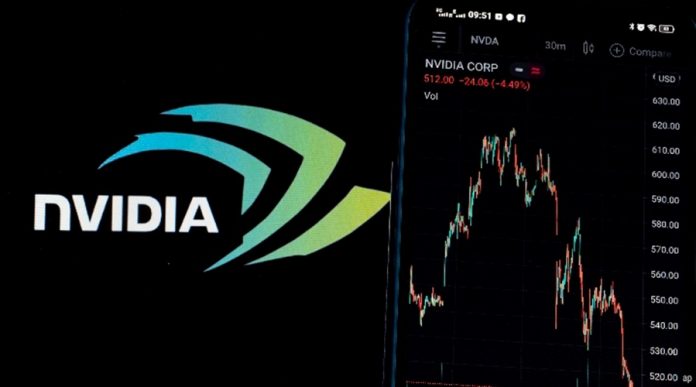
Rumors have circulated on social media, particularly X, suggesting that NVIDIA, the third-largest company by market capitalization, is considering adding Bitcoin to its balance sheet for “stability.” These claims, amplified by crypto influencers like Crypto Rover and André Dragosch, lack official confirmation from NVIDIA. The company’s latest SEC filings and earnings reports, focused on AI and data centers, show no mention of Bitcoin or cryptocurrency investments.

While NVIDIA’s GPUs have historically been used for crypto mining, similar moves by companies like MicroStrategy and Tesla have driven market reactions in the past, but without an official statement, these claims remain speculative. Investors should monitor NVIDIA’s official communications and SEC filings for any confirmation, as unverified rumors can fuel volatility in both Bitcoin and NVDA stock.

If NVIDIA were to add Bitcoin to its balance sheet, the implications could be significant across financial, market, and strategic dimensions. A move by a tech giant like NVIDIA (market cap ~$3 trillion) could drive Bitcoin demand, potentially pushing its price higher, as seen with Tesla’s 2021 Bitcoin purchase.

Institutional adoption by NVIDIA would further validate Bitcoin as a corporate treasury asset, encouraging other firms to follow. Investors might react positively (crypto enthusiasm) or negatively (concerns over risk), depending on sentiment toward Bitcoin’s volatility. Bitcoin could hedge against inflation or fiat depreciation, but its volatility (standard deviation ~50-80% annually) introduces treasury risk, unlike NVIDIA’s stable cash flows from AI and GPUs.

A Bitcoin allocation could signal innovation but might alarm risk-averse shareholders, given NVIDIA’s focus on predictable growth sectors. Under U.S. GAAP, Bitcoin is an intangible asset, subject to impairment losses but not unrealized gains, potentially complicating financial reporting. NVIDIA’s move could accelerate crypto adoption among tech firms, especially those with high cash reserves, like Apple or Microsoft.

While NVIDIA’s GPUs are already used for mining, a public Bitcoin stance could indirectly boost demand if mining activity spikes. Adding Bitcoin could attract attention from the SEC or other regulators, especially amid ongoing debates over crypto classification and taxation. NVIDIA might face pressure to disclose risk management strategies for crypto holdings.

Reputation and Stakeholder Reaction

The crypto community would likely celebrate, amplifying NVIDIA’s brand among blockchain enthusiasts. Traditional investors might question the move, given Bitcoin’s speculative nature and NVIDIA’s core AI focus. Without official confirmation, these implications are hypothetical. NVIDIA’s leadership, led by Jensen Huang, has emphasized AI and data centers, not crypto. Any pivot toward Bitcoin would mark a bold strategic shift, requiring careful risk assessment given Bitcoin’s historical drawdowns (e.g., -60% in 2022). Investors should watch for NVIDIA’s next earnings call or SEC filings for clarity.

The idea of NVIDIA adding Bitcoin to its balance sheet could create a sharp divide among stakeholders, reflecting broader tensions in finance, technology, and crypto communities. View Bitcoin as a hedge against inflation and fiat devaluation, especially in a low-yield environment. Believe NVIDIA’s move would signal forward-thinking diversification, boosting its appeal to younger, crypto-savvy shareholders.

Arguments points to MicroStrategy’s stock rally post-Bitcoin adoption as a precedent. They see Bitcoin as a speculative asset with high volatility (~50-80% annualized), risking NVIDIA’s stable financial profile. Worry about impairment losses under GAAP accounting, where Bitcoin’s value drops could hit reported earnings. Some investors prefer NVIDIA’s focus on AI and semiconductors, viewing crypto as a distraction from core growth.

Some argues that Bitcoin aligns with NVIDIA’s tech-forward ethos, leveraging its GPU mining legacy to strengthen crypto ties. They see it as a bold move to capture blockchain’s long-term potential, especially if digital assets become mainstream. While highlighting Bitcoin’s regulatory uncertainty (e.g., SEC’s evolving stance) and potential for reputational damage. Emphasing on NVIDIA’s $3 trillion valuation, built on AI dominance, not crypto speculation, making treasury risk unnecessary.

Crypto Community would rally behind NVIDIA, amplifying its brand on platforms like X, where crypto influencers already fuel the rumor, and it could spark a broader “corporate Bitcoin adoption” narrative, driving retail and institutional crypto investment. Skeptical Analysts questioned the rumor’s credibility, noting no mention in NVIDIA’s filings or Jensen Huang’s public statements and warned of market manipulation risks, as unverified X posts could inflate Bitcoin or NVDA prices temporarily.

While Decentralization Proponents view corporate Bitcoin adoption as a step toward decentralizing financial systems, reducing reliance on fiat and central banks. They celebrate NVIDIA potentially joining Tesla and MicroStrategy in challenging traditional finance. Financial Traditionalists argued Bitcoin lacks intrinsic value and exposes NVIDIA to systemic risks (e.g., crypto market crashes). They see corporate treasuries as unsuitable for assets prone to 50%+ drawdowns, as seen in 2022. The divide mirrors broader societal debates over crypto’s role—revolutionary asset class or speculative bubble.

NVIDIA’s decision would amplify this, given its tech titan status. A confirmed move could widen the gap between crypto bulls and bears, with Bitcoin’s price and NVDA’s stock as battlegrounds. NVIDIA would need to navigate vocal crypto advocates on X versus cautious institutional investors, balancing innovation with financial prudence. As of May 6, 2025, the rumor stems from unverified X posts, not NVIDIA’s official channels.

The divide is currently speculative, driven by crypto enthusiasm rather than evidence. If confirmed, the split would intensify, with financial markets, X sentiment, and NVIDIA’s shareholder base as key arenas. Watch for NVIDIA’s next SEC filing or earnings call to gauge any shift.

OpenAI Reverses For-Profit Push, Nonprofit to Retain Control Despite Corporate Transition

0

OpenAI, the artificial intelligence pioneer behind ChatGPT, announced on Monday that its nonprofit arm will retain control of its for-profit division, abandoning plans to fully transition to a for-profit model.

The decision, detailed in a blog post by Board Chairman Bret Taylor, follows intense scrutiny from civic leaders, regulators, and critics, including billionaire co-founder Elon Musk and Meta.

“We made the decision for the nonprofit to retain control of OpenAI after hearing from civic leaders and engaging in constructive dialogue with the offices of the Attorney General of Delaware and the Attorney General of California,” the company stated.

As OpenAI restructures its for-profit arm into a public benefit corporation (PBC), valued at $300 billion after a record $40 billion funding round, the move balances its mission to advance AI for humanity with the capital demands of a competitive industry.

The move marks a significant reversal from its September 2024 plan to shed nonprofit control and adopt a traditional for-profit structure, driven by the need for substantial capital to train advanced AI models. CEO Sam Altman, addressing employees and investors, explained the original rationale.

“Instead of our current complex capped-profit structure—which made sense when it looked like there might be one dominant AGI effort but doesn’t in a world of many great AGI companies—we are moving to a normal capital structure where everyone has stock,” he said.

The shift aimed to simplify governance and attract investors, as training models like o3 and o4-mini, launched in April 2025, can cost billions.

However, the path to full for-profit status proved fraught with legal and public obstacles. “The TLDR is that with the structure we’re contemplating, the not-for-profit will remain in control of OpenAI,” Taylor stated in the blog post, indicating that the nonprofit will remain a significant shareholder in the PBC, overseeing its operations to ensure alignment with its mission of ensuring artificial general intelligence (AGI) benefits all of humanity.

Altman, in a virtual press briefing, expressed gratitude for the feedback that shaped the decision.

“We’re very grateful to all the people that have constructively engaged with us, talking about different ways we could do this, and I’m very happy that we’ve made the decision for the nonprofit to stay in control,” he said.

The restructuring into a PBC allows OpenAI’s for-profit arm to prioritize societal benefits alongside shareholder value, maintaining nonprofit oversight while enabling access to capital markets. This hybrid model addresses investor requirements from the March 2025 funding round, which included a clause allowing refunds if the for-profit transition wasn’t completed within two years.

“OpenAI’s transition will satisfy the requirements accompanying the investments made by SoftBank and other investors,” a person familiar with the matter told BI, ensuring the $40 billion round, led by SoftBank, Thrive Capital, and others, remains secure.

Origins in Public Interest, Driven by Capital Needs

Founded in 2015 as a nonprofit by Sam Altman, Elon Musk, Greg Brockman, and others, OpenAI aimed to develop AI safely and ethically, as outlined on its website. In 2019, it adopted a “capped-profit” model, creating a for-profit subsidiary to fund research while retaining nonprofit control, a structure Altman later described as complex in a world with multiple AGI competitors.

The 2023 leadership crisis, when the nonprofit board ousted Altman over communication breakdowns, only to reinstate him after employee and investor pressure, exposed governance vulnerabilities. The episode, resolved in five days, highlighted the tension between mission and commercial ambitions, setting the stage for the 2024 for-profit push.

The September 2024 announcement to transition fully to for-profit status sparked immediate backlash. Converting assets, determining equity for Altman and investors, redefining governance, and amending OpenAI’s Delaware incorporation required navigating a legal minefield. Public criticism was fierce, led by Musk, who left OpenAI in 2018 and founded rival xAI in 2023. Musk filed multiple lawsuits in 2024, alleging OpenAI breached its nonprofit mission by prioritizing profit, aiming to halt the restructuring.

Meta, a competitor via its AI division, also opposed the move. In a December 2024 letter to the California Attorney General, Meta accused OpenAI of “taking advantage” of its nonprofit status to raise funds, urging regulators to block the transition. The California and Delaware Attorney General offices engaged with OpenAI, with their input proving pivotal.

OpenAI cited “Engaging in constructive dialogue with the offices of the Attorney General of Delaware and the Attorney General of California” as a key driver of the nonprofit retention decision.

The AI industry’s capital-intensive nature drove OpenAI’s initial for-profit push. Training advanced models like o3, which supports multimodal tasks like image analysis, demands billions, as Altman noted in 2024. Competitors like Anthropic, backed by Amazon’s $4 billion, and Google’s DeepMind, funded internally, have raised significant sums, while xAI leverages Musk’s resources.

However, OpenAI’s leadership is underscored by the $300 billion valuation, with ChatGPT boasting 200 million weekly active users and enterprise solutions like ChatGPT Enterprise gaining traction.

Binance Signs MoU With Kyrgyzstan’s National Agency for Investments to Boost Crypto Education and Payments Infrastructural Networks

0

Binance has signed a Memorandum of Understanding (MoU) with Kyrgyzstan’s National Agency for Investments to introduce crypto payment infrastructure and blockchain education programs. The agreement, formalized on May 4, 2025, during the inaugural meeting of the Council for the Development of Digital Assets attended by President Sadyr Japarov, aims to modernize Kyrgyzstan’s digital economy and position it as a blockchain hub in Central Asia.

Binance Pay will enable secure, contactless crypto transactions for residents and visitors, facilitating cross-border payments, particularly within the Eurasian Economic Union (EAEU). This marks the first introduction of cryptocurrency payments to Kyrgyzstan’s national market, enhancing financial inclusion and simplifying international trade and remittances.

Binance Academy will collaborate with Kyrgyz government agencies, universities, and financial institutions to deliver tailored educational programs on blockchain, virtual assets, and cybersecurity. These initiatives target government officials, regulators, financial professionals, students, and the public to boost digital finance literacy and prepare a skilled workforce for the Web3 ecosystem.

Binance will provide technical and regulatory expertise to help Kyrgyzstan develop policy frameworks and infrastructure for blockchain adoption. This includes advising on digital asset regulations and supporting the country’s pilot project for a central bank digital currency (CBDC), the “digital som,” which was granted legal tender status on April 18, 2025.

The partnership builds on an earlier MoU signed on April 3, 2025, with Binance founder Changpeng “CZ” Zhao advising Kyrgyz authorities on crypto regulation and blockchain strategy. President Japarov expressed optimism about the collaboration, stating it will “open new horizons” for Kyrgyzstan and the region. The initiative aligns with Binance’s global strategy of government collaborations, including advising countries like Pakistan and supporting strategic Bitcoin reserves.

Binance Pay’s integration will streamline cross-border transactions, particularly within the EAEU, boosting trade and remittances. This could attract foreign investment and enhance financial inclusion for unbanked populations. Binance’s expertise in supporting the “digital som” could accelerate Kyrgyzstan’s transition to a digital economy, improving transaction efficiency and reducing reliance on cash.

Blockchain Hub Ambitions

The partnership positions Kyrgyzstan as a potential blockchain hub in Central Asia, leveraging its strategic location and progressive digital asset policies. This could draw tech companies, startups, and investors to the region. Collaboration with Binance on regulatory frameworks may create a crypto-friendly environment, encouraging innovation while ensuring compliance.

Binance Academy’s programs will build a skilled workforce proficient in blockchain, Web3, and cybersecurity, fostering long-term economic growth. Educating regulators and officials could lead to balanced, informed policies that support innovation while mitigating risks like fraud or money laundering. Successful implementation could enhance President Japarov’s administration’s credibility, showcasing tangible progress in digital transformation.

Increased financial access and literacy may empower citizens, particularly in rural areas, but could also raise concerns about crypto volatility or regulatory gaps. Kyrgyzstan’s early adoption of crypto payments and blockchain education could set a precedent for neighbors like Kazakhstan, Uzbekistan, or Tajikistan, spurring regional competition in digital innovation.

As an EAEU member, Kyrgyzstan’s crypto infrastructure could facilitate seamless cross-border payments, strengthening economic ties within the bloc. Aligning with Binance, a global crypto leader, may enhance Kyrgyzstan’s international visibility and attract attention from other crypto firms or governments exploring blockchain. However, reliance on a foreign entity like Binance could raise sovereignty concerns or expose Kyrgyzstan to global crypto market fluctuations.

The partnership opens a new market for Binance in Central Asia, strengthening its global footprint and diversifying revenue streams through Binance Pay adoption. Supporting Kyrgyzstan’s CBDC and regulatory framework reinforces Binance’s role as a trusted government partner, potentially leading to similar deals elsewhere. Collaborating with a sovereign government enhances Binance’s credibility amid global regulatory scrutiny, positioning it as a leader in shaping crypto policies.

Educational initiatives via Binance Academy could foster long-term user loyalty and mainstream crypto adoption. Binance’s involvement in Kyrgyzstan’s digital economy could face challenges if local infrastructure (e.g., internet access, technical capacity) lags or if public adoption is slow. Regulatory missteps or crypto market volatility could tarnish Binance’s reputation and the project’s success.

Kyrgyzstan’s initiative could inspire other developing nations to adopt crypto payments and blockchain, accelerating global mainstreaming of digital assets. The partnership highlights the delicate balance between fostering innovation and managing risks, offering a case study for other countries navigating crypto integration.

By building blockchain literacy and infrastructure, Kyrgyzstan could lay the groundwork for DeFi applications, potentially transforming sectors like agriculture, remittances, or microfinance. This partnership could transform Kyrgyzstan’s economy and regional standing while reinforcing Binance’s global influence. However, its success hinges on effective implementation, robust regulation, and public adoption amidst the volatile crypto landscape.

Top Football Betting Bonuses in Singapore 2025 

0

All the fun and excitement that comes along with every bet in your much awaited sports match is not only because of the game itself but also because of the exciting features that  bonuses and promotions from the leading sportsbook in the market has to offer.

If you’re planning your next football bet, have a quick break and read this article first to know the top bonuses that you can use and where to find the best deals. Experience football betting Singapore today only in the best sportsbook you can find at TopBettingSiteSG!

What Are the Top Bonuses in Football Betting Singapore Online?

Betting on football in the best sportsbook in Singapore has more perks than what it might look like. So to give you an idea of the best casino offerings that await you, here’s the list of the top bonuses in football betting.

Welcome Bonuses

Also known as the sign-up bonus, this one is pretty self-explanatory. It refers to a promotion available to new users after creating an account. In football betting, this promotion can help you have a fun and rewarding game start.

More often than not, it comes with a percentage of your initial deposit. But the good thing is, since many online football betting Singapore offer 100% matches, you can have a $50 bet if you start with $50. To have a clear understanding of this bonus, it’s crucial to check the wagering requirements for more informed betting.

Reload Bonuses

Reload bonus is quite similar to Welcome bonus, the main difference is that it’s only available to existing users rather than the new ones. These are ideal for regular football bettors who want a little extra value each time they fund their wallet. For example, a 50% reload bonus on a $100 deposit would give you an extra $50 in betting credits—boosting your bankroll and allowing for more match-day bets.

If you want to make the most of this bonus, watch out for special events as they tend to get bigger in these instances.

Cashback Bonus

This promotion serves as punters’ safety net in their loss. When you lose a qualifying football bet, the sportsbook could return a percentage of your loss—usually anywhere from 5% to 20%. While it doesn’t cover the loss in total, it softens the impact and assists you in recovering some of your bankroll so you can continue to play.

No Deposit Bonuses

As the name implies, no deposit bonus is a casio promotion that will provide you with free betting credits for joining—no deposit needed. It’s a risk-free method for Singapore bettors to test a site and put a couple of football bets on without paying a dime first. Winnings might be subject to wagering requirements, but it’s still a risk-free introduction for new members.

Loyalty Rewards

Football betting online Singapore site knows exactly how to reward their player with loyalty rewards. As luck would have it, most online football betting sites have VIP or loyalty programs that will help you earn points every time you place a bet.

In turn, all your accumulated free bets and be converted for free bets, cash bonuses, and even other exclusive perks. The main idea is, the more you play, the more you get back to add long-term value to your betting experience.

Bet Insurance

Also known as risk-free bets, this promotion can help you to protect your wager from your losses. Let’s say that you place a $50 football bet in EPL and you don’t win, with this bonus, you still have the chance for your money to be refunded as bonus credits. This kind of offer is especially useful for trying riskier bets or betting on underdog teams without fully committing your real funds.

Parlay Betting Bonuses

Parlay betting bonuses reward players who combine multiple football bets into a single slip. The more selections you add—and the more legs that win—the higher your payout. Some sites in Singapore even offer bonus percentages on successful parlays, boosting your profits significantly if all your predictions hit. It’s a high-risk, high reward, but the bonus makes it even more enticing.

Odds Boost

Another casino promotion you could use is odds boost. It will help you to enhance your potential payout as you bet on football. As the popular and major matches begin to unfold, with this bonus, you can increase your chances of winning big in football events—and turn the odds in your favor.

Where to Find the Best Football Betting Bonuses Online in Singapore?

If you want to take your football betting in Singapore to the next level, then no question that choosing the best sportsbook in Singapore is the way to go. And if you don’t know where to start, you can do so by checking out the lineup of the leading Singapore sportsbook, only at TopBettingSiteSG.

Not only are they licensed and regulated by reputable gambling authorities, but when it comes to bonuses and promotions, they will never run out of things to offer on the table. Even better, this is not only applicable to football betting but to sports betting in general. So visit this review site now and get started with your rewarding journey today!

Frequently Asked Questions

What are the best types of sports bonuses in Singapore?

When betting on sports in Singapore, the best bonuses that you can use include welcome bonuses, cashback bonuses, reload bonuses, and loyalty rewards. Not only can they make your betting experience more exciting, but they can also give you more profitable gameplay in the process.

What sportsbook gives the best bonuses?

Considering the plenty of sportsbooks in the market, the best betting sites to offer you excellent bonuses include Solarbet, GoPlay711, AS128 Grand, Sanado Club, and IB8. They have a never-ending promotion, so you surely won’t lack things to boost your gameplay.

How to maximize sports betting bonuses online?

There’s no better way to maximize your sports betting bonuses online than reading the terms and conditions. By doing so, you can have a more informed bet.