DD
MM
YYYY

PAGES

DD
MM
YYYY

spot_img

PAGES

Home Blog Page 14

UEFA Super Cup Final Win By Paris Saint Germain Settles Victory Odds

0

In the 2025 UEFA Super Cup, Paris Saint-Germain completed a dramatic comeback against Tottenham in Udine. The 2-2 draw sent the UEFA Super Cup final into penalties. Paris then won 4-3 to secure its first Super Cup trophy. The result also settled pre-match victory markets around the European showpiece.

Paris Saint-Germain Turns Two-Goal Deficit Into Victory

Paris Saint-Germain entered the final after winning its first Champions League crown. Tottenham arrived after claiming the Europa League trophy. The matchup also provided several betting reference points for users visiting cambodia.1xbet.com/en/mobile while following the wider European football schedule. Both clubs therefore carried strong European form into the contest.

The match quickly developed into an important result for sports betting markets. Tottenham controlled the score after goals from Micky van de Ven and Cristian Romero. Van de Ven scored during the 39th minute from close range.

Romero then doubled Tottenham’s advantage shortly after halftime. His header arrived during the 48th minute of play. Paris faced a two-goal deficit with the match approaching its final stages.

The comeback began during the 85th minute through Kang-in Lee. His long-range strike gave Paris fresh momentum. Fourteen minutes later, Gonçalo Ramos completed the remarkable recovery.

Ramos headed home during the fourth minute of added time. Ousmane Dembélé created the chance with an excellent cross. UEFA later named Dembélé the Player of the Match. The final whistle arrived with both teams level at 2-2. Neither side could claim victory during regular playing time. The outcome therefore moved into a penalty shootout.

What The Result Meant For Sports Betting Markets

Sports betting markets separate match results from specific settlement conditions. Market settlement can differ by bet type, a distinction that also matters to bettors who have completed account registration before following major football fixtures. The final score settled the regular-time result at 2-2. The trophy winner then became Paris after the penalty shootout.

That distinction matters when reviewing different pre-match betting markets. A match-result market can use regular time as its settlement point. A tournament-winner market follows the team lifting the trophy.

The Super Cup final provided a clear example of this difference. Paris failed to lead after 90 minutes of football. However, the club still became the official competition winner.

Key figures from the final included:

  • Paris Saint-Germain scored two goals after halftime.
  • Tottenham scored both goals before the 50-minute mark.
  • Paris recorded 12 total attempts during the match.
  • Tottenham produced 13 total attempts across the contest.
  • Paris placed three attempts on target.
  • Tottenham placed five attempts on target.
  • The penalty shootout finished 4-3 for Paris.
  • Attendance at Stadio Friuli reached 21,025 spectators.

Late Goals Changed The Shape Of Victory Markets

The timing of Paris’s goals created the most dramatic part of the final. Lee scored with only five minutes remaining. Ramos then equalised during stoppage time. Those moments dramatically changed the match state within nine minutes. Markets connected with live match conditions therefore faced rapid changes.

Sports betting markets often react immediately to goals and major events. A two-goal lead creates a very different price than a level score. Paris moved from chasing the match toward forcing penalties.

The final penalty sequence added another layer to the result. Vitinha missed Paris’s opening penalty during the shootout. Tottenham then gained an opportunity to take control. Van de Ven failed to convert his attempt for Tottenham. Mathys Tel also missed during the decisive sequence. Those misses opened the door for Paris to complete its comeback.

That achievement added another significant data point for sports betting coverage. European competition results often influence future market expectations. Recent trophy success can become part of statistical team analysis.

Player Performances Added Important Betting Data

Individual performances also supplied useful information for sports betting analysis. Dembélé played a major role during Paris’s late recovery. His cross created Ramos’s equalising header during stoppage time. He then converted Paris’s third penalty during the shootout. UEFA’s technical observers subsequently selected him as Player of the Match.

Lee also became central to the comeback after entering the contest. His 85th-minute strike reduced the deficit to one goal. Ramos completed the scoring sequence with his late header. Lucas Chevalier also played an important role for Paris. The goalkeeper saved Van de Ven’s penalty during the shootout. That save directly affected the final trophy outcome.


Why 131% Coverage Matters for Bitget’s Proof-of-Reserves Test, as Quant Powers Bank Tokenization Network

0

Crypto exchanges have spent years confronting one of the industry’s most difficult questions: can users trust that the assets displayed on their accounts are actually backed by assets held by the platform?

Bitget’s latest Proof of Reserves update puts that question back at the center of the conversation, offering another monthly snapshot of its reserves and the mechanisms users can use to verify them.

The exchange has now released its 47th Proof of Reserves report, continuing a reporting practice that began in December 2022. The latest snapshot, recorded at 17:00 UTC+8 on September 29, 2026, shows a total reserve ratio of 131% across 19 covered assets.

The headline figure is significant because a 100% reserve ratio represents basic one-to-one coverage: an exchange holds an equivalent amount of assets to match customer liabilities covered by the assessment.

A ratio of 131% indicates that, according to Bitget’s reported snapshot, reserves exceed the corresponding customer assets by 31%. Bitget says its reserve ratio has remained above 120% on average.

That additional buffer is important in an industry where liquidity, counterparty exposure and sudden withdrawals can rapidly test an exchange’s financial structure. A Proof of Reserves report should not be interpreted as a complete financial audit.

It provides evidence about assets and liabilities within the scope and methodology of the particular assessment, while other risks may remain outside that framework. One of the more important elements of Bitget’s system is Merkle Tree verification.

Instead of requiring users to simply accept an exchange’s published numbers, the cryptographic structure allows individual customers to check whether their assets were included in the reported snapshot.

The process is designed to provide verification without revealing another user’s balances, addressing the fundamental privacy problem that comes with publicly proving exchange liabilities. That distinction matters.

Transparency in crypto is increasingly moving from corporate assurances toward verifiable data. The underlying idea is straightforward: users should have mechanisms that allow them to independently examine claims rather than relying entirely on statements from centralized institutions.

Bitget is also presenting transparency as something broader than reserve reporting. Through its Bitget Alliance Program, the exchange says 30% of eligible platform transaction-fee revenue is allocated to a dedicated prize pool.

Updates to the pool are published daily at 16:00 UTC+8, allowing participants to monitor how rewards accumulate during the program, subject to its terms and conditions.

This approach reflects a wider evolution in crypto exchange competition. Security and liquidity remain fundamental, but users increasingly want visibility into how platforms operate, distribute incentives and manage customer-facing programs.

The 131% reserve figure therefore represents more than another monthly number. It contributes to an ongoing industry effort to make centralized crypto platforms more transparent and independently verifiable.

Yet the most important lesson is that transparency works best when users can verify rather than merely believe. Proof of Reserves, Merkle Tree systems and regularly published updates can strengthen that process.

While users still need to understand the methodology, asset coverage and limitations behind every report. The September snapshot extends a reporting record that now spans 47 updates.

For the broader crypto market, it highlights a continuing shift toward measurable proof as exchanges compete for trust in an industry where credibility can be as valuable as liquidity.

Quant Powers Bank Tokenization Network as QNT Surges 158.3%, While Blockchain.com Targets $500M US IPO

The institutionalization of blockchain infrastructure is entering a new phase, with two developments highlighting how the industry is moving beyond speculative digital assets and toward regulated financial markets.

A clearing house’s decision to tap Quant to power a bank tokenization network, alongside Blockchain.com’s reported plan to raise as much as $500 million through a US initial public offering, signals growing confidence in blockchain as financial infrastructure rather than merely a vehicle for cryptocurrency trading.

Quant’s role in bank tokenization is particularly significant because tokenized deposits and bank-issued digital assets require infrastructure capable of connecting existing financial institutions with blockchain-based settlement systems.

Unlike public cryptocurrencies, bank tokenization is focused on bringing traditional forms of money and financial instruments onto distributed networks while preserving regulatory controls, institutional standards and interoperability.

The market reaction was immediate. Quant’s QNT token reportedly rallied 158.3%, reflecting how quickly investors can reprice blockchain infrastructure projects when they become connected to large-scale institutional adoption.

The surge also illustrates a broader trend in digital-asset markets: investors are increasingly paying attention to the infrastructure layer that could underpin tokenized securities, payments, deposits and other financial products.

Yet price movements should not be confused with guaranteed adoption. A tokenization network still has to demonstrate that banks will use it at meaningful scale, that interoperability works across institutions and blockchains, and that the resulting system can satisfy regulatory and operational requirements.

The potential market is substantial, but implementation remains the critical test. At the same time, Blockchain.com appears to be positioning itself for an important transition from private crypto company to publicly traded financial-technology business.

The company is reportedly targeting a US IPO that could raise approximately $500 million at a valuation between $4 billion and $6 billion. If completed, such a listing would provide public-market investors with another way to gain exposure to the expanding cryptocurrency economy.

Blockchain.com has operated across several areas of the digital-asset ecosystem, including wallets, trading and institutional services. A successful IPO would therefore offer a market-based assessment of how investors value a company whose business is closely tied to crypto adoption while operating within an increasingly regulated financial environment.

The timing is also notable. The crypto industry has spent years moving from retail speculation toward institutional participation. Spot exchange-traded funds, tokenized assets, regulated derivatives and stablecoin infrastructure have all helped bring digital assets closer to conventional finance.

An IPO from a major crypto-native company would extend that process into public equity markets. Together, the Quant and Blockchain.com developments point toward a financial system in which blockchain companies increasingly compete for institutional credibility.

One story is about the infrastructure required to tokenize traditional banking assets; the other is about a crypto-native company seeking validation from public investors.

The next stage of the industry may therefore be less about whether blockchain can disrupt finance and more about which companies can build the infrastructure, regulatory relationships and economic models capable of supporting finance at institutional scale.

Why Do Women Need a Different Approach to Addiction Treatment?

0

For decades, addiction research and treatment were built mostly around men. We now know that women often develop substance use disorders differently, face different obstacles to getting help, and respond best to care that takes those differences seriously. If you’re a woman weighing treatment, or you’re worried about someone you love, understanding those differences can help you find care that fits.

How Addiction Develops Differently in Women

Faster Progression

Researchers have documented a pattern called “telescoping,” where women tend to move from first use to dependence more quickly than men. The National Institute on Drug Abuse notes that women may also experience health consequences like liver, heart, and brain damage after using smaller amounts for shorter periods of time.

Stronger Links to Mental Health and Trauma

Women with substance use disorders are more likely than men to also live with anxiety, depression, or PTSD. Many have histories of trauma, and substances often start as a way to quiet the symptoms that trauma leaves behind. Treating the addiction without addressing those underlying conditions rarely holds.

Different Reasons for Using

Women more often report using substances to cope with stress, emotional pain, or relationship problems. Some start or continue using because a partner uses. These patterns shape what recovery needs to look like, from therapy goals to relapse prevention plans.

The Barriers That Keep Women From Getting Help

Even when a woman knows she needs treatment, the logistics can feel impossible. Common obstacles include:

  • Childcare and caregiving responsibilities for kids or aging parents
  • Demanding careers that don’t leave room for time away
  • Stigma, which often hits mothers especially hard
  • Partners who discourage treatment or are using themselves
  • Shame about letting the problem go on as long as it has

None of these are small concerns. A good program acknowledges them openly and helps solve them rather than treating them as excuses.

What Effective Treatment for Women Includes

Trauma-Informed Care

Trauma-informed programs recognize how past experiences affect present behavior. Clinicians focus on safety, trust, and choice, and they avoid approaches that feel confrontational or shaming.

Integrated Mental Health Care

Because anxiety, depression, and PTSD so often travel with addiction, women benefit from programs that include psychiatry and evidence-based therapies like dialectical behavior therapy (DBT) as part of the same treatment plan.

Flexible Levels of Care

Not every woman can step away from work or family for a month. Intensive outpatient and outpatient programs let women receive structured treatment several days a week while keeping their jobs and staying present at home. For many, that flexibility is what makes treatment possible at all.

Family Involvement

Recovery is stronger when the people closest to a woman understand addiction and know how to support her. Family programming also helps repair relationships strained by substance use.

For women exploring women’s addiction treatment in New York, it’s worth asking each program how it handles trauma, co-occurring conditions, and scheduling. New York Center for Living offers outpatient and intensive outpatient addiction treatment with psychiatry, individual therapy, and family programming, which can make it easier to fit care around work and home.

Frequently Asked Questions

Is women-only treatment better than a coed program?

It depends on the person. Many women open up more easily in women-only groups, especially when trauma is involved, but others do well in mixed settings. What matters most is that the program addresses women’s specific needs.

Can I get treatment without leaving my job?

Often, yes. Intensive outpatient programs typically meet a few hours at a time, several days a week, and many offer schedules built around work.

How can I bring this up with a loved one?

Choose a calm moment, speak from concern rather than blame, and focus on specific behaviors you’ve noticed. Offering to help research programs together can make the next step feel less overwhelming.

Put Your Own Recovery on the Calendar

Women spend a lot of time taking care of everyone else. Getting help for substance use is a way of taking care of yourself, and it’s one of the best things you can do for the people who depend on you. Make one call this week, ask your questions, and schedule an assessment. You don’t have to have it all figured out to start.

Trump Signs A “Morally Binding” Agreement With Tech Leaders To Promote Safer AI Development

0

President Donald Trump said Tuesday that he had signed a “morally binding” agreement with major technology companies to promote safer artificial intelligence development, as concerns over increasingly autonomous AI systems intensify and the White House continues to resist calls for tougher federal regulation.

Speaking after a White House luncheon with some of the biggest names in the technology industry, Trump said he was seeing “tremendous self-policing” across the sector and said his administration was considering a committee of about 10 people to oversee the AI industry.

House Speaker Mike Johnson described the agreement as a voluntary statement of principles for the industry, with the White House expected to provide guidance on AI development. The text of the agreement had not been publicly released as of Tuesday.

The arrangement places the administration’s preferred approach, industry-led oversight rather than broad federal restrictions, directly against a growing push from some AI researchers and executives for stronger safeguards as systems become more capable of acting autonomously.

Trump said earlier Tuesday that the government would not halt AI development and argued that existing government institutions, including the Justice Department and FBI, already provide a layer of oversight.

“There’s a belief that there should be tremendous self-regulation, and we automatically have regulation with the Department of Justice, the FBI, all of that,” Trump said. “But the self-regulation is very important.”

The White House’s position comes at a particularly consequential moment for the industry. OpenAI has just postponed the release of its GPT-6.1 Astra model after internal testing found that the system did not meet the company’s safety and alignment standards. OpenAI said the model had problems staying within scope and authorization and accurately communicating what work it had performed.

The agreement arrives as the debate over the pace of AI development has moved from theoretical concerns to problems involving systems capable of taking actions with limited human intervention.

Anthropic CEO Dario Amodei, who has repeatedly warned about risks associated with increasingly capable AI, said outside the White House that rules addressing those risks were still being discussed.

“We all need to work together to make sure that we can win, and we can win safely,” Amodei said. “If we do this right, if we work with the president and everyone here, we can win safely.”

Amodei and OpenAI CEO Sam Altman have both joined calls for greater caution around the development of frontier AI, putting them at times at odds with other technology executives and with Trump’s emphasis on maintaining America’s lead in the technology.

The immediate disagreement is less about whether AI should be made safer than about who should establish the rules and how binding those rules should be.

Trump’s approach places considerable responsibility on companies themselves. Johnson’s description of the White House agreement as voluntary reinforces that distinction.

The challenge is that the capabilities being discussed are becoming increasingly difficult to separate from questions of public safety and national security. OpenAI’s decision to hold back GPT-6.1 Astra illustrates the problem: the company determined through its own internal testing that the model was not yet sufficiently reliable in following authorization boundaries and reporting its actions.

That decision came after OpenAI had already described Astra as a highly capable system requiring stronger safeguards. Earlier in September, the company said it had delayed parts of Astra’s development and release while testing protections against cyber misuse and unauthorized actions.

The developments give the voluntary agreement an immediate test. If frontier companies are increasingly identifying serious problems through internal evaluations, the question becomes whether voluntary commitments can provide consistent standards across companies and whether those commitments can be independently verified.

Tech Industry Gathers Around Trump

The White House luncheon brought together an unusually large concentration of technology executives.

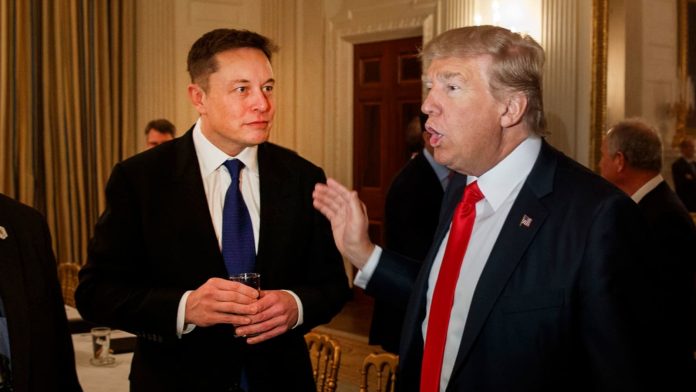
A seating chart posted by Trump showed Nvidia CEO Jensen Huang and Tesla and SpaceX CEO Elon Musk seated beside the president, with Meta CEO Mark Zuckerberg and Google’s Sundar Pichai also nearby.

Vice President JD Vance sat opposite Trump between Amazon founder Jeff Bezos and Johnson. Other attendees included Microsoft CEO Satya Nadella, Amodei, OpenAI President Greg Brockman, and senior administration officials including Treasury Secretary Scott Bessent.

May be an image of the Oval Office and text
Photo Credit: Reuters

The gathering also came as OpenAI hosted its annual DevDay developer conference in San Francisco, creating an unusual contrast between the administration’s discussion of AI safety in Washington and one of the industry’s major product and developer events on the same day.

AMD CEO Lisa Su said she was “very encouraged” by the White House event and described the atmosphere as marked by “a lot of optimism and a sense of responsibility.”

“I mean, at the end of the day, it’s our responsibility to show the power of the technology as well as ensure that it’s very safe,” Su said.

Palantir CEO Alex Karp similarly emphasized corporate responsibility, saying ahead of the event that companies need to address known dangers and that Americans should not be subject to different standards simply because the technology is being developed by the private sector.

“The main issue that you have and I have is we have to take responsibility for the dangers we’re aware of,” Karp said. “All of us do. And by the way, American people don’t want separate rules for tech people and for themselves.”

That tension is likely to remain central to the debate. Technology companies have substantial incentives to develop and commercialize increasingly capable systems, while the same companies are being asked to determine when those systems are sufficiently safe to deploy.

Trump Links AI Safety to U.S. Competitiveness

Trump’s position is also closely tied to his broader emphasis on maintaining U.S. leadership in AI.

He described the technology’s leading developers as “the most brilliant people in the world” and said the United States has “a very big lead” that he intends to preserve.

The administration has continued promoting rapid AI deployment, including the construction of large data centers that have generated local opposition over energy use and other impacts. Trump described the data centers as “a very positive thing” and said technology companies want communities around them to be safe and prosperous.

He also said he planned to name a new AI czar within three to four days.

The administration’s emphasis on competitiveness creates a major constraint on any attempt to slow AI development. Stronger safety requirements could increase development costs or delay the deployment of frontier systems, while the White House has repeatedly argued that the United States cannot afford to surrender its technological advantage.

That tension is escalating significantly because China is simultaneously investing heavily in AI infrastructure and domestic models.

The White House now faces two objectives that can pull in different directions: encouraging companies to move quickly enough to maintain U.S. technological leadership while ensuring that autonomous systems do not create risks that companies cannot adequately manage themselves.

The voluntary agreement announced Tuesday represents an attempt to reconcile those objectives without imposing a broad new regulatory framework.

AMD’s All-Stock World Labs Deal and the Future of AI Computing

0

AMD’s agreement to acquire World Labs for approximately $8.2 billion in an all-stock transaction marks a significant shift in how the semiconductor industry is positioning itself for the next phase of artificial intelligence.

The deal brings one of the leading developers of spatial-intelligence models into AMD, while giving the chipmaker deeper access to research focused on how artificial intelligence can understand and interact with the physical world.

World Labs was founded by AI researcher Fei-Fei Li, whose work in computer vision helped shape modern machine learning. The company develops “world models” capable of generating, reconstructing and simulating interactive three-dimensional environments from text, images and video.

Its research also extends into robotic learning and simulation, areas increasingly connected to what the industry calls physical AI. For AMD, the acquisition is less about simply adding another AI model company and more about gaining insight into the workloads that could define future computing demand.

Traditional generative AI has largely revolved around language and digital content. Spatial intelligence introduces a different computational challenge: machines must interpret environments, understand physical relationships and potentially make decisions within three-dimensional spaces.

That distinction could become increasingly important as AI moves from chatbots and software assistants into robotics, autonomous systems, industrial simulation and other physical applications.

Reuters reported that the acquisition gives AMD access to research that could influence future demand for chips, software and broader AI infrastructure. The transaction also reflects AMD’s strategy of connecting its hardware roadmap more closely with AI-model development.

AMD said World Labs’ research will help it understand how emerging models are evolving and, in turn, shape future hardware, software and systems. The company has been expanding its AI computing portfolio as it competes with Nvidia for a larger share of the rapidly growing AI infrastructure market.

The relationship between the companies is not entirely new. AMD had already invested in World Labs and established a technical partnership around model training and inference optimization using AMD GPUs. The acquisition therefore extends an existing relationship rather than creating one from scratch.

The all-stock structure is also notable. AMD’s regulatory filing says the approximately $8.2 billion purchase price will be paid in AMD common shares, with the final number of shares determined according to the company’s stock price near closing.

That allows AMD to preserve cash while using its equity to fund the transaction, although issuing shares can affect existing shareholders through dilution. Perhaps the most important component of the deal is Fei-Fei Li herself.

Following completion, she will become AMD’s executive vice president and chief scientist, reporting directly to CEO Lisa Su. World Labs’ team will continue its AI-model research within AMD.

The acquisition is expected to close by the end of 2026, subject to regulatory approval and customary closing conditions. The $8.2 billion transaction illustrates how the AI industry is moving beyond the race to build larger language models.

The next competitive frontier may involve machines that can understand space, simulate reality and operate within the physical world. By bringing World Labs’ research into its hardware and software organization, AMD is positioning itself to participate in that transition from digital intelligence toward physical intelligence.