DD
MM
YYYY

PAGES

DD
MM
YYYY

spot_img

PAGES

Home Blog Page 143

Bullish Q3 2025 Earnings Record Profits Amid Stock Dip

0

Bullish Inc, the crypto exchange backed by Peter Thiel and parent company of CoinDesk, reported its strongest quarter since going public in August 2025.

For Q3 2025, the firm swung to a net income of $18.5 million, a dramatic turnaround from a $67.3 million loss in the prior-year period. This equated to earnings per share (EPS) of $0.10, aligning with analyst estimates.

Adjusted revenue: $76.5 million, up 72% year-over-year from $44.6 million, fueled by the launch of U.S. spot markets and crypto options trading. Adjusted EBITDA: $28.6 million, a 271% increase.

Options trading milestone surpassed $1 billion in volume shortly after launch. Assets under management: Grew to $49 billion tied to Bullish indices, up from $41 billion. Despite these positives, BLSH shares fell 3.5% to 8% on November 19, 2025, trading around $36.42—below its $37 IPO price.

The stock has declined nearly 40% over the past month, reflecting broader caution toward newly public crypto firms. Analysts like Cantor Fitzgerald maintained an “overweight” rating but trimmed the price target to $56 from $59, citing sector-wide multiple compression.

Investor reaction may stem from a slight dip in adjusted transaction revenue to $26.7 million from $32.9 million due to lighter trading volumes, even as institutional adoption grew. CEO Tom Farley emphasized momentum:

We launched our crypto options trading and U.S. spot trading businesses, signed notable institutional clients, and expanded our liquidity services.

Looking ahead, Q4 guidance projects subscriptions, services, and other revenue (SS&O) between $47–$53 million, with adjusted operating expenses at $48–$50 million. Notably, Cathie Wood’s ARK Invest added $10.2 million in BLSH shares across three ETFs just days prior.

Bitcoin Miner Fees Hit 12-Month Low: Spotlight on Subsidy Dependence

Bitcoin transaction fees for miners have plunged to a 12-month low of about $300,000 per day as of mid-November 2025, accounting for less than 1% of total miner revenue.

This underscores the network’s ongoing heavy reliance on block subsidies, which currently provide ~$45 million daily based on 3.125 BTC per block at prevailing prices. Bitcoin’s reward structure splits miner income between: Block subsidy: Newly minted BTC halved to 3.125 BTC post-2024 halving, set to continue declining until zero issuance around 2140.

Transaction fees: Paid by users for block inclusion, which fluctuate with network demand. Historically, fees spiked during high-activity periods—like 2023–2024 Ordinals and Runes hype—peaking at over 40% of revenue.

But with calmer on-chain usage primarily as a monetary transfer layer rather than app platform, fees now contribute minimally. Post-halving, subsidies dominate even more, raising long-term questions about fee growth to sustain security as subsidies fade.

This isn’t an immediate crisis—the next halving isn’t until 2028, and aggregate miner revenue remains robust ~$1 billion+ monthly. Solutions could include rising Bitcoin prices boosting subsidy value in fiat terms, broader adoption for fee-generating transactions, or innovations like Layer-2 scaling.

Still, it highlights the need for organic demand growth to transition toward a fee-dominant model without compromising hash rate or network integrity.

The $18.5 M profit and 72% revenue growth were already priced in after the IPO hype and ARK Invest buying. Investors focused on the sequential drop in transaction revenue and broader de-rating of public crypto stocks.

BLSH still trades with relatively low float and high short interest ~18%. Any negative headline triggers outsized moves. The dip reinforces that newly public crypto companies Bullish, Circle, Kraken if it lists are trading more like high-beta growth stocks than stable financials, highly sensitive to BTC price and macro liquidity.

Bullish is proving it can generate real earnings from institutional flow options, custody, indices rather than just retail spot trading. This is a differentiator vs. Coinbase, which still derives ~70–80% from retail transaction fees.

If Bullish keeps hitting $25–30 M quarterly EBITDA while trading at ~8× EV/EBITDA current levels, it becomes an attractive takeover target for traditional exchanges Nasdaq, CME, ICE or banks wanting regulated crypto exposure.

Cathie Wood/ARK adding shares signals belief that regulated, U.S.-focused crypto infrastructure will compound as Trump administration eases enforcement. At ~$70k–$100k BTC, the 3.125 BTC subsidy is worth ~$220k–$310k per block. Even with tiny fees, daily revenue per block is still $230k–$320k—plenty to keep most efficient miners profitable.

Hash-rate growth will slow or stall in 2026–2027 as marginal miners older-gen machines get squeezed post-halving profitability cliff. The 2028 halving to 1.5625 BTC will cut subsidy revenue another 50%. If BTC price doesn’t at least double from the halving price and fees remain <10% of revenue, a large portion of current hash rate becomes unprofitable.

Security budget debate re-ignited: Bitcoin’s long-term economic security ultimately depends on transaction fee volume growing 10–20× from today’s levels. Current data shows the opposite trend outside of periodic meme-coin/Ordinals spikes.

Higher BTC price linearly increases subsidy value in USD, buying another 4–8 years of breathing room. Organic fee market growth: Requires widespread adoption of Bitcoin as a settlement layer (Lightning, Ark, statechains, BitVM apps, stablecoins on Bitcoin, etc.).

Tail emission or protocol change: Extremely unlikely and politically toxic in the core community. Hash rate centralization: Less efficient miners shut off ? surviving large industrial players like Marathon, Riot, CleanSpark, Bitfarms capture more share ? higher geographic and corporate concentration risk.

Bullish’s earnings prove institutions are willing to pay premium fees on regulated venues ? potential fee upside for Bitcoin if similar institutional activity migrates on-chain or via Layer-2. But today’s fee collapse shows retail-driven hype cycles are not sticky enough to replace subsidies yet.

Bitcoin’s economic security remains a 2030–2040 problem, not a 2025–2027 problem, as long as price trends upward every cycle. The Bullish result is mildly bullish for that thesis—regulated venues can extract healthy fees from institutions, hinting at what a mature fee market could eventually look like.

Zeeh Africa Unveils Enhanced Direct Debit Feature to Tackle Loan Repayment Challenges in Nigeria

0

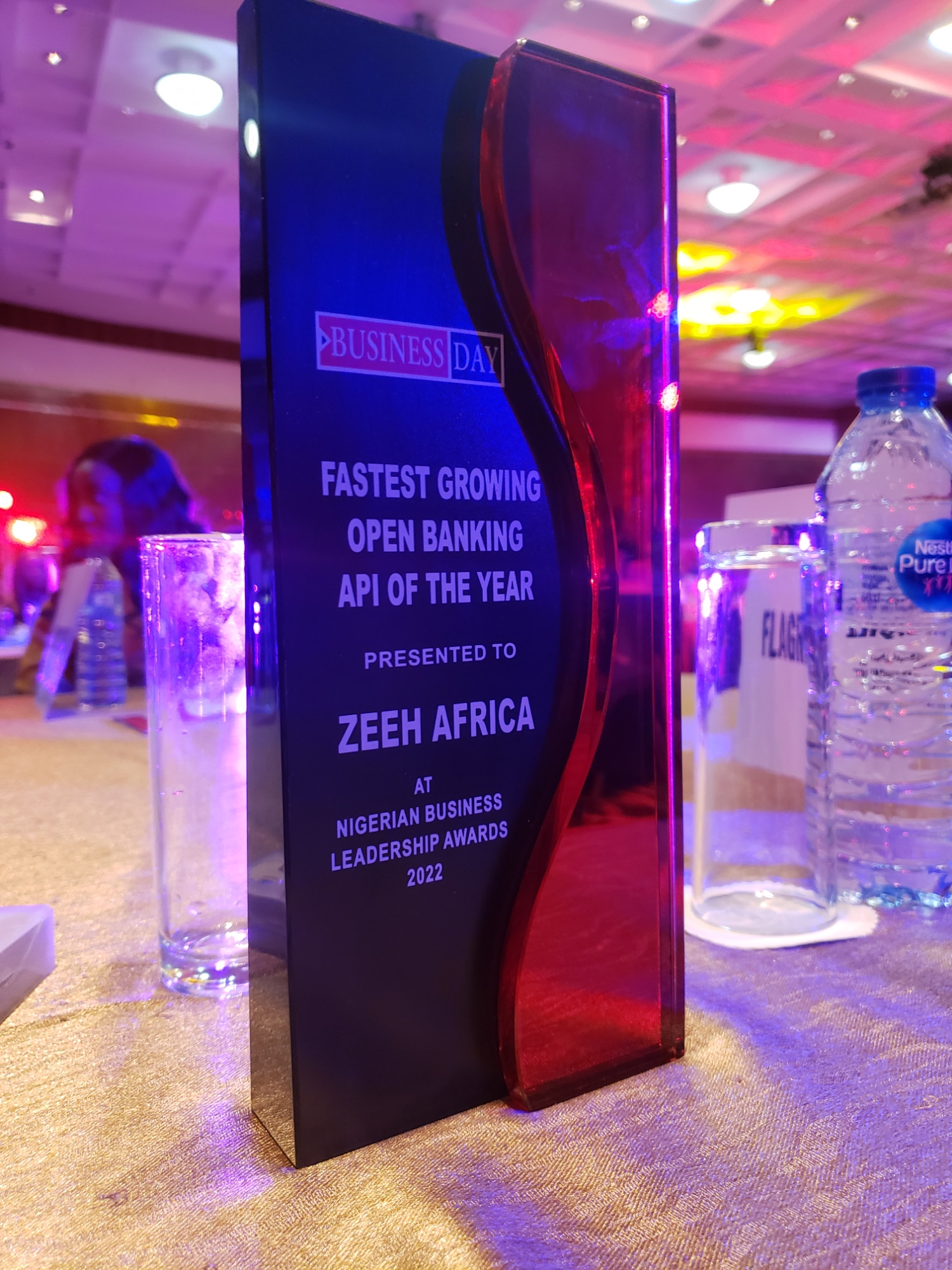
Zeeh Africa, a Tekedia portfolio company that unlocks value in financial data for people and businesses in Africa, has relaunched its Direct Debit feature.

The update aims to tackle one of Nigeria’s digital lending sector’s biggest challenges, ensuring timely loan repayments from borrowers.

The revamped Direct Debit solution enables users to access secure, automated direct debit payments for seamless collections, helping lenders easily manage recurring payments and minimize collection risks.

Highlighting the urgency of the solution, Zeeh Africa CEO David Adeleke said,

“The irony of Nigeria’s fintech boom is that while we’ve made it incredibly easy to disburse loans, we’ve remained inefficient at collecting repayments. Manual follow-ups, failed bank transfers, and unreliable payment promises create a cycle where good borrowers get lumped with bad ones.”

Key Features of the Direct Debit Solution Include;

Automated Payment Collections

Businesses can automate recurring payments and gain access to detailed transaction records, offering insights into user spending and payment patterns.

Reduced Payment Defaults

The system helps minimize missed payments through secure, reliable direct debit processes that support consistent loan repayment.

Secure and Efficient Transactions

Direct debit enhances transaction security, reduces fraud exposure, and ensures smoother payment flows for businesses.

Fixed Recurring Payments

Enables the collection of consistent payment amounts spread across predetermined intervals.

Enhanced Security

Mandate setup requires customer authorization and consent, ensuring secure and compliant transactions.

Swift Mandate Setup and Authorization

Mandates can be created in under five minutes, enabling faster onboarding and payment processing.

Multi-Institutional Support

The platform supports mandate setup across more than 30 Nigerian commercial banks, broadening payment collection options.

The launch of this feature comes at a strategic time, following the Central Bank of Nigeria’s (CBN) Q3 2025 Credit Conditions Survey, which revealed an interesting shift in the country’s lending landscape. According to the report, lenders recorded a decrease in default rates for unsecured lending, while default rates for secured lending increased during the review quarter.

The rise in default rates highlights growing pressure on asset-backed borrowers. Secured loans, such as mortgages, auto loans, and business loans backed by collateral, are usually seen as safer for lenders. However, the Q3 data indicates that borrowers are struggling to meet repayment obligations.

Zeeh Africa, founded in 2022 by Adeleke and Frank Uwajeh, has positioned itself as a leading AI-powered cross-border financial identity and credit data infrastructure provider, trusted by financial institutions, digital banks, and fintechs to verify users, assess risk, and power inclusive credit decisions.

The company’s infrastructure grants access to real-time insights and financial data drawn from over 85 million financial records. Through secure APIs and no-code tools, Zeeh aggregates financial data, behavioral analytics, and verified identity records including NIN, BVN, and facial match into actionable intelligence.

These capabilities help partners onboard customers faster, reduce fraud, and extend credit confidently, even to thin-file or previously unbanked users.

In just a few years, the fintech company has become a key player in Africa’s open finance evolution, serving more than 65 financial institutions across Nigeria, Ghana, and Kenya, and influencing over $15.5 million in credit decisions.

As the company expands into new regions including Canada and diaspora corridors, it remains committed to unlocking financial identity for everyone, everywhere.

Perplexity Escalates “Agentic” Commerce War with PayPal Partnership

0

In a strategic maneuver designed to capitalize on the upcoming holiday spending surge, artificial intelligence startup Perplexity announced on Wednesday that it will roll out a free “agentic” shopping product for U.S. users next week.

This launch marks a significant escalation in the race to monetize AI search, moving beyond simple information retrieval to direct transaction facilitation. The initiative is anchored by a robust infrastructure partnership with PayPal, which will enable users to purchase items directly from more than 5,000 merchants without ever leaving the Perplexity search engine interface.

The core value proposition of this new offering centers on the concept of “agentic” commerce—a term increasingly used to describe AI that acts on behalf of the user rather than merely advising them. Dmitry Shevelenko, Perplexity’s chief business officer, defined this pivot by noting that while most consumers still desire the autonomy to conduct their own research, they demand a streamlined bridge between discovery and acquisition.

“The agentic part is the seamless purchase right from the answer,” Shevelenko told CNBC in an interview. “Most people want to still do their own research. They want that streamlined and simplified, and so that’s the part that is agentic in this launch.”

The “agentic” component effectively collapses the traditional sales funnel, allowing for a seamless purchase immediately following the answer to a user’s query. To achieve this, the new free product utilizes memory from a user’s previous searches to better detect shopping intent and deliver highly personalized results, an evolution from the company’s initial “Buy With Pro” offering released for paid subscribers late last year.

A critical operational shift in this launch involves the “Merchant of Record” status, a detail with significant legal and logistical implications. Under the previous “Buy With Pro” model, Perplexity acted as the intermediary that completed purchases. However, under the new framework, the merchants themselves will serve as the merchants of record.

This means the retailers will retain control over the transaction lifecycle, including customer service and returns, while utilizing PayPal’s backend architecture to process the payments. Michelle Gill, who leads PayPal’s agentic strategy, emphasized that this infrastructure includes the company’s buyer protection policies, ensuring that users remain reimbursed if problems arise—a necessary layer of trust as consumers begin transacting on novel AI platforms.

The timing and structure of this rollout place Perplexity in direct confrontation with OpenAI, which is aggressively building its own e-commerce ecosystem. OpenAI announced a similar feature called Instant Checkout in September, allowing ChatGPT users to transact directly with initial partners like Etsy, Shopify, and eventually PayPal.

A key point of divergence in their business models appears to be monetization; while OpenAI has explicitly stated it will take a fee from purchases made through its “Instant Checkout,” Perplexity has declined to share whether it will earn revenue from these transactions. This silence suggests Perplexity may be prioritizing user growth and market share over immediate monetization in the early stages of this “next era of commerce.”

What’s in it for Perplexity?

Some analysts believe that this structural change significantly de-risks Perplexity’s business model by shielding the company from three specific liabilities. First, it mitigates financial and fraud liability. In the previous intermediary model, Perplexity was exposed to chargeback risks if a user utilized a stolen credit card; now, PayPal processes the payment directly between the user and the merchant, removing Perplexity from the flow of funds. Second, it alleviates the burden of sales tax compliance. Because the merchant is now the record holder, they retain the responsibility for calculating, collecting, and remitting sales tax, allowing Perplexity to avoid the complex legal status of a “marketplace facilitator” across thousands of jurisdictions.

Finally, the shift transfers operational and product liability back to the retailer. Perplexity explicitly stated that merchants will handle processes like purchases, customer service, and returns directly.

Furthermore, Gill emphasized that PayPal’s buyer protection policies will apply to these transactions. This ensures that users remain reimbursed if problems arise, but the operational overhead of triaging returns and defective products falls on the retailer and PayPal rather than Perplexity. This pivot transforms Perplexity from a logistics-heavy reseller into a scalable technology platform.

Nokia Leans Heavily Into AI With New Strategy, Targets 60% Profit Surge by 2028

0

Nokia has laid out an ambitious reinvention plan centered on artificial intelligence, placing itself squarely in the escalating global race among the world’s biggest technology companies to dominate the next wave of digital infrastructure.

The Finnish telecoms equipment maker said the shift marks a structural reset designed to simplify its business, expand beyond its traditional markets, and ride a sector-wide belief that AI is the next major engine of corporate growth.

Beginning in 2026, Nokia will reorganize its operations into two major units. The first, Network Infrastructure, will focus on AI-powered and data-center-grade technologies such as optical networking, routing, and cloud connectivity. The second, Mobile Infrastructure, will oversee the company’s core telecoms operations, including the radio-access equipment that powers mobile networks.

The new structure will support a financial overhaul. Nokia is now targeting an annual comparable operating profit of 2.7 billion to 3.2 billion euros by 2028, up from 2 billion euros last year. That would amount to as much as a 60% jump in profitability.

The move comes as virtually every major tech company intensifies its AI push. Google, Amazon, Meta, Microsoft, Nvidia, IBM, and startups like OpenAI and Anthropic have poured tens of billions into training compute, data-center expansions, and model development. Executives across Silicon Valley now describe AI as the next major platform shift — a transformation akin to the rise of the smartphone, cloud computing, or the early internet. Nokia’s plan signals its determination not to be left behind as AI becomes the focal point of both innovation and investment.

Nokia’s strategic pivot follows a difficult period for telecom equipment suppliers, who have been hit by a global slowdown in 5G rollouts and weak capital spending from mobile operators. In search of steadier ground, the company has been building deeper ties with the cloud and AI ecosystem. Earlier this year, it acquired U.S. optical networking firm Infinera, whose technology is widely used by hyperscale cloud providers. The purchase has already boosted sales and expanded Nokia’s reach into the fast-growing data-centre connectivity market.

That expansion was reinforced when Nvidia pumped $1 billion into Nokia for a 2.9% stake, an endorsement from the most influential chipmaker in the AI boom. Nvidia’s investment signaled confidence in Nokia’s attempt to realign itself with the needs of AI infrastructure builders rather than relying solely on telecoms operators.

At Nokia’s capital markets day in New York, CEO Justin Hotard pointed out that the balance of power in global connectivity has shifted.

“The largest hyperscalers are now investing more each quarter than the largest telcos invest in a year,” he said.

Hotard noted that nine of the world’s ten biggest cloud providers now rely on Nokia technology, underscoring the company’s growing relevance beyond mobile networks.

Alongside its commercial strategy, Nokia announced plans to launch a new defense incubation unit to develop secure connectivity for Western governments — a reflection of rising geopolitical tensions and growing spending on cyber-secure communication capabilities.

The company also intends to cut operating expenses dramatically. It aims to bring group operating costs down to 150 million euros by 2028 from 350 million euros today, freeing up capital for AI-heavy infrastructure and product development.

Investors, however, were not impressed in the immediate term. Nokia shares fell as much as 6%, making it one of the weakest performers on the Stoxx 600 on Wednesday, though the stock remains up about 25% so far this year. Analysts said the sell-off stemmed from lofty expectations after the recent rally.

“Market expectations were higher after a strong share price increase,” said Atte Riikola of Inderes.

Paolo Pescatore of PP Foresight added that the strategy was not dramatically different from the company’s existing direction and warned that the AI build-out is capital-intensive with uncertain long-term returns.

Nokia’s plan aligns with the wider industry narrative that AI is now seen as the defining force of the digital economy. Every major player wants to secure a role, whether through chipmaking, cloud infrastructure, model development, or the communications backbone that keeps these systems running.

The next several years will determine whether Nokia’s repositioning itself at the heart of the AI surge is enough to transform its fortunes.

A Look At Kraken’s Major Funding Boost of $800M Raised at $20B Valuation

0

Crypto exchange Kraken announced that it has raised $800 million in fresh capital across two funding tranches, catapulting its valuation to $20 billion. This comes just ahead of the company’s planned initial public offering (IPO) targeted for early 2026.

The news has generated significant buzz in both crypto and traditional finance circles, signaling strong institutional confidence in Kraken’s growth trajectory amid a maturing regulatory landscape.

The funding was split into two rounds. The first tranche of $600 million came in at a $15 billion valuation from investors including Jane Street, DRW Venture Capital, HSG (Herald Investment), Oppenheimer Alternative Investment Management, and Tribe Capital. The second tranche added $200 million from Citadel Securities at the elevated $20 billion valuation.

Beyond the cash, Citadel is providing expertise in liquidity provision, risk management, and market structure. This marks a notable shift for the firm, which had historically shied away from direct crypto investments due to regulatory hurdles.

Kraken had only raised about $27 million in venture capital historically. This latest infusion builds on a July 2025 effort to secure $500 million and follows September talks for $200–300 million from a single strategic investor.

The capital is earmarked for aggressive expansion argeting new markets in Latin America, Asia-Pacific, Europe, the Middle East, and Africa, with a focus on regulatory-compliant operations. Enhancing asset offerings, payments solutions, and bringing traditional finance (TradFi) products on-chain.

Recent acquisitions include NinjaTrader for $1.5 billion and Small Exchange for $100 million to bolster U.S. derivatives. Bloomberg reports Kraken is working with Morgan Stanley and Goldman Sachs for the listing, potentially in Q1 2026. This positions it ahead of peers like Bullish and Gemini, which have faced post-IPO challenges.

Kraken’s co-CEO Arjun Sethi emphasized the vision: “Our focus has always been straightforward: to create a platform where anyone can trade any asset, anytime, anywhere.” The exchange reported $472 million in Q1 2025 revenue up 19% YoY and $40.5 billion in October trading volume, underscoring its operational strength.

Citadel’s involvement highlights TradFi’s increasing integration with crypto, especially post-FTX recovery and under a more crypto-friendly U.S. administration. While spot ETF flows were negative on November 18 ~$373M outflow for BTC, $74M for ETH, Kraken’s raise reflects optimism for regulated infrastructure over speculative on-chain activity.

Onchain mectrics noted the contrast with slower growth in daily active users on chains like Solana 2.4M, declining and Ethereum 500K, flat. At $20B, Kraken surpasses many rivals and eyes a “one-stop shop” for crypto and beyond, potentially rivaling Coinbase’s 100M users.

Coinbase Global, Inc. (NASDAQ: COIN) went public via direct listing on April 14, 2021, with shares opening at $381 up 52% from the $250 reference price and closing at $328.28, implying an $85.8 billion valuation at the time.

This debut marked a historic milestone for the crypto industry, showcasing explosive growth amid Bitcoin’s bull run. However, the stock’s journey since has mirrored the sector’s volatility: soaring peaks, gut-wrenching lows, and a 2025 rebound that’s been modest at best.

COIN trades at $261.79, down about 31% from its IPO close but up roughly 2% year-to-date. Coinbase reported Q1 revenue of $1.8B and net profit of $730-800M, underscoring its dominance with 56M users. The stock ended 2021 up ~10% from IPO, but volatility was rampant as it tracked crypto prices.

The “crypto winter” post-FTX implosion crushed COIN, dropping to $31.83 by Dec 2022—a 90%+ wipeout from IPO highs. Trading volumes plummeted, revenue fell 60% YoY, and regulatory scrutiny added pressure. By mid-2023, it traded at ~$62, down 84% from debut.

2024 Recovery: A Bitcoin halving and ETF approvals sparked a rebound. Shares climbed ~150% for the year, hitting $343 by Dec 2024 52-week high then. Q4 revenue jumped on institutional inflows, but lingering SEC battles capped gains.

Q1-Q2 2025: Surge hits $147 low in April amid economic uncertainty and BTC dips, then rallied 196% to $436 in July. May 13 announcement of S&P 500 inclusion, sparking a 22.9% single-day jump to ~$256. June saw 52% monthly gains best since Nov 2024, tied to Circle’s IPO rally and stablecoin buzz—Coinbase benefits as a custodian and revenue sharer.

July ATH reflected crypto recovery, but October-November saw a 24% drop to $262, possibly from broader market corrections, regulatory noise and Bitcoin’s YTD decline. Recent X chatter highlights earnings beats on trading volumes and stablecoins, but stock lags peers like leveraged ETFs.

2025 revenue hit $472M in Q1 up 19% YoY, with $40B+ monthly volumes. Analysts at Bernstein, Oppenheimer raised targets post-Q2, eyeing $300+ by year-end if BTC stabilizes. However, COIN’s fate remains ~80% correlated to crypto prices—risky for non-HODLers.

Forbes projects potential $400+ in 3 years if crypto booms, but recession risks could drag it to $150. With 100M+ users, Coinbase eyes TradFi crossovers, but it’s no “set-it-and-forget-it” stock. Coinbase’s post-IPO saga is a microcosm of crypto: high-reward, high-risk.

From $86B debut hype to today’s steadier but subdued footing, it’s resilient but tethered to BTC’s whims. This latest $800M funding round cements Kraken’s status as a frontrunner in the next wave of crypto IPOs.