DD
MM
YYYY

PAGES

DD
MM
YYYY

spot_img

PAGES

Home Blog Page 1454

Tech Will Power Nigeria’s Empires of the Future

0

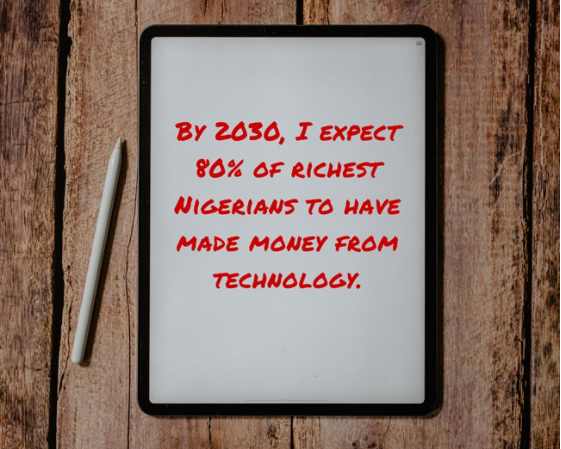
By 2030, I expect 80% of the richest Nigerians to have made money from technology. For all the paralysis in the land, Nigeria is having one of its finest cambrian moments on the formation of enduring companies. The last time we were this bold, on entrepreneurial capitalism, was in the early 1990s when some of Nigeria’s current leading banks were established.

The 1990s gave us the new generation of banks. The 2000s brought voice telephony. The 2010s ushered mobile internet. The 2020s would deliver the era of application utility across industry sectors and market territories.

Here is the deal: most companies are expiring or have expired as new technology vectors penetrate into the nation. AI (artificial intelligence) has taken out many SaaS products in the nation.  Upon this AI domain, many things will happen. We will see technology systems change the ordinances in markets by fixing frictions at scale. From education to healthcare, from financial services to logistics, and beyond, it would be exciting. The empires of the future are being built – get ready, Nigeria is a promise!

Yet, I challenge the government to do more by building platforms of commerce. These platforms are built by governments and entrepreneurs build companies on them. The platforms include road, clean water, security, postal systems, and amenities which enable companies to grow and thrive. For these emerging wealth creators to drive a more equal abundance of the future, Nigeria must build these platforms. Otherwise, many of the citizens will not benefit because no matter what happens, tech will “collect” from the economy.

Musk Admits China’s Restriction on Rare Earth Minerals Will Hurt Tesla’s Robot Ambitions

0

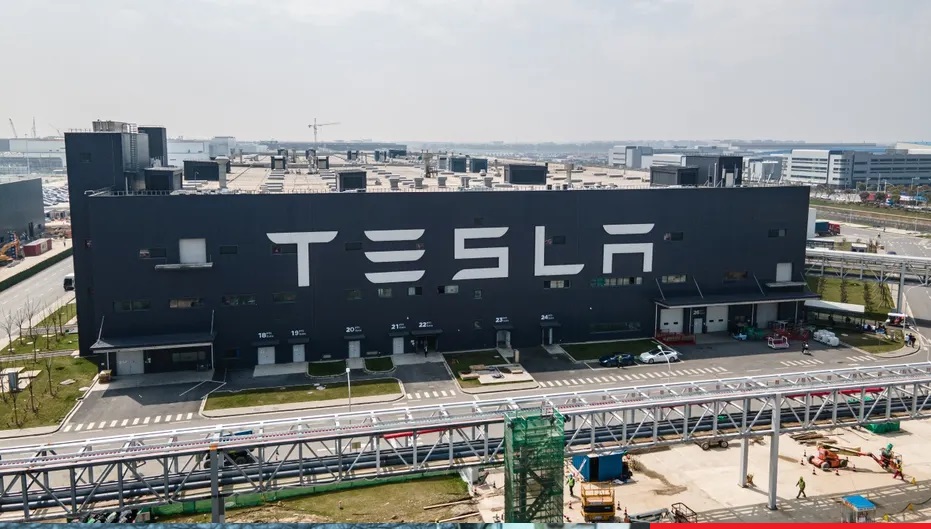
Tesla’s plans to scale production of its humanoid robot, Optimus, have run into geopolitical headwinds as China’s latest export controls on rare earth elements ripple through the global tech economy.

On Tuesday’s earnings call, CEO Elon Musk confirmed that Beijing’s restrictions on critical rare earth magnets have directly impacted production of the robots, forcing the company into a holding pattern while negotiating access to the materials.

“China wants some assurances that these aren’t used for military purposes, which obviously they’re not. They’re just going into a humanoid robot,” Musk told investors, downplaying the concern but acknowledging the company is working through sensitive discussions with Chinese authorities.

The rare earth materials at the heart of this friction, particularly medium and heavy rare earths like dysprosium, terbium, and samarium, are essential for high-efficiency magnets used in Tesla’s robots and electric vehicles. Beijing’s new rules require exporters to obtain licenses and submit end-use declarations, a move widely seen as retaliation for U.S. President Donald Trump’s latest round of tariffs on Chinese goods.

But analysts say this is not just about tit-for-tat policy. China’s control over the global rare earth supply—estimated at over 70% of global output—gives it leverage that hits at the very core of U.S. technological advancement.

Tesla is already feeling the heat. Optimus, the humanoid robot Musk has declared foundational to Tesla’s future, is caught in the middle of the growing tension. Musk had announced that the company would produce about 5,000 units of the robot this year, with thousands expected to be deployed across Tesla’s EV factories. The machines, equipped with AI and built for labor-intensive tasks, are key to Tesla’s diversification strategy as its core EV business faces rising competition and a sagging stock price—down over 37% year-to-date.

“The future of the company is fundamentally based upon large scale autonomous cars and large scale, large volume and vast numbers of autonomous humanoid robots,” he said.

But now, Tesla is not only dealing with uncertainty over material access but also facing a potential timeline squeeze. While Musk tried to reassure investors that the company still intends to deliver thousands of units, industry observers warn that any extended delay in accessing critical components could derail deployment or reduce output.

Making matters more complicated, Tesla’s rivals in the humanoid robotics space, particularly China’s Unitree Robotics and AgiBot, are gearing up for mass production this year. Analysts suggest that the export restrictions could end up giving Chinese players an upper hand, not just in access to resources but also in time to market.

For China, the rare earth restrictions underline the idea that control over physical supply chains still trumps virtual dominance in a high-tech world. The U.S. may lead in software and innovation, but China holds the keys to the physical materials needed to build next-generation machines—humanoid or otherwise.

Trump’s administration is softening its tone on tariff negotiation with China, with President Donald Trump saying on Tuesday that the U.S. “is going to be very nice” to China.

“145% is very high, and it won’t be that high,” Trump said. “No, it won’t be anywhere near that high. It’ll come down substantially. But it won’t be zero ? used to be zero. We were just destroyed. China was taking us for a ride.”

Tesla, for its part, is already exploring material alternatives and redesigns to reduce its dependence on Chinese-sourced rare earths. But experts caution that diversification will take time—years in some cases—and will not solve the immediate shortfall.

Meanwhile, former Tesla board member Steve Westly emphasized the urgency of finding a new growth engine amid EV headwinds. He told CNBC that Tesla’s EV margins are shrinking, and the company needs this robotics bet to work. If they can’t get materials, that’s a massive setback, he said.

Trump Signals Tariff Retreat, Analysts Say He’s “Folding”, Giving Beijing Upper Hand

0

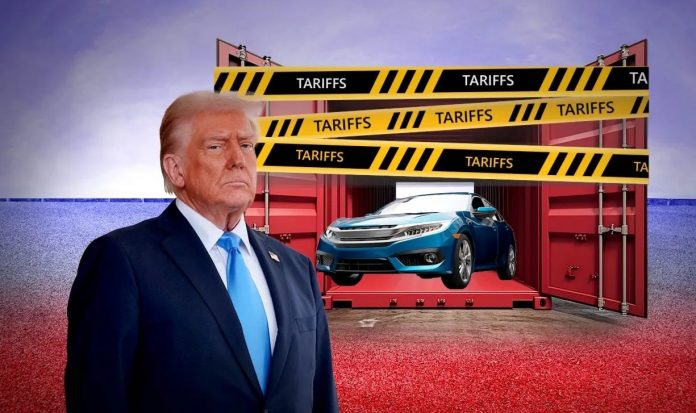
President Donald Trump on Tuesday signaled a potential retreat from his administration’s aggressive trade stance against China, saying the steep 145% tariff rate currently imposed on Chinese imports “won’t be that high” for long.

His remarks, made in the Oval Office, added to mounting speculation that the U.S. is preparing to soften its position amid growing economic fallout and pressure from businesses hit by the escalating trade war.

Trump’s declaration came just hours after Treasury Secretary Scott Bessent privately admitted that the current U.S.-China trade impasse is “not sustainable.” Though Trump struck a hopeful tone about eventual negotiations, insisting “we’re going to be very nice,” there was no indication that formal talks have resumed. The White House later confirmed that there have been no direct communications between Trump and Chinese President Xi Jinping.

Still, Trump said the current tariff rate “will come down substantially,” but not to zero — a level he claimed previously “destroyed” the U.S. economy.

The shift in tone did not go unnoticed by market watchers and analysts, who described it as a retreat under mounting pressure.

“Trump has just folded on Powell and China! Not going to fire Powell and China tariffs to come down substantially… This man is running a circus. This daily flip-flop is disgraceful and a joke,” said Puru Saxena, founder of Hong Kong-based investment research firm AlphaTarget, in a post on social media.

Trump’s softening posture has been interpreted as a signal of vulnerability, with several analysts arguing that China now holds the upper hand in any future negotiations. According to the South China Morning Post, advisers close to Chinese policymakers see the White House’s recent statements as a sign that the U.S. side is “folding.” That perception, experts suggest, could embolden Beijing to hold out for more favorable terms — or make fewer concessions altogether.

“[Trump] needs a quick deal,” Garcia-Herrero told the South China Morning Post. “China does not need to offer anything big in such circumstances, because the US is so desperate for a deal. With a few billion in imports from the US, China might manage to lower the tariffs. The deal might be sweeter for China than in 2019.”

One source familiar with Trump’s strategy said the White House is even willing to phase in tariffs over five years — a dramatic shift from the abrupt enforcement deadlines that defined earlier rounds of tariffs. Another possible concession, the source said, includes coordinating future tariffs with negotiations, rather than slapping them on unilaterally.

But while Trump confirmed he’s open to dialing back tariffs, he remained adamant that duties on Chinese goods would not be entirely lifted. “It won’t be zero,” he said.

Analysts say the policy shift is being driven not by diplomacy but by economic headwinds. Since Trump announced the universal tariffs earlier this month, industry data shows that ocean container bookings from China to the U.S. have plummeted more than 60% industry-wide — a direct hit to U.S. supply chains. The downturn is affecting everything from electronics and household goods to raw materials critical to American manufacturers.

“There’s a real squeeze happening here,” said Chen Zhiwu, a finance professor at the University of Hong Kong. “The more he talks like this, the more it shows how anxious the U.S. side is.”

According to Chen, China sees little incentive to rush back to the table and might benefit from prolonging the standoff, especially as the yuan gains popularity in regional trade.

Trump’s calls for cooperation come as China continues to demand that the U.S. drop what it calls “threats and coercion.” Beijing has also stepped up its own diplomacy, reportedly engaging U.S. allies like Japan to build opposition against Trump’s tariff plan, a move seen as undermining Washington’s leverage.

Despite the political theater, Trump remains without a clear path to securing a deal. Talks have not resumed, and China has yet to formally respond to U.S. overtures. Instead, Beijing has stuck to its retaliatory tariffs, now totaling 125% on U.S. exports, while exempting select industries such as semiconductors and medical devices in a bid to contain the domestic impact.

Even U.S. officials appear to be hedging expectations. Bessent, speaking Tuesday to investors, warned that the negotiations with China would likely be a “slog,” and that while a de-escalation is expected, the process will be neither fast nor simple.

In Beijing, Foreign Ministry spokesperson Guo Jiakun reiterated China’s stance that the U.S. must “stop making threats and resorting to coercion” if it wants a path to dialogue. Until then, analysts believe China is content to wait out the storm.

“Rising living costs, economic disarray, and popular discontent will eventually force a definite pivot of Trump’s approach,” said Xu Tianchen, a senior China economist. “China is betting that time is on its side.”

With the U.S. economy showing signs of strain and businesses warning of disruptions, Trump’s shift from hardline rhetoric to cautious optimism may not be the final act, but it’s certainly a curtain-raiser for a more complicated phase of the trade war.

Earnings Surprises and Their Effect on Market Sentiment

0

Markets thrive on expectations, predictions, and surprises. One of the biggest drivers of stock movements is earnings season. This is when companies report their financial results. Investors eagerly compare actual numbers to estimates. But what happens when the numbers aren’t what anyone expected? That’s where earnings surprises come in and shake things up.

What Are Earnings Per Share and Why Do They Matter?

Earnings per share (EPS) is a key financial metric. It tells you how much profit a company makes for each share of its stock. EPS helps investors gauge a company’s profitability. Analysts often provide an estimate of what a company’s EPS will be. For example, they might say, “We think this company will earn $2.50 per share this quarter.”

Investors watch these estimates closely. If a company meets or beats the forecast, its stock might rise. If it falls short, the stock could drop. But the bigger the gap between expectation and reality, the bigger the reaction is likely to be.

Why Does Market Sentiment Shift?

Market sentiment is how investors feel about stocks or the market as a whole. Numbers alone don’t drive stocks; emotions do, too. People react strongly to news, good or bad.

If a company performs better than expected, it generates excitement. The positive sentiment makes people eager to buy. On the other hand, disappointing results can trigger fear or uncertainty. This causes selling pressure. Big surprises, especially, send ripples across the entire market.

The Role of Earnings Surprises

Earnings surprises occur when a company’s reported results differ from analysts’ predictions. These surprises can be positive or negative. For example, suppose analysts predict a company’s EPS will be $1.20. If the actual EPS comes in at $1.50, that’s a positive surprise. But if it’s $1.00, it’s a negative surprise.

Positive surprises often lead to sharp stock price gains. Investors view the company as stronger than they thought. For instance, imagine a tech company says its revenue beat forecasts by 20%. Suddenly, everyone wants a piece of that stock.

Negative surprises, meanwhile, can crush a stock. Investors might question the business model or worry about future performance. A single earnings miss can even lead to a downward spiral. This is especially true if negative news keeps piling on quarter after quarter.

Other Factors in Play

Earnings surprises don’t operate in a vacuum. The market also considers other factors. Things like company guidance, broader economic trends, or geopolitical events weigh heavily.

For example, inflation or high interest rates can affect market sentiment. Even with strong earnings, external pressures may limit how much a stock can rally. A company might deliver great results during a recession. But the stock might not move much because people feel uneasy about the economy overall.

Timing also matters. If a competitor reports weak earnings, even a decent report might not boost sentiment. Investors often lump entire industries together when making decisions.

The Influence of Politics and Global Events

Geopolitical factors also impact earnings. For instance, consider how the 2025 trade wars could create uncertainty. Tariffs and other restrictions may hurt companies that rely on international trade. A business might face supply chain disruptions or higher costs. Even a firm with strong sales this year might warn investors about challenges next year.

This uncertainty impacts earnings surprises. A company may beat expectations but issue cautious guidance due to political events. Investors could react negatively even when the numbers are solid. Similarly, weaker-than-expected earnings could get overlooked if the market has bigger issues on its mind.

Tips for Investors Navigating Market Sentiment

If you follow the stock market, you’ve probably seen wild jumps in prices during earnings season. Some investors love this period; others find it stressful. Here are some tips to stay level-headed.

  1. Don’t overreact to a single earnings report. A bad quarter doesn’t always signal long-term trouble.
  1. Look at the guidance provided by the company. Future growth projections are just as important as past results.
  1. Watch the broader market trends. External factors influence how investors respond to earnings surprises.
  1. Diversify your portfolio to balance risks. Don’t put all your money into a single company or sector.

Wrapping It Up

Earnings surprises, whether positive or negative, have a big effect on market sentiment. They reveal how well a company is performing compared to expectations. While surprises can create excitement or fear, they don’t tell the whole story. Factors like global events, such as the 2025 trade wars, add more layers of complexity.

For investors, staying calm and looking at the bigger picture is key. Reacting quickly to market sentiment can lead to missed opportunities or unnecessary losses. By staying informed and thinking long-term, you can ride out the volatility of earnings season with confidence.

Musk Steps Back From DOGE to Save Tesla – But Has He Learned His Lessons?

0

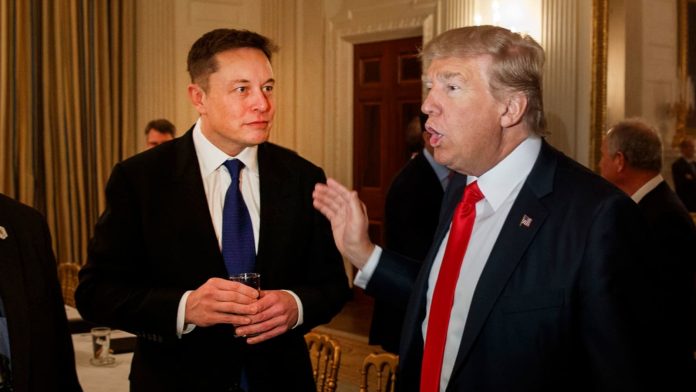
In what some investors are calling a long-overdue course correction, Elon Musk has announced plans to step back from his controversial position as head of the Department of Government Efficiency (DOGE), a move interpreted by analysts as an attempt to salvage Tesla’s standing after months of political turbulence and financial setbacks.

Musk made the announcement during Tesla’s first-quarter earnings call on Tuesday, revealing that he would significantly reduce the time he allocated to DOGE starting in May.

“My time allocation to DOGE will drop significantly,” Musk said. “I’ll have to continue doing it for the remainder of the President’s term just to make sure the waste and fraud that we stopped does not come roaring back…but I’ll only be spending a day or two per week on government matters.”

The billionaire CEO framed the job as “mostly done.”

The statement came after Tesla posted a dismal earnings report, showing a 71% drop in quarterly profits and a 20% plunge in vehicle sales revenue compared to the same period last year. Tesla’s total revenue slid 9% to $19.3 billion, falling short of Wall Street’s expectations. Deliveries also slumped by 13%, marking the company’s first year-over-year decline in over a decade.

For months, Tesla has been battered not just by macroeconomic headwinds and rising global competition, but also by a wave of public backlash tied directly to Musk’s close alliance with President Donald Trump and his leadership in the White House’s cost-cutting agency, DOGE. The political alignment drew protests and calls for boycotts, with Musk even claiming—without offering proof—that demonstrators were “receiving fraudulent money” from the government.

But the biggest damage may have been financial. In its earnings release, Tesla admitted for the first time that “changing political sentiment” and “the current tariff landscape” posed immediate risks to its business. The company also warned of increasing uncertainty in global supply chains.

Now, it appears Musk is pulling back from Washington to focus on Tesla—a pivot interpreted by analysts as both necessary and urgent.

“Musk made a huge move forward as his time in DOGE/White House now winds down and he will be laser focused on Tesla again,” said Dan Ives, Managing Director of Equity Research at Wedbush Securities. “Musk finally read the room and made a pivot which helps remove the black cloud over Tesla. New chapter begins.”

Ives, who has remained a longtime Tesla supporter even during the company’s rocky period, raised his price target to $350, emphasizing a renewed focus on autonomous vehicle development. Still, he did not shy away from acknowledging the depth of the damage Musk’s political entanglements have done.

“Last night was a pivotal conference call for Musk to turn the corner from this dark chapter,” Ives said. “The 1Q numbers ended a disaster quarter in which deliveries were very soft and Tesla missed the Street on basically every metric. More important than numbers, this was the time Musk could pivot, speak to shareholders and employees, and take a turn away from the DOGE/Trump White House and recommit as CEO of Tesla…and he did it loudly and clearly.”

Even with the pivot, Tesla’s thin margin of profit this quarter was largely buoyed by an infusion of $595 million in government-purchased regulatory credits—funds unrelated to the company’s core operations. Without those credits, several analysts believe Tesla would have posted a loss. The credits, which automakers earn by selling electric vehicles and can sell to other companies to meet emissions standards, have historically been a controversial but vital cushion for Tesla.

Inside the company, CFO Vaibhav Taneja acknowledged the challenges during the earnings call.

“The negative impact of vandalism and unwarranted hostility towards our brand and our people had an impact in certain markets,” he said. “Despite this, we were able to sell out legacy Model Y.” Production for the legacy Model Y ended in February, as Tesla began ramping up new models.

Yet the question remains: has Musk truly learned from the consequences of mixing high-stakes business with partisan politics?

For many, the Tesla boss’s public missteps recall a lesson long held by Warren Buffett, the billionaire investor who has famously stayed away from direct involvement in political matters. Many believe Musk should have heeded that wisdom long ago. His tenure at DOGE, though framed as a crusade against government waste, has largely backfired—alienating parts of Tesla’s customer base, worrying shareholders, and allowing competitors like China’s BYD to gain ground while he was distracted.

Despite the retreat, Musk appeared to double down on his vision, ending the call with a flourish of political and historical references.

“Lift your gaze to the bright shining citadel on the hill — I don’t know, some Reagan-esque imagery — and that’s where we’re headed,” he said.