DD
MM
YYYY

PAGES

DD
MM
YYYY

spot_img

PAGES

Home Blog Page 1462

Amid Soaring Inflation, Nigeria’s Nominal Manufacturing Output Recorded 34.9% Spike in H2 2024 – MAN

0

The Manufacturers Association of Nigeria (MAN) has disclosed that Nigeria’s nominal manufacturing output surged by 34.9 percent to N33.43 trillion in the second half of 2024, attributing the growth largely to rising inflation and domestic prices.

The development was announced by MAN’s Director-General, Segun Ajayi-Kadir, during the presentation of the “MAN Economic Review – Second Half 2024” released on Monday in Lagos, according to the News Agency of Nigeria (NAN).

Ajayi-Kadir stated that the sharp rise in nominal output was largely due to the prevailing inflationary pressures and escalating local prices. The report, according to him, detailed performance indicators such as capacity utilization, production levels, inventory build-up, raw material sourcing, capital investment, energy consumption, and employment figures within the sector.

He noted that capacity utilization within the sector improved slightly, rising to 57.0 percent in 2024 from 55.1 percent in 2023. On a half-year basis, there was a 1.2 percentage point increase in the second half of 2024 compared to the first.

While nominal figures soared, real manufacturing output posted a more modest gain, growing by 1.7 percent year-on-year to N7.78 trillion. This real growth, though limited, was driven by increased production activity in segments such as motor vehicles and miscellaneous assembly, non-metallic mineral products, and electrical and electronics.

However, a half-year comparison revealed that real output declined by 3.1 percent between H2 and H1 2024, exposing the continued struggles manufacturers face, including high production costs, weak consumer purchasing power, and unstable pricing conditions.

On the issue of local raw material sourcing, the report observed a notable improvement. The use of local inputs rose from 52.0 percent in 2023 to 57.1 percent in 2024. This shift was spurred by the enduring scarcity of foreign exchange, high prices of imported inputs, and government initiatives encouraging the adoption of local resources.

Sectors such as wood and wood products, textiles and apparel, footwear, and pharmaceuticals made significant progress in this area, while the electrical and electronics sector lagged due to its heavy dependency on imported components.

Investment trends, however, painted a more concerning picture. Real manufacturing investment dropped sharply by 35.3 percent year-on-year to N658.81 billion, reflecting persistent macroeconomic uncertainties and diminished investor confidence. Yet, on a positive note, there was a 19.4 percent increase in investment in H2 compared to H1 2024, suggesting a cautious resumption of capital expenditure by some firms responding to early signs of macroeconomic stability.

One of the more alarming revelations in the report was the significant build-up of unsold inventory. The total value of unsold finished goods rose by 87.5 percent to N2.14 trillion in 2024, a result of sluggish consumer demand, elevated inflation, and rising production costs. However, compared to the first half of the year, there was a 27.9 percent reduction in inventory volumes in H2, indicating a partial recovery in sales and possible pricing adjustments that helped clear some stock.

On the employment front, the manufacturing sector added 34,769 new jobs in 2024, a modest increase from the 34,163 jobs recorded in 2023. Nonetheless, labor exits also rose to 17,949, up from 17,364 in the previous year. This simultaneous rise in hiring and exits points to increased labor mobility, internal restructuring, and possibly economic migration as firms adjust to a volatile economic landscape.

Electricity supply to manufacturers showed significant gains during the year. Average daily power supply rose to 13.3 hours in 2024, up from 10.6 hours in 2023. On a half-year comparison, this figure jumped from 11.4 hours in the first half to 15.2 hours in the second half. Despite the longer supply hours, manufacturers endured soaring energy costs, exacerbated by the over 200 percent hike in Band A electricity tariffs.

Consequently, total industry expenditure on alternative energy sources—including diesel, petrol, and generator maintenance—ballooned to N1.11 trillion, representing a 42.3 percent increase from N781.68 billion in 2023. This expenditure spiked sharply from N404.80 billion in H1 to N708.07 billion in H2 2024, marking a staggering 75 percent surge in just six months.

Manufacturers were also burdened by the steep rise in the cost of credit. Lending rates from commercial banks jumped to an average of 35.5 percent in 2024, up from 28.06 percent the previous year. As a result, finance costs soared to N1.3 trillion, further constraining firms’ capacity to expand or invest in new production lines.

Ajayi-Kadir concluded by calling on the government to implement urgent reforms aimed at stabilizing the policy environment, improving foreign exchange liquidity, lowering energy costs, and moderating interest rates. He stressed that sustained growth in manufacturing will require a more predictable business climate backed by concrete actions to tackle the underlying economic challenges.


Gold Price Surged Past $3400 Per Ounce

0

Gold prices surged past $3,400 per ounce, setting a new all-time high on April 21, 2025, driven by a weakening U.S. dollar, escalating U.S.-China trade tensions, and heightened geopolitical risks, including the collapse of the Russia-Ukraine ceasefire. Spot gold rose over 3% to a record $3,436.01, with U.S. gold futures for June 2025 delivery hitting $3,455.90.

The rally, which saw gold gain more than $700 (27%) since January 2025, reflects strong safe-haven demand amid investor concerns over U.S. economic stability, particularly following President Trump’s comments challenging Federal Reserve independence. Market chatters highlight market unease, noting gold’s surge as a signal of eroding confidence in the dollar and global stability.

Analysts warn of potential volatility, with some projecting further rises to $3,500 if trade tensions worsen, though profit-taking or improved U.S.-China relations could trigger a pullback. The surge in gold prices past $3,400, hitting a new all-time high on April 21, 2025, is driven by weakening U.S. Dollar: A declining dollar, down 0.5% against major currencies, makes gold more attractive as a dollar-denominated asset.

Escalating trade disputes, including new U.S. tariffs, have heightened economic uncertainty, boosting gold’s safe-haven appeal. The collapse of the Russia-Ukraine ceasefire and ongoing global conflicts have increased investor demand for gold as a hedge against instability. President Trump’s comments challenging Federal Reserve independence have raised fears of monetary policy uncertainty, driving investors to gold.

Market sentiment that gold is a hedge against potential dollar devaluation and persistent inflation risks. These factors have fueled a 27% ($700) gain in gold prices since January 2025, with spot gold reaching $3,436.01 and futures hitting $3,455.90. Gold’s rally signals investor fears about U.S. economic stability, driven by a weakening dollar, U.S.-China trade tensions, and geopolitical risks like the Russia-Ukraine ceasefire collapse. This suggests eroding confidence in traditional financial systems. The 27% price increase since January 2025 reflects worries about inflation and potential dollar devaluation, particularly amid President Trump’s comments on Federal Reserve independence. Investors may continue seeking gold as a hedge.

Analysts warn of heightened volatility. While gold could climb toward $3,500 if trade tensions or geopolitical risks intensify, profit-taking or easing U.S.-China relations could trigger a price pullback. Rising gold prices may divert capital from equities and bonds to safe-haven assets, potentially pressuring stock markets, especially in sectors sensitive to trade disruptions.

The surge underscores the economic fallout of escalating tariffs and trade disputes, which could lead to higher consumer prices and slower global growth if unresolved. Central banks may increase gold reserves to diversify away from dollar-based assets, while retail and institutional investors might further drive demand, sustaining upward price pressure.

Gold’s 27% rise since January 2025 signals investors shifting capital from equities to safe-haven assets like gold amid economic and geopolitical uncertainty. This could depress stock indices, as seen with the SPY (SPDR S&P 500 ETF Trust) dropping to $519.91 on April 22, 2025, from a high of $576.00 in March 2025, reflecting a 9.7% decline over the past month. Escalating U.S.-China trade tensions and tariffs threaten sectors like technology, consumer goods, and industrials, which rely on global supply chains. Stocks in these sectors may face sharper declines.

A weaker dollar and uncertainty over Federal Reserve independence could squeeze bank margins and profitability, pressuring financial stocks. Conversely, gold mining and related companies (e.g., Newmont, Barrick Gold) may see gains as higher gold prices boost revenues. The SPY’s recent volatility, with a low of $490.57 and high of $576.00 in the past month, aligns with X posts noting gold’s surge as a signal of market unease. Increased volatility may persist if trade disputes or geopolitical risks intensify, prompting further equity sell-offs.

Trade tensions and a weaker dollar could weigh on global markets, particularly in export-driven economies like China and Europe, amplifying downward pressure on multinational corporations listed on U.S. exchanges. Some analysts frame gold’s rally as a warning of eroding confidence in economic stability, which could lead to broader risk-off sentiment, reducing demand for stocks and favoring defensive assets like gold, bonds, or utilities.

While gold’s rise could stabilize if U.S.-China relations improve or profit-taking occurs, persistent uncertainty may continue to drag on equities, with the SPY’s year-to-date decline from $605.04 in 2024 to $519.91 signaling a bearish outlook for the near term.

ChatGPT Search Gains Traction in Europe, Surges to 41.3 Million Monthly Active Users

0

OpenAI’s ChatGPT Search, which integrates real-time web data into its responses, is rapidly expanding in Europe.

According to a report, the feature averaged 41.3 million monthly active users in the EU for the six months ending March 31, 2025, up from 11.2 million in the prior six-month period ending October 31, 2024.

Announcing the milestone, EU Digital Services Act (DSA), wrote via a post,

“In accordance with our obligations under Article 24(2) of the DSA, OpenAI Ireland Limited publishes information on the average ‘monthly active recipients’ of ChatGPT search (i.e. our online search features) in the European Union, calculated over a six-month period.  For the six-month period ending 31 March 2025, ChatGPT search had in combination approximately 41.3 million average monthly active recipients in the European Union.”

Under the EU’s Digital Services Act (DSA), platforms with over 45 million monthly users face stricter rules, including allowing users to opt out of recommendation systems, sharing data with researchers, and undergoing external audits. With its current growth, ChatGPT Search may soon trigger these requirements. Non-compliance could lead to fines of up to 6% of global revenue or even temporary EU suspension.

Launched in October 2024, OpenAI rolled out the search feature on ChatGPT, to enable users to get fast, timely answers with links to relevant web sources. The search model is a fine-tuned version of GPT?4o, post-trained using novel synthetic data generation techniques, including distilling outputs from OpenAI o1 preview. ChatGPT search leverages third-party search providers, as well as content provided directly by its partners, to provide the information users are looking for.

The company also partnered with news and data providers to add up-to-date information and new visual designs for categories like weather, stocks, sports, news, and maps.

ChatGPT Search’s rapid growth to 41.3 million monthly active users in Europe by March 2025 is reshaping the search industry in several ways:

1. Increased Competition:

With its conversational AI-driven approach, ChatGPT Search challenges Google’s dominance by offering concise, synthesized answers rather than traditional link-based results. This could pressure Google, which still holds over 90% of the global search market, to innovate further, particularly in AI integration.

2. Shifting User Expectations:

The surge in adoption highlights a growing preference for natural language processing and direct answers, pushing traditional search engines to enhance their interfaces. Bing and others may accelerate AI investments to compete.

3. Market Share Redistribution:

While Google’s market share remains dominant, ChatGPT Search’s growth capturing a fraction of the 8.5 billion daily global searches could erode smaller players’ shares (e.g., Bing, Yahoo) more quickly, as users gravitate toward AI-driven alternatives.

A September 2024 poll showed that 8% of users prefer ChatGPT Search over Google. However, studies highlight reliability issues, with one noting a 67% error rate in identifying articles and another flagging inaccuracy in news content, including from OpenAI’s licensed partners.

Despite its rise, ChatGPT Search trails Google, the dominant search engine, which processes an estimated 373 times more searches. Meanwhile, ChatGPT search rise, is a wake-up call for Google, pushing it to innovate faster, protect its ad-driven model, and leverage its scale and reliability to fend off this emerging threat. Failure to adapt could lead to gradual market share erosion, though Google’s entrenched position provides a strong buffer for now.

Circle and BitGo Reportedly Planning to Apply for U.S. Banking License

0

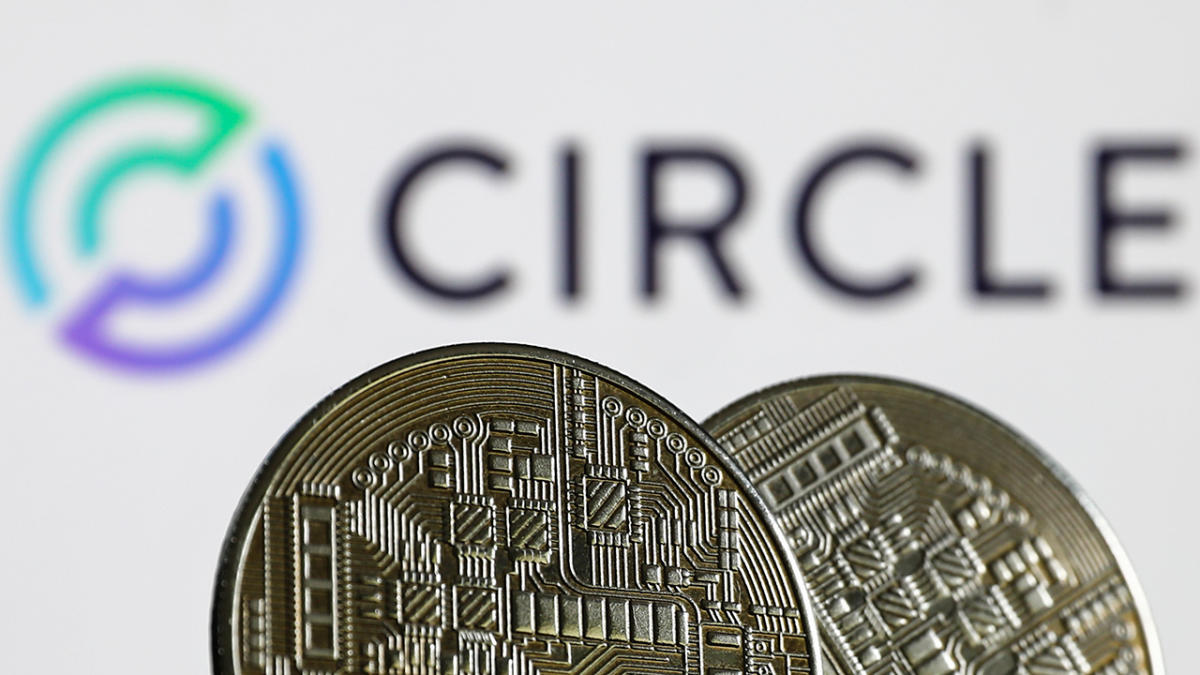
Circle, the issuer of the USDC stablecoin, and BitGo, a digital asset custody provider, are reportedly planning to apply for U.S. banking licenses, according to an April 21, 2025, Wall Street Journal report. They aim to secure federal bank charters, enabling them to offer traditional banking services like deposit-taking and lending, and gain direct access to Federal Reserve payment systems. This move would also enhance their regulatory legitimacy, allowing better compliance with Anti-Money Laundering (AML) and Know Your Customer (KYC) rules, and potentially offering FDIC insurance.

Coinbase and Paxos are also exploring similar steps, with Paxos having received conditional approval for a U.S. bank charter in 2021. The push follows a more crypto-friendly regulatory environment under the Trump administration, which has relaxed restrictions on banks engaging with crypto firms. Congress is advancing stablecoin legislation, such as the STABLE Act and GENIUS Act, which would require issuers to obtain licenses, further driving these efforts.

The only crypto-native firm with a federal bank charter, Anchorage Digital, has faced significant compliance costs and is under investigation by the Department of Homeland Security, highlighting the challenges of stricter oversight. Meanwhile, traditional banks like Bank of America and U.S. Bancorp are showing renewed interest in crypto, with the former considering its own stablecoin and the latter relaunching custody services.

Obtaining federal bank charters would enhance the credibility of crypto firms, signaling compliance with stringent U.S. banking regulations like AML and KYC. This could attract institutional and retail customers, boosting adoption of stablecoins like USDC and crypto custody services.

A banking license grants direct access to Federal Reserve payment systems, reducing reliance on third-party banks for settlement and custody. This could lower costs, improve transaction efficiency, and enable firms to offer FDIC-insured deposits, making crypto services more competitive with traditional banks.

Licensed crypto firms could provide traditional banking services such as lending, deposit-taking, and wealth management alongside crypto offerings. This convergence could blur lines between crypto and traditional finance, fostering innovation but also competition with established banks.

Operating as banks would subject these firms to rigorous oversight by federal regulators like the OCC and FDIC. While this ensures compliance, it increases operational costs and complexity, as seen with Anchorage Digital’s compliance challenges and ongoing DHS investigation.

The move by Circle, BitGo, Coinbase, and Paxos reflects a broader trend among crypto-native firms to integrate with traditional finance. This could pressure other crypto firms to seek licenses, while traditional banks (e.g., Bank of America, U.S. Bancorp) may accelerate their crypto offerings, intensifying market competition. Pending legislation like the STABLE Act and GENIUS Act, which mandate banking licenses for stablecoin issuers, aligns with these efforts.

A crypto-friendly Trump administration and bipartisan Congressional support could expedite approvals, shaping a clearer regulatory framework but potentially favoring larger players with resources to navigate compliance. Licensed crypto banks could stabilize the volatile crypto market by offering insured deposits and regulated services. However, their integration into the financial system might introduce systemic risks if crypto market volatility affects their banking operations.

Customers could benefit from safer, more accessible crypto services with FDIC protections and seamless fiat-crypto integration. However, increased compliance costs might lead to higher fees or reduced innovation in some crypto offerings. Overall, this shift could bridge crypto and traditional finance, but it hinges on navigating complex regulatory and operational challenges while balancing innovation with stability.

We Invite You To Tekedia Capital Demo Day on Saturday, April 26

0

On Saturday, April 26, Tekedia Capital will hold its Demo Day. Eighteen great companies will participate. Nations rise when great entrepreneurs emerge because they build category-king companies. Our aspiration is to become a farm to breed tech unicorns as we support innovators and makers to fix frictions in markets, and advance societies. If you can, join us https://capital.tekedia.com/course/fee/ .