DD
MM
YYYY

PAGES

DD
MM
YYYY

spot_img

PAGES

Home Blog Page 1466

Aso Villa Goes Solar as Power Bills Soar, Signaling More Challenge in Nigeria’s Electricity Sector

0
Concept of house in paper on blue color background for real estate property industry

In a move that has left many Nigerians seething, the Federal Government has earmarked a staggering N10 billion in the 2025 budget to install a solar-powered mini-grid at the Presidential Villa, suggesting it is walking away from the national electricity grid,  per The Punch.

The plan, tucked inside the N57.1 billion proposed for the State House next year, covers the “solarization” of the Villa, including its main buildings in Abuja, the State House Medical Centre, and the former seat of government at Dodan Barracks in Lagos. According to internal projections, the project is expected to save the Villa up to N5 billion annually in electricity bills.

The decision has stirred a fresh conversation about Nigeria’s electricity challenge. While officials say the project is aimed at promoting clean energy, many believe it lays bare the growing crisis in Nigeria’s power sector — one that the government itself now appears eager to escape.

The Villa’s pivot to solar isn’t happening in a vacuum. In February this year, the Abuja Electricity Distribution Company (AEDC) publicly named the Presidential Villa among its top debtors, claiming the State House owed over N923 million in unpaid electricity bills. The presidency initially disputed the figure, but after a reconciliation process, it acknowledged a debt of N342 million, which President Bola Tinubu ordered paid immediately.

The scale of the Villa’s power consumption has since become a matter of national interest. According to GovSpend, a public finance tracking platform, the presidency spent more than N483 million on electricity in 2024 alone. A large chunk of that came from a lump-sum payment of N316.88 million in October, presumably to settle part of the backlog.

Meanwhile, the State House has continued to burn millions on diesel. In the three months following that payment, records show that over N88 million was spent on diesel alone — a signal that power from the national grid, even when paid for, isn’t always available.

Still, the move to spend N10 billion on solar power is raising serious questions, not just about the presidency’s energy choices, but about the message it sends to a nation whose power sector is already wobbling under the weight of high tariffs, low supply, and dwindling public trust. For ordinary Nigerians who are grappling with record-high electricity costs and epileptic supply, the question now is: if the Villa can’t cope with grid electricity, how are the rest of the country’s consumers supposed to survive?

The concern is more notable among Nigeria’s electricity consumers, who have faced exorbitant tariff increases over the last year. The most punishing of these came in April when the Nigerian Electricity Regulatory Commission (NERC) approved a new Band A tariff of N209.5 per kilowatt-hour, more than triple the previous rate of N68. Band A customers are meant to receive at least 20 hours of electricity daily. However, many of them still struggle with intermittent supply.

The Villa is classified under this premium band, and it’s no surprise the costs are stacking up. Last week,  Lagos State’s Deputy Governor, Obafemi Hamzat, revealed that he was slapped with an N29 million electricity bill for a single month.

For many, the government’s decision to disconnect itself from the grid, even in the name of sustainability, confirms that the national electricity supply system is not only unreliable but unaffordable.

A Sector Focused on Revenue, Not Service

The discontent deepened earlier this month when the Minister of Power, Adebayo Adelabu, announced that the electricity sector had raked in N700 billion in revenue in 2024. While the government has touted the figure as a sign of improvement in the power sector, critics say it reveals a troubling shift in focus — from service delivery to aggressive revenue generation.

The solarization of the Presidential Villa, as extensive and strategic as it may seem, is not part of any clear national solar roadmap. There is no indication that the government plans to extend similar installations to schools, hospitals, or local government secretariats, many of which continue to operate without basic electricity.

The project itself is already running behind schedule. Construction of a 1.2MW solar facility at the State House Medical Centre was launched in October 2024, but by early 2025, no physical work had begun on solar infrastructure for the main Villa complex. Officials blame procurement delays, but critics suspect the project could be bogged down by bureaucratic inertia or even mismanagement.

The Villa’s move for solar energy underlines Nigeria’s current electricity situation, where individuals and businesses are increasingly seeing solar as an alternative to the country’s expensive – yet unstable power supply.

Savings Emerged as The Second Fastest Growing Financial Service Among Mobile Money Providers in 2024

0
Piggybank for saving has enslaved many to online lenders

Mobile money usage worldwide has continued to gain momentum, as millions of people now use their cell phones to manage their finances.

A state of the industry report on mobile money 2025, revealed that last year, savings was the second fastest-growing mobile money adjacent financial service. In 2024, 34% of mobile money providers were reported to be offering savings services, up from 23% in 2023.

As a result, the cumulative number of unique customers who transferred funds to a savings account grew by 80% between September 2023 and June 2024. This includes customers using a dedicated interest-bearing savings account (where regulations permit) or others who use mobile money accounts as a reliable store of value.

Demand-side data supports this latter point. In several African and Asian countries, mobile money is being used by more customers to save money. The number of customers saving money via mobile money over the past 12 months grew by more than 20 percentage points in Ethiopia, India, Indonesia and Nigeria.

Customers who used mobile money to send money to a savings account in the past 12 months in Nigeria, from 2023 and 2024, grew from 40% to 71%. Senegal grew from 5% to 8%, Bangladesh grew from 7% to 14% and Pakistan grew from 3% to 15%. Significant increases were also observed in Pakistan and Uganda.

Notably, a high number of users were already using mobile money to save money in Kenya in 2023, leading to a modest rise in 2024. As of 2023, responses to the 2024 GSMA Global
Adoption Survey suggest that women continue to rely on mobile money to save money. Among MMPs that offer savings accounts, the number that collect gender-disaggregated data remains small but has grown by nearly half year on year. MMPs that collected this data reported a 91% increase in the cumulative number of unique female customers saving money via mobile money.

Growth of savings on mobile money platforms reflects a broader trend in which mobile money services are transitioning from simple payment tools to more comprehensive digital financial ecosystems. This growth is majorly attributed to ease of access in making deposits and withdrawals.

As competition in the mobile money space intensifies, providers are seeking to differentiate themselves by offering value-added services that meet the broader financial needs of their users. Savings products, in particular, serve a dual purpose: they not only help users manage their money more effectively but also deepen engagement with the platform and foster long-term customer loyalty.

The increased availability of savings services can be attributed to several factors. First, there is a growing demand among users especially in underserved or unbanked regions for tools that allow them to securely store and grow their money. Mobile money platforms, which often offer easier access than traditional banks, are well-positioned to meet this need. By offering savings accounts or wallet-based savings features, MMPs can help users cultivate better financial habits, build resilience, and achieve their financial goals.

Second, regulatory environments in many markets have become more supportive of financial inclusion, encouraging mobile money operators to expand their range of services. Partnerships between mobile money providers and financial institutions have also played a critical role, enabling the integration of savings accounts that are backed by banks, thus adding a layer of security and trust for users.

Third, advancements in technology have made it easier and more cost-effective for mobile money platforms to roll out savings products. Digital onboarding, mobile KYC (Know Your Customer) processes, and intuitive user interfaces have lowered the barriers for both providers and users to adopt these services.

Looking ahead

The upward trajectory of savings on mobile money platforms is a positive indicator of the shift toward more holistic financial offerings. If this trend continues, savings could soon rival core mobile money services in terms of both relevance and user adoption marking an important milestone in the journey toward greater financial inclusion and economic empowerment through digital finance.

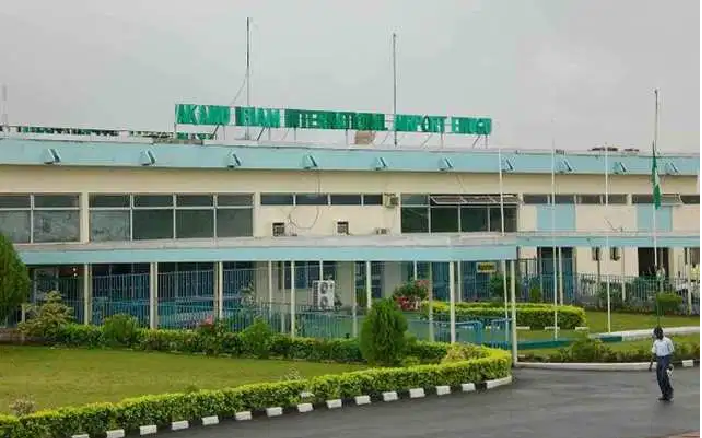
Concerns Mount Over Akanu Ibiam Airport Concession as Enugu Govt. Confirms 70% Progress

0

The Enugu State Government has announced that the concession process for the Akanu Ibiam International Airport in Enugu is now over 70 percent complete, with expectations that it will be finalized by the second quarter of 2025.

This was disclosed by the State Commissioner for Transportation, Dr. Obi Ozor, during a program on Afia TV.

According to Dr. Ozor, the process is being managed by the Federal Ministry of Aviation in collaboration with private investors. Once completed, the concessionaire will commence upgrades to the international wing of the airport, including the long-abandoned international terminal, the cargo terminal, aircraft maintenance, repair and overhaul (MRO) facilities, hangars, and runway extension.

But while the state government is optimistic, the airport concession has sparked growing unease among citizens, particularly those from the Southeast where Akanu Ibiam remains the only functional international airport. Many believe that the current move might not be to make the airport more efficient but to weaken it through a calculated strategy masked as a concession deal.

Allegations of Sabotage and Lack of Transparency

The distrust is not new. For years, the Southeast has had to lobby for the reopening or rehabilitation of the Akanu Ibiam Airport, which has repeatedly suffered neglect and funding delays. Now that the Federal Government has approved its concession, critics argue that the manner of the process raises red flags.

Financial analyst and commentator, Kalu Aja, took the questions directly to Aviation Minister Festus Keyamo, demanding answers to what he describes as glaring omissions and a lack of transparency surrounding the deal.

“Who exactly is Aero Alliance Consortium?” Aja asked. “Are they registered in Nigeria? Who are their promoters?”

Despite being named as the preferred bidder, virtually no public information exists about the Aero Alliance Consortium—its history, its executives, or its financial and technical credentials. This opacity has fueled suspicions about the motives behind the concession and whether due process was followed.

Did the Concession Follow Nigeria’s PPP Guidelines?

Aja pointed to the guidelines under the Infrastructure Concession Regulatory Commission (ICRC) Act of 2005, which mandates that all public-private partnerships (PPPs) must follow a competitive bidding process. He raised issues of concern and questioned whether the process adhered to the key provisions of the law:

Competitive Bidding: There is no evidence that multiple bids were invited or evaluated in a competitive manner. The ICRC rules require the bidder with the most technically and economically sound proposal to be selected through a transparent process. Did that happen here?

Technical Expertise: According to the ICRC, any private sector firm vying for an airport concession must demonstrate strong technical capacity in managing international aviation facilities. Yet there are no publicly available records of Aero Alliance Consortium’s involvement in any airport management project, either within or outside Nigeria.

Financial Capacity: Bidders are required to show a net worth of at least N30 billion (around $72 million) and obtain support letters from credible financial institutions to prove they can manage airport infrastructure. Many believe there is no evidence that Aero Alliance has met this threshold.

The 80-Year Tenor: A New Precedent?

Another concern that’s drawn public outrage is the unprecedented length of the concession period—80 years. That is more than double the tenors given for the concessions of other Nigerian airports, most of which are under 30 years.

“What’s the rationale behind locking down a strategic infrastructure asset for 80 years?” Aja questioned. “That’s two generations. Airports in Lagos and Abuja have 20 to 30-year concessions. Why is the East different?”

As the unusually long tenor deepens fears that the aim may not be efficient management, but a calculated sidelining of the only international gateway in the region, some Southeast stakeholders are calling for the agreement to be published and scrutinized by the National Assembly or a public oversight body before it is allowed to proceed.

What Happens to the Free Trade Zone?

The uncertainty doesn’t end with the concession contract itself. There are also concerns about what parts of the airport complex fall under the deal. Aja raised a pointed question: “Is the Free Trade Zone at Akanu Ibiam International Airport covered under this concession?”

The Free Trade Zone, if included in the concession, would mean ceding a potentially lucrative economic zone to a private entity for the next 80 years, without input from the state government or even clarity on how such assets will be managed.

Revenue Guarantees and Risk Transfer

Perhaps the most worrying detail to emerge is that the Federal Government appears to have agreed to “guarantee” the concessionaire’s projected revenues over the 80-year period—an arrangement critics argue is reckless and places enormous financial risk on taxpayers.

“If the concessionaire fails to meet its revenue targets, will the government really cover those shortfalls with public funds?” Aja asked. “Why should Nigerian taxpayers be saddled with 80 years of projected revenue risk for a deal they had no say in?”

Such an arrangement, if true, would amount to privatizing the gains while socializing the risks—a model that has repeatedly failed in Nigeria, especially in power, rail, and telecoms concessions.

“This is the most outrageous agreement I have seen. According to the Enugu Airport concession, if this concession is terminated and the termination is a result of the FGN default, then the FGN must pay outstanding loans, third-party liabilities, equity investment, and projected returns,” Aja noted.

He went further to ask: “Have we gone mad in this nation? Nigeria will repay “equity investment” and PROJECTED returns? So if the concessionaires say they projected to make 500%, FGN will repay 500%? On whose authority is Keyamo signing this contingent liability on the Federation? Is the Debt Management Office (DMO) aware that a contingent liability is being created here? Is the ICRCNG going to really sign off on an 80 year lease? Is this in the public interest?”

Aja went further to liken the concession to the P&ID controversial deal. “This is how P&ID’s liability was created: You draft a nonsense contract, get it signed, you get paid, and if it’s cancelled you also get paid. The same method was used in Ajaokuta Steel Mill and Mambila Power; both projects are now dead.

“This is a tactic to burden Enugu airport with debt and kill it, making it inoperable. Why would any government agree to be liable for “projected returns”? This is a setup against the entire region.”

State Government Optimism

In contrast to the criticism, Enugu’s state government remains hopeful. Dr. Ozor insisted the Federal Government and private investors are working closely to ensure the airport becomes fully operational with modern facilities. He said the aim is to turn the airport into a regional hub for international travel, commerce, and logistics.

He also noted that the airport upgrades align with broader plans, including the upcoming launch of Enugu Air—a state-backed airline scheduled to commence operations in May 2025.

Against the backdrop of the questions being raised, the government has been urged to release more information about the Aero Alliance Consortium, the concession agreement, and the future governance structure of the airport if it hopes to regain public trust and secure buy-in for the project.

OpenAI Faces Scrutiny Over Benchmark Discrepancy in o3 Model Performance

0

A glaring mismatch between internal and independent benchmark scores for OpenAI’s recently released o3 AI model is raising fresh questions about the company’s transparency and the reliability of industry claims.

While the discrepancy is not unprecedented, it underlines an uncomfortable truth that artificial intelligence, still sold on the promise of human-level reasoning and logic, is not yet ready to be trusted at face value.

When OpenAI introduced its o3 model in December, it was with no shortage of flair. During a live-streamed event, Chief Research Officer Mark Chen said the model could correctly solve just over 25% of problems in FrontierMath, a challenging benchmark designed to test mathematical reasoning at a level far beyond standard AI performance. The next-best model at the time managed just under 2%.

“Today, all offerings out there have less than 2% [on FrontierMath],” Chen said. “We’re seeing [internally], with o3 in aggressive test-time compute settings, we’re able to get over 25%.”

The claim stunned much of the AI research community, who viewed it as a major leap in machine reasoning. But months later, as the o3 model finally reached public hands, the shine has dulled. Independent testing from Epoch AI, the group that created the FrontierMath benchmark, has found that the released version of o3 achieves a much lower score of around 10%, far below what OpenAI originally showcased.

Epoch acknowledged that several factors could explain the difference. Their testing used a newer version of the benchmark dataset, and the model evaluated was the production-grade o3 — not the more powerful internal version OpenAI likely used for its earlier tests. The compute settings, model scaffolding, and even the subset of questions were different.

“The difference between our results and OpenAI’s might be due to OpenAI evaluating with a more powerful internal scaffold, using more test-time [computing], or because those results were run on a different subset of FrontierMath,” Epoch noted in its statement.

In other words, OpenAI’s headline result was real — just not representative of the model the public can use.

Supporting this, the ARC Prize Foundation, which also tested o3 before its public release, confirmed that the production model is “a different model […] tuned for chat/product use,” and that all the available o3 compute tiers are smaller than the one originally benchmarked. That technical gap matters, as more computing typically enables better performance.

OpenAI did not refute Epoch’s findings. Instead, it offered a familiar rationale: the version of o3 now available is optimized for speed and practical use, not for peak benchmark performance. Wenda Zhou, a technical staff member at the company, said last week during a livestream that the production o3 was deliberately engineered to be more cost-efficient and responsive at the expense of benchmark scores.

“We’ve done [optimizations] to make the [model] more cost efficient [and] more useful in general,” Zhou said. “You won’t have to wait as long when you’re asking for an answer, which is a real thing with these [types of] models.”

Still, the shift from one model to another without clearly distinguishing between them in public-facing benchmarks has once again spotlighted the credibility gap growing in the AI industry.

While technically not a lie, OpenAI’s choice to showcase the best-case results of a high-performance internal model and then release a significantly dialed-down version plays into a broader pattern. In a rush to dominate headlines and capture market attention, AI firms often blur the distinction between what is achievable in theory and what is available in practice.

Meta recently admitted it had benchmarked one model but released another. Elon Musk’s xAI was accused of misleadingly promoting Grok 3’s benchmark charts. Even Epoch, now on the side of scrutiny,  was previously criticized for not disclosing its funding from OpenAI until after the company unveiled o3.

The pattern is growing familiar: model scores are gamed, fine print is overlooked, and developers and the public are left navigating a fog of performance claims they can’t independently verify.

And yet, for all the frustration, this may be part of the necessary turbulence that comes with the evolution of an emerging field. AI is still learning to walk, and the companies building it are trying, sometimes awkwardly, to translate research breakthroughs into practical tools. The road from lab to real-world deployment is rarely smooth. Models are often re-engineered for usability, cost, and latency, which inevitably introduces performance tradeoffs.

The benchmark discrepancy around o3 is not just a technical note — it is also a reminder that artificial intelligence, at this stage, still straddles the line between promise and practicality. It reveals that, for now, trust in AI remains elusive. And perhaps more importantly, it reinforces the need for independent verification, clearer disclosures, and transparent model reporting standards.

But viewed from another lens, these stumbles can be seen as evidence of progress. The fact that researchers like Epoch can even test and compare these models in the open and that they are holding even the largest labs accountable is a sign of a maturing industry. The tension between public utility and internal performance may not disappear soon, but the pressure to bridge that gap is growing.

OpenAI appears to be aware of this dynamic. The company says newer variants like o3-mini-high and o4-mini already outperform the standard o3 on FrontierMath, and a higher-end model, o3-pro, is expected to launch in the coming weeks. If true, the company may once again make headlines — but with them, the same responsibility will follow: clarity, accountability, and respect for the people using these tools.

Ultimately, artificial intelligence is not failing, it is revealing how fragile trust can be when science and marketing collide. And in that, the discrepancy over a math benchmark becomes less about numbers and more about the story the AI industry chooses to tell about itself.

Until that story becomes more consistent, analysts believe that critical scrutiny will remain essential. While the evolution of AI will likely bring better models, faster tools, and more capability, the path forward must include the humility to admit  — openly and early, when the technology doesn’t yet live up to its promises.

ZKSYNC’S $5M Hack Had Significant Impact to its Total Value Locked (TVL)

0

ZKsync, an Ethereum Layer-2 scaling solution, confirmed a security breach where a compromised admin account led to the theft of approximately $5 million in unclaimed ZK tokens from its June 2024 airdrop. The attacker exploited the sweepUnclaimed() function in three airdrop distribution contracts, minting 111 million ZK tokens, which increased the circulating supply by 0.45%. The compromised account was identified as wallet 0x842822c797049269A3c29464221995C56da5587D.

ZKsync emphasized that the breach was isolated to the airdrop contracts, with no impact on user funds, the core protocol, ZK token contract, or governance systems. The team is conducting a full investigation, collaborating with cybersecurity experts and exchanges for recovery efforts, and has urged the attacker to negotiate to avoid legal consequences. The incident caused a sharp 20% drop in ZK token price, later recovering slightly to around $0.046.

ZKsync quickly revoked the compromised admin key to prevent further unauthorized access to the airdrop distribution contracts. This ensured no additional tokens could be minted via the exploited sweepUnclaimed() function, as confirmed by the team on April 16, 2025. The team verified that the breach was isolated to three airdrop contracts, with no impact on the core ZKsync protocol, ZK token contract, governance systems, or user funds. All vulnerable tokens were minted, closing the exploit vector.

An internal investigation was launched to determine how the admin account wallet address was compromised. ZKsync’s co-founder, Alex Gluchowski, noted that the unclaimed tokens were meant to return to the Token Assembly, and the team is probing why this didn’t occur. A full incident report was promised, with Gluchowski stating it would be published once the investigation and recovery efforts are complete. ZKsync is collaborating with the Security Alliance (SEAL), a blockchain cybersecurity group, to track the attacker’s movements and recover the stolen funds. SEAL is assisting in tracing the 111 million ZK tokens, most of which remain in the attacker’s wallet (0xb102…d6a8).

The team is working with cryptocurrency exchanges to freeze the stolen assets. Approximately 44 million tokens ($2.1 million) are unaccounted for, while 2,200 ETH ($3.4 million) from swapped tokens are traceable, indicating active efforts to monitor and potentially recover these funds. Security teams froze suspicious transactions within hours of the breach, limiting further damage.

ZKsync publicly urged the attacker to contact their security team at security@zksync.io to negotiate the return of the stolen funds, warning of legal consequences if they fail to comply. This approach aims to recover assets without escalating to law enforcement, though no updates on negotiations have been reported. ZKsync has used X to provide updates, reassuring users that their funds are safe and the protocol remains secure. Posts on April 15 and 16, 2025, detailed the breach, the compromised wallet, and containment measures.

Despite these efforts, community backlash has been significant, with accusations of mismanagement and skepticism about the breach’s legitimacy. Some users suggested it might be an “inside job” or a cover for other issues, though no evidence supports these claims. ZKsync has acknowledged the criticism and pledged enhanced security protocols.

ZKsync developers have committed to implementing stronger security measures, including transitioning to multi-party computation (MPC) wallets, real-time transaction monitoring, and decentralized governance controls for treasury management. These aim to address vulnerabilities in admin key management and restore investor confidence. The breach highlighted centralization risks in airdrop contract management, prompting calls for more robust multi-signature wallet protections and regular security audits.

The ZK token price dropped 15-20% following the breach, from $0.047 to as low as $0.039, but later recovered slightly to around $0.046-$0.0475. ZKsync’s assurances about protocol security helped mitigate panic selling, though trading volume surged 96% to $71 million, reflecting market volatility. The team is addressing community frustration over the loss of airdrop tokens, which were meant to incentivize ecosystem participation. While no specific compensation plans have been announced, users anticipate governance reforms or potential reimbursement strategies.

The recovery of the stolen $5 million remains uncertain, as the attacker still holds most of the tokens. Tracing and freezing assets across decentralized exchanges is complex, and negotiations may not yield results. Community trust has been strained due to prior criticism of ZKsync’s airdrop distribution (e.g., weak Sybil protection) and the current breach. Restoring confidence will require transparent reporting and tangible security improvements.

ZKsync’s total value locked (TVL) was reported at $57.3-$60 million, down significantly since February 2025, adding pressure to demonstrate resilience. ZKsync’s recovery efforts involve immediate containment, collaboration with security experts and exchanges, an ongoing investigation, and plans for enhanced security protocols. While the team has taken steps to limit damage and pursue the stolen funds, rebuilding community trust and fully recovering the assets remain significant challenges.