DD
MM
YYYY

PAGES

DD
MM
YYYY

spot_img

PAGES

Home Blog Page 147

UK Launches Major Crypto Fraud Probe with Arrests Tied to $28M Basis Markets Collapse

0

The Serious Fraud Office (SFO), the country’s primary agency for investigating serious financial crimes, has described this as its first major investigation into crypto-related fraud. Here’s a breakdown of what happened, based on official statements and reporting.

Two men—one in his 40s and the other in his 30s—were detained on suspicion of fraud and money laundering. Their identities haven’t been publicly disclosed, but one may be linked to Adam Cobb-Webb, a 48-year-old UK national previously fined $150,000 by the U.S. Commodity Futures Trading Commission (CFTC) in 2023 for market manipulation in oil futures.

Coordinated raids occurred on November 20 in Herne Hill south London and Bradford West Yorkshire. The men were released on bail pending further inquiries. The probe stems from the 2022 collapse of Basis Markets, a project that raised approximately $28 million from investors in late 2021 but allegedly diverted funds to personal wallets without delivering any product.

Basis Markets pitched itself as a “decentralized hedge fund” offering “delta-neutral” yields through sophisticated arbitrage basis trades—strategies typically reserved for institutional investors. The team claimed over 80 years of combined experience in traditional finance, software, and crypto.

Despite assurances of locked team allocations and a project treasury, investigators found funds were funneled directly to founders’ personal wallets. No platform was built, and the project shut down months later without refunds.

Pitch materials hyped unrealistic returns, like a single NFT earning up to $18,000 monthly by year three later revised down but still inflated. Founders reportedly flaunted luxury purchases like watches in their Discord community.

This fits the pattern of “rug pulls” from the 2021 crypto boom, where hype around NFTs and DeFi lured retail investors into unaccountable schemes. The SFO is urging victims and whistleblowers to come forward, signaling this could be the start of a wave of prosecutions.

It reflects a national strategy to tackle digital asset crimes, especially as the UK pushes for crypto regulation via the Financial Services and Markets Act 2023. Blockchain forensics and NFT traceability were key to tracing funds.

Similar probes are underway elsewhere—e.g., the U.S. SEC’s actions against high-profile rug pulls. This case highlights ongoing risks in crypto, even years later, and may deter future fraud by emphasizing accountability.

The investigation is ongoing, with potential for more arrests. The SFO is analyzing blockchain transactions from the sales. A basis trade is a low-risk arbitrage strategy that exploits small price differences (“basis”) between two closely related assets.

In traditional finance, the most famous version is the cash-and-carry trade in futures markets (e.g., Treasury futures vs. actual bonds, or Bitcoin futures vs. spot Bitcoin). In crypto, the basis trade almost always refers to: Long spot Bitcoin or ETH + Short perpetual futures or quarterly futures at a higher price

You lock in the difference (the “basis”) as nearly risk-free profit. Immediately short the same amount of BTC on a perpetual futures exchange using cross-margin or stablecoin-margin. You are now delta-neutral no net directional exposure. Collect funding rate payments from the short perpetual position. This is the key profit source.

Hold the position until the basis shrinks or you decide to unwind. Profit = cumulative funding received minus borrowing costs and fees. Unlike traditional markets, crypto perpetual futures almost always trade at a premium to spot because:Most retail traders are long-only and leveraged ? they pay funding to shorts.

Funding rates can stay positive for months or even years especially in bull markets. Example historical rates: 2021 bull market: often 0.05–0.30% per 8 hours ?18–100% annualized. 2024–2025 bull market: frequently 0.01–0.10% per 8 hours ?10–80% annualized on good days.

When funding is positive ? shorts get paid by longs ? basis traders (who are short) earn steady yield.Simplified Profit & Loss Example (2025 numbers)You run a $1 million basis trade when funding is 0.05% every 8 hours

In late 2024 and early 2025, large hedge funds like Millennium, Balyasny, Exodus, etc. reportedly made hundreds of millions doing exactly this trade.  Risks Funding rate flips negative ? You start paying instead of receiving happened briefly in crashes. Exchange insolvency or forced liquidation.

Margin calls if you over-leverage the short leg. Opportunity cost — your capital is tied up earning 20–40% instead of going 5× long in a bull run. The fraudulent project Basis Markets  promised investors they were running sophisticated basis trades and other delta-neutral strategies with decades of TradFi experience.

In reality, they allegedly just took the money and never executed any trades — classic rug pull dressed up in impressive-sounding hedge-fund jargon. The crypto basis trade = buy spot Bitcoin, short the same amount in perpetual futures, collect funding payments from leveraged longs.

It’s one of the closest things crypto has to a “risk-free” trade, which is why real hedge funds love it — and why scammers love name-dropping it.
Congrats Eloquent AI, And Welcome to Tekedia Capital

0

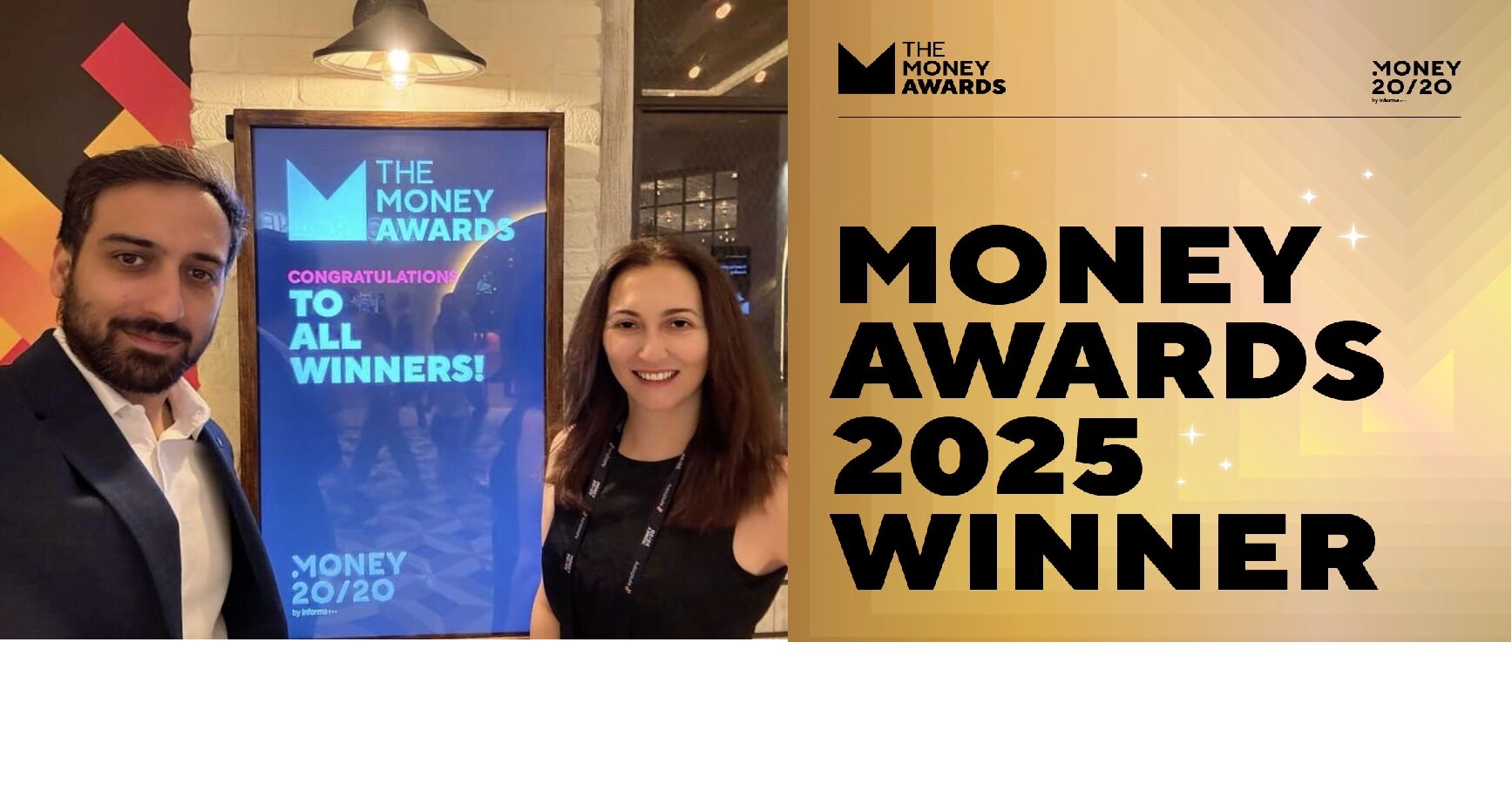
Tekedia Capital congratulates our portfolio startup, Eloquent AI, for winning the Money 20/20 Award for Novel Technologies.

This prestigious award honors the boldest innovators shaping the future of money and the global financial ecosystem. Winners were selected from hundreds of worldwide entries by an independent jury of more than 40 leading fintech experts.

At Tekedia Capital, we have always believed that Eloquent AI is building the most amazing Financial AI Operator in this emerging era of AI. Their recognition on the world stage affirms that belief.

Eloquent AI, win the future.

BlackRock Moves Toward a Staked Ethereum ETF

0

BlackRock filed a Delaware name registration for the iShares Staked Ethereum Trust ETF, marking an early but significant step in launching a new exchange-traded fund (ETF) focused on staked Ethereum (ETH).

This filing, handled by Daniel Schweiger—a BlackRock managing director who previously registered the firm’s iShares Ethereum Trust (ETHA) in late 2023—signals preparation for a formal Securities Act of 1933 (Form S-1) submission to the U.S. Securities and Exchange Commission (SEC).

Bloomberg ETF analyst Eric Balchunas noted that a full filing is “coming soon.” Unlike BlackRock’s existing ETHA ETF launched in July 2024 with over $11.5 billion in assets, this new product would allow investors to earn staking rewards—typically 3-5% annually—on top of ETH price exposure. Staking involves locking ETH to secure the Ethereum network and validate transactions.

Delaware Registration Process: Such filings are a standard preliminary action for new ETFs, creating a statutory trust entity. They often precede SEC applications by weeks or months and have reliably predicted launches for crypto products like spot Bitcoin and Ethereum ETFs.

This comes amid evolving SEC rules. Nasdaq submitted a 19b-4 filing in July 2025 to add staking to ETHA, but recent changes eliminated the need for product-specific 19b-4 approvals under new generic listing standards for crypto ETPs. BlackRock’s Head of Digital Assets, Robert Mitchnick, has called ETH ETF staking “the next phase” of development.

BlackRock is joining a wave of issuers racing to offer staked ETH products. This competition could drive more institutional inflows into Ethereum, building on the $13+ billion BlackRock has already attracted to ETHA.

ETH prices hovered around $2,800, up slightly amid broader market optimism, though no immediate surge tied directly to this filing. Investors should watch for the S-1 filing, expected imminently, and SEC feedback on staking mechanics.

Nvidia’s Q3 Earnings Ignite Rally in Bitcoin Mining Stocks

Nvidia’s fiscal Q3 2026 earnings, released after market close, delivered a resounding beat on both revenue and earnings per share, while guidance for Q4 exceeded analyst expectations.

This performance alleviated mounting concerns over an “AI bubble” and sparked a broad tech rebound, with Nvidia’s own shares surging 2.85% to $184.66 in after-hours trading. The ripple effects extended to bitcoin mining companies increasingly pivoting to AI and high-performance computing (HPC) infrastructure, as their power-secured data centers align perfectly with surging demand for GPU-heavy AI workloads.

$57.01 billion up 62% YoY, beating estimates of $54.92–$55.19 billion. EPS: $1.30 adjusted vs. $1.25–$1.26 expected. Q4 Guidance: $65 billion in sales vs. $61.66 billion forecast, driven by data center revenue hitting a record $51 billion up 66% YoY.

Jensen Huang dismissed AI bubble fears, emphasizing “AI is going everywhere, doing everything, all at once.” CFO Colette Kress noted the company is on track for $500 billion in AI chip orders through 2025–2026, with potential for more.

The results boosted bitcoin prices from sub-$89,000 to around $91,000, while miners’ stocks—many now retrofitting facilities for Nvidia H100/Blackwell GPUs—saw sharp after-hours gains. This reflects their strategic shift: bitcoin mining’s energy-intensive infrastructure is being repurposed for AI hosting, with deals like IREN’s $9.7 billion Microsoft contract and Cipher’s $5.5 billion AWS pact underscoring the trend.

After-Hours Stock Performance

Bitcoin miners led the charge, acting as “leveraged beta” plays on Nvidia’s dominance amid power constraints for AI data centers. Here’s a snapshot of key movers after-hours/pre-market as of November 20, 2025.

Up >10x YTD (+215%); AI hosting deal with AWS/Fluidstack. Up >10x YTD (+367%); $9.7B Microsoft AI cloud deal for GB300 GPUs. Multi-year AI leases; 360 MW capacity. Focused on efficient, renewable-powered ops.

These gains followed a brutal selloff last week, where the sector shed billions amid AI skepticism and debt concerns like IREN -35%, CIFR -30%. Nvidia’s beat has restored momentum, with analysts viewing miners as undervalued AI enablers—faster to scale than building new power plants.

Miners like IREN and Cipher control vast, low-cost power assets ideal for Nvidia’s power-hungry chips. They’ve paused BTC expansion to prioritize AI, with IREN’s AI cloud revenue up 33% QoQ in Q3 2025. AI infrastructure spend could hit $3–4 trillion annually by decade’s end; miners offer “plug-and-play” capacity to hyperscalers like Microsoft and Google.

High debt loads and volatility remain. Earnings volatility from BTC prices could pressure pure miners, but AI deals provide revenue stability. This rally validates the hybrid model: bitcoin as a hedge, AI as the growth engine.

With Nvidia signaling sustained demand, these stocks could extend gains if Q4 delivers—watch for updates on GPU deployments and hyperscaler contracts.

Michael Selig Faces Probing Questions from US Senate Agriculture Committee

0

Michael Selig, President Donald Trump’s nominee to chair the Commodity Futures Trading Commission (CFTC), faced probing questions from the Senate Agriculture Committee during his confirmation hearing.

The session highlighted tensions around the agency’s role in regulating the burgeoning crypto market, especially as Congress advances major legislation to expand CFTC oversight.

Selig, currently chief counsel for the SEC’s crypto task force and a senior advisor to SEC Chair Paul Atkins, emphasized a balanced, innovation-friendly approach to digital assets while avoiding firm commitments on key concerns like funding and bipartisanship.

The hearing comes at a critical juncture: The CFTC, with its 543 full-time staff compared to the SEC’s 4,200, is poised to gain primary authority over crypto spot markets under pending bills. Lawmakers expressed bipartisan support for clearer rules but voiced worries about the agency’s capacity and independence from executive influence.

Lawmakers focused on three main areas: agency independence, resource needs for crypto oversight, and preventing future crises like the 2022 FTX collapse. Sen. Elissa Slotkin (D-MI) warned that operating as the sole commissioner could make Selig “vulnerable to the pressure of the president,” urging commitments to bipartisan appointments.

She tied this to broader Trump administration efforts to remove Democrats from independent agencies, which is under Supreme Court review. Selig acknowledged valuing diverse viewpoints but deferred to the president on nominations, stating he would “honor such decisions.”

He avoided endorsing a specific number of Democratic commissioners. Sen. John Boozman (R-AR), the committee chair, pressed on regulating decentralized finance (DeFi) and spot trading for assets like Bitcoin and Ethereum. He advocated for “the CFTC, and only the CFTC” to handle digital commodities. Others asked about overhauling crypto rules and election betting markets.

Selig called crypto a “critical mission” for the CFTC, supporting a “cop on the beat” for investor protection in on-chain markets and DeFi. He advocated for frameworks that foster software developers and exchanges with proper disclosures, warning that unclear rules could drive firms overseas. He cautioned against an “enforcement-only approach.”

Funding and Resources

Multiple senators, including Democrats, repeatedly asked if the CFTC needs more funding to oversee the $4 trillion crypto market, especially with pending bills like the CLARITY Act. The draft bill proposes $150 million initially, shifting to fees later.

Selig declined to commit, calling it “premature” and saying he’d assess needs upon confirmation. He noted the agency’s recent staff reductions down ~20% but focused on internal efficiencies, like bolstering enforcement with specialized prosecutors.

Selig also addressed preventing another FTX-like scandal, stressing robust controls for exchanges and intermediaries. The hearing aligns with accelerating legislative efforts.

CLARITY Act: Would grant the CFTC exclusive jurisdiction over spot digital commodity trading (e.g., Bitcoin, Ethereum, Litecoin), requiring exchanges to register. It includes DeFi provisions targeting intermediaries rather than open-source code. The Senate Agriculture Committee is set to consider it soon, with optimism for passage before year-end despite a partial government shutdown.

Digital Asset Market Clarity Act (House-passed): Approved in July 2025 (294-137 bipartisan vote), it clarifies SEC vs. CFTC roles, covers stablecoins, custody, and DeFi. Senate reconciliation is ongoing. These bills stem from years of regulatory ambiguity, with the CFTC already handling crypto derivatives but seeking spot market authority.

If confirmed, Selig would replace Acting Chair Caroline Pham who plans to depart immediately, initially as the sole commissioner on the five-member panel. The committee scheduled a vote on his nomination for November 20, 2025, potentially fast-tracking him to the full Senate.

Crypto advocates, including The Digital Chamber’s CEO Cody Carbone, welcomed Selig’s nomination as “exciting” and pro-innovation. On X (formerly Twitter), reactions were positive but cautious. Posts highlighted Selig’s SEC experience and potential for “unified digital-asset oversight.”

Industry figures like David Sacks— White House AI/crypto czar praised him for modernizing regulation to keep the U.S. competitive. Some noted his pro-crypto stance could accelerate rulemaking on tokens and stablecoins.

Bitcoin and Ethereum saw modest gains post-hearing (~2-3%), reflecting optimism for regulatory clarity. However, critics worry about underfunding and politicization, with Democrats pushing for safeguards in the bills.

This development underscores Trump’s push to make the U.S. the “Crypto Capital of the World,” as Selig himself posted on X upon nomination. Confirmation could reshape crypto’s regulatory landscape by early 2026.

Aztec Launches Privacy-Focused L2 Ignition Chain As Bitwise Spot XRP ETF Launches 

0

Aztec Network, a leading Ethereum Layer 2 (L2) solution specializing in zero-knowledge (ZK) proofs for privacy, has officially launched its Ignition Chain on Ethereum’s mainnet on November 19, 2025.

This marks a significant milestone as the project claims Ignition Chain is the first fully decentralized L2 on Ethereum, enabling programmable privacy for decentralized applications (dApps), particularly in DeFi.

The launch followed the initiation of its AZTEC token sale on November 13, 2025, which powers staking, governance, and block rewards on the network. Ignition Chain uses ZK proofs to provide end-to-end confidentiality for transactions and smart contracts, addressing Ethereum’s inherent transparency while preserving verifiability.

This allows developers to build a “private world computer” where users can execute private DeFi trades, payments, and more without exposing sensitive data. It builds on Aztec’s public testnet rollout from May 2025.

The chain activated block production after reaching a validator queue of 500, with each validator required to stake 200,000 AZTEC tokens. Early stakers receive bonuses to accelerate decentralization, differentiating it from L2s like Optimism or Arbitrum, where sequencers often remain centralized.

The AZTEC token auction opens to the public on December 2, 2025, aiming to boost community participation. Aztec, backed by a $100 million Series B round from a16z in 2022, positions this as a step toward scalable, privacy-preserving infrastructure.

The announcement generated buzz on X, with discussions around its implications for privacy in Web3. No immediate price data for AZTEC is available pre-auction, but it underscores growing demand for compliant privacy tools amid regulatory scrutiny.

This launch positions Aztec as a frontrunner in the privacy L2 race, competing with projects like zkSync while emphasizing full decentralization from day one.

Bitwise Spot XRP ETF Launches Thursday Amid Altcoin ETF Boom

Bitwise Asset Management’s spot XRP exchange-traded fund (ETF) is set to debut on NYSE Arca today, November 20, 2025, under the ticker XRP. This comes amid a surge in U.S. altcoin ETFs, driven by clearer SEC guidance on crypto fund approvals, with recent launches for Solana, Litecoin, and Hedera paving the way.

Bitwise’s CIO Matt Hougan called it a “historic moment,” highlighting XRP’s role in modernizing global payments. The ETF provides direct, physically backed exposure to XRP (Ripple’s native token), with Coinbase as custodian. It features a 0.34% management fee, waived for the first month on the initial $500 million in assets. This follows Bitwise’s European XRP ETP (GXRP) launched in 2022.

XRP’s price is consolidating around $2.10–$2.30 after a 9% dip, showing bullish divergence on technical charts (e.g., RSI forming higher lows despite price lows). Community projections suggest strong inflows: conservative estimates predict $72.5 million on day one acquiring ~34 million XRP, potentially surpassing Canary Capital’s XRP ETF (XRPC) record of $58 million.

Over 100 crypto ETFs are expected soon, including Grayscale’s XRP ETP and Dogecoin ETF on November 24, plus filings for Cardano, Avalanche, and Polkadot. Altcoin ETFs have already pulled in $500 million+ in under a month, signaling institutional appetite beyond Bitcoin and Ethereum. Ripple’s recent $500 million funding round valuing it at $40 billion adds tailwinds.

On X, excitement is high, with users debating the simple “XRP” ticker vs. branded ones like BSOL for Solana and forecasting record volumes. Some question potential confusion, but others see it as a branding win for mainstream adoption.

This wave reflects maturing crypto markets, but analysts note XRP’s price may not rally immediately due to broader sell-offs—fundamentals like Ripple’s expansions could drive longer-term gains.