DD
MM
YYYY

PAGES

DD
MM
YYYY

spot_img

PAGES

Home Blog Page 15

Microsoft’s ‘Agent Seats’ Vision Challenges Narrative of AI Disrupting Software Industry

0
Microsoft CEO

Fears that agentic artificial intelligence could dismantle the traditional software industry are prompting a strategic response from incumbents, with Microsoft advancing a framework that would fold AI agents into the same commercial logic that has underpinned enterprise software for decades.

The argument, articulated by Microsoft Executive Vice President Rajesh Jha, is that AI systems will not eliminate software demand but redefine who, or what, counts as a user. Speaking at a recent conference, Jha described a near-term scenario in which AI agents operate inside corporate environments as digital workers, each with its own identity, credentials, and access rights.

“All of those embodied agents are seat opportunities,” he said, invoking the industry’s core pricing unit: the per-user license.

Under Microsoft’s model, an organization deploying AI at scale could see its licensing footprint expand rather than contract. Ten employees supervising multiple agents would not reduce demand for software seats; it could increase demand for them. Each agent, performing discrete tasks across systems, would require authorized access, audit trails, and integration into enterprise identity frameworks.

This framing is designed to counter a competing narrative gaining traction among analysts and technologists. In that view, large language models and autonomous agents act as intermediaries that sit above traditional software stacks, executing tasks without requiring users to engage directly with multiple applications. If that model holds, the value of many SaaS products could be compressed, with AI interfaces becoming the primary layer of interaction.

Microsoft’s counter-position is rooted in infrastructure realities. Enterprise systems are governed by strict controls around identity, permissions, and compliance. Even highly autonomous agents must authenticate, access data through approved channels, and leave verifiable records of activity. These requirements create a structural argument for preserving licensing frameworks, even as the nature of “users” evolves.

There is also a financial imperative. The global software industry, dominated by subscription-based SaaS models, depends heavily on predictable, per-seat revenue streams. A shift toward fewer human users interacting with software would, under traditional assumptions, threaten that model. Microsoft is attempting to extend its revenue base into the automation layer itself by redefining agents as licensable entities.

However, this approach introduces new tensions. Nenad Milicevic of AlixPartners argues that agentic AI may push enterprises in the opposite direction, toward minimizing the number of active “users” altogether. As automation scales, a smaller group of human supervisors could manage increasingly complex workflows, reducing the need for widespread software access.

In such a scenario, the logic of per-seat licensing begins to strain. If a single AI agent can perform the work of several employees, charging per “seat” may not align with perceived value. Vendors could respond by increasing prices for machine-based operators or introducing new tiers of licensing, but that carries competitive risk. Enterprises may favor providers that adopt usage-based or outcome-based pricing models better suited to automated environments.

The debate points to a deeper question about how value is measured in an AI-driven enterprise. Traditional software pricing assumes a linear relationship between users and output. Agentic systems break that link. One agent can operate continuously, scale tasks dynamically, and interface with multiple systems simultaneously. This creates ambiguity around what constitutes fair pricing: access, activity, or results.

There is also a dimension tied to platform control. If AI agents become the primary interface through which work is executed, the layer that orchestrates those agents could capture disproportionate value. Microsoft’s broader AI strategy, including its investments in enterprise copilots and cloud infrastructure, suggests it is positioning itself not just as a software vendor but as the operating environment for these agents. Maintaining licensing control within that stack would reinforce its ecosystem advantage.

However, the emergence of more open and interoperable AI systems could challenge that dominance. If enterprises can deploy agents that move seamlessly across different software environments, the switching costs that have historically protected large vendors may weaken. That would shift bargaining power toward customers, particularly large enterprises capable of negotiating bespoke licensing arrangements.

Operational considerations further complicate the picture. Treating AI agents as employees requires organizations to rethink identity management, cybersecurity, and governance frameworks. Each agent would need defined permissions, monitoring protocols, and accountability structures. These requirements could reinforce the role of established enterprise software providers, which already offer integrated solutions for managing users and access.

For now, the agentic AI economy remains in an early, largely experimental phase. Most deployments are limited in scope, and the economics of large-scale automation are still being tested. The contrasting perspectives from Jha and Milicevic reflect an industry attempting to map out its future before the underlying dynamics fully materialize.

What is emerging, however, is a clear divide, where incumbents like Microsoft are working to adapt existing revenue models to a world of machine-driven work, effectively extending the concept of a “user” to include AI. Critics believe that the same technology could erode those models, forcing a transition toward more flexible and potentially less lucrative pricing structures.


Bitcoin Drops Below $74,000 as Iran Rejects Second Round of US Peace Talks Amid Strait of Hormuz Tensions

0

Bitcoin erased its recent weekend gains and briefly dipped below the $74,000 level on Sunday evening, as escalating geopolitical tensions between the United States and Iran triggered a risk-off sentiment across global markets.

The price of the crypto asset dipped after the US military seized an Iranian cargo ship, putting pressure on a ceasefire between the two countries.

According to on-chain and market data, Bitcoin fell after reaching a high of $78,390, earlier in the weekend, before dropping to a low of approximately $73,684, representing a sharp intraday decline of over 2%.

The trigger for the sell-off was Iran’s rejection of a second round of in-person peace talks with the United States, scheduled to take place in Islamabad, Pakistan. Iranian state media cited Washington’s “excessive demands,” “unrealistic expectations,” and the ongoing U.S. naval blockade of Iranian ports as the primary reasons for pulling out of negotiations.

Tensions further intensified when the U.S. military intercepted and seized an Iranian-flagged cargo ship in the Gulf of Oman. President Donald Trump announced that U.S. forces fired on the vessel after it attempted to bypass the blockade, describing the action as necessary to enforce the restrictions.

Iran condemned the incident as a violation of the fragile two-week ceasefire and vowed retaliation. This forced the country to reimpose restrictions on the Strait of Hormuz, a critical chokepoint through which roughly 20% of the world’s oil supply passes. Reports indicated zero oil tankers transiting the strait at times, raising fears of potential supply disruptions and higher energy prices.

Why Bitcoin Reacted Amid Geopolitical Tensions Between The US and Iran

Bitcoin has increasingly behaved like a risk-on asset in recent months, rising during periods of de-escalation (such as the initial ceasefire announcement) and falling when geopolitical uncertainty returns.

The weekend rally that pushed BTC toward $76,000 quickly reversed as headlines about the collapsed talks and naval confrontations dominated market sentiment. Analysts noted heightened liquidations in the crypto space, with over $107 million in Bitcoin positions wiped out in the last 24 hours, amplifying the downside move.

Notably, the Crypto Fear & Greed index has reportedly risen by two points to a score of 29 out of 100 on Monday, its highest score since late January, but which still indicated a sentiment of “fear.”

Broader Market And Geopolitical Context

The current ceasefire between the U.S. and Iran is set to expire mid-week, adding urgency to diplomatic efforts. President Trump has warned of severe consequences if Iran does not return to the negotiating table, including potential strikes on Iranian infrastructure.

Oil prices spiked on the news, reflecting classic safe-haven flows away from equities and crypto into traditional havens during uncertainty.

Despite the short-term volatility, many long-term Bitcoin observers view these headline-driven moves as temporary. Historically, geopolitical shocks have often created buying opportunities for BTC once tensions stabilize, as investors refocus on macroeconomic factors like liquidity and institutional adoption.

Outlook

Traders are closely monitoring the $72,000–$73,000 support zone for any deeper correction. A break below could accelerate selling, while a swift recovery above $75,000 would signal that the market is brushing off the latest Iran-U.S. developments.

On the diplomatic front, all eyes are on whether backchannel talks can salvage the peace process before the ceasefire deadline. Any positive update from Islamabad or de-escalation in the Strait of Hormuz could quickly reverse the current risk-off mood.

Africa’s Startup Funding Holds Strong at The Top, But Early-Stage Deals Show Signs of Strain – Report

0

Africa’s startup ecosystem continues to project resilience, with funding totals holding firm and signaling sustained investor confidence. Yet beneath these strong headline figures lies a more fragile reality.

A recent report by Africa: The Big Deal reveals that capital is increasingly concentrated in larger, later-stage deals, while the early-stage segment, where future industry leaders are born, is beginning to fade out.

This growing imbalance suggests that while the ecosystem may appear healthy today, the foundations supporting its long-term growth are gradually weakening, raising important questions about the sustainability of Africa’s next wave of innovation.

In the 12 months leading to March 2026 (April 2025–March 2026), African startups raised approximately $3.3 billion, excluding exits. This total includes $1.8 billion in equity and $1.4 billion in debt, reflecting a funding environment that remains relatively stable and, in some respects, near the upper range of recent trends. However, this stability is increasingly concentrated at the top end of the market.

Beneath the headline figures, early-stage activity is quietly declining. Smaller equity deals, critical for nurturing the next generation of high-growth startups, are becoming less frequent. In 2021, deals in the $100,000–$250,000 range accounted for 40% of all disclosed equity rounds, and those between $100,000–$500,000 made up 53%.

The African Venture Capital report 2024 revealed that early-stage startups have seen funding dry up over the past three years, with the share of early-stage investments in overall funding dropping from 31% in 2021 to just 9% in 2024

By 2025, these shares had dropped to 29% and 45%, respectively. Early data for 2026 suggests an even sharper decline, with just 21% of deals falling within the $100,000–$250,000 range and 31% within the $100,000–$500,000 bracket.

Over the past year, only 129 startups secured equity funding between $100,000 and $500,000, down from 148 the previous year. This marks the lowest rolling count since tracking began in 2021, signaling a steady erosion at the base of the funding pyramid.

This trend is often masked by the nature of funding distribution. While small deals represented nearly half of all equity rounds in 2025 (164 out of 363), they contributed only about 2% of total equity funding, roughly $40 million out of $1.9 billion.

As a result, a decline in early-stage deals has minimal impact on overall funding totals, especially when larger rounds and increased debt financing continue to dominate. Importantly, this pattern is not unique to Africa.

Globally, venture capital is becoming more concentrated, with larger sums flowing into fewer companies, particularly in sectors like artificial intelligence. Deal volumes are declining even as capital deployment remains high.

Grants, often overlooked as a funding instrument, have played a crucial role in sustaining early-stage innovation. In 2025, Africa recorded its highest number of disclosed grants above $100,000 since 2021, with 160 grants awarded to 154 ventures.

However, early figures for 2026 indicate a slowdown. In the first quarter (Q1) alone, only 15 such grants were recorded, totaling around $4 million, significantly lower than the 27 deals and approximately $20 million recorded in Q1 2025.

This decline raises concerns, as grants are instrumental in de-risking innovation and supporting startups that may not yet attract traditional investment. A slowdown in grant activity further compounds the challenges facing early-stage ventures.

While overall funding figures remain steady, the underlying ecosystem tells a more cautious story. The strength of Africa’s startup landscape ultimately depends on its foundation, the steady flow of early-stage capital that fuels future growth.

Contisx Securities Exchange Receives Approval-in-Principle (AIP) from SEC Nigeria

0

Good People, I am delighted to share that the Securities and Exchange Commission (SEC) Nigeria has granted my company Approval-in-Principle (AIP) to operate a new securities exchange in Nigeria. This is a full-service exchange (yes, “stock market” lol) designed to support public markets, private markets, and derivatives, covering instruments such as equities, corporate and government bonds, commercial papers, ETFs, and more.

Our mission is anchored on “exchanging prosperity” through the principle of “investment inclusion”, transforming idle money into productive capital that can uplift communities across the nation.  Roughly ?5 trillion in circulating currency sits outside Nigeria’s banking system, largely idle and earning nothing. If we can channel even 50% of that into simple sovereign instruments, say FGN savings bonds or Treasury Bills at just 10%, that would generate about ?250 billion in returns for citizens, while also providing the government with capital to fund development.

Extend this across state bonds and other instruments, and the implication becomes clear: Nigeria is not short of money; it is under-mobilized. Contisx aspires to become part of the solution.

We have begun the countdown to launch on our website: https://contisx.com/ — targeting September 2026. We are inviting stakeholders across Nigeria to participate in this journey. How can we support your business, cooperative, or state to scale through the capital market? (The live buttons on website are not active; those will become active on launch).

I commend the leaders of our nation for the Investments and Securities Act (ISA) 2025, arguably the most consequential economic and business legislation in Nigeria since 1999. It provides the foundation upon which a new era of capital formation can be built. I am confident that the 2030s will become Nigeria’s decade of capital, and I am building with that conviction.

I also extend my appreciation to the leadership of the Securities and Exchange Commission; our Director-General, Dr. Emomotimi Agama, Commissioner Ajomale, Director Mrs. Rufai, and the entire team, for their dedication and excellence in advancing regulatory service.

Good People: “build, list, and trade on Contisx — we’re exchanging prosperity”, not just for the rise of few, but for the rise of ALL. Our flag is up in our headquarters in Owerri (regional centers in Aba, Kano, Ibadan, etc coming); we welcome you to partner with Contisx and ring the bell to prosperity.

Prof. Ndubuisi Ekekwe

Founder, Contisx Securities Exchange Plc

Build, list, and trade on Contisx

With Approval-in-Principle (AIP) from the Securities and Exchange Commission (SEC) to establish a new securities exchange (“stock market”) in Nigeria, and as we complete the remaining requirements, we are targeting a full launch by September 2026. Our team is actively working across all fronts, and soon, the careers page on contisx.com will open with opportunities for young people to join this journey.

I am also using this medium to invite companies, cooperatives, and governments seeking to raise capital. Contisx is designed to support both public and private markets, backed by experienced professionals who can guide your capital market strategy and help scale your mission.

To the Nigerian and broad African diaspora: the moment is here. The development of our continent requires your participation. Through Contisx, we are building pathways for diaspora capital to flow into communities and cities across Nigeria and Africa. We will engage with diaspora hubs globally to co-create mechanisms that enable you to drive the change you want at home. Our message is clear: Invest at Home, Thrive Globally. I confirm that we will be in Ontario in August; reach out because we want you to invest in Africa with Nigeria as the hub.

Good People: Build, list, and trade on Contisx — we’re exchanging prosperity. Not just for the rise of a few, but for the rise of all. Our flag is already flying at our headquarters in Owerri, with regional centers planned for Aba, Kano, Ibadan, and beyond. We welcome you to partner with us and ring the bell to prosperity. https://www.tekedia.com/contisx-securities-exchange-receives-aip-from-sec-nigeria/

Before I forget, would you like to ring our opening bell at Contisx?  Tell us …

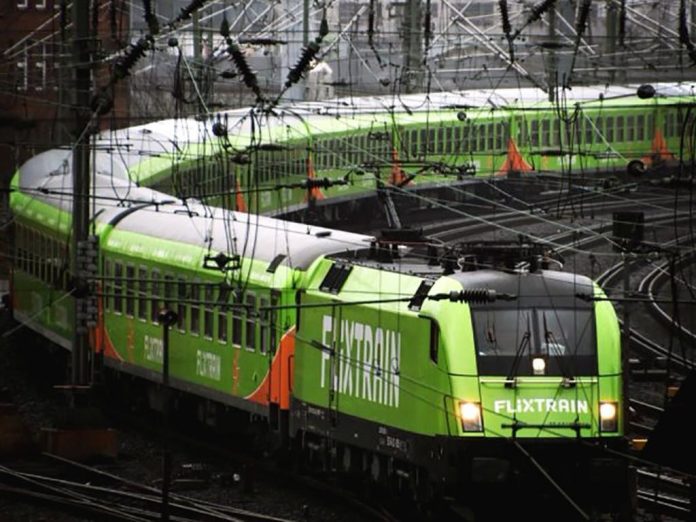
Deutsche Bahn to Modernize its Stations to Address Long-standing Infrastructure Issues 

0

Deutsche Bahn (DB), Germany’s state-owned rail operator, has announced a major push to modernize its stations as part of ongoing efforts to address long-standing infrastructure issues. According to DB Chairwoman Evelyn Palla, the company plans to invest €4 billion per year in station renovations through 2030.

This amounts to more than €20 billion over the next five years, targeting a clear backlog in maintenance and upgrades. This year (2026): Modernization work on more than 1,000 stations across Germany. By 2030: Fundamental renovation of 710 stations nationwide, with 130 already scheduled for 2026. Primarily the beautification and upgrading of reception buildings including platforms, accessibility improvements, and overall passenger experience.

A separate €50 million immediate action program for enhanced cleanliness and security at stations. This includes more cleaning staff, security personnel, modern camera and video technology in cooperation with federal police, and mobile repair teams for quick fixes. The announcement highlights clear catch-up needs after years of underinvestment, delays, and complaints about the condition of many German stations.

It forms part of broader DB infrastructure efforts, which saw around €19 billion invested in 2025 covering tracks, switches, signaling, and stations and plans for a record €23 billion in 2026 across the entire network. Germany’s rail system has faced chronic challenges, including aging infrastructure, frequent disruptions, and punctuality issues. DB and the federal government have been ramping up funding, with ambitions for a multi-year overhaul that could require up to €150 billion overall for network restructuring, expansion, and digitalization.

Station upgrades are a visible part of making rail more attractive to passengers amid competition from cars and other transport modes. Travelers can expect more construction sites and potential disruptions in the coming years, but completed projects like certain corridor modernizations have already shown improvements in reliability where finished.

This station-specific program emphasizes not just structural repairs but also making stations more welcoming, safer, and cleaner—addressing common passenger frustrations. Germany’s rail system, operated primarily by Deutsche Bahn (DB), has faced persistent punctuality challenges for years. These issues have worsened recently, turning the train is delayed into a common national frustration.

DB defines a train as on time if it arrives less than 6 minutes late. 2025 annual figure: Only 60.1% on time — a decline from 62.5% in 2024 and far below the 74.4% seen in 2015. This marked the worst annual result on record for long-distance services. Monthly lows in 2025: Punctuality dropped to record lows, with around 51.5% in October 2025.

Early 2026: January saw just 52.1% of long-distance trains on time. Figures improved slightly toward the end of 2025 when some construction paused for holidays but remain volatile. Perform better, typically around 90% punctuality, though they have also seen slight declines. Overall DB rail in Germany: Hovers around 89%, but long-distance services drag down the perception and reliability for intercity travel.

In European comparisons, Germany ranks near the bottom for long-distance rail punctuality, with massive cumulative delay times. Several interconnected factors contribute to the problems: Aging and overloaded infrastructure — Decades of underinvestment have left tracks, switches, signals, and bridges in poor condition. Many sections operate at or beyond capacity, causing cascading delays from even minor incidents.

DB is ramping up investments including the station overhaul you mentioned earlier, plus broader network upgrades. However, thousands of construction sites simultaneously disrupt operations. Major projects have been extended to 2036, prolonging the pain before benefits appear. In 2026, a record number of sites ~28,000 is expected.

Weather events (storms, cold snaps), technical failures on old equipment, and occasional strikes add pressure. High train frequency on a dense but strained network means one delay often triggers missed connections and further knock-on effects. DB reported a €2.3 billion net loss for 2025, partly linked to punctuality issues affecting revenue and operations.

Frustration is high, with missed connections, unreliable planning, and competition from cars or other transport. Some international partners have raised concerns about DB trains affecting their networks. Officials have called the situation a serious problem for mobility and even broader societal trust. DB and the federal government are investing heavily: Record infrastructure spending planned for 2026.