DD
MM
YYYY

PAGES

DD
MM
YYYY

spot_img

PAGES

Home Blog Page 1519

WEF Launched Independent Investigation on Klaus Schwab Following Allegations of Misconduct

0

The World Economic Forum (WEF) has launched an independent investigation into its founder, Klaus Schwab, following allegations of misconduct detailed in a whistleblower letter. The letter, reportedly sent by current and former WEF staff, accuses Schwab of financial misconduct, including misuse of WEF funds, asking junior employees to withdraw cash from ATMs on his behalf, and using Forum resources for private expenses like in-room massages at hotels. It also alleges that Schwab’s wife, Hilde, used WEF-funded meetings to justify luxury holiday travel.

The WEF’s board, which includes figures like former U.S. Vice President Al Gore and European Central Bank President Christine Lagarde, unanimously supported the probe, led by the Audit and Risk Committee with external legal counsel. Schwab, who resigned as chairman on April 21, 2025, denies the allegations, calling them “false” and indicating plans to sue those responsible for the letter. The WEF emphasizes that the allegations remain unproven and awaits the investigation’s outcome. This follows earlier reports of workplace culture issues at the WEF, including allegations of harassment and discrimination, which the organization has denied.

The whistleblower letter, sent anonymously by current and former World Economic Forum (WEF) employees to the WEF’s board last week, contains detailed allegations of financial and ethical misconduct by founder Klaus Schwab and his wife, Hilde Schwab. The letter, first reported by The Wall Street Journal, prompted an independent investigation and Schwab’s abrupt resignation as chairman on April 21, 2025. The letter accuses Klaus Schwab of using WEF resources for personal expenses, including charging private, in-room massages at hotels to the Forum’s account. Schwab reportedly reimbursed these charges, but the letter claims this reflects improper use of organizational funds.

Schwab allegedly instructed junior employees to withdraw thousands of dollars in cash from ATMs on his behalf, raising concerns about transparency and accountability. The letter highlights the Schwab family’s use of Villa Mundi, a luxury property purchased by the WEF for $30 million and renovated for an additional $20 million, located near the WEF’s Geneva headquarters. Hilde Schwab is accused of maintaining tight control over the property, which was allegedly used for personal purposes beyond official Forum events.

The letter claims Hilde Schwab, a former WEF employee, organized “token” WEF-funded meetings to justify luxury holiday travel at the Forum’s expense. These trips were allegedly disguised as business-related but served personal interests. Her oversight of Villa Mundi’s renovations is cited as an example of the Schwab family commingling personal and organizational affairs without proper oversight.

The letter accuses Schwab of systemic governance failures, describing the WEF as his “personal empire” where he operated with “unchecked authority” for decades. It claims he mixed personal affairs with Forum resources without adequate board supervision. It revisits prior allegations of workplace culture issues, including Schwab’s alleged mistreatment of female employees and allowing sexual harassment and discrimination to go unchecked. These claims echo a 2024 Wall Street Journal report, which the WEF denied after an internal probe found no legal violations.

The letter is described as a “comprehensive account” of governance failures and abuses of power, written by current and former employees. It emphasizes long-standing issues under Schwab’s leadership. It was sent anonymously, likely due to fear of retaliation, and prompted an emergency board meeting on Easter Sunday, April 20, 2025, where the board voted unanimously to launch an independent investigation.

Schwab’s Response

Schwab and his wife deny all allegations, with a spokesperson calling them “false” and stating Klaus Schwab intends to sue the letter’s authors and anyone spreading the claims. Schwab has reportedly described the accusations as “mistruths.” Schwab claims he reimbursed the WEF for any personal expenses, such as the in-room massages, and denies misuse of funds or improper use of Villa Mundi. The letter accelerated Schwab’s exit, disrupting a planned transition set to conclude by January 2027. His immediate resignation followed the board’s decision to investigate, suggesting internal tensions.

The allegations build on prior scrutiny of the WEF’s workplace culture, including a 2024 investigation into harassment and discrimination claims, which the WEF said were unsubstantiated. The WEF has emphasized that the allegations remain unproven and is awaiting the investigation’s outcome, led by the Audit and Risk Committee with external legal counsel. The letter’s anonymity and the lack of public disclosure of its full contents limit further details, but it has significantly impacted the WEF’s leadership and public image.

Lafarge Africa’s Q1 profit jumps 739% to N73.1bn, As Cement Giants Defy Nigeria’s Economic Headwinds

0

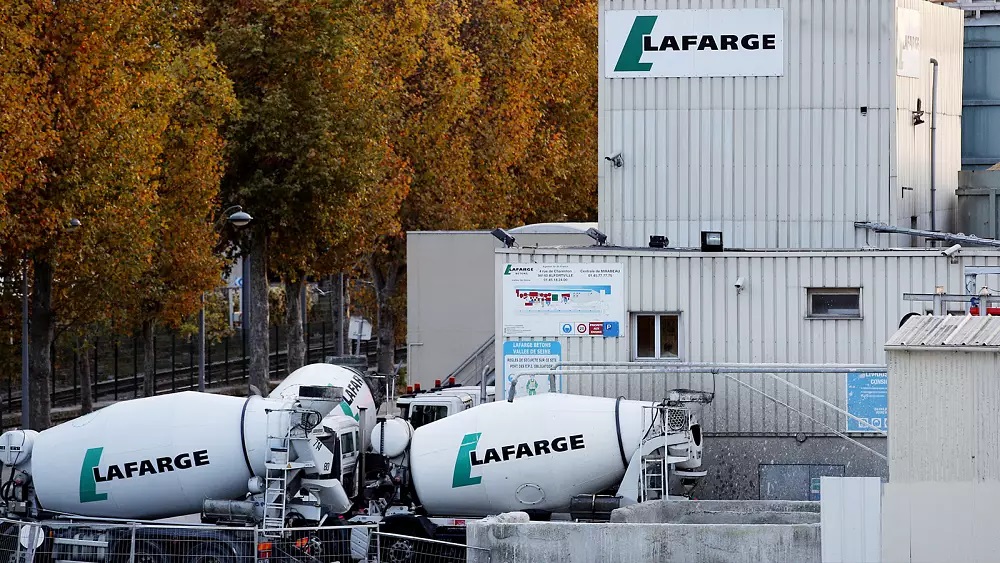
Lafarge Africa Plc has defied Nigeria’s economic turbulence with an extraordinary first-quarter performance, posting a 739.47% surge in pre-tax profit to N73.1 billion for the period ended March 31, 2025.

The cement manufacturer’s result stands out in a country grappling with high inflation, currency volatility, and a general slowdown in construction and infrastructure spending—conditions that would typically dampen earnings across the sector.

The surge mirrors the financial leap reported by BUA Cement Plc, which in the same quarter delivered a pre-tax profit of N99.7 billion, an increase of 368.58% year-on-year, fueled by record revenue and reduced foreign exchange losses. Taken together, these performances signal a cement industry that is thriving against the odds, managing to pull off record profits even as much of the Nigerian economy stumbles.

Lafarge’s Q1 revenue rose to N248.3 billion, marking an 80.26% increase from N137.7 billion in the same quarter last year. Cement sales accounted for the lion’s share at N242.6 billion, while aggregates and concrete contributed N5.4 billion. Revenue from other products came in at N281 million.

Despite the broader slowdown in real estate and government infrastructure projects—a direct result of rising construction costs, declining public capital expenditure, and steep interest rates—the demand for cement appears largely inelastic. Industry watchers believe this stems from private self-build projects, growing urban sprawl, and a shift to alternative building systems that still rely heavily on cement.

The sustained demand is surprising, given that Nigeria’s economy has barely grown in real terms in recent quarters, with many state governments halting or delaying construction activity.

Margins remain strong despite cost pressures

Lafarge’s cost of sales increased by 73.82% to N125.3 billion, from N72.1 billion in Q1 2024. The increase was expected, given the rise in energy prices, costlier raw materials, and logistics disruptions. However, gross profit rose even faster, up 87.34% to N122.9 billion, thanks to better pricing strategies and possible improvements in production efficiency.

The company, like its peers, faced mounting operating costs. Selling and distribution expenses rose by 45.87% to N38.9 billion, driven by increased haulage rates and supply chain constraints. Administrative expenses also grew 56.21% to N12.9 billion.

However, these were not enough to stall momentum. Operating profit reached N71.6 billion, a significant 136.97% jump compared to N30.2 billion in the first quarter of 2024. This reflects strong operational leverage, and the ability to scale earnings faster than costs when revenue increases, an important advantage in a high-inflation economy.

Solid balance sheet and investor returns

On the balance sheet, Lafarge reported total assets of N914.7 billion. Retained earnings climbed to N364.2 billion, up 15.41% year-on-year. The company appears to have avoided the kind of foreign exchange losses that weighed on some industrial players last year. Unlike BUA, whose debt portfolio rose sharply in Q1, Lafarge has maintained a more cautious financing strategy, limiting its exposure to exchange rate fluctuations.

As of April 24, 2025, Lafarge’s share price was N79.20. In 2024, the stock returned 122%, placing it among the best-performing equities on the Nigerian Exchange. This performance may reflect investor confidence in the company’s ability to navigate persistent macroeconomic challenges.

A thriving sector in a faltering economy

The financial results of Lafarge and its competitors suggest that Nigeria’s cement sector is enjoying a rare boom, even as other sectors shrink or stagnate. This divergence highlights cement’s strategic importance in the economy and the ability of dominant players to pass on costs, optimize production, and capture market share.

Analysts say these firms are benefitting from a near-monopoly structure, improved pricing power, and investments in energy efficiency that have begun to pay off. Some also point to the dollarization of certain construction contracts, particularly in private sector-led real estate, as a buffer against naira volatility.

However, questions remain about how sustainable this momentum is. The construction sector’s long-term prospects are still threatened by public spending cuts, high borrowing costs, and potential saturation in urban housing markets. Moreover, any new FX policy shocks or regulatory changes could affect input costs and profit margins.

Shiba Inu’s (SHIB) 325% Predicted Gains Won’t Give the Rags-to-Riches Story You Hope for, But This Token Could with a 24020% Rise

0

Shiba Inu (SHIB) struggles to sustain its current trajectory because of rising competition. The projected 325% increase for SHIB stands dwarfed by upcoming token Rexas Finance’s RXS, which shows potential for a 24,020% surge because it brings revolutionary access to real-world assets (RWA).

SHIB Drops7.66% – Even a 325% Surge Won’t Deliver Explosive Gains!

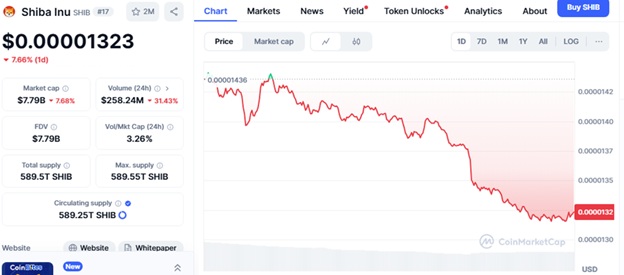
The price of Shiba Inu stands at $0.00001323 and shows a daily decrease of 7.66% in its market value. Shibarium and ShibaSwap serve as community initiatives that enhance the growth of its ecosystem. The excessive circulating supply and limited revolutionary features prevent SHIB from attaining significant exponential growth. This cryptocurrency is predicted to have a 325% value increase and will not result in the dramatic financial transformation many investors expect.

RXS Presale 91.74% Sold – Real Asset Tokenization, Not Meme Hype!  $47.7M Raised & Counting!

Rexas Finance (RXS) is a promising innovation because it creates digital tokens for high-value physical assets, including gold and real estate properties. Unlike meme coins, RXS offers fractional ownership opportunities previously inaccessible to many investors. RXS introduces a disruptive strategy that positions itself as an industry leader among cryptocurrency solutions. The successful RXS presale indicates strong market potential for this investment. The current Stage 12 price for RXS tokens sits at $0.20 before the platform will progress to public trading at $0.25 on June 19, 2025. RXS has completed 91.74% of its presale with $47,744,191 in funding and 458,718,666 sold tokens from a total 500 million allocation.

RXS Set for 24,020% Growth – Real Utility, Not Meme Hype!

The analysts forecast RXS to increase by 24,020% because its commitment to real-world asset tokenization and strong fundamentals will drive this exceptional growth. The extreme growth potential of RXS stands above the market potential of SHIB and other meme coins, making it an appealing investment choice for those looking for substantial profits.

RXS gains credibility in its market trajectory because it appears on CoinMarketCap and CoinGecko platforms. The security and reliability of the token are ensured through Certik audits, which provide essential evidence for investor trust.

RXS Soars from $0.03 to $0.20 – Real Asset Investing for Everyone!

RXS offers investors both practicality and innovation as its main draw. The platform enables people to buy small pieces of expensive assets to invest in exclusive properties previously available only to the wealthy elite. This method allows investors to access multiple investment options while meeting the rising market demand for cryptocurrencies, which solves practical problems. The presale structure shows investors are confident about the project’s vision because it has attracted significant interest from investors. The gradual price increase throughout the presale stages, starting at $0.03 during Stage 1, reached $0.20 in Stage 12, demonstrates steady investor demand and anticipation for future market expansion.

Conclusion

The 325% price projection of Shiba Inu fails to provide substantial wealth generation opportunities for investors even though the meme coin maintains community support. Rexas Finance emerges as a token demonstrating strong growth potential through an anticipated climb to 24,020%. Real-world asset tokenization forms the core of its operations, providing concrete benefits and strong financial investment potential. With RXS presale almost selling out and predicted massive growth of 240X, investors are encouraged to act fast and buy into the fast-ending presale stage 12.


Website: https://rexas.com

Whitepaper: https://rexas.com/rexas-whitepaper.pdf

Twitter/X: https://x.com/rexasfinance

Telegram: https://t.me/rexasfinance

PTDF Opens 2025/2026 Overseas Postgraduate Scholarship Applications for Nigerian Graduates

0

The Petroleum Technology Development Fund (PTDF) has announced the commencement of applications for the 2025/2026 edition of its Overseas Postgraduate Scholarship Scheme (OSS), aimed at developing local expertise for Nigeria’s oil and gas sector. The call for applications was made public in a statement posted on PTDF’s official X platform.

According to the Fund, the OSS programme has been restructured to align more closely with national goals of domestic capacity development. The scheme now prioritizes cultivating a new generation of Nigerian professionals equipped with advanced knowledge and skills to support the country’s energy industry.

“The Petroleum Technology Development Fund (PTDF) is pleased to bring to the notice of the public that the applications for the 2025/2026 Overseas Postgraduate Scholarship Scheme (OSS) has commenced,” the Fund said in its announcement.

Destinations and Structure of Study

Scholarships under the 2025/2026 OSS will be available in selected countries, including the United Kingdom, Germany, France, and Malaysia. The scheme covers both Masters’ and Doctoral degree programmes in fields relevant to the petroleum and energy sectors.

MSc programmes will be fully funded in the UK, Germany, France, and Malaysia. For PhD studies, scholarships are available in Germany, France, and Malaysia.

However, for candidates seeking a PhD in the United Kingdom, the scholarship will only be available through a Split-Site Programme, hosted in collaboration with the PTDF College of Petroleum and Energy Studies in Kaduna (CPESK) and three UK partner institutions: Robert Gordon University, University of Strathclyde, and University of Portsmouth.

What the Scholarship Covers

The PTDF has confirmed that successful applicants will receive full financial support for the duration of their studies. The package includes:

  • Round-trip flight tickets
  • Health insurance coverage
  • Full tuition and bench fees where applicable
  • Living expenses for the entire period of study

The scheme is targeted at Nigerian graduates with strong academic records, pursuing postgraduate degrees in petroleum-related disciplines such as engineering, geosciences, environmental sciences, energy management, and renewable energy.

How to Apply

Applications are to be submitted online via the PTDF Scholarship Management Portal. The deadline for submission is June 4, 2025.

Prospective candidates are advised to visit the PTDF website for detailed information on eligibility criteria, required documents, and the full list of partner institutions.

About the PTDF

The Petroleum Technology Development Fund is a statutory agency under the Federal Ministry of Petroleum Resources. Established to promote the development of indigenous human capacity for Nigeria’s oil and gas industry, the Fund has consistently supported training through scholarship awards, academic grants, and research funding.

Over the years, PTDF has sponsored thousands of Nigerians to pursue postgraduate studies both locally and internationally in critical sectors supporting oil exploration, production, refining, and alternative energy. The Fund also supports academic infrastructure development and manages specialized institutions like the CPESK, aimed at reducing Nigeria’s dependence on expatriate technical labor.

The restructuring of the OSS underlines PTDF’s shift toward strategic talent development—equipping Nigerians with the skills and global exposure needed to take on leadership roles in the evolving energy sector.

For further updates, candidates can follow PTDF on social media or visit the official website: www.ptdf.gov.ng.

“Asking A Man With An Ulcer To Go On A Fasting Mission:” Rewane Counters IMF Admonition to Nigeria to Curtail Spending

0

The International Monetary Fund (IMF) has called on Nigeria to exercise greater fiscal discipline, urging the Tinubu-led government to optimize public expenditure amid growing concerns about inefficient resource allocation.

However, some of the country’s top economists say this is not the time to be overly frugal—warning that cutting back too hard could further strain a fragile economy.

The IMF’s warning came during the 2025 IMF/World Bank Spring Meetings in Washington, D.C., where Davide Furceri, Division Chief in the Fiscal Affairs Department, commended Nigeria’s difficult fiscal reforms, such as subsidy removal, but stressed that these must be followed by “continued discipline in government expenditure.”

“We understand that many countries, including Nigeria, face pressing spending needs. But spending must be done wisely, which means stronger prioritization and greater efficiency in resource allocation,” Furceri said.

This statement, while appearing prudent, has sparked a wave of dissent among local economists, many of whom argue that Nigeria’s economic condition calls for a more pragmatic, not restrictive, approach.

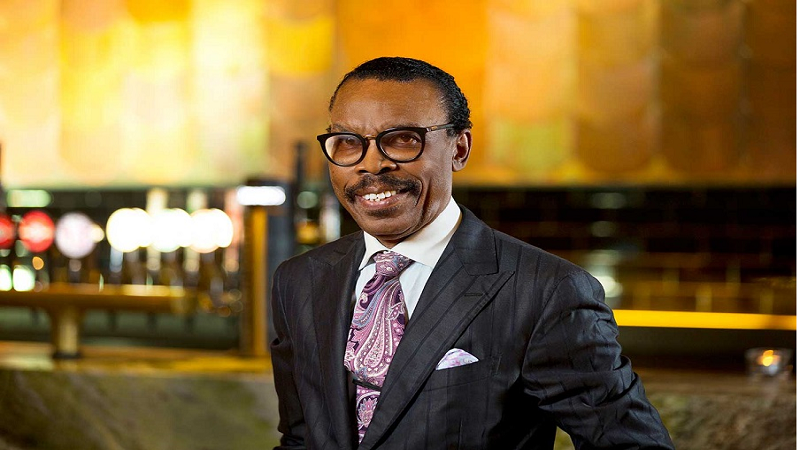
One of the strongest responses came from Bismarck Rewane, Chief Executive Officer of Financial Derivatives Company, who, while acknowledging the importance of managing spending, warned against drastic cuts that could cripple already stressed sectors. Speaking on Channels Television’s Business Morning, Rewane noted that cutting government spending is not the same as optimizing it.

“The IMF is advising that we optimize expenditure, as there are numerous leakages at both state and federal levels, which act as a negative investment multiplier,” he said. “But to ask us to cut our expenditure at a time when we need to invest more is like asking a man with an ulcer to go on a fasting mission.”

Rewane acknowledged the necessity of reforms introduced by President Bola Tinubu, including fuel subsidy removal and currency realignment, but insisted that these moves alone are insufficient.

“These reforms are necessary, but not sufficient. We must stop looking backwards. What was appropriate in 2023 may not suffice for 2025,” he said, adding that insecurity, particularly in oil-producing regions, continues to undermine revenue growth and economic recovery.

The IMF’s recommendation also comes against the backdrop of heavy criticism over what many Nigerians see as excessive and tone-deaf government spending. A 2025 budget analysis revealed that Tinubu plans to spend N7 billion on travel, N6.1 billion internationally, and N873 million locally, while Vice President Kashim Shettima will spend an additional N1.731 billion on his own travel expenses. In 2024 alone, data from the Open Treasury Portal showed that the Tinubu presidency spent N83 billion on travel.

Despite the staggering figures, Nigeria’s Minister of Foreign Affairs, Ambassador Yusuf Maitama Tuggar, defended the expenses, arguing on a Channels TV program that the president should be “traveling even more.” Tuggar pointed to a $2 million livestock investment deal allegedly secured during a visit to Brazil, portraying it as a worthwhile outcome.

But experts like Rewane suggest that the issue is not about the volume of travel but whether spending is yielding measurable, wide-scale economic impact.

“We must optimize expenditure, not spend like drunken sailors,” Rewane warned.

He cautioned that frugality in key areas like infrastructure, security, and inflation control would be counterproductive. Instead, he proposed a balanced approach: seal the leakages, enhance efficiency, and ensure that government outlays generate real value.

On inflation, Rewane challenged the IMF’s projections of 30% in 2025 and 37% in 2026, predicting a more moderate 25–27% increase. He argued that the Central Bank of Nigeria (CBN) might be forced to raise interest rates again to control liquidity, given that inflationary pressure remains persistent.

He also criticized recent decisions by the Debt Management Office (DMO), particularly the reduction of bond issuance from N1.8 trillion in Q1 to N1.2 trillion in Q2, a move he described as counterproductive.

“Increased bond issuance is key to mopping up liquidity and controlling inflation. This is one of the painful choices we make to control inflation,” he said.

Rewane also drew attention to ongoing concerns over Nigeria’s undervalued crude oil exports.

“We sell for 70 cents, while our neighbors get $1.20. How long can this go on?” he asked, warning that continued underpricing could worsen the country’s revenue crisis.

He praised the Dangote Refinery’s role in easing fuel prices but warned that global dynamics could soon reverse those gains. According to him, a potential output increase by the Organization of Petroleum Exporting Countries (OPEC) could further depress crude prices, compounding Nigeria’s already strained revenue outlook.

Rewane also commented on broader global developments, noting that U.S. President Donald Trump’s proposed tariff reductions on China might offer temporary relief. However, he maintained that uncertainty will persist.

“Yes, a recession may come, but it will be mild, not deep,” he predicted.

Looking forward, Rewane emphasized the urgency of closing Nigeria’s fiscal gap through smarter borrowing, reduced leakages, and targeted fiscal consolidation. He stressed that the solution to Nigeria’s economic woes lies in thoughtful action—not blind austerity.

“These are serious times, and we must respond with serious adjustments,” he said. “There is no one-size-fits-all approach. What Nigeria needs is discipline, yes—but also courage to invest, restructure, and grow.”