DD
MM
YYYY

PAGES

DD
MM
YYYY

spot_img

PAGES

Home Blog Page 162

African Startups Face Longer Fundraising Cycles as Global Market Conditions Shift

0

A new analysis shows that start-ups across Africa are now waiting nearly twice as long to raise their next round of funding, reflecting a broader global slowdown in venture capital deployment. This comes as a shifting investor appetite prolongs fundraising for these startups.

The slowdown in funding began with the withdrawal of global venture capitalists as interest rates began rising a few years ago. Investors who have remained active in Africa have been inclined to fund startups at an early stage, where the ticket sizes are smaller.

According to data reviewed by Africa: The Big Deal, analyst Maxime examined how quickly African start-ups were raising capital during the peak funding period. The numbers from that time show a significantly accelerated pace. On average, start-ups moved from launch to pre-seed in 16 months, from Pre-Seed to Seed in just 11 months, and from Seed to Series A in around 15 months. Between Series A and Series B, the typical 18–24-month rule largely held.

This rapid cycle occurred because the market was overheated. Investors were eager and sometimes even pressured to deploy capital quickly for fear of missing out on strong opportunities. As a result, start-ups enjoyed higher valuations and greater bargaining power.

However, with the market slowdown that followed, the timelines have shifted dramatically. Since 2023, African start-ups have faced fundraising cycles that are 1.5 to 2 times longer than before. The journey from launch to Pre-Seed typically takes around two years, the same applies from pre-seed to seed. The Seed-to-Series A interval has stretched to about 2 years and 4 months, while raising a Series B now takes over three years from Series A.

Several factors contribute to this slowdown which include reduced capital availability, increased investor caution especially from those who were only casually investing in African markets, and the elevated valuations from the heatwave, which make follow-on conversations more difficult and often raise the specter of down rounds.

Partech General Partner Tidjane Deme in an interview with Semafor earlier this year, said that fewer investors are active in the current market, and the terms being offered have become far less attractive, resulting in longer negotiation periods. In his words, “There are less investors active in the market, the terms you find are much less attractive so negotiations take longer. Investors right now are trying to protect their downside, and founders are finding it difficult to take the more expensive and constraining terms.”

Crucially, this trend is not specific to Africa. Global comparisons confirm that extended fundraising timelines are a worldwide reality. A late-2024 analysis by Carta reported that the median interval between Seed and Series A had grown to 25 months—1.8 times longer than three years earlier. This aligns closely with Africa’s median of 28 months. Carta reported a 24-month gap between Series A and Series B, while Crunchbase estimates for a similar period reached 31 months, still in the same range, though slightly shorter than the 39-month interval observed in Africa.

The takeaway for founders is clear, extended fundraising cycles are now the global norm. Where “18–24 months” once guided planning, “2–3 years” has become the new reality. Understanding this shift is essential for strategic preparation, runway planning, and navigating the steadily evolving investment landscape.

Fintech Innovations That Are Expanding Access to Credit Across the Globe

0

As recently as 2015, people could get a loan from a traditional bank only. Unfortunately, not everyone had the opportunity to get it because many had no credit history or a stable job.

But nowadays, the situation has changed thanks to online platforms, automated services, and mobile apps. This allows people to get a loan easily and quickly now.

Problems with Traditional Bank Lending

The lending system in traditional banks is very inconvenient for customers. Banks necessarily check your credit history, require stable employment, or collateral. Therefore, most people have a high chance of getting rejected.

About 15% of Americans are partially served by banks, and 6% have no bank account, according to the 2022 Federal Reserve data. Lending is almost unavailable to such people.

The size of the loans also matters. Often, it’s not profitable for banks to issue small loans like $100 or $300, because the verification and paperwork costs much more. So, lots of people are left without support.

Global Impact of Fintech Innovations

Fintech innovations spread far from the USA and more and more every day. It is becoming a major tool for credit access worldwide.

In 2011, only 51% of adults all over the world had access to financial services, but today it is over 76%. This growth was due to using mobile banking (fintech platforms).

Global fintech lending volume has reached $223 billion, with an additional $572 billion from tech-based companies, according to the Bank for International Settlements. This shows us the scale and global impact of financial technologies.

Forecasts suggest that by 2030, the USA lending market will exceed $700 billion. Similar trends are seen in the other regions, where digital services are becoming a tool for economic growth for small businesses and households in Asia, Africa, and Latin America.

A great example of how fintech is changing practices is microloans through automated platforms. It lets people get funds quickly with clear terms and without hard checks. This is especially important for those who are often rejected by traditional banks. Fintech companies help to create a fairer financial system where everyone can rely on support.

How Fintech Companies Work

Fintech companies operate much simply than traditional banks, and it is more convenient for users. They work online without any physical offices, they do not require paper forms, and they use AI technology for quick and soft information checks.

Fintech services usually analyse the following:

  • Stable income
  • Bill payments
  • Rent payment history

One of the biggest changes that fintech has made is an opportunity for people to make a credit history from scratch. Thanks to small, regular payments for utilities, phone, or online purchases, people can prove their reliability.

Fintech has made it possible to get a loan in places where traditional banks do not even reach. Lots of services that are working through mobile apps became extremely popular because of people who use only a smartphone for all financial operations. Many entrepreneurs can’t get a loan from a traditional bank because they don’t have a stable income. So they also benefit from fintech progress.

One more interesting thing that fintech brought is that loans appear right inside the everyday services people already use. For example, in Kenya, there is a service that gives small loans for buying a smartphone. Every day or month, a person pays a small amount through mobile money, and when the company sees that the person pays regularly, it can offer another small loan.

The same thing happens in Latin America. The platform can see people’s financial activity and offer a small loan.

Benefits of fintech lending

Fintech lending services improve the credit market by enabling faster and more convenient transactions. Here are their key advanges:

Accessibility

Unlike traditional banks, fintech services can give people loans without a formal credit history.

Transparency

Customers can see all terms, interest rates, and total costs. Users of fintech services often say that they clearly understand all of the loan conditions, unlike users of traditional banks do not.

Popularity

Trust in such services is growing rapidly. Statistics show that fintech companies provide about 63% of all personal loans now.

According to the Federal Reserve, the total loan volume reached $356 billion in the USA in 2022. And about 14% of that (it is around $50 billion) was issued through fintech platforms.

Speed

In traditional banks, the approval can take about a week, but fintech services process loan applications in minutes.

The Negative Side and Possible Risks of Fintech

Despite many advantages, these innovations also have downsides and risks, such as:

High interest rates

Fintech companies often set higher rates than banks because of the risks of non-payment. Sometimes the annual rate can reach 36-100%, while the bank’s average is around 12%.

Data security

FinTech services operate fully online and process a lot of personal information from ID data to transaction history. Any data breach can have serious consequences. In 2022, Block’s Cash App reported a data leak, which affected about 8.2 million users. Then Americans lost over $10 billion.

Different financial laws in the USA

Lending regulations in the USA vary by state. For example, in California, the maximum rate for loans is 36%, while in Texas, companies can legally charge over 100%. To operate in several states, some companies partner with federally licensed banks. This helps expand credit access but also creates loopholes that dishonest lenders might use.

Risk of a high debt

Fintech made the borrowing process very easy; because of that, some people take loans too often, without enough financial knowledge. Lots of borrowers take new loans to pay off old ones.

Service depends on technologies.

A system glitch can block a client’s access to funds. Also, fintech companies heavily rely on a stable Internet and artificial intelligence.

Japan Proposes Crypto Tax Reform From 55% to 20%

0

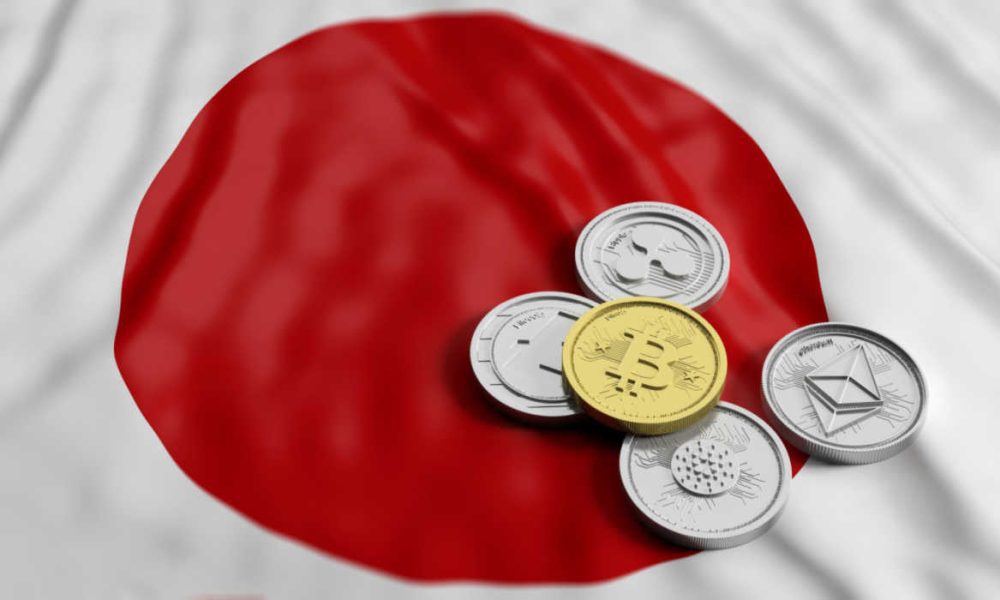
Japan is actively advancing a major overhaul of its cryptocurrency taxation framework, proposing to slash the tax rate on crypto gains from a progressive rate of up to 55% to a flat 20%.

This change aims to treat digital assets more like traditional financial instruments, such as stocks, to encourage investment, foster Web3 innovation, and boost institutional participation. However, the reform is not yet finalized—it’s pending parliamentary approval and is slated to take effect in the 2026 financial year starting April 2026.

The proposal has gained significant momentum following recent announcements from Japan’s Financial Services Agency (FSA). In Japan Under the existing system:Crypto gains are classified as “miscellaneous income” and added to your overall income.

They’re taxed at progressive national rates of 5%–45%, plus a flat 10% local inhabitant tax, resulting in a combined top rate of 55% for high earners (e.g., those with annual income over ~¥40 million or about $260,000 USD).

This has been criticized as punitive, driving some traders offshore and hindering market growth compared to equities, which are taxed at a flat 20%. The high rates apply to disposals like selling, trading, or using crypto for payments, but not to simple transfers between your own wallets.

A flat 20% capital gains tax on profits from approved cryptocurrencies, aligning with stock taxation. This would apply to the 105 tokens listed on licensed Japanese exchanges (e.g., Bitcoin, Ethereum), but initially exclude many altcoins, NFTs, or speculative tokens, which may remain under the old 55% regime.

Crypto would shift from “property” under the Payment Services Act to “financial products” under the Financial Instruments and Exchange Act (FIEA). This enables:Three-year loss carry-forward provisions (offset losses against future gains, similar to stocks).

Insider trading bans and mandatory disclosures for listed tokens to enhance market fairness. Banks and insurers could offer crypto trading and custody via subsidiaries, potentially unlocking ¥5 trillion ~$33 billion in institutional and retail capital.

Public feedback and guidelines are expected by early 2026, with full implementation in FY2026. Corporate taxes currently ~30% on unrealized gains may see separate adjustments. Primarily 105 listed tokens; others may stay at 55%

Lower taxes could spur retail participation—over 11 million crypto accounts exist in Japan already—and make holding long-term more attractive. However, stricter reporting and exclusions for niche assets might limit benefits initially.

Analysts predict a surge in on-chain activity, corporate Bitcoin buying (e.g., by firms like Metaplanet), and even Bitcoin ETF approvals by mid-2026. This positions Japan as a competitive global hub, though rates like 20% are still higher than in places like Germany 0% for long-held assets or Singapore (l0% on capital gains.

Volatility concerns, enforcement of new rules, and expanding coverage to more tokens will be key hurdles. The Japan Blockchain Association has long advocated for this, citing growth stifled by the old regime.

If you’re a Japanese taxpayer or investor, consult a professional for personalized advice, as rules could evolve. This reform signals Japan’s pivot toward embracing crypto as mainstream finance—watch for Diet approval in early 2026.

By reclassifying approved cryptocurrencies like Bitcoin and Ethereum as “financial products” under the Financial Instruments and Exchange Act (FIEA), the reforms aim to integrate digital assets into mainstream finance. This could unlock ¥5 trillion (~$33 billion) in pent-up institutional and retail capital, fostering innovation while introducing safeguards like insider trading rules and mandatory disclosures.

High earners currently face a combined 55% rate 45% national + 10% local, which has deterred trading and driven activity offshore. The flat 20% aligns crypto with stocks, potentially saving investors millions on large gains. For example, a ¥10 million profit taxed at 55% costs ¥5.5 million; at 20%, it’s just ¥2 million—freeing up capital for reinvestment.

A new three-year offset for losses absent in the current system provides a safety net in volatile markets, encouraging long-term holding over short-term speculation. With 13.2 million crypto accounts already (e.g., 3.4 million via Mercari), lower barriers could push retail ownership from its current ~12% of the population toward global averages, accelerating mainstream use for payments and savings.

Banks and insurers can now offer crypto trading/custody through subsidiaries, drawing in conservative players. Analysts forecast ¥5 trillion in new inflows by mid-2026, as seen in early moves like Metaplanet’s addition to the FTSE Japan Index and its BTC purchases totaling 18,991 coins.

While individuals benefit most, corporations taxed at 20-30% may see indirect gains from clearer rules, though unrealized gains taxation persists. Startups could thrive with easier funding, but stricter FIEA compliance (e.g., risk disclosures) raises operational costs.

Licensed exchanges like SBI VC Trade and Mercari are expanding services, potentially repatriating traders from abroad and boosting liquidity. Expect heightened on-chain activity, ETF approvals and a 15-20% BTC price lift from Japanese demand alone. This addresses the “capital flight” caused by high taxes, positioning Japan as a Web3 hub.

Aligning with the “New Capitalism” initiative, reforms could inject vitality into Japan’s stagnant economy, promoting blockchain for payments (e.g., JPYC stablecoin) and reducing cash reliance. 20% flat tax + loss offsets = more affordable trading; easier reporting.

Initial exclusions for altcoins/NFTs keep some at 55%; stricter KYC/enforcement, ¥5T inflows; bank-integrated services. Higher compliance costs under FIEA; volatility risks amplified by new entrants. Web3 hub status; capital retention. Revenue dip for govt ~¥100B/year?; need for robust anti-fraud measures.

Lower taxes may fuel speculation, raising bubble risks. FIEA’s insider trading bans and disclosures aim to mitigate this, but enforcement on 105 tokens leaves others (e.g., speculative alts) vulnerable. Parliamentary approval in early 2026 is likely but not guaranteed—delays could temper optimism.

Tax authorities must handle increased filings, and global treaties ensure offshore compliance. Benefits skew toward high-volume traders; low-income users see minimal change, and corporate taxes remain unchanged.

Overall, this reform signals Japan’s evolution from crypto pioneer 2017 regulations to global leader, potentially adding billions in economic value while modeling balanced regulation.

Early market reactions—like Metaplanet’s BTC buys—show momentum building. For personalized impacts, consult a tax advisor, as details may evolve. If approved, 2026 could mark Japan’s “Satoshi era.”

Adam Back Speaks on Quantum Computing Risks to Bitcoin

0

Adam Back, the cypherpunk cryptographer and Blockstream CEO whose work on Hashcash is cited in Satoshi Nakamoto’s original Bitcoin white paper, recently addressed growing concerns about quantum computing threats to Bitcoin’s security.

In a November 15, 2025, exchange on X formerly Twitter, Back downplayed the near-term risk, estimating that Bitcoin is unlikely to face a “cryptographically relevant” quantum attack for at least 20–40 years. This stance contrasts with more alarmist predictions, such as venture capitalist Chamath Palihapitiya’s claim that quantum computers could break.

Bitcoin’s SHA-256 hashing in as little as 2–5 years with around 8,000 qubits. Back’s comments were prompted by a user sharing Palihapitiya’s video, sparking a thread on Bitcoin’s vulnerability. No serious risk for 20–40 years or longer.

Current quantum computers are “too noisy and too small” to execute algorithms like Shor’s which targets elliptic curve cryptography in Bitcoin signatures or Grover’s which could speed up brute-force attacks on hashes like SHA-256. Today’s systems, such as Google’s Willow chip or Atom Computing’s 1,000+ qubit machines, fall far short of the millions of logical qubits needed for practical attacks.

The Network can upgrade seamlessly via soft forks. Bitcoin uses signatures (e.g., ECDSA and Schnorr), not encryption, making it more resilient. Post-quantum (PQ) standards like NIST’s SLH-DSA standardized in 2024 are ready for integration.

Taproot activated in 2021 already enables “quantum-ready” commitments to alternate spending paths, allowing users to migrate without halting the network or paying premium fees for oversized PQ signatures today.

SHA-256 is “fairly robust” against quantum attacks. Grover’s algorithm could theoretically halve the search space from 2^256 to 2^128 possibilities, but that’s still computationally infeasible. Back noted that key sizes provide additional buffer.

Fears are often overhyped for marketing or during market dips. Back has consistently dismissed quantum FUD (fear, uncertainty, doubt) as exaggerated, calling it “quantum over-marketing.” In past posts, he’s joked about it being used to “load up on cheap Bitcoin” during price wobbles.

He advocates proactive “quantum readiness” (e.g., adding PQ options in the next 5 years) to calm markets without rushing unvetted tech. The discussion reignited amid Bitcoin’s price volatility and broader crypto debates on long-term security. While governments (e.g., US NIST) plan to deprecate ECDSA by 2030–2035 for federal systems.

Back argues Bitcoin’s decentralized, conservative development process—relying on peer-reviewed proposals (BIPs) and economic incentives—allows for measured upgrades without panic. He even speculated in an April 2025 interview that a real quantum threat might inadvertently reveal if Satoshi Nakamoto is alive, by forcing a move of their untouched ~1 million BTC to a PQ-secure address.

Critics like Palihapitiya highlight risks like “harvest now, decrypt later” storing encrypted data for future cracking, but Back counters that Bitcoin’s on-chain nature and upgradeability mitigate this.

Ongoing research, including hash-based signatures like SPHINCS+ basis for SLH-DSA, positions Bitcoin ahead of the curve.Back’s history of quantum skepticism dates back years; in 2020–2025 X posts, he repeatedly urged calm, emphasizing Bitcoin’s multi-decade lead time for defenses.

For now, Adam Back’s message: Focuses on fundamentals—quantum hype is noise, not signal. If you’re holding BTC, this reinforces the “HODL” ethos with a technical backstop.


Tether to Invest $1.5B in Neura Robotics, as Aster Team Delays Token Unlocks

0

Tether, the issuer of the world’s largest stablecoin USDT, is reportedly in advanced talks to invest $1.15 billion in Neura Robotics, a German startup specializing in AI-powered humanoid robots. This deal, if finalized, would value Neura between $9.3 billion and $11.6 billion, marking one of the largest crypto-to-AI investments to date.

The move signals Tether’s aggressive expansion beyond stablecoins into cutting-edge hardware, potentially leveraging its vast reserves over $120B in assets to fuel robotics innovation.

Neura, founded in 2023, focuses on “cognitive robotics” for industrial and consumer applications, and this funding could accelerate its development of versatile AI bots. Industry watchers see this as a strategic pivot, blending crypto liquidity with real-world tech amid booming AI interest.

Cardano Whale’s Costly Slippage Blunder

In a stark reminder of DeFi’s liquidity pitfalls, a long-dormant Cardano whale—inactive for five years—attempted to swap 14.45 million ADA worth ~$7.08M at the time for USDA, a stablecoin on the Cardano network, but ended up with just 847,694 USDA due to razor-thin liquidity pools.

This resulted in an immediate ~$6.2M loss from slippage, where the trade’s size overwhelmed the available liquidity, causing the effective exchange rate to plummet from ~$0.49/ADA to an effective $0.059.

The botched swap even triggered a temporary depeg of USDA from its $1 anchor. Experts attribute this to the whale likely using a one-click aggregator without checking pool depths, highlighting risks in emerging ecosystems like Cardano’s DeFi scene.

On-chain sleuths like Lookonchain flagged it as a “nuke” moment, underscoring the need for better tools or simulations for large trades.

Implications of Tether’s $1.15B Investment in Neura Robotics

Tether becomes a major AI/hardware player overnight A $1.15B check would make Tether one of the largest corporate investors in humanoid robotics globally, rivaling Tesla’s Optimus and Figure in firepower.

It instantly legitimizes Neura a relatively unknown 2023-founded German startup and catapults its valuation into the $10B+ unicorn club — higher than Figure’s $2.6B and only slightly below Apptronik or Agility Robotics combined.

Tether holds >$120B in assets mostly short-term Treasuries. Deploying even 1% into robotics signals a new phase: stablecoin issuers becoming sovereign-like investment funds that build physical infrastructure instead of just holding paper.

This could set a precedent for other stablecoin giants (Circle/USDC, Paxos, etc.) to follow into AI, energy, or manufacturing. A crypto-linked entity funding advanced dual-use robotics in Germany will attract intense scrutiny from EU and U.S. regulators, especially around export controls and AI safety.

Expect questions about whether Tether’s profits estimated $10B+ in 2024 alone should face stricter oversight if they’re being funneled into strategic technologies. Bullish signal for the entire humanoid sector If Tether is willing to pay $10B+ for a robotics company with almost no revenue yet, it confirms that deep-pocketed investors now view humanoids as the next trillion-dollar category after EVs and LLMs.

Implications of the $6.2M Cardano Whale Slippage Incident

Brutal reminder that Cardano DeFi is still extremely fragile Cardano’s TVL is ~$300M–$400M. A single $7M trade should not move the needle, yet it obliterated an entire stablecoin pool and depegged USDA. This exposes how thin real liquidity remains despite years of hype.

The incident is being memed heavily “Cardano whale rugpulled himself”. It reinforces the narrative that Cardano is research-heavy but practically underdeveloped compared to Solana, Base, or even TON for real DeFi activity.

Forces the ecosystem to finally prioritize liquidity solutions Expect accelerated development or import of: Better DEX aggregators with slippage simulation. Deeper stablecoin pools possibly USDC.e or USDT bridges

Native concentrated-liquidity models like Plutus v3 or partner chains. Teachable moment for the entire industry Even “dormant” whales waking up after 5 years can nuke pools if tools are bad. Highlights why large holders on any chain now prefer OTC desks, private liquidity providers like Wintermute, GSR, or gradual DCA instead of one-click DEX swaps.

We’re seeing the two ends of crypto’s maturation spectrum in real time: Tether using its war chest to buy into the physical AI future at billionaire scale. Cardano still suffering growing pains that Ethereum solved in 2020–2021.

One story shows crypto money flowing aggressively into the real world; the other shows how far some ecosystems still have to go before they can safely handle that money.

Aster Team Delays Token Unlocks

The Aster team, behind the decentralized perpetuals exchange Aster DEX, recently announced adjustments to its ASTER token release schedule, postponing several unlocks originally planned for 2025.

This move has sparked both positive market reactions and some community confusion, particularly after updates on platforms like CoinMarketCap (CMC) and Binance dashboards. ASTER’s tokenomics included monthly ecosystem unlocks starting from the token generation event (TGE) in September 2024.

This was meant to gradually release tokens for ecosystem development, rewards, and liquidity over 20 months, with larger vesting for airdrops— 80 months and team allocations 1-year cliff + 40-month vest. Approximately 75% of 2025 unlocks around 183 million ASTER, or ~11% of current market cap delayed to summer 2026.

Some portions pushed even further to 2035 (e.g., 3.86 billion and 1.6 billion tokens). A smaller airdrop unlock on December 15, 2025 ~200 million ASTER. Projected circulating supply: ~70 million ASTER in 2025, growing to over 600 million by 2035.

Unused ecosystem tokens which have never entered circulation since TGE will be moved to a dedicated public wallet for independent tracking. The team emphasized no plans to spend from this address.

Reasons for the Delay

The Aster team cited a lack of immediate demand and usage plans for the ecosystem tokens as the primary driver. Monthly unlocks were part of the original plan, but with no operational need (e.g., for development or rewards), they were never executed and remained locked.

This adjustment aims to:Avoid unnecessary selling pressure and market dilution. Promote long-term price stability and investor confidence. Align releases with actual ecosystem growth, reflecting a broader DeFi trend toward flexible vesting to reduce volatility.

The team has described this as a “strategic move” rather than a fundamental tokenomics overhaul, and they’ve actively incorporated community feedback on issues like airdrop distribution and buybacks.

Many holders and analysts view the delays as bullish, reducing near-term supply risks. ASTER’s price surged ~10% immediately after the announcement, trading around $1.13 up 24% from Binance founder CZ’s entry point of $0.91. Posts on X highlight it as a “long-term hold” signal, with some calling it a “healthier token” for the next 8 years.

An initial CMC update showing the delayed dates led to speculation of major changes, with some users questioning the project’s utility planning (e.g., “Why launch without a token utility plan?”). Earlier X discussions showed frustration over perceived insider control and withdrawal limits ahead of unlocks.

The team quickly clarified via X that tokenomics are “unchanged” and apologized for the “miscommunication.” This fits Aster’s launch strategy, which prioritized on-chain usage before wider exchange listings (e.g., delayed to October 2024).

Community posts note ongoing developer buybacks and a 50% burn program as supportive measures. Analysts predict potential upside for ASTER in 2025–2026 due to reduced dilution, but long-term unlocks (e.g., 6.35 billion tokens or 79% of supply still locked) could create uncertainty.

Bullish factors include Aster’s competitive edge in on-chain perps and rivalry with platforms like Hyperliquid. However, sustained growth depends on delivering token utility and avoiding further miscommunications.

Monthly ecosystem releases ~183M total. Mostly delayed; only Dec 15 airdrop remains. Reduced sell pressure; +10% price boost. Larger batches (e.g., 3.86B + 1.6B). Promotes stability but risks future dumps if utility lags.