DD
MM
YYYY

PAGES

DD
MM
YYYY

spot_img

PAGES

Home Blog Page 1635

Chowdeck Optimizes Operations, Lays off 68% of Contract Staff, Amid Ghana Expansion

0

Chowdeck, Nigeria’s on-demand online food delivery service is streamlining its operation by laying off 68% of its contract staff, following the implementation of efficiency improvements in its rider and restaurant management processes.

According to Tech Point, Chowdeck CEO Femi Aluko disclosed that the company’s operations team expanded sixfold from 20 employees in January 2024 to 120 by January 2025. However, he added that maintaining this level of staffing was unsustainable, given the company’s ambitious fivefold growth target for 2025.

Hence, it has since focused on optimizing processes and reducing manual dependencies, allowing it to operate more with a leaner team.

The CEO said,

“As we were growing very fast last year, we had to hire a lot of contract people to help handle a lot of things in operations. In the last two months, we’ve optimized a lot of those processes that now require us to not need as many people as we needed before for our contract employees”.

Aluko emphasized that the layoffs were not due to financial struggles but rather a result of operational improvements that have significantly enhanced delivery speed and efficiency. For instance, he noted that a team that once required 24 employees can now function with just two, and average delivery times have dropped from 41 minutes to 33 minutes.

Notably, the affected contract staff were informed of the decision at a company meeting, where they were assured of three months’ salary and health insurance as severance. Chowdeck also plans to assist as many as possible in transitioning to new roles outside the company. However, in all of these, full-time employees remain unaffected.

Chowdeck Rapid Growth And Expansion Into New Markets

Despite the layoffs, Chowdeck continues its aggressive expansion. The company, which secured a $2.5 million seed round in 2024, hit the 10 million delivery milestone on March 3, 2025, with a staggering six million deliveries occurring in just the last nine months.

Its recent operational optimizations have enabled faster market entry. In January 2025, the company expanded to Kaduna and Owerri and is set to launch in Ghana next week, starting with the capital Accra.

Chowdeck has already appointed a country manager for Ghana and plans to maintain a lean team, leveraging its improved operational efficiency. The company’s CEO emphasized that the expansion follows a city-by-city approach rather than a broad national rollout.

“Just because we’re live in Ghana doesn’t mean we’ll launch in Kumasi soon. We’ve built a great product that has hit Product-Market Fit (PMF) in specific cities, and our goal is to double down on those success points across Africa”, the CEO said.

Chowdeck’s ability to combine rapid expansion with operational excellence has positioned it as a dominant force in Nigeria’s food delivery sector. In October 2024, the company surpassed N30 billion in total deliveries for 2024, highlighting the platform’s growing influence in Nigeria’s food service industry. The company also boasted of having over one million registered users, serving over 3,000 businesses across Nigeria.

Since its inception in October 2021, Chowdeck has grown rapidly, establishing itself as a major player in Nigeria’s food delivery market. The platform has expanded its reach to eight major cities in Nigeria, which includes Lagos, Abuja, Ibadan, and Port Harcourt, with a fleet of over 3,000 riders. Chowdeck’s riders, according to the company, earn comparable salaries to senior civil servants in Nigeria, highlighting the platform’s role in providing employment opportunities.

Looking Ahead

As Chowdeck continues its aggressive growth strategy, with its recent expansion to Ghana, the company is set to further reshape how Africans access restaurant meals through technology-driven convenience.


FIFA Announces $1bn Prize Pool for 2025 Club World Cup in the U.S., Signaling Major Financial Boost for Global Football

0

FIFA has announced an unprecedented $1 billion in total prize money for the 32 teams participating in the first expanded men’s Club World Cup, which will take place in the United States in 2025.

The landmark announcement, made on Wednesday, follows months of negotiations and the recent completion of a crucial broadcast deal with DAZN, a streaming service backed by Saudi Arabian investment.

This expanded version of the Club World Cup, which will be held every four years, marks a major shift in FIFA’s club competition format. The tournament, scheduled to kick off in Miami, promises to be a game-changer in both financial and sporting terms, with FIFA projecting total revenue of $2 billion. This includes an expected $500 million from ticket and hospitality sales across 63 matches in 12 cities throughout the U.S.

The $1 billion prize pool is a significant increase compared to previous editions of the Club World Cup, which traditionally featured only seven teams and a much smaller prize purse. The new format includes 32 of the world’s top clubs, including European heavyweights such as Real Madrid, Manchester City, Bayern Munich, and Paris Saint-Germain. Clubs from other continents, including South America, Africa, and Asia, will also participate, reflecting FIFA’s ambitions to create a true global club competition.

The financial structure of the prize money has not yet been disclosed, but clubs from Europe had previously pushed for assurances they could earn tens of millions of dollars by participating. The lack of specific details regarding the prize distribution has left clubs and analysts eager for clarity, particularly as teams plan their strategies and budgets for 2025.

This move is part of FIFA’s broader financial strategy to significantly boost its revenue streams. The organization’s financial report for 2024 indicates that the Club World Cup will contribute to a target of $13 billion in revenue over the 2023-2026 cycle. Much of FIFA’s income is traditionally booked in the year of major tournaments, meaning the Club World Cup’s financial impact will play a critical role in balancing the books ahead of the 2026 World Cup, which will also be hosted in North America.

Expanding Financial Opportunities in Other Tournaments

FIFA’s announcement of the $1 billion prize pool is expected to set a precedent for other FIFA-organized tournaments, including the FIFA Women’s World Cup and youth competitions. The organization has been under pressure to boost prize money across all its tournaments to match the growing financial landscape of global sports. During the 2023 Women’s World Cup, FIFA increased the prize pool to $110 million, a considerable jump from previous editions but still far below the men’s tournament. With the increased revenue from expanded tournaments and new broadcast deals, analysts expect that future women’s tournaments and youth competitions could also see significant financial uplifts.

Qualification and Participation Criteria

The teams competing in the 2025 Club World Cup qualified through either winning continental club championships or achieving consistent success in these tournaments from 2021 through 2024. FIFA also extended a host-nation spot to Inter Miami, highlighting the influence of Lionel Messi, who joined the club in 2023. The decision to include Inter Miami as a host nation entry, based on its record in the Major League Soccer (MLS) regular season, underscores FIFA’s strategy to maximize market appeal and fan engagement, particularly in the American market.

Impact on FIFA’s Financial Projections

The expanded Club World Cup is not only a flagship sporting event but also a financial linchpin for FIFA. The organization’s revenue model heavily depends on the success of its marquee tournaments, with most of its broadcast and sponsorship income realized during tournament years. FIFA’s financial health has been robust, with the organization reporting strong earnings in its 2024 financial report. The Club World Cup, with its projected $2 billion revenue, is set to play a significant role in sustaining this momentum.

The late announcement of a broadcast deal with DAZN highlighted the challenges FIFA faced in securing media rights for the new tournament. However, DAZN’s backing by Saudi Arabian investors comes with fresh excitement, although Saudi Arabia has been recording increasing influence in global sports. The Kingdom has been making significant strides through investments in football, including its involvement with the English Premier League and the LIV Golf series. The DAZN deal is expected to provide substantial revenue while also ensuring widespread viewership, particularly in Europe and Asia.

As part of its financial transparency measures, FIFA disclosed that its President, Gianni Infantino, received a basic salary of 2.6 million Swiss francs ($2.92 million) in 2024, a modest raise from the previous year. His total compensation, including a 1.65 million Swiss francs ($1.85 million) bonus, amounted to 4.25 million Swiss francs ($4.77 million).

Since Infantino’s election in 2016, FIFA has implemented reforms aimed at improving transparency, especially in the wake of corruption scandals that marred the organization’s reputation under former leadership.

Broader Expectations for Global Football

The 2025 Club World Cup is seen as a critical step in FIFA’s long-term strategy to reshape global club competitions. FIFA aims to elevate the status of the Club World Cup to rival established competitions such as the UEFA Champions League. The organization is betting on the financial and commercial success of this event to not only boost its own revenues but also to create new opportunities for clubs worldwide.

In addition to the prize money, FIFA’s approach to “solidarity payments” to clubs that did not qualify for the tournament signals an effort to support global football development. This mechanism is expected to provide financial relief and development opportunities to smaller clubs and leagues, aligning with FIFA’s mission to promote football’s growth beyond traditional powerhouses.

RCO Finance is the Only Top Crypto that Will Outperform Cardano in 2025

0

The crypto market is witnessing the rise of a new contender, RCO Finance, which is poised to outshine established players like Cardano in 2025. With its innovative AI features and a rapidly growing community, RCO Finance is positioning itself as a game-changer in the DeFi landscape, offering investors the potential for substantial returns.

But can this top crypto token live up to expectations? Find the details below!

RCO Finance: The Next Evolution of Crypto Trading

RCO Finance has emerged as a formidable contender, challenging established tokens such as Cardano, while reshaping the landscape of online investing. With state-of-the-art technology and user-centric features, this DeFi trading platform is set to captivate individuals seeking robust returns and a reliable trading environment

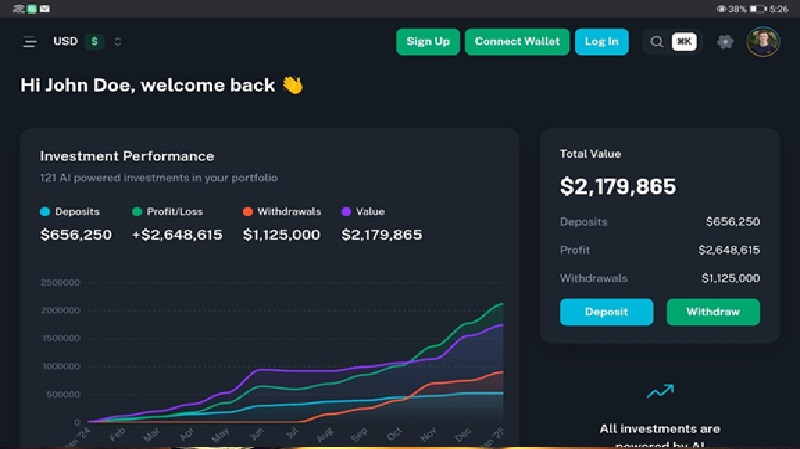
The platform features an AI-powered Robo Advisor that excels in analyzing financial markets by processing vast data in real time. It crafts personalized investment strategies, helping users capitalize on sudden market movements, like the 4300% spike in Zenqira (ZENQ), which even established assets like Ethereum struggle to time effectively.

The Robo Advisor also automatically adjusts portfolios as market conditions change, making investments stay agile. This feature is ideal for users lacking the time or expertise to monitor markets constantly, providing peace of mind that their portfolios are managed without the need for continuous oversight.

RCO Finance stands out in the DeFi landscape by prioritizing user privacy with a KYC-free model, simplifying access for newcomers. This allows anyone to start trading easily, supported by an impressive inventory of over 120,000 tradable assets, including stocks, bonds, cryptocurrencies, and tokenized real-world assets.

And the best part? You can test these features on RCO Finance’s recently launched beta platform, packed with advanced AI trading tools and automated analytics. The platform is set to evolve even further, paving the way for a groundbreaking release.

RCO Finance further strengthens its credibility and security through a solid partnership with reputable firms to audit its smart contracts. This proactive approach guarantees that the AI trading platform operates with a high level of integrity and transparency, safeguarding users’ investments from potential vulnerabilities.

ADA Hits $1 As US Crypto Reserve Speculation Drives Massive Rally

Cardano (ADA) surged 50% in a single day and 37% over the week, reaching $1, fueled by speculation regarding its potential inclusion in the new U.S. Crypto Strategic Reserve. Although it has since declined, traders are eager to see if Cardano can reach $3 by March. Analysts attribute the rally to significant economic developments, including an announcement from former U.S. President Trump.

Rumors suggest that Cardano may be integrated into a reserve for Bitcoin transactions, utilizing ADA for transaction fees, which could enhance its popularity. Additionally, a potential partnership with Hedera Hashgraph (HBAR) for a stablecoin project could attract investors through automated profit generation.

Experts view Cardano as a potential threefold investment, expecting 300% gains. However, resistance may arise around $1.17, with a pullback below $1. Current signals show strong buying but slowing momentum. If Cardano remains above $0.98, it could reach $1.20; otherwise, it may drop to $0.85.

Beat the Rush: RCOF Presale Offers Early Investors Huge Potential

With a growing interest in tokens promising high returns, some experts suggest that RCOF could outperform Cardano in 2025. This optimism stems from the RCOF’s token presale successfully raising over $14 million in revenue.

Currently trading at $0.10, RCOF will rise to $0.13 in the next stage, offering a potential 39

0% profit. However, what’s even more exciting is that experts anticipate a 10,000x surge after the RCOF token launch at $0.6 on crypto exchanges.

To ensure the long-term value of RCOF, 50% of the total token supply is reserved for the presale, bolstering liquidity. Additionally, a token-burning strategy is in place to decrease circulation, potentially increasing scarcity and boosting prices as demand grows.

Investing in RCOF presale tokens now could lead to significant rewards in the future, so don’t miss out on this opportunity!


For more information about the RCO Finance (RCOF) Presale:

Visit RCO Finance Presale

Join The RCO Finance Community

RCOF Takes Crypto by Storm with Projected 8000% Gains by Q2 2025

0

The crypto world is about to witness a seismic shift as RCO Finance (RCOF) takes the stage. With its innovative AI features and highly successful  presale, RCO Finance is quickly emerging as the altcoin to watch, with projections of a staggering 8000% rally by Q2 2025.

But what are the factors contributing to this bullish outlook? Find the details below!

RCO Finance Revolutionizing Crypto Trading

RCO Finance is not just another DeFi trading platform; it’s an inclusive solution that supports investors of all backgrounds. With its innovative AI features, it’s no surprise that RCO Finance is gaining traction as one of the crypto tokens to watch. The future of finance is here, and it welcomes everyone.

Fueling this innovation is its AI-powered Robo Advisor, which is designed to simplify crypto trading for users without extensive knowledge. By employing AI and machine learning, it provides a user-friendly experience, removing intermediaries and confusion. Users can access tailored investment strategies that align with their financial situations and market preferences.

The Robo Advisor is a personalized investment manager that analyzes market data, allowing even beginners to access institutional-level strategies. It continuously monitors trends and adjusts portfolios in real time to align with users’ financial goals. Imagine receiving an alert about a token like MELANIA, which surged significantly overnight.

RCO Finance’s Beta Platform Goes Live!

For investors interested in trying out these features, RCO Finance has recently launched a beta platform that features advanced AI trading tools and automated analytical systems. This user testing is expected to improve the overall trading experience and position RCO Finance as the top crypto presale in 2025

This AI trading platform emphasizes user privacy and anonymity by operating on a KYC-free model, avoiding extensive identity verification. This allows users to trade without middlemen or intrusive processes. Combined with robust security measures, RCO Finance is solidifying its spot as the top crypto presale in 2025.

The smart contracts underpinning RCO Finance have been thoroughly audited by SolidProof, a leading blockchain security firm known for its rigorous evaluation processes. This thorough audit guarantees that user funds are well-protected, providing investors with peace of mind and confidence in the platform’s security measures

RCOF Presale Stuns The Crypto Market

For those looking for the top crypto presale in 2025, RCO Finance is one to watch, having raised over $14 million in revenue. The RCOF token is generating significant interest as it advances through its fifth presale stage, currently priced at $0.10.

Since its launch, the RCOF token has demonstrated an impressive 509% increase from its starting price, indicating strong growth potential. As the presale approaches the next stage, early investors could benefit significantly when the RCOF token price rises to $0.13.

Analysts predict that RCOF may debut at around $0.60, with even more promising growth prospects on the horizon for 2025. Market rumors suggest that the value of the RCOF token could surpass the remarkable price rally of Solana in 2021, potentially yielding gains of up to 8000%.

Now is the perfect time to consider investing in RCOF presale tokens!


For more information about the RCO Finance (RCOF) Presale:

Visit RCO Finance Presale

Join The RCO Finance Community

The Investing Opportunity in MAGA 2.0 As Recession Looms

0

My prediction remains: Trump will cause a recession by the time Trump 2.0 is over. Republicans have that in their DNAs, naturally or otherwise. George Bush Sr caused one; Bill Cinton cleaned it up. George Bush Jr caused a really big one; Obama cleaned everything. Under Trump 1.0 we had one, Biden took care of business. Now, another one will happen.

Ndubuisi does not buy stocks unless during recessions as recessions provide opportunities to have great multiples. Outside recessions, stock markets are boring for me on those single-digit or low double-digit returns.

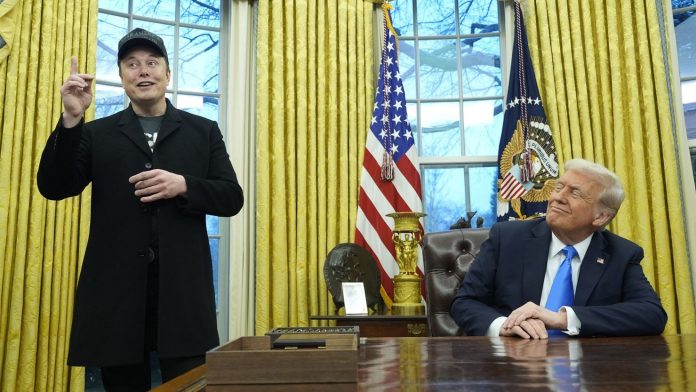
But as we wait for the next recession, I am moved to comment on something unique about Musk, Trump and America: ability to fire thousands of people with no one saying he is eliminating “Igbos”, “Yorubas”, and “Hausas”, as would have been the case in Nigeria. Yes, these men are enjoying the firing of federal workers, with no concerns on balancing the federal character on the lost jobs!

From LinkedIn: “Layoffs rose 245% in February compared to the month prior…. Of the roughly 172,000 people who were let go last month, more than one-third, or 62,000, lost their jobs to cuts by the Department of Government Efficiency, led by billionaire Elon Musk. The monthly total is the highest since July 2020, and also the highest figure for February since 2009, when the country was grappling with the global financial crisis.” They are just starting.

MAGA 2.0 will provide a huge opportunity to buy low and then capture value later in this innovation age powered by AI. I expect a huge tax cut soon, and it will be bigger than any spending cut, and typically whenever that happens, you see financial imbalance, triggering an economic avalanche. Then the BUY moment will present itself!

MAGA 2.0 presents opportunities: just save for the moments.

Comment on Feed

Comment 1: Thank you for sharing your insights and predictions. I find your perspective on economic cycles and investment strategies quite intriguing, especially the idea of leveraging recessions for investment opportunities. While I agree that recessions can present unique buying opportunities, I would like to add a nuanced perspective on the broader implications of such economic downturns.

Recessions, while beneficial for investors like yourself who are positioned to capitalize on them, often come at a significant cost to the broader population. Job losses, reduced consumer spending, and economic instability can disproportionately affect lower-income households and small businesses. For instance, while layoffs in the tech sector or federal workforce might create opportunities for investors, they also lead to financial insecurity for thousands of families. This duality is worth considering when discussing the potential benefits of economic downturns.

Additionally, your observation about the lack of ethnic or regional bias in layoffs in the U.S. compared to Nigeria is an interesting cultural contrast. However, it’s worth noting that even in the U.S., layoffs can have uneven impacts across different demographics, such as minority groups or older workers, even if these disparities aren’t framed in ethnic or regional terms. The systemic issues in hiring and firing practices, while less overt, still exist and can perpetuate inequality.

As for the potential economic policies under a hypothetical Trump 2.0 administration, I would caution against assuming that tax cuts alone will trigger a recession. While large tax cuts without corresponding spending reductions can indeed lead to fiscal imbalances, the broader economic context such as global market conditions, monetary policy, and technological advancements also plays a significant role. For example, the rise of AI and automation, as you mentioned, could offset some of the negative impacts of fiscal imbalances by driving productivity gains and creating new industries.

To put it simply, while I agree that recessions can create investment opportunities, it’s important to balance this perspective with an understanding of their broader societal impacts. Moreover, the interplay between fiscal policy, technological innovation, and global economic trends will likely shape the next recession in ways that are not entirely predictable. Saving for the “BUY moment” is a sound strategy, but it’s equally important to consider the ethical and social dimensions of investing during times of economic hardship.